
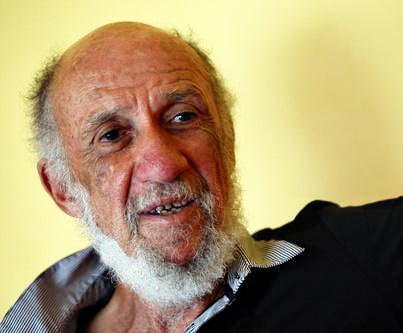
As long ago as 1998 Edward Said reminded the world that acting as if Palestinians were equally responsible with Israelis for the persisting struggle of the two peoples was not only misleading, but exhibited a fundamental in misunderstanding of the true reality facing the two peoples: “The major task of the American or Palestinian intellectual of the left is to reveal the disparity between the so-called two sides, which appears to be in perfect balance, but are not in fact. To reveal that this is an oppressed and an oppressor, a victim and a victimizer, and unless we recognize that, we’re nowhere.” – he said in an interview with Bruce Robbins published in Social Text (1998).

I would rephrase Said’s statement by substituting ‘any engaged citizen and morally sensitive intellectual’ for ‘the American or Palestinian intellectual of the left.’

We do not need to be on the left to expose the cruel hypocrisy of suppressing gross disparities of circumstances, or more to the point, blocking out the multiple diplomatic, military, material, and psychological advantages enjoyed by Israel as compared to the Palestine. “It is elementary, my dear Watson!” as Sherlock Holmes so often exclaimed, or at least it should be.

Unfortunately, a principal instrument of the mind numbing diplomacy of the United States is precisely aimed at avoiding any acknowledgement of the disparity that at the core of the encounter. As a result, the American public is confused as to what it is reasonable to expect from the two sides and how to interpret the failure of negotiations to get anywhere time and again.

This failure is far from neutral. It is rather the disparity that has done the most damage to peace prospects ever since 1967: This pattern of delay has kept the Palestinians in bondage while allowing the Israelis build and create armed communities on occupied Palestinian land that was supposedly put aside for the future Palestinian state.

Beyond this appeal to intellectuals, Said’s message should be understood by everyone everywhere, and not just by Americans and Palestinians, although these are the two populations most responsible for the prolonged failure to produce a peace based on justice.

Elsewhere, except possibly in parts of Western Europe, such a discourse as to shared responsibility for the ongoing struggle is not so relevant because the ugly forms of Israeli exploitation of the Palestinian ordeal have become increasingly transparent in recent years.

For decades Europeans gave Israel the benefit of the doubt, partly reflecting a sense of empathy for the Jewish people as victims of the Holocaust without giving much attention to the attendant displacement of the indigenous population of Palestine. Such an outlook, although still influential, loses its tenability as time passes.

Beyond this, there are increasing expressions of grassroots solidarity with the Palestinian struggle by most peoples in the world. It is a misfortune of the Palestinians that most political leaders in the world are rarely moved to act to overcome injustice, and are far more responsive to hegemonic structures that control world politics and their perception of narrowly conceived national interests. This pattern has become most vividly apparent in the Arab world where the people scream when Israel periodically launches its attacks on Gazan civilian society while their governments smile quietly or avert their eyes as the bombs drop and the hospitals fill up.

In Israel, the argument as to balance also has little resonance as Israelis, if they pause to wonder at all, tend to blame the Palestinians for failing to accept past Israeli conflict-resolving proposals initiatives made over the years.

Israelis mostly believe that the Barak proposals at Camp David in 2000 and the Sharon ‘disengagement’ from Gaza in 2005 demonstrated Tel Aviv’s good faith. Even Netanyahu, at least when he is not seeking reelection, and is speaking for the benefit of an American audience disingenuously claims Israel’s continuing dedication to a peace process based on seeking a two-state solution while he explains diplomatic gridlock by contending that lacks a Palestinian partner in the search for peace, and never deigns to mention the settlement archipelago as an obstacle.

Looked at objectively, by assessing behavior and apparent motivation, it is the Palestinians that have no partner for genuine peace negotiations, and should have stopped long ago acting as if Israel was such a partner.

That is, Israel inverts the Said disparity, contending that the public should point its finger of blame at Palestine, not Israel. Of course, this is hasbara in its impurest form.

Israel never made a peace proposal that offered Palestinians a solution based on national and sovereign equality and sensitive to Palestinian rights under international law. And as for Sharon’s purported disengagement from Gaza, it was justified at the time in Israel as a way to deflect international pressures building to pursue a diplomatic solution and it was managed as a withdrawal that didn’t loosen the grip of effective control, leaving Gaza as occupied and more vulnerable than it was when the IDF soldiers patrolled the streets.

Since 2005 the people of Gaza have suffered far more from Israel’s military domination than in all the years following 1967 when occupation commenced, and it should be clear, this outcome was not a reaction to Hamas and rockets. Hamas has repeated sought and upheld ceasefires that Israel has consistently violated, and offered long-term arrangements for peaceful coexistence that Israel and the United States have refused to even acknowledge.

Where the equivalence argument is so influential is with the Obama administration and among liberal Zionists, including such NGOs as J Street and Peace Now that are critical of Israel for blocking progress toward a two-state solution. It is a blindfold that obscures the structural reality of the relationship between the two sides, and believes that if Israel would make some small adjustments in their occupation policy, especially in relation to settlements, and if the Palestinians would do the same with respect to refugees and accepting Israel as a Jewish state, then a negotiated peace would follow as naturally as day follows night.

In effect, Israel is expected to curtail unlawful settlement activity in exchange for Palestine suspending its rights under international law affecting the situation of several million Palestinian refugees. As is widely known, Jews from anywhere in the world have an unconditional right to immigrate to Israel, whereas Palestinian living abroad with deep residence roots in the country are almost totally banished from Israel including if their purpose is to resume residence so as to live with close family members.

In Ramallah back in March 2013, and speaking to a Palestinian gathering, President Obama did forcefully say that “The Palestinians deserve an end to occupation and the daily indignities that come with it,” and this will require “a state of their own.” Obama even then acknowledged “that the status quo isn’t really a status quo, because the situation on the ground continues to evolve in a direction that makes it harder to reach a two-state solution.”

Such a display of circumlocution (“..continues to evolve in a direction”) so as to avoid clearing mentioning Israel’s continuous encroachment on the land set aside by the international consensus, is for a discerning reader all that one needs to know. The unwillingness to challenge frontally Israel’s unlawful and obstructive behavior is underscored by Obama’s reassurances given to a separate Israeli audience in Jerusalem on the same day that he spoke guardedly to the Palestinian, with such phrases as “America’s unwavering commitment,” ‘unbreakable bonds,” “our alliance is eternal, it is forever,” “unshakeable support,” and “your greatest friend.”

No such language of reassurance was offered the Palestinians. His two speeches left no doubt that Israel retained its upper hand, and could continue to rest easy with this status quo of simmering conflict that had worked so long in its favor.

The Secretary of State, John Kerry, ploughs the same field, calling on both sides to make “painful concessions.” Obama in his Jerusalem speech illustrated what this concretely might mean, assuming that the two sides were equally called upon to act if peace were to be achieved.

The Palestinians were called upon to recognize Israel as a Jewish state, while Israel was politely reminded in language so vague as to be irrelevant, “Israelis must recognize that settlement activity is counterproductive.” To ask Palestinians to recognize Israel is to affirm as legitimate the discriminatory regime under which the 20% Palestinian minority lives, while asking the Israelis to recognize that the counterproductive character of settlement expansion is to misunderstand Israeli intentions.

If their goal is to avoid the establishment of a Palestinian state then being ‘counterproductive’ is exactly the result being sought. Besides asking the Palestinians to abridge their rights while requesting Israel to admit that their settlement activity is not helping the diplomatic process is to appeal to their self-interest, and avoid a demand to cease and reverse an unlawful, likely criminal, activity.

The false equivalence is a metaphor for the deformed framework of diplomacy that has unfolded largely as a result of the United States being accepted as the presiding intermediary, a role for which it is totally unsuited to play. This lack of qualification is admitted by its own frequent declarations of a high profile strategic and ideological partnership with Israel, not to mention the interference of a domestic Israeli lobby that controls Congress and shapes the media allocation of blame and praise in relation to the conflict.

Kerry expresses the same kind of one-sidedness in the guise of fairness when he calls on the parties to make compromises: “..we seek reasonable compromises on tough complicated, emotional, and symbolic issues. I think reasonable compromises has to be a keystone of all of this effort.”

What kind of compromises are the Palestinians supposed to make, given that they are already confined to less and less of the 22% of the British Mandatory territory of Palestine, and since 1988 have sought no greater proportion of the land. Kerry’s approach overlooks, as well, the defiant refusal of Israel to act in good faith in relation to the 1967 Security Council Resolution 242 that called upon Israel to withdraw without claiming territory through its use of force or by taking advantage of being the occupying power.

In the interim, while being unwilling to do anything concrete to implement its view of decades that Israeli settlement activity is ‘counterproductive’ the United States proclaims and proves its readiness to oppose any Palestinian attempt to gain access to the UN to express its grievances, an effort which Obama denigrated as “unilateral attempts to bypass negotiations through the UN.”

The Palestinian Authority has repeatedly made clear that it favors a resumption of direct negotiations with Israel, despite being at a great disadvantage within such a framework, and insists persuasively that there is no inconsistency between its seeking greater participation in international institutions and its continued readiness to work toward a diplomatic solution of the conflict.

If Israel and the United States were sincerely dedicated to a sustainable peace, they would encourage this Palestinian turn away from violent resistance, and their increased effort to push their cause by persuasion rather than missiles, to advance their cause by gaining respectability through joining institutions and adhering to lawmaking treaties instead of being confined in a prolonged rightless lockdown euphemistically disguised as ‘occupation.’

In the end, we cannot see the situation for what it is without reverting to the Said insistence that the relation between oppressor and oppressed is a paramount precondition for sustainable peace.
Unless the structural distortion and illegitimacy is acknowledged, no viable political arrangement will be forthcoming.

From this perspective the Kerry emphasis on ‘reasonable compromise’ is as mind numbingly irrelevant as it would have been in seeking a peaceful end to racial struggle in apartheid South Africa by demanding that ANC and Nelson Mandela become amenable to compromise with their racist overlords.

Peace will come to Israel and Palestine, and be sustained, if and only if the oppressor becomes ready to dismantle its oppressive regime by withdrawing, not merely by disengaging Gaza style. At present, such a readiness is not to be found on the Israeli side, and so long as this is so, direct negotiations and these periodic calls issued by Washington to resume direct talks have one main effect – to free Israel to realize its ambition to establish ‘Greater Israel’ while keeping the Palestinians in chains.

This ambition has not yet been explicitly embraced by the Israeli leadership, although only those who refuse to notice what is happening on the ground can fail to notice this expansionist pattern. Israel’s new coalition government even more rightest and pro-settler than its predecessor makes Israel’s ambition to end the conflict by self-serving unilateral action less and less a well kept state secret.
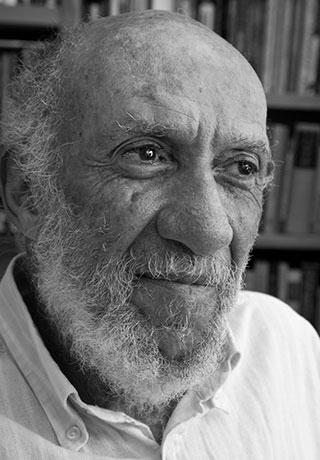

Professor Falk became an adviser to TFF when it was established in 1985.

Related Posts

The agreement is catastrophic both because of what it says and what it doesn’t mention. It reduces further the major asset of security policies: Freedom of action. Jan Oberg TFF director September 25, 2026 A couple of hours before the agreement was signed on September 22, 2026, I published the following 13 hypotheses about what it would most likely contain on TFF Substack (in English). I was wrong on only the first point. Contrary to what Trump had written on his Truth Social platform, it does not appear to come into force immediately. In fact, it turned out to be worse than even I had anticipated. After these hypotheses now come a number of reflections in light of what the agreement actually contains, and does not contain, as well as the way in which it has generally been presented by major media outlets and by the public-service broadcaster DR. My...
Photos © TFF 2000 Read PressInfo 90 “Lift the Sanctions and Bring More Aid to Yugoslavia” See Pictures from Belgrade © TFF 2000 Please reprint, copy, archive, quote or re-post this item, but please retain the source.
LONDON – So far so good, at least on the wider level. While internally Iraq seems on the edge of chaos, the much heralded clash of civilizations between the Muslim and Judaeo-Christian worlds has yet to become apparent. We have anger and despair aplenty in the Arab and Muslim worlds. But very little rushing to the standard and there was no great pilgrimage of warriors to join the fight, as happened when the Soviet Union invaded Afghanistan twenty years ago, and then, having driven the Red Army out, were left to ferment in that mountainous redoubt. With the armaments supplied by the CIA the mujahidin were transformed into Al Qaeda that became, for a relatively brief moment as these things go, ‘the greatest threat to the homeland that America has ever known.’ Nevertheless a ‘Cold War’ between much of the Muslim world and the West is certainly in full swing. Winston...

Recent Articles

Tony Robinson October 4, 2026 Violence is easy to recognise when someone is being beaten, shot or killed. It becomes more difficult when nobody is holding a weapon. Poverty, discrimination, exploitation and repression can restrict a human life just as effectively, although they do so in very different ways and with very different consequences. Simply adding more categories to an ever-growing list of forms of violence does not really solve the problem. The more interesting question is what all these different situations have in common and why it makes sense to describe them using the same word. Human beings do not simply react to what happens around them. They remember the past, imagine things that do not yet exist, make plans and undertake projects. Workers organise because they imagine different working conditions; people migrate because they imagine another life somewhere else; social movements emerge because people refuse to accept the...
It’s a matter of principles, courage, vision and pulling together – while the militarist world is falling apart… Peter Langille October 3, 2026 “Here, then, is the problem which we present to you, stark and dreadful and inescapable: Shall we put an end to the human race; or shall mankind renounce war?”The Bertrand Russell—Albert Einstein Manifesto, July 9, 1955 ⁕ The forecast for what’s ahead is worrisome. The sharp rise in armed conflicts over the past three years is adding to what was already the highest level in over seventy years. Genocides, which should be prevented are supported. A shared climate emergency that jeopardises survival is ignored. Diverse polls now suggest that people are war-weary, worried and interested in a more effective United Nations. And, there are viable policy options for a more secure world! Yet governments are doubling-down, betting on more war and investing heavily. If current trends persist,...
Johan Galtung 1930-2024October 2015 Published here on October 3, 2026 Let us focus on Civilization for conflict analysis and remedies. Major forms of disorder use violence; war is state organized violence. The most belligerent states are the United States of America and Israel, both with civilization roots. National Evangelism, the US Protestant Christian civilization– more national than evangelical–justifies US warfare as exceptionalism of a people chosen by God, with a manifest destiny to run the world. Orthodox Judaism justifies Israeli warfare to conquer and expand from Nile to Euphrates as a religious right and duty to the Eternal One. The third most belligerent country, the UK, no longer believes it is God-chosen but chosen by the USA; not quite the same but something. But the root cause of global disorder lies in the Occident–with Islam–seeing itself as the single, universal civilization valid for all at all times, all others being...

TFF on Substack

Discover and subscribe to more peace materials on TFF Substack

Most Popular

Tony Robinson October 4, 2026 Violence is easy to recognise when someone is being beaten, shot or killed. It becomes more difficult when nobody is holding a weapon. Poverty, discrimination, exploitation and repression can restrict a human life just as effectively, although they do so in very different ways and with very different consequences. Simply adding more categories to an ever-growing list of forms of violence does not really solve the problem. The more interesting question is what all these different situations have in common and why it makes sense to describe them using the same word. Human beings do not simply react to what happens around them. They remember the past, imagine things that do not yet exist, make plans and undertake projects. Workers organise because they imagine different working conditions; people migrate because they imagine another life somewhere else; social movements emerge because people refuse to accept the...
It’s a matter of principles, courage, vision and pulling together – while the militarist world is falling apart… Peter Langille October 3, 2026 “Here, then, is the problem which we present to you, stark and dreadful and inescapable: Shall we put an end to the human race; or shall mankind renounce war?”The Bertrand Russell—Albert Einstein Manifesto, July 9, 1955 ⁕ The forecast for what’s ahead is worrisome. The sharp rise in armed conflicts over the past three years is adding to what was already the highest level in over seventy years. Genocides, which should be prevented are supported. A shared climate emergency that jeopardises survival is ignored. Diverse polls now suggest that people are war-weary, worried and interested in a more effective United Nations. And, there are viable policy options for a more secure world! Yet governments are doubling-down, betting on more war and investing heavily. If current trends persist,...
Johan Galtung 1930-2024October 2015 Published here on October 3, 2026 Let us focus on Civilization for conflict analysis and remedies. Major forms of disorder use violence; war is state organized violence. The most belligerent states are the United States of America and Israel, both with civilization roots. National Evangelism, the US Protestant Christian civilization– more national than evangelical–justifies US warfare as exceptionalism of a people chosen by God, with a manifest destiny to run the world. Orthodox Judaism justifies Israeli warfare to conquer and expand from Nile to Euphrates as a religious right and duty to the Eternal One. The third most belligerent country, the UK, no longer believes it is God-chosen but chosen by the USA; not quite the same but something. But the root cause of global disorder lies in the Occident–with Islam–seeing itself as the single, universal civilization valid for all at all times, all others being...
Read More
Living-Peace-Sign-Budapest-copy
Tony Robinson October 4, 2026 Violence is easy to recognise when someone is being beaten, shot or killed. It becomes more difficult when nobody is holding a weapon. Poverty, discrimination, exploitation and repression can restrict a human life just as effectively, although they do so in very different ways and with very different consequences. Simply adding more categories to an ever-growing list of forms of violence does not really solve the problem. The more interesting question is what all these different situations have in common and why it makes sense to describe them using the same word. Human beings do not simply react to what happens around them. They remember the past, imagine things that do not yet exist, make plans and undertake projects. Workers organise because they imagine different working conditions; people migrate because they imagine another life somewhere else; social movements emerge because people refuse to accept the...
b54a1f10-8c65-4f0b-9dd5-4abc0a7d04cc_2659x2659
It’s a matter of principles, courage, vision and pulling together – while the militarist world is falling apart… Peter Langille October 3, 2026 “Here, then, is the problem which we present to you, stark and dreadful and inescapable: Shall we put an end to the human race; or shall mankind renounce war?”The Bertrand Russell—Albert Einstein Manifesto, July 9, 1955 ⁕ The forecast for what’s ahead is worrisome. The sharp rise in armed conflicts over the past three years is adding to what was already the highest level in over seventy years. Genocides, which should be prevented are supported. A shared climate emergency that jeopardises survival is ignored. Diverse polls now suggest that people are war-weary, worried and interested in a more effective United Nations. And, there are viable policy options for a more secure world! Yet governments are doubling-down, betting on more war and investing heavily. If current trends persist,...
010
Johan Galtung 1930-2024October 2015 Published here on October 3, 2026 Let us focus on Civilization for conflict analysis and remedies. Major forms of disorder use violence; war is state organized violence. The most belligerent states are the United States of America and Israel, both with civilization roots. National Evangelism, the US Protestant Christian civilization– more national than evangelical–justifies US warfare as exceptionalism of a people chosen by God, with a manifest destiny to run the world. Orthodox Judaism justifies Israeli warfare to conquer and expand from Nile to Euphrates as a religious right and duty to the Eternal One. The third most belligerent country, the UK, no longer believes it is God-chosen but chosen by the USA; not quite the same but something. But the root cause of global disorder lies in the Occident–with Islam–seeing itself as the single, universal civilization valid for all at all times, all others being...
Screenshot 2026-10-02 011738
Jan ObergPhD, director, The Transnational Foundation for Peace and Future Research, TFFLund, Sweden October 2, 2026 This is my full original manuscript. The Chinese Academy of Social Science, CASS, makes two publications out if it. 1. China’s Five-year plan emphasized the capabilities of basic research and original innovation. It is regarded as the goal of the future social development, which, as required, should be significantly enhanced. Can you comment on the importance of original innovation in research and academic study? I believe it is easier to define “original innovation” in the natural sciences than in social sciences. The breaking points of what constitutes something new, or innovative, are not quite as sharp in the latter. But in both fields it is about opening up something that was closed, unseen, unexplored before – making manifest what was earlier latent. Innovations come in many forms and shapes – naming something that was not...
arctic-circle-map
The agreement is catastrophic both because of what it says and what it doesn’t mention. It reduces further the major asset of security policies: Freedom of action. Jan Oberg TFF director September 25, 2026 A couple of hours before the agreement was signed on September 22, 2026, I published the following 13 hypotheses about what it would most likely contain on TFF Substack (in English). I was wrong on only the first point. Contrary to what Trump had written on his Truth Social platform, it does not appear to come into force immediately. In fact, it turned out to be worse than even I had anticipated. After these hypotheses now come a number of reflections in light of what the agreement actually contains, and does not contain, as well as the way in which it has generally been presented by major media outlets and by the public-service broadcaster DR. My...
girl-5894831_1280
Below are TFF-related media mentions, comments, videos and social media posts published elsewhere but not on this homepage. We happen to catch and list only a fraction. Regarding video comments and debates, we recommend that you go to the TFF Video Channel on Substack where many of them are reproduced. Jan Oberg is a contributor to China Daily – 52 million daily clicks – and Global Times, CGTN and CCTV (the national television), China Investment, Xinhua News Agency and several others. Articles and videos on these media very often multiply into countless Chinese (and Western media) that re-post them from these main media. Thanks to The China Academy, his analyses, interviews and comments are frequently posted on YouTube channels such as Thinkers Forum and Wave Media. These videos are often re-posted on Bilibili (China’s YouTube), the China Content Center on TikTok, and on the Chinese edition of TikTok, Douyin.com. This means reaching hundreds of millions of viewers worldwide over a year. While there are too many to catch on all these...




