Our Orwellian World: The anniversary of the publication of 1984

With a few words about the US’ domestic authoritarianism and NATO’s reckless expansion and re-armament where everything else but that is needed.

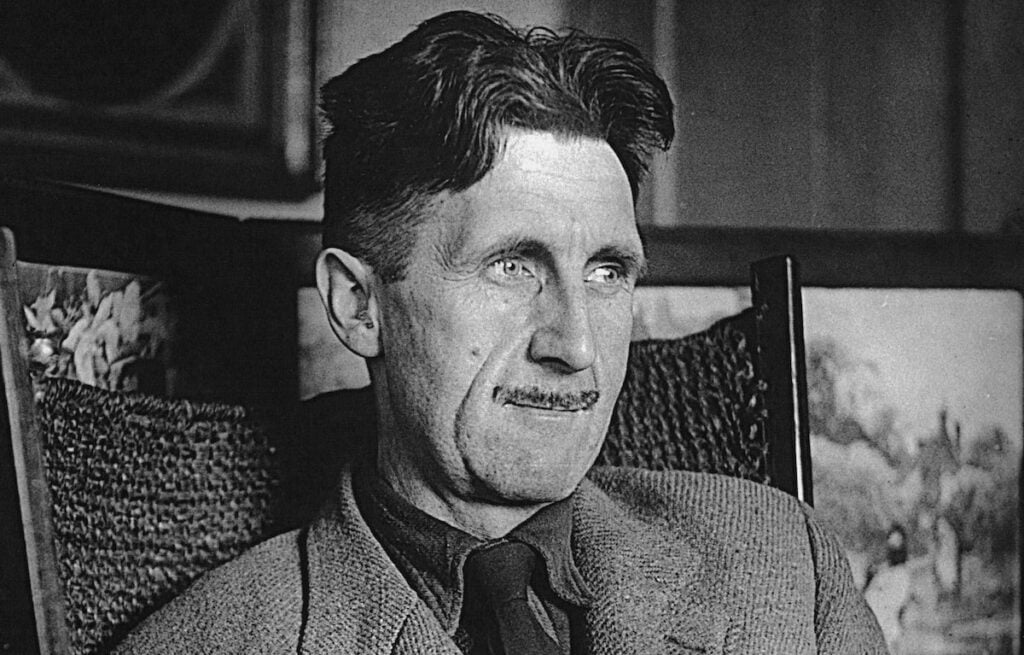
George Orwell’s prophetic book, 1984, was written in 1948 and was published on 9 June 1949. So, today is the 76th anniversary of the publication of that important and prophetic book. The book centres on the consequences of the decline of democracy and the rise of totalitarianism, mass surveillance and repressive regimentation of people’s behaviour within society. The book was influenced by totalitarianism under Stalin and censorship and propaganda under the Nazis. The book is not about any particular society but refers to any society that falls under the influence of those oppressive policies. The book is basically about the power of propaganda and indoctrination employed in the service of authoritarian rulers and regimes.

Orwell warned us that the manipulation of the public in the service of autocracies did not belong to the past, but could be repeated in any society, no matter how advanced. He envisages a dystopian society in a state of perpetual war, dominated by a totalitarian superstate, Oceania. He envisages a Great Britain, known as an Airstrip, which becomes a province or colony of Oceania, led by Big Brother —a dictatorial leader with a huge ego and supported by an intense cult of personality, indoctrinated by the Party’s Thought Police working through the Ministry of Truth. Clearly, 1984 is a great work of fiction, and it would be wrong to regard any contemporary state as representing the dystopian model the book warns against.

Great Britain and the United States are two leading democracies with vibrant, if declining, freedom of expression. The British and the American people, and for that matter most of the world, are not brainwashed and dominated by a single ideology, due to the multiplicity of mass media and new sources of information available to all.

By reminding us of the anniversary of the publication of 1984, it is not my intention to cast aspersions on any society, but simply to make us vigilant about any policy or any individual which might be dragging us towards a dystopian society. Today, I was watching two programmes that made me think of 1984.

The first one was the declaration of a state of emergency in California and President Trump’s decision to send 2,000 National Guard members, and the Secretary of Defence’s decision to put the Marines on alert for being deployed to Los Angeles. US Secretary of Defence, Pete Hegseth, posted a tweet on Saturday that active-duty Marines stationed at nearby Camp Pendleton had been put on “high alert” to support the National Guard.

According to the US Constitution, the aim of the deployment of the National Guard is to put down an “insurrection” or the “threat of foreign invasion.” These are the only two circumstances when a president can declare a state of emergency and deploy the National Guard without a request by a state governor. California’s Governor Gavin Newsom had not asked for the deployment of the National Guard. On the contrary, he pushed back strongly, warning that the deployment would only fan the flames.

The last time a president bypassed a governor to deploy the National Guard was in 1965 at the height of the civil rights marches and protests. In March 1965, the then-US President Lyndon B Johnson deployed the National Guard on the eve of the civil rights march from Selma to Montgomery, Alabama.

The Selma to Montgomery marches were organised to protest the systemic denial of voting rights to Black Americans in Alabama. Despite making up more than half of Selma’s population, only a small fraction of Black residents (2 per cent) were registered to vote, due to discriminatory laws, literacy tests, and intimidation by local authorities. So, the aim of the deployment of troops on that occasion was to protect the constitution, allowing the blacks to use their right to vote and to send their children to school.

Furthermore, the deployment had already been preceded by many acts of violence, including the killing of Jimmie Lee Jackson, a young black man shot by a state trooper during a peaceful demonstration. So, the deployment was done to control the rising tensions between protestors and law enforcement officials. President Johnson decided to protect peaceful demonstrators against violence condoned and carried out by the forces of the then fascist and racist state governor, George Wallace, a prominent segregationist. That was the last time the National Guard was deployed by the president, bypassing the state governor.

Sometimes, a political leader is forced to engage in conflict to safeguard the law, protect civilians, prevent violence by state forces or unruly mobs. There are also times when a leader needs conflict in order to distract the people from the problems he is facing, to strengthen his political power, and to subdue his opponents or critics. He needs to launch deliberate provocations to incite violence to strengthen or justify his own power.

There have been many examples of the use of force based on a manufactured crisis and the resort to violence on phoney pretexts by politicians. This has been done both in democratic countries and mainly by despotic regimes, which wish to divert attention from their own mistakes or wrongdoings.

People can judge for themselves whether the aim of the deployment of force in California, and perhaps shortly in other parts of the United States, has been to safeguard the Constitution, enforce the rule of law, and protect the people, or whether the main aim has been to create an unnecessary crisis for the sake of personal political gain. Once they have established this in their own minds, they should push back against power-hungry and authoritarian leaders who wish to subvert democracy and push the country towards the abyss.

NATO Secretary General’s speech

The other event that caught my attention was NATO Secretary General Jens Stoltenberg’s keynote speech at Chatham House on 9 June, carried live by the BBC. The speech under the title of “Building A Better NATO” was designated as an important speech ahead of the NATO Summit in The Hague (24-25 June). The main thrust of the speech was Rutte’s expectation that Allies will agree to invest 5% of their GDP on defence. This is a major leap from the initial 2% of the GDP, later increased to 2.5% and a vague promise by some governments to increase it to 3%.

The main justification for such a big increase in military spending at a time when most European countries are suffering from economic problems, when the poorer classes are getting poorer and most countries cannot meet their welfare bills is allegedly the challenges that the West faces from its adversaries, mainly China and Russia, but which also includes Iran and North Korea for good measure.

Rutte claimed: “Russia has teamed up with China, North Korea and Iran. They are expanding their militaries and their capabilities. Putin’s war machine is speeding up – not slowing down… Russia could be ready to use military force against NATO within five years.”

Rutte boasted: “With our military power, and our resolve to use it, if necessary, no one should even think about attacking us.” He made it clear that NATO’s mission was not limited to Europe or the North Atlantic, as its title denotes, but covers the entire world. He stressed that NATO is ready to fight any country, whether in the East or the West, that poses a threat to any of its members. He said: “The enduring commitment by all NATO Allies to Article 5 – that an attack on one is an attack on all – sends a powerful message. We will defend against any threat, from any direction.”

Let’s look at some of the facts about the relative strength of NATO and its adversaries. At present, NATO has 32 member states, with more countries waiting to join. Although President Gorbachev had been explicitly promised that if Russia agreed to the reunification of Germany, NATO would not move one inch closer to Russia, NATO has spread all over the world and encircles Russia from the East to the West. Since the fall of the Soviet Union, when NATO had 12 members, it has brought in 20 more countries, mainly members of the former Soviet Union.

The Warsaw Pact was established in 1955 between the Soviet Union and seven other communist states in Central and Eastern Europe in response to the formation of NATO and the entry of West Germany into the Alliance. With the fall of the former Soviet Union and the dissolution of the Warsaw Pact, NATO should have been dismantled. However, not only has it violated the promise not to move an inch closer to Russia, but it has also gone from strength to strength and has taken part in many US wars in the Middle East and Asia. It was the plan to incorporate Ukraine into NATO that led to the disastrous Russian invasion of Ukraine, which has killed hundreds of thousands of people on both sides.

As of 2024, the total population of NATO member states was over 973 million. Collectively, they account for 30.3% of the global GDP, a staggering $64.355 trillion. In contrast, Russia has a population of 146,028,325, with a GDP of $2.076 trillion, a small fraction of NATO members’ GDP. The United States alone has a military budget larger than the next six biggest spenders combined. The only way that Russia can compete with the United States and NATO is if there is a nuclear war, in which case, there will be no winners and all will be losers if any survives.

Furthermore, the US and NATO have many military bases all over the world. China has only one acknowledged overseas military base in Djibouti, Africa. Following the dissolution of the Soviet Union, many of Russia’s military bases and early-warning radar stations ended up in former Soviet republics. Only the radar in Belarus is still rented by Russia. In addition to that, Russia has several military bases abroad. In 2018, it was reported that Russia operates at least 21 significant military facilities overseas. In contrast to that, the United States alone has more than 750 major military bases in some 80 countries, encircling China, Russia, the Middle East, Africa and practically every corner of the world.

A policy of more and more arms spending to prevent war is a folly of monumental proportions. As Gandhi said, “A policy of an eye for an eye, will make the whole world blind.” In the age of nuclear weapons, any war between the nuclear powers is total madness and will end human civilisation as we know it. Instead of trying to compete for more methods of mass annihilation, pursuing warlike policies and preparing for more devastating wars, we must spend a fraction of that effort on attempts to find peaceful solutions to the conflicts. The current path that mankind is pursuing has only one end. The policy of mutual assured destruction will work until it fails, and then it will be too late for everyone.

Distinguished American diplomat and former U.S. Ambassador to Moscow, George Kennan, warned us against the military-industrial complex many decades ago. He said: “Were the Soviet Union to sink tomorrow under the waters of the ocean, the American military-industrial establishment would have to go on, substantially unchanged, until some other adversary could be invented. Anything else would be an unacceptable shock to the American economy.”

Instead of inventing new adversaries, it would be wiser to establish organisations which, in the words of the UN Charter, will try to establish peace by peaceful means. Mankind can have a brilliant and promising future only if it can change course from war to peace and from hostility to cooperation in a multipolar world.

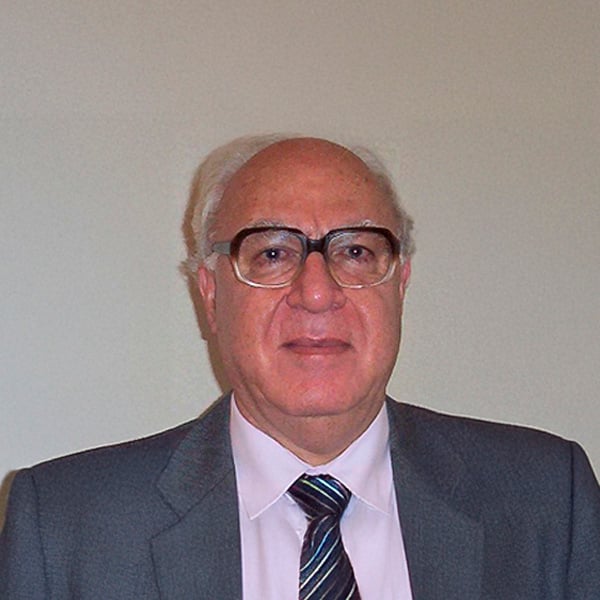
Former Professor and Dean of the Faculty of Languages, University of Isfahan; former lecturer at Cambridge, Harvard and Oxford universities; retired Editor for Middle East and North Africa, BBC Monitoring. And a TFF Associate since 2006.

Related Posts

Johan Galtung 1930-2024October 2015 Published here on October 3, 2026 Let us focus on Civilization for conflict analysis and remedies. Major forms of disorder use violence; war is state organized violence. The most belligerent states are the United States of America and Israel, both with civilization roots. National Evangelism, the US Protestant Christian civilization– more national than evangelical–justifies US warfare as exceptionalism of a people chosen by God, with a manifest destiny to run the world. Orthodox Judaism justifies Israeli warfare to conquer and expand from Nile to Euphrates as a religious right and duty to the Eternal One. The third most belligerent country, the UK, no longer believes it is God-chosen but chosen by the USA; not quite the same but something. But the root cause of global disorder lies in the Occident–with Islam–seeing itself as the single, universal civilization valid for all at all times, all others being...
Jan ObergPhD, director, The Transnational Foundation for Peace and Future Research, TFFLund, Sweden October 2, 2026 This is my full original manuscript. The Chinese Academy of Social Science, CASS, makes two publications out if it. 1. China’s Five-year plan emphasized the capabilities of basic research and original innovation. It is regarded as the goal of the future social development, which, as required, should be significantly enhanced. Can you comment on the importance of original innovation in research and academic study? I believe it is easier to define “original innovation” in the natural sciences than in social sciences. The breaking points of what constitutes something new, or innovative, are not quite as sharp in the latter. But in both fields it is about opening up something that was closed, unseen, unexplored before – making manifest what was earlier latent. Innovations come in many forms and shapes – naming something that was not...
The agreement is catastrophic both because of what it says and what it doesn’t mention. It reduces further the major asset of security policies: Freedom of action. Jan Oberg TFF director September 25, 2026 A couple of hours before the agreement was signed on September 22, 2026, I published the following 13 hypotheses about what it would most likely contain on TFF Substack (in English). I was wrong on only the first point. Contrary to what Trump had written on his Truth Social platform, it does not appear to come into force immediately. In fact, it turned out to be worse than even I had anticipated. After these hypotheses now come a number of reflections in light of what the agreement actually contains, and does not contain, as well as the way in which it has generally been presented by major media outlets and by the public-service broadcaster DR. My...

Recent Articles

Tony Robinson October 4, 2026 Violence is easy to recognise when someone is being beaten, shot or killed. It becomes more difficult when nobody is holding a weapon. Poverty, discrimination, exploitation and repression can restrict a human life just as effectively, although they do so in very different ways and with very different consequences. Simply adding more categories to an ever-growing list of forms of violence does not really solve the problem. The more interesting question is what all these different situations have in common and why it makes sense to describe them using the same word. Human beings do not simply react to what happens around them. They remember the past, imagine things that do not yet exist, make plans and undertake projects. Workers organise because they imagine different working conditions; people migrate because they imagine another life somewhere else; social movements emerge because people refuse to accept the...
It’s a matter of principles, courage, vision and pulling together – while the militarist world is falling apart… Peter Langille October 3, 2026 “Here, then, is the problem which we present to you, stark and dreadful and inescapable: Shall we put an end to the human race; or shall mankind renounce war?”The Bertrand Russell—Albert Einstein Manifesto, July 9, 1955 ⁕ The forecast for what’s ahead is worrisome. The sharp rise in armed conflicts over the past three years is adding to what was already the highest level in over seventy years. Genocides, which should be prevented are supported. A shared climate emergency that jeopardises survival is ignored. Diverse polls now suggest that people are war-weary, worried and interested in a more effective United Nations. And, there are viable policy options for a more secure world! Yet governments are doubling-down, betting on more war and investing heavily. If current trends persist,...
Johan Galtung 1930-2024October 2015 Published here on October 3, 2026 Let us focus on Civilization for conflict analysis and remedies. Major forms of disorder use violence; war is state organized violence. The most belligerent states are the United States of America and Israel, both with civilization roots. National Evangelism, the US Protestant Christian civilization– more national than evangelical–justifies US warfare as exceptionalism of a people chosen by God, with a manifest destiny to run the world. Orthodox Judaism justifies Israeli warfare to conquer and expand from Nile to Euphrates as a religious right and duty to the Eternal One. The third most belligerent country, the UK, no longer believes it is God-chosen but chosen by the USA; not quite the same but something. But the root cause of global disorder lies in the Occident–with Islam–seeing itself as the single, universal civilization valid for all at all times, all others being...

TFF on Substack

Discover and subscribe to more peace materials on TFF Substack

Most Popular

Tony Robinson October 4, 2026 Violence is easy to recognise when someone is being beaten, shot or killed. It becomes more difficult when nobody is holding a weapon. Poverty, discrimination, exploitation and repression can restrict a human life just as effectively, although they do so in very different ways and with very different consequences. Simply adding more categories to an ever-growing list of forms of violence does not really solve the problem. The more interesting question is what all these different situations have in common and why it makes sense to describe them using the same word. Human beings do not simply react to what happens around them. They remember the past, imagine things that do not yet exist, make plans and undertake projects. Workers organise because they imagine different working conditions; people migrate because they imagine another life somewhere else; social movements emerge because people refuse to accept the...
It’s a matter of principles, courage, vision and pulling together – while the militarist world is falling apart… Peter Langille October 3, 2026 “Here, then, is the problem which we present to you, stark and dreadful and inescapable: Shall we put an end to the human race; or shall mankind renounce war?”The Bertrand Russell—Albert Einstein Manifesto, July 9, 1955 ⁕ The forecast for what’s ahead is worrisome. The sharp rise in armed conflicts over the past three years is adding to what was already the highest level in over seventy years. Genocides, which should be prevented are supported. A shared climate emergency that jeopardises survival is ignored. Diverse polls now suggest that people are war-weary, worried and interested in a more effective United Nations. And, there are viable policy options for a more secure world! Yet governments are doubling-down, betting on more war and investing heavily. If current trends persist,...
Johan Galtung 1930-2024October 2015 Published here on October 3, 2026 Let us focus on Civilization for conflict analysis and remedies. Major forms of disorder use violence; war is state organized violence. The most belligerent states are the United States of America and Israel, both with civilization roots. National Evangelism, the US Protestant Christian civilization– more national than evangelical–justifies US warfare as exceptionalism of a people chosen by God, with a manifest destiny to run the world. Orthodox Judaism justifies Israeli warfare to conquer and expand from Nile to Euphrates as a religious right and duty to the Eternal One. The third most belligerent country, the UK, no longer believes it is God-chosen but chosen by the USA; not quite the same but something. But the root cause of global disorder lies in the Occident–with Islam–seeing itself as the single, universal civilization valid for all at all times, all others being...
Read More
Living-Peace-Sign-Budapest-copy
Tony Robinson October 4, 2026 Violence is easy to recognise when someone is being beaten, shot or killed. It becomes more difficult when nobody is holding a weapon. Poverty, discrimination, exploitation and repression can restrict a human life just as effectively, although they do so in very different ways and with very different consequences. Simply adding more categories to an ever-growing list of forms of violence does not really solve the problem. The more interesting question is what all these different situations have in common and why it makes sense to describe them using the same word. Human beings do not simply react to what happens around them. They remember the past, imagine things that do not yet exist, make plans and undertake projects. Workers organise because they imagine different working conditions; people migrate because they imagine another life somewhere else; social movements emerge because people refuse to accept the...
b54a1f10-8c65-4f0b-9dd5-4abc0a7d04cc_2659x2659
It’s a matter of principles, courage, vision and pulling together – while the militarist world is falling apart… Peter Langille October 3, 2026 “Here, then, is the problem which we present to you, stark and dreadful and inescapable: Shall we put an end to the human race; or shall mankind renounce war?”The Bertrand Russell—Albert Einstein Manifesto, July 9, 1955 ⁕ The forecast for what’s ahead is worrisome. The sharp rise in armed conflicts over the past three years is adding to what was already the highest level in over seventy years. Genocides, which should be prevented are supported. A shared climate emergency that jeopardises survival is ignored. Diverse polls now suggest that people are war-weary, worried and interested in a more effective United Nations. And, there are viable policy options for a more secure world! Yet governments are doubling-down, betting on more war and investing heavily. If current trends persist,...
010
Johan Galtung 1930-2024October 2015 Published here on October 3, 2026 Let us focus on Civilization for conflict analysis and remedies. Major forms of disorder use violence; war is state organized violence. The most belligerent states are the United States of America and Israel, both with civilization roots. National Evangelism, the US Protestant Christian civilization– more national than evangelical–justifies US warfare as exceptionalism of a people chosen by God, with a manifest destiny to run the world. Orthodox Judaism justifies Israeli warfare to conquer and expand from Nile to Euphrates as a religious right and duty to the Eternal One. The third most belligerent country, the UK, no longer believes it is God-chosen but chosen by the USA; not quite the same but something. But the root cause of global disorder lies in the Occident–with Islam–seeing itself as the single, universal civilization valid for all at all times, all others being...
Screenshot 2026-10-02 011738
Jan ObergPhD, director, The Transnational Foundation for Peace and Future Research, TFFLund, Sweden October 2, 2026 This is my full original manuscript. The Chinese Academy of Social Science, CASS, makes two publications out if it. 1. China’s Five-year plan emphasized the capabilities of basic research and original innovation. It is regarded as the goal of the future social development, which, as required, should be significantly enhanced. Can you comment on the importance of original innovation in research and academic study? I believe it is easier to define “original innovation” in the natural sciences than in social sciences. The breaking points of what constitutes something new, or innovative, are not quite as sharp in the latter. But in both fields it is about opening up something that was closed, unseen, unexplored before – making manifest what was earlier latent. Innovations come in many forms and shapes – naming something that was not...
arctic-circle-map
The agreement is catastrophic both because of what it says and what it doesn’t mention. It reduces further the major asset of security policies: Freedom of action. Jan Oberg TFF director September 25, 2026 A couple of hours before the agreement was signed on September 22, 2026, I published the following 13 hypotheses about what it would most likely contain on TFF Substack (in English). I was wrong on only the first point. Contrary to what Trump had written on his Truth Social platform, it does not appear to come into force immediately. In fact, it turned out to be worse than even I had anticipated. After these hypotheses now come a number of reflections in light of what the agreement actually contains, and does not contain, as well as the way in which it has generally been presented by major media outlets and by the public-service broadcaster DR. My...
girl-5894831_1280
Below are TFF-related media mentions, comments, videos and social media posts published elsewhere but not on this homepage. We happen to catch and list only a fraction. Regarding video comments and debates, we recommend that you go to the TFF Video Channel on Substack where many of them are reproduced. Jan Oberg is a contributor to China Daily – 52 million daily clicks – and Global Times, CGTN and CCTV (the national television), China Investment, Xinhua News Agency and several others. Articles and videos on these media very often multiply into countless Chinese (and Western media) that re-post them from these main media. Thanks to The China Academy, his analyses, interviews and comments are frequently posted on YouTube channels such as Thinkers Forum and Wave Media. These videos are often re-posted on Bilibili (China’s YouTube), the China Content Center on TikTok, and on the Chinese edition of TikTok, Douyin.com. This means reaching hundreds of millions of viewers worldwide over a year. While there are too many to catch on all these...