
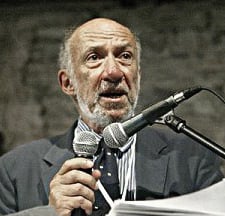
A few days ago I was a participant in a well-attended academic panel on ‘the decline of violence and warfare’ at the International Studies Association’s Annual Meeting held this year in San Diego, California. The two-part panel featured appraisal of the common argument of two prominent recent publications: Steven Pinker’s best-selling The Better Angels of our Nature: Why Violence has Declined and Joshua Goldstein’s well-researched, informative, and provocative Winning the War on War: The Decline of Armed Conflict Worldwide.

Both books are disposed to rely upon quantitative data to back up their optimistic assessments of international and domestic political behavior, which if persuasive, offer humanity important reasons to be hopeful about the future. Much of their argument depends on an acceptance of their interpretation of battlefield deaths worldwide, which according to their assessments have declined dramatically in recent decades. But do battlefield deaths tell the whole story, or even the real story, about the role and dangers of political violence and war in our collective lives?

My role was to be a member of the Goldstein half of the panel. Although I had never previously met Joshua Goldstein I was familiar with his work and reputation as a well regarded scholar in the field of international relations.

To offer my response in the few minutes available to me I relied on a metaphor that drew a distinction between a ‘picture’ and its ‘frame.’ I found the picture of war and warfare presented by Goldstein as both persuasive and illuminating, conveying in authoritative detail information about the good work being doing by UN peacekeeping forces in a variety of conflict settings around the world, as well as a careful crediting of peace movements with a variety of contributions to conflict resolution and war avoidance.

Perhaps, the most enduringly valuable part of the book is its critical debunking of prevalent myths about the supposedly rising proportion of civilian casualties in recent wars and inflated reports of casualties and sexual violence in the Congo Wars of 1998-2003. These distortions, corrected by Goldstein, have led to a false public perception that wars and warfare are growing more indiscriminate and brutal in recent years, while the most reliable evidence points in the opposite direction.

Goldstein is convincing in correcting such common mistakes about political violence and war in the contemporary world, but less so when it comes to the frame and framing of this picture that is conveyed by his title ‘winning the war on war’ and the arguments to this effect that is the centerpiece of his book, and accounts for the interest that it is arousing.

For one thing the quantitative measures relied upon do not come to terms with the heightened qualitative risks of catastrophic warfare or the continued willingness of leading societies to anchor their security on credible threats to annihilate tens of millions of innocent persons, which if taking the form of a moderate scale nuclear exchange (less than 1% of the world’s stockpile of weapons) is likely to cause, according to reliable scientific analysis, what has been called ‘a nuclear famine’ resulting in a sharp drop in agricultural output that could last as long as ten years and could be brought about by the release of dense clouds of smoke blocking incoming sunlight. Here is more.

Also on the panel were such influential international relations scholars as John Mearsheimer who shared with me the view that the evidence in Goldstein’s book did not establish that, as Mearsheimer put it, ‘war had been burned out of the system,’ or that even such a trend meaningfully could be inferred from recent experience. Mearsheimer – widely known for his powerful realist critique of the Israeli Lobby (in collaboration with Stephen Walt) – did make the important point that the United States suffers from ‘an addiction to war.’

Mearsheimer did not seem responsive to my insistence on the panel that part of this American addiction to war arose from role being played by entrenched domestic militarism a byproduct of the permanent war economy that disposed policy makers and politicians in Washington to treat most security issues as worthy of resolution only by considering the options offered by thinking within militarist box of violence and sanctions, a viewpoint utterly resistant to learning from past militarist failures (as in Vietnam, Iraq, Afghanistan, and now Iran).

In my view the war addiction is real, but can only be treated significantly if understood to be a consequence of this blinkering of policy choice by a militarized bureaucracy in nation’s capital that is daily reinforced by a compliant media and a misguided hard power realist worldview sustained by high paid private sector lobbyists and the lure of corporate profits, and continuously rationalized by well funded subsidized think tanks such as The Hoover Institution, The Heritage Foundation, and The American Enterprise Institute.

Dwight Eisenhower in his presidential farewell speech famously drew attention to the problem that has grown far worse through the years when he warned the country about ‘the military-industrial complex’ back in 1961.

What to me was most shocking about the panel was not its overstated claims that political violence was declining and war on the brink of disappearing, but the unqualified endorsement of nuclear weapons as deserving credit for keeping the peace during Cold War and beyond.

Nuclear weapons were portrayed as if generally positive contributors to establishing a peaceful and just world, provided only that they do not fall into unwanted hands (which means ‘adversaries of the West,’ or more colorfully phrased by George W. Bush as ‘the axis of evil’) as a result of proliferation.

In this sense, although not made explicit in the conversation, Obama’s vision of a world without nuclear weapons set forth at Prague on April 5, 2009 seems irresponsible from the perspective of achieving a less war-prone world. I had been previously aware of Mearsheimer’s support for this position in his hyper-realist account of how World War III was avoided in the period between 1945-1989, but I was not prepared for Goldstein and the well regarded peace researcher, Andrew Mack, blandly to endorse such a conclusion without taking note of the drawbacks of such ‘a nuclear peace.’

Goldstein in his book writes on p.42, “[n]uclear deterrence may in fact help to explain why World War III did not occur during the Cold War — certainly an important accomplishment.” Goldstein does insist that this role of nuclear weapons has problematic aspects associated with some risk of unintended or accidental use and cannot by itself explain other dimensions of the decline of political violence, which rests on a broader set of developments that are usefully depicted elsewhere in the book.

These qualifications are welcome but do not offset a seeming willingness to agree that nuclear weapons seemed partly responsible for the avoidance of World War III or the liberal internationalist view, perhaps most fully articulated by Joseph Nye, that an arms control approach is a sufficient indication that the threat posed by the possession and deployment of nuclear weaponry is being responsibly addressed. [Nye, Nuclear Ethics (New York: Free Press, 1986)]

Steven Pinker in his book takes a more nuanced position on nuclear weapons, arguing that if it were indeed correct to credit nuclear weapons with the avoidance of World War III, there would be grounds for serious concern. He correctly asserts that such a structure of peace would be “a fool’s paradise, because an accident, a miscommunication, or an air force general obsessed with precious bodily fluids could set off an apocalypse.”

Pinker goes on to conclude that “[t]hankfully, a closer look suggests that the threat of nuclear annihilation deserves little credit for the Long Peace.” (p.268) Instead, Pinker persuasively emphasizes the degree to which World War III was discouraged by memories of the devastation experienced in World War II combined with the realization that advances in conventional weaponry would make a major war among leading states far more deadly than any past war even if no nuclear weapons were used.

Pinker also believes that a ‘nuclear taboo’ developed after World War II to inhibit recourse to nuclear weapons in all but the most extreme situations, and that this is the primary explanation of why the weapons were not used in a variety of combat settings during the 67 years that have passed since a single atomic bomb was dropped on Nagasaki.

But Pinker does not raise deeply disturbing questions about the continued possession and threat to use such weaponry that is retained by a few of the world’s states. Or if the taboo was so strong, why this weaponry remains on hair trigger alert more than 20 years after the collapse of the Berlin Wall, and why on several occasions a threat to use nuclear weapons was used to discourage an adversary from taking certain actions – see for instance, Steven Starr, “On the overwhelming urgency of de-alerting US & Russian missiles. And if the taboo was so valued, why did the United States fight so hard, it turns out unsuccessfully, to avoid having the International Court of Justice pronounce on the legality of nuclear weapons? (See ICJ Advisory Opinion, 8 July 1996?

And why has the United States, along with some of the other nuclear weapons states, refused to declare ‘a no first use policy.’ The taboo exists, to be sure, but it is conditional and has been contested in times of international crisis, and its strength rests on the costs associated with any further use of nuclear weapons, including creating a precedent that might work against future interests.

More surprising than these comments on how the presence of nuclear weapons dissuaded the United States and the Soviet Union from going to war, was the failure of my co-panelists to surround their endorsement of the war-avoiding presence of nuclear weapons with moral and prudential qualifiers.

At minimum, they might have acknowledged the costs and risks of tying strategic peace so closely to threatened mass devastation and civilizational, and perhaps species, catastrophe, a realization given sardonic recognition in the Cold War by the widely used acronym MAD (mutually assured destruction). The questions put by the audience also avoided this zone of acute moral and prudential insensitivity, revealing the limits of rational intelligence in addressing this most formidable challenge if social and political construction of a humane world order was recognized as a shared goal of decent people.

It is unimaginable to reach any plateau of global justice without acting with resolve to rid the world of nuclear weaponry. The geopolitical ploy of shifting attention from disarmament to proliferation does not address the moral depravity of relying on genocidal capabilities and threats to uphold vital strategic interests of a West-centric world (Chinese nuclear weapons, and even those few possessed by North Korea, although dangerous and morally objectionable, at least seem acquired solely for defensive and deterrent purposes).

I doubt very much that such a discussion of the decline of war and political violence could take place anywhere in the world other than North America, and possibly Western Europe and Japan. Of course, this does not by itself invalidate its central message, but it does raise questions about what is included and what is excluded in an Americans-only debate (Mack is an Australian).

Aside from the U.S. being addicted to war, I heard no references in the course of the panel and discussion to the new hierarchies in the world being resurrected by indirect forms of violence and intervention after the collapse of colonialism, or of structural violence that shortens life by poverty, disease, and human insecurity. I cannot help but wonder whether some subtle corruption has seeped into the academy over the years, especially at elite universities whose faculty received invitations to work as prestigious consultants by the Washington security establishment, or in extreme cases, were hosts to lucrative arrangements that included giving weapons labs a university home and many faculty members a salary surge.

Princeton, where I taught for 40 years, was in many respects during the Cold War an academic extension of the military-industrial complex, with humanists advising the CIA, a dean recruiting on behalf of the CIA, a branch of the Institute for Defense Analysis on campus doing secret contract work on counterinsurgency warfare, and a variety of activities grouped under the anodyne heading of ‘security studies’ being sponsored by outside financing.

Perhaps, such connections did not spillover into the classroom or induce self-censorship in writing and lecturing, but this is difficult to assess.

The significance of this professional discussion of nuclear weaponry in 2012, that is, long after the militarized atmosphere of the Cold War period has happily passed from the scene, can be summarized: To witness otherwise perceptive and morally motivated scholars succumbing to the demons of nuclearism is a bad omen; for me this nuclearist complacency is an unmistakable sign of cultural decadence that can only bring on disaster for the society, the species, and the world at some indeterminate future point.

We cannot count on our geopolitical luck lasting forever! And we Americans cannot possibly retain the dubious advantages of targeting the entire world with these weapons of mass destruction without experiencing the effects of a profound spiritual decline, which throughout human history, has always been the prelude to political decline, if not collapse.

David Krieger, President of the Nuclear Age Peace Foundation, and I explore this range of issues in our recently published book, The Path to Zero: Dialogues on Nuclear Dangers (Boulder, CO: Paradigm, 2012).
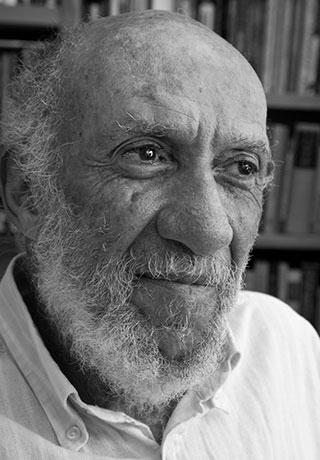

Professor Falk became an adviser to TFF when it was established in 1985.

Related Posts

Tony Robinson October 4, 2026 Violence is easy to recognise when someone is being beaten, shot or killed. It becomes more difficult when nobody is holding a weapon. Poverty, discrimination, exploitation and repression can restrict a human life just as effectively, although they do so in very different ways and with very different consequences. Simply adding more categories to an ever-growing list of forms of violence does not really solve the problem. The more interesting question is what all these different situations have in common and why it makes sense to describe them using the same word. Human beings do not simply react to what happens around them. They remember the past, imagine things that do not yet exist, make plans and undertake projects. Workers organise because they imagine different working conditions; people migrate because they imagine another life somewhere else; social movements emerge because people refuse to accept the...
It’s a matter of principles, courage, vision and pulling together – while the militarist world is falling apart… Peter Langille October 3, 2026 “Here, then, is the problem which we present to you, stark and dreadful and inescapable: Shall we put an end to the human race; or shall mankind renounce war?”The Bertrand Russell—Albert Einstein Manifesto, July 9, 1955 ⁕ The forecast for what’s ahead is worrisome. The sharp rise in armed conflicts over the past three years is adding to what was already the highest level in over seventy years. Genocides, which should be prevented are supported. A shared climate emergency that jeopardises survival is ignored. Diverse polls now suggest that people are war-weary, worried and interested in a more effective United Nations. And, there are viable policy options for a more secure world! Yet governments are doubling-down, betting on more war and investing heavily. If current trends persist,...
Johan Galtung 1930-2024October 2015 Published here on October 3, 2026 Let us focus on Civilization for conflict analysis and remedies. Major forms of disorder use violence; war is state organized violence. The most belligerent states are the United States of America and Israel, both with civilization roots. National Evangelism, the US Protestant Christian civilization– more national than evangelical–justifies US warfare as exceptionalism of a people chosen by God, with a manifest destiny to run the world. Orthodox Judaism justifies Israeli warfare to conquer and expand from Nile to Euphrates as a religious right and duty to the Eternal One. The third most belligerent country, the UK, no longer believes it is God-chosen but chosen by the USA; not quite the same but something. But the root cause of global disorder lies in the Occident–with Islam–seeing itself as the single, universal civilization valid for all at all times, all others being...

Recent Articles

Tony Robinson October 4, 2026 Violence is easy to recognise when someone is being beaten, shot or killed. It becomes more difficult when nobody is holding a weapon. Poverty, discrimination, exploitation and repression can restrict a human life just as effectively, although they do so in very different ways and with very different consequences. Simply adding more categories to an ever-growing list of forms of violence does not really solve the problem. The more interesting question is what all these different situations have in common and why it makes sense to describe them using the same word. Human beings do not simply react to what happens around them. They remember the past, imagine things that do not yet exist, make plans and undertake projects. Workers organise because they imagine different working conditions; people migrate because they imagine another life somewhere else; social movements emerge because people refuse to accept the...
It’s a matter of principles, courage, vision and pulling together – while the militarist world is falling apart… Peter Langille October 3, 2026 “Here, then, is the problem which we present to you, stark and dreadful and inescapable: Shall we put an end to the human race; or shall mankind renounce war?”The Bertrand Russell—Albert Einstein Manifesto, July 9, 1955 ⁕ The forecast for what’s ahead is worrisome. The sharp rise in armed conflicts over the past three years is adding to what was already the highest level in over seventy years. Genocides, which should be prevented are supported. A shared climate emergency that jeopardises survival is ignored. Diverse polls now suggest that people are war-weary, worried and interested in a more effective United Nations. And, there are viable policy options for a more secure world! Yet governments are doubling-down, betting on more war and investing heavily. If current trends persist,...
Johan Galtung 1930-2024October 2015 Published here on October 3, 2026 Let us focus on Civilization for conflict analysis and remedies. Major forms of disorder use violence; war is state organized violence. The most belligerent states are the United States of America and Israel, both with civilization roots. National Evangelism, the US Protestant Christian civilization– more national than evangelical–justifies US warfare as exceptionalism of a people chosen by God, with a manifest destiny to run the world. Orthodox Judaism justifies Israeli warfare to conquer and expand from Nile to Euphrates as a religious right and duty to the Eternal One. The third most belligerent country, the UK, no longer believes it is God-chosen but chosen by the USA; not quite the same but something. But the root cause of global disorder lies in the Occident–with Islam–seeing itself as the single, universal civilization valid for all at all times, all others being...

TFF on Substack

Discover and subscribe to more peace materials on TFF Substack

Most Popular

Tony Robinson October 4, 2026 Violence is easy to recognise when someone is being beaten, shot or killed. It becomes more difficult when nobody is holding a weapon. Poverty, discrimination, exploitation and repression can restrict a human life just as effectively, although they do so in very different ways and with very different consequences. Simply adding more categories to an ever-growing list of forms of violence does not really solve the problem. The more interesting question is what all these different situations have in common and why it makes sense to describe them using the same word. Human beings do not simply react to what happens around them. They remember the past, imagine things that do not yet exist, make plans and undertake projects. Workers organise because they imagine different working conditions; people migrate because they imagine another life somewhere else; social movements emerge because people refuse to accept the...
It’s a matter of principles, courage, vision and pulling together – while the militarist world is falling apart… Peter Langille October 3, 2026 “Here, then, is the problem which we present to you, stark and dreadful and inescapable: Shall we put an end to the human race; or shall mankind renounce war?”The Bertrand Russell—Albert Einstein Manifesto, July 9, 1955 ⁕ The forecast for what’s ahead is worrisome. The sharp rise in armed conflicts over the past three years is adding to what was already the highest level in over seventy years. Genocides, which should be prevented are supported. A shared climate emergency that jeopardises survival is ignored. Diverse polls now suggest that people are war-weary, worried and interested in a more effective United Nations. And, there are viable policy options for a more secure world! Yet governments are doubling-down, betting on more war and investing heavily. If current trends persist,...
Johan Galtung 1930-2024October 2015 Published here on October 3, 2026 Let us focus on Civilization for conflict analysis and remedies. Major forms of disorder use violence; war is state organized violence. The most belligerent states are the United States of America and Israel, both with civilization roots. National Evangelism, the US Protestant Christian civilization– more national than evangelical–justifies US warfare as exceptionalism of a people chosen by God, with a manifest destiny to run the world. Orthodox Judaism justifies Israeli warfare to conquer and expand from Nile to Euphrates as a religious right and duty to the Eternal One. The third most belligerent country, the UK, no longer believes it is God-chosen but chosen by the USA; not quite the same but something. But the root cause of global disorder lies in the Occident–with Islam–seeing itself as the single, universal civilization valid for all at all times, all others being...
Read More
Living-Peace-Sign-Budapest-copy
Tony Robinson October 4, 2026 Violence is easy to recognise when someone is being beaten, shot or killed. It becomes more difficult when nobody is holding a weapon. Poverty, discrimination, exploitation and repression can restrict a human life just as effectively, although they do so in very different ways and with very different consequences. Simply adding more categories to an ever-growing list of forms of violence does not really solve the problem. The more interesting question is what all these different situations have in common and why it makes sense to describe them using the same word. Human beings do not simply react to what happens around them. They remember the past, imagine things that do not yet exist, make plans and undertake projects. Workers organise because they imagine different working conditions; people migrate because they imagine another life somewhere else; social movements emerge because people refuse to accept the...
b54a1f10-8c65-4f0b-9dd5-4abc0a7d04cc_2659x2659
It’s a matter of principles, courage, vision and pulling together – while the militarist world is falling apart… Peter Langille October 3, 2026 “Here, then, is the problem which we present to you, stark and dreadful and inescapable: Shall we put an end to the human race; or shall mankind renounce war?”The Bertrand Russell—Albert Einstein Manifesto, July 9, 1955 ⁕ The forecast for what’s ahead is worrisome. The sharp rise in armed conflicts over the past three years is adding to what was already the highest level in over seventy years. Genocides, which should be prevented are supported. A shared climate emergency that jeopardises survival is ignored. Diverse polls now suggest that people are war-weary, worried and interested in a more effective United Nations. And, there are viable policy options for a more secure world! Yet governments are doubling-down, betting on more war and investing heavily. If current trends persist,...
010
Johan Galtung 1930-2024October 2015 Published here on October 3, 2026 Let us focus on Civilization for conflict analysis and remedies. Major forms of disorder use violence; war is state organized violence. The most belligerent states are the United States of America and Israel, both with civilization roots. National Evangelism, the US Protestant Christian civilization– more national than evangelical–justifies US warfare as exceptionalism of a people chosen by God, with a manifest destiny to run the world. Orthodox Judaism justifies Israeli warfare to conquer and expand from Nile to Euphrates as a religious right and duty to the Eternal One. The third most belligerent country, the UK, no longer believes it is God-chosen but chosen by the USA; not quite the same but something. But the root cause of global disorder lies in the Occident–with Islam–seeing itself as the single, universal civilization valid for all at all times, all others being...
Screenshot 2026-10-02 011738
Jan ObergPhD, director, The Transnational Foundation for Peace and Future Research, TFFLund, Sweden October 2, 2026 This is my full original manuscript. The Chinese Academy of Social Science, CASS, makes two publications out if it. 1. China’s Five-year plan emphasized the capabilities of basic research and original innovation. It is regarded as the goal of the future social development, which, as required, should be significantly enhanced. Can you comment on the importance of original innovation in research and academic study? I believe it is easier to define “original innovation” in the natural sciences than in social sciences. The breaking points of what constitutes something new, or innovative, are not quite as sharp in the latter. But in both fields it is about opening up something that was closed, unseen, unexplored before – making manifest what was earlier latent. Innovations come in many forms and shapes – naming something that was not...
arctic-circle-map
The agreement is catastrophic both because of what it says and what it doesn’t mention. It reduces further the major asset of security policies: Freedom of action. Jan Oberg TFF director September 25, 2026 A couple of hours before the agreement was signed on September 22, 2026, I published the following 13 hypotheses about what it would most likely contain on TFF Substack (in English). I was wrong on only the first point. Contrary to what Trump had written on his Truth Social platform, it does not appear to come into force immediately. In fact, it turned out to be worse than even I had anticipated. After these hypotheses now come a number of reflections in light of what the agreement actually contains, and does not contain, as well as the way in which it has generally been presented by major media outlets and by the public-service broadcaster DR. My...
girl-5894831_1280
Below are TFF-related media mentions, comments, videos and social media posts published elsewhere but not on this homepage. We happen to catch and list only a fraction. Regarding video comments and debates, we recommend that you go to the TFF Video Channel on Substack where many of them are reproduced. Jan Oberg is a contributor to China Daily – 52 million daily clicks – and Global Times, CGTN and CCTV (the national television), China Investment, Xinhua News Agency and several others. Articles and videos on these media very often multiply into countless Chinese (and Western media) that re-post them from these main media. Thanks to The China Academy, his analyses, interviews and comments are frequently posted on YouTube channels such as Thinkers Forum and Wave Media. These videos are often re-posted on Bilibili (China’s YouTube), the China Content Center on TikTok, and on the Chinese edition of TikTok, Douyin.com. This means reaching hundreds of millions of viewers worldwide over a year. While there are too many to catch on all these...




