

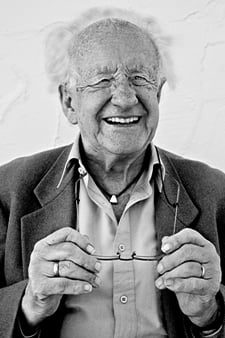
johangaltung

The linchpin of an empire is the link between two elites, one in the imperial center and the other in the peripheries. Symmetric alliances exist, but not with a superpower in the center.

The periphery elites do jobs for the center: killing, say, in Libya, Syria, when so wanted; securing the center economic interests in return for a substantial cut, serving as a bridgehead culturally–called americanization–delivering obedience against protection.

For this to work the elites have to believe in the empire. They put words up front–like democracy, human rights, rule of law–serving as human shields. However, the costs may be heavy, the benefits decreasing; they may have difficulties with restless students, working classes, other countries. Or worse: they may sense that the empire is not working, heading for decline and fall, and want to get out.

And even if this is not the case, the US elites – the policy officials – may suspect it to be and spy on empire-alliance leaders:

[Director of the NSA] General Keith Alexander: “NSA–was asked by /US/ policy officials to discover the “leadership intentions” of foreign countries. If you want to know leadership intentions, these were the issues” (english@other-news.info 01-11-13).

Clear from the beginning, beyond “threats to privacy”, “they all do it”, “it was technically feasible”, and similar smoke screens. Spying on intentions of enemy leaders–the “humint” (HUMan INTelligence) to complement capabilities–is an obvious part of the state system. But on allies?

Even more so. There are allies and allies; empires may decline. Foreign leaders may not offer full obedience in return for protection. Or may not accept US views as accurate, but have their own. They may even explore options. Their real intentions are crucial, and nobody can spy and supervise better than their own secret agencies – coordinated by CIA-NSA–and in their own language. Alexander said the obvious: “policy officials” (ambassadors, etc.) and alliance agencies spying together on policy-makers. The real power elite inside the elite.

Look at this through Angela Merkel’s eyes. She hated the DDR-Deutsche Demokratische Republik Stasi surveillance. But they were amateurs; these people are professionals. A decade went unnoticed, till Snowden. Imagine her rage, comparing.

And imagine the non-rage over the same in Spain: beyond Franco, yes, but Rajoy’s party (Partido Popular) is the – highly corrupt –successor to Franco.

Yet, as there is an inner circle of self-appointed elites there is also an inner circle of allies that presumably can be trusted, the “Five Eyes”: UK, USA, Canada, Australia, New Zealand; Anglo-America writ large. Who are they? A club of countries selected on a racist-culturalist basis. White and Anglo, killers of indigenous peoples all over: USA of Native Indians, Canada a little less of First Nations, Australia of Aborigines, New Zealand a little less of Māoris, UK all over – getting the others launched on that slippery slope of genocide and sociocide. They know this. They know that the world’s majority is the kind of people they killed and feel strongly they have to keep together, distrusting non-members. But the US spies on UK Labour and Parliament, USA-UK together on the other three.

Germany wants to join the club for another 5+l, like with the UNSC-UN Security Council veto powers. Race is no problem but culture is: they are not Anglo.

The more the empire declines the more expectation of more spying to identify the enemy within. How is the state of the empire? Not good:

Afghanistan: USA won bases and a pipeline and nothing else, and may lose both after 2014 withdrawal.

Iran gains more influence in Iraq, Syria and Lebanon, being more legitimate than Saudi-Qatar and G7 in general with their Islamism.

Iraq: USA won bases and access to oil and seems to lose both; and managed to do what Iran did not, turning Iraq into a Shia country.

Syria: dividing Syria into three, four, smaller parts seems not to work; at any rate the leading anti-Assad faction is Islamist Sunni.

Egypt: The USA misread the situation altogether, stranded in a choice between two evils they do not master.

Libya: One more misreading, not understanding how Western secular imperialism (Italy-UK-France-USA-Israel) ignited an Islamist (rather than Arab) and a Berber-Tuareg (rather than Arab) awakening.

Israel: spying on US elites, tail-wags-dog politics, more US anti-semitism than ever (watch YouTube), media increasingly critical of Israel; and Israel in the agony between a Jewish state and democracy, sooner or later forced to declare its Eastern border, faces a South African scenario, being declared a liability for Washington.

Now, how about the other force in the world, BRICS? Not bad:

Brazil’s president Roussef was the first to speak at the UN General Assembly with a devastating critique of the NSA spy program, calling for alternative Internet servers.

Russia: Putin may have put an end to the Syrian crisis as part of a general Middle East crisis – like Gorbachev put an end to the Cold War, not the US with perennial war and threat of war–calling for an end to weapons of mass destruction, including nuclear, in the region.

China: Hsinhua media agency called for general deamericanization and for an end to the dollar as “world reserve currency” in particular favoring a basket of currencies not of any single country’s currency.

“Foreign leaders” know this and would betray their own peoples were they not to explore options. The question is how, when. They may use NSA spying as pretext for withdrawal from the empire and cancel-postpone the “Trans-Atlantic Partnership”, TAP. NSA widens the gap.

Leibach’s book This Town makes it unlikely that the Washington politics-media conglomerate will come up with solutions to calamities that dramatic. Few regimes are.

Koht, Norwegian foreign minister, spent the night Germany invaded Norway with his mistress, and then rose to the occasion; Quisling, who took over, spent the last cabinet meeting discussing police uniforms, then surrendered to the police. One wonders what Washington DC will do with the double, triple, debacle.

Originally published here.

Related Posts

The agreement is catastrophic both because of what it says and what it doesn’t mention. It reduces further the major asset of security policies: Freedom of action. Jan Oberg TFF director September 25, 2026 A couple of hours before the agreement was signed on September 22, 2026, I published the following 13 hypotheses about what it would most likely contain on TFF Substack (in English). I was wrong on only the first point. Contrary to what Trump had written on his Truth Social platform, it does not appear to come into force immediately. In fact, it turned out to be worse than even I had anticipated. After these hypotheses now come a number of reflections in light of what the agreement actually contains, and does not contain, as well as the way in which it has generally been presented by major media outlets and by the public-service broadcaster DR. My...
Photos © TFF 2000 Read PressInfo 90 “Lift the Sanctions and Bring More Aid to Yugoslavia” See Pictures from Belgrade © TFF 2000 Please reprint, copy, archive, quote or re-post this item, but please retain the source.
By Jan ObergTFF co-founder and director February 11, 2026 PART 3 — ECONOMICS, TRADE & FINANCIAL SOVEREIGNTY A. Trade Measures & Market Signaling Economic pressure can be applied instantly and scaled without violence. Immediate Measures (within a week) Government boycott US goods and services  A very powerful signal which over time will be felt. Targeted tariffs on selected U.S. goods Symbolic but high-visibility sectors send a clear message. Suspend trade facilitation talks A peaceful pause that signals deep concern. Freeze U.S. participation in public procurement – military procurement in particular A nonviolent way to reduce influence. Competition law review of U.S. corporations A legal tool to scrutinise market dominance. Longer-Term Measures EU–Asia–Africa trade corridors Reducing reliance on U.S. markets. European supply chains for critical minerals Strategic autonomy in resource access. European Strategic Trade Authority Monitoring coercive practices globally. Euro-denominated commodity markets Weakening the dollar’s pricing monopoly. The EU must resume contacts and negotiations with Russia, focusing on energy cooperation To...

Recent Articles

Below are TFF-related media mentions, comments, videos and social media posts published elsewhere but not on this homepage. We happen to catch and list only a fraction. Regarding video comments and debates, we recommend that you go to the TFF Video Channel on Substack where many of them are reproduced. Jan Oberg is a contributor to China Daily – 52 million daily clicks – and Global Times, CGTN and CCTV (the national television), China Investment, Xinhua News Agency and several others. Articles and videos on these media very often multiply into countless Chinese (and Western media) that re-post them from these main media. Thanks to The China Academy, his analyses, interviews and comments are frequently posted on YouTube channels such as Thinkers Forum and Wave Media. These videos are often re-posted on Bilibili (China’s YouTube), the China Content Center on TikTok, and on the Chinese edition of TikTok, Douyin.com. This means reaching hundreds of millions of viewers worldwide over a year. While there are too many to catch on all these...
Jan Oberg TFF director October 13, 2026 According to Alfred Nobel’s will, the Nobel Peace Prize shall be awarded: ”to the person who has done the most or best to advance fellowship among nations, the abolition or reduction of standing armies, and the establishment and promotion of peace congresses.” Further down, he also expresses how the prize for the “champions of peace” shall be decided: “that for champions of peace by a committee of five persons to be selected by the Norwegian Storting. Alfred Nobel’s will is remarkably short and clear. But few seem to have read it. Nobel did not say that the committee itself should consist of members of parliament. He entrusted the Storting with appointing five persons. In principle, it could have selected diplomats, mediators, peace researchers, conflict-resolution specialists, or other individuals with recognised expertise in matters of peace from around the world. Instead, the Storting gradually...
The Quest for Humane Survival Richard Falk Professor emeritus, Princeton UniversityTFF Associate since 1986October 12, 2026 After decades of teaching and writing about international law in academic frameworks that were not institutionally situated within law school environments—at Princeton and the University of California, Santa Barbara—I found myself most receptive to the TWAIL outlook. It has been especially illuminating in clarifying the extent to which international law evolved as a dialogical critique of Europe’s efforts to legitimize its colonial undertakings. In particular, TWAIL has exposed how international law has functioned to legalize the subjugation of Third World peoples, securing conditions for exploitative investment and trade relations, the coercive enforcement of public debts, and an ideology of cultural superiority. TWAIL’s exposure of these economic legacies of colonialism has influenced my understanding of the history and development of international law, broadly conceived, as an ideological project of the Western sub-system of the world...

TFF on Substack

Discover and subscribe to more peace materials on TFF Substack

Most Popular

Below are TFF-related media mentions, comments, videos and social media posts published elsewhere but not on this homepage. We happen to catch and list only a fraction. Regarding video comments and debates, we recommend that you go to the TFF Video Channel on Substack where many of them are reproduced. Jan Oberg is a contributor to China Daily – 52 million daily clicks – and Global Times, CGTN and CCTV (the national television), China Investment, Xinhua News Agency and several others. Articles and videos on these media very often multiply into countless Chinese (and Western media) that re-post them from these main media. Thanks to The China Academy, his analyses, interviews and comments are frequently posted on YouTube channels such as Thinkers Forum and Wave Media. These videos are often re-posted on Bilibili (China’s YouTube), the China Content Center on TikTok, and on the Chinese edition of TikTok, Douyin.com. This means reaching hundreds of millions of viewers worldwide over a year. While there are too many to catch on all these...
Jan Oberg TFF director October 13, 2026 According to Alfred Nobel’s will, the Nobel Peace Prize shall be awarded: ”to the person who has done the most or best to advance fellowship among nations, the abolition or reduction of standing armies, and the establishment and promotion of peace congresses.” Further down, he also expresses how the prize for the “champions of peace” shall be decided: “that for champions of peace by a committee of five persons to be selected by the Norwegian Storting. Alfred Nobel’s will is remarkably short and clear. But few seem to have read it. Nobel did not say that the committee itself should consist of members of parliament. He entrusted the Storting with appointing five persons. In principle, it could have selected diplomats, mediators, peace researchers, conflict-resolution specialists, or other individuals with recognised expertise in matters of peace from around the world. Instead, the Storting gradually...
The Quest for Humane Survival Richard Falk Professor emeritus, Princeton UniversityTFF Associate since 1986October 12, 2026 After decades of teaching and writing about international law in academic frameworks that were not institutionally situated within law school environments—at Princeton and the University of California, Santa Barbara—I found myself most receptive to the TWAIL outlook. It has been especially illuminating in clarifying the extent to which international law evolved as a dialogical critique of Europe’s efforts to legitimize its colonial undertakings. In particular, TWAIL has exposed how international law has functioned to legalize the subjugation of Third World peoples, securing conditions for exploitative investment and trade relations, the coercive enforcement of public debts, and an ideology of cultural superiority. TWAIL’s exposure of these economic legacies of colonialism has influenced my understanding of the history and development of international law, broadly conceived, as an ideological project of the Western sub-system of the world...
Read More
girl-5894831_1280
Below are TFF-related media mentions, comments, videos and social media posts published elsewhere but not on this homepage. We happen to catch and list only a fraction. Regarding video comments and debates, we recommend that you go to the TFF Video Channel on Substack where many of them are reproduced. Jan Oberg is a contributor to China Daily – 52 million daily clicks – and Global Times, CGTN and CCTV (the national television), China Investment, Xinhua News Agency and several others. Articles and videos on these media very often multiply into countless Chinese (and Western media) that re-post them from these main media. Thanks to The China Academy, his analyses, interviews and comments are frequently posted on YouTube channels such as Thinkers Forum and Wave Media. These videos are often re-posted on Bilibili (China’s YouTube), the China Content Center on TikTok, and on the Chinese edition of TikTok, Douyin.com. This means reaching hundreds of millions of viewers worldwide over a year. While there are too many to catch on all these...
Nobel-Prize-Plaque
Jan Oberg TFF director October 13, 2026 According to Alfred Nobel’s will, the Nobel Peace Prize shall be awarded: ”to the person who has done the most or best to advance fellowship among nations, the abolition or reduction of standing armies, and the establishment and promotion of peace congresses.” Further down, he also expresses how the prize for the “champions of peace” shall be decided: “that for champions of peace by a committee of five persons to be selected by the Norwegian Storting. Alfred Nobel’s will is remarkably short and clear. But few seem to have read it. Nobel did not say that the committee itself should consist of members of parliament. He entrusted the Storting with appointing five persons. In principle, it could have selected diplomats, mediators, peace researchers, conflict-resolution specialists, or other individuals with recognised expertise in matters of peace from around the world. Instead, the Storting gradually...
law-419057_1280
The Quest for Humane Survival Richard Falk Professor emeritus, Princeton UniversityTFF Associate since 1986October 12, 2026 After decades of teaching and writing about international law in academic frameworks that were not institutionally situated within law school environments—at Princeton and the University of California, Santa Barbara—I found myself most receptive to the TWAIL outlook. It has been especially illuminating in clarifying the extent to which international law evolved as a dialogical critique of Europe’s efforts to legitimize its colonial undertakings. In particular, TWAIL has exposed how international law has functioned to legalize the subjugation of Third World peoples, securing conditions for exploitative investment and trade relations, the coercive enforcement of public debts, and an ideology of cultural superiority. TWAIL’s exposure of these economic legacies of colonialism has influenced my understanding of the history and development of international law, broadly conceived, as an ideological project of the Western sub-system of the world...
images-2
Advocates of nuclear disarmament are regularly dismissed by the champions of nuclear deterrence as naïve and unrealistic, utopian or even irresponsible. Yet this ‘doctrine’ of deterrence, regarded by France as the ‘cornerstone’ of its national security, is based on quasi-religious beliefs, a theory that cannot be proven, risky gambles and fragile assumptions. So much so that one might legitimately ask which side the ‘Care Bears’ are on. Marc FinaudVice-President of Initiatives for Nuclear Disarmament (IDN) October 9, 2026 This article was originally published on Pressenza When it comes to these things being treated as religious concepts, look here. Idealists and realists It was Hubert Védrine, François Mitterrand’s former Foreign Minister, who repeatedly coined the phrase: ‘Europeans are a sort of Care Bears who don’t realise they’re living in Jurassic Park’. He applies this reference to the cartoon for well-behaved children not only to what he regards as weakness or idealism...
8824b09f-33a5-43f9-9fd0-550f28cda24d_1536x1024
What the West Borrowed from Asia and What It Left Behind Jan Krikke October 8, 2026 The article was originally published here In the late 1960s, the musical Hair announced that the Age of Aquarius was dawning. Its opening anthem promised a transformation of human consciousness: an era of peace, harmony and understanding. Half a century later, a familiar echo of that promise is a meditation app offered by your employer. You can find it in the same list of benefits as the pension plan and the gym discount. How did a spiritual revolution become an employee benefit? The answer lies in the history of the movement known as New Age: where it came from, what it borrowed from Asia, and why the meaning of what it borrowed changed in the process. Two definitions will help. New Age is a loose label for a wide range of spiritual practices and...
Screenshot 2026-10-04 210142
Small and different + among the 10% most active + 9,000 texts + 150 Associates + 60 000 a day — and a stubborn belief that peace is smarter and must be secured by peaceful means. In 2026, the Transnational Foundation for Peace and Future Research (TFF) turns 40. On Monday, October 5, 2026, a new TFF homepage will go live — a new gateway to more than 9,000 articles, analyses, research papers and other contributions produced over four decades of independent peace research. But this is not simply a new website. For four decades, TFF has worked from a simple conviction: peace is smarter than militarism and can be brought about by peaceful means. This is not merely an aspiration. It is the principle expressed in the UN Charter and the Gandhian tradition that has guided our work from the beginning. TFF is a research-based, independent and people-financed foundation....





