Norway Revisited: Two Crises – An Oil Slick – And ?

johangaltung

Norway, on top of the UN indicator of good life for years, is now hit by two different crises; one for the less developed aspect and one for the more developed. Yet the citizens are protected by a massive oil slick, the biggest sovereign fund in the world, the Government Pension Fund for an aging population when oil dries out. For only 5 million inhabitants, $178,000/capita, and growing.

First crisis: Third World monoculture—oil/gas–hit by the world markets; from over $ 100 per barrel to under 50 recently. A crisis of over-supply and also of under-demand, less than expected: toxic fossil fuels do the same to the lungs of Planet Earth as smoking to the lungs of humans. Green alternatives strong in Germany, China, coming in USA.

A generation was needed for the smoking truth to penetrate, but smoking survived in the Third World – for some time. We will get the same for addiction to fossil fuels, from denial to abstention, with collective decisions. So far, most action is coal focused – including the Norwegian oil fund no longer investing – time is coming for oil.

With falling prices, demand insecure, and 1/3 of employment being oil-dependent, unemployment is rising. In February 4.1% of the about 2,730,000 total were unemployed, rising to 8% (Klassekampen, KK 12 May 15). The powerful oil branch claims it is all temporary, soon the prices will go up. Official optimism, hoping it will be self-fulfilling.

Second crisis: An enormous building boom (Oslo is Europe’s fastest expanding capital) with Norwegian households being among the world’s most indebted (KK, 18 May 15), and very little saving. Sounds familiar? Norwegians aim straight for top material standards, also for children, with very cheap money, trusting that the oil-driven boom will last.

The world currency market tells another story. The euro was like pegged to 8 Norwegian kroner, now 9.5 buying and 8.5 selling (Den norske Bank, 8 Aug 15); the huge difference says it all. The euro is falling relative to dollar – but soon the dollar may follow, with the world bond market falling (Financial Times, 6 Aug 15).

Nevertheless, Norway will cover this with unemployment insurance so far; and some will prefer that to working. They will add to the huge number (15%?) of employed on sickness leave (“the back is aching, doctor”) when the real problem may be conflicts at work and low ability to handle them. They are usually structural: the companies are too vertical; more horizontal cooperatives with sales points may be better. For employers a golden opportunity to get rid of “brysomme arbeidere“, “troublemakers”, making the situation worse: fewer voices speaking.

Add loneliness to that, a feeling of uselessness particularly among men (75% of suicides over 75 are by men, KK, 16 May 15). But also among youth: see the movie OSLO; emptiness, empty sex, drugs–suicide.

Add to this high immigration, mainly from Eastern Europe: 15.6% are either born abroad or (1/5) children of two parents born abroad. Norwegians see the country slipping away from them. Breivik killed 76 persons four years ago blaming it on the Labor Party’s opening for Muslims.

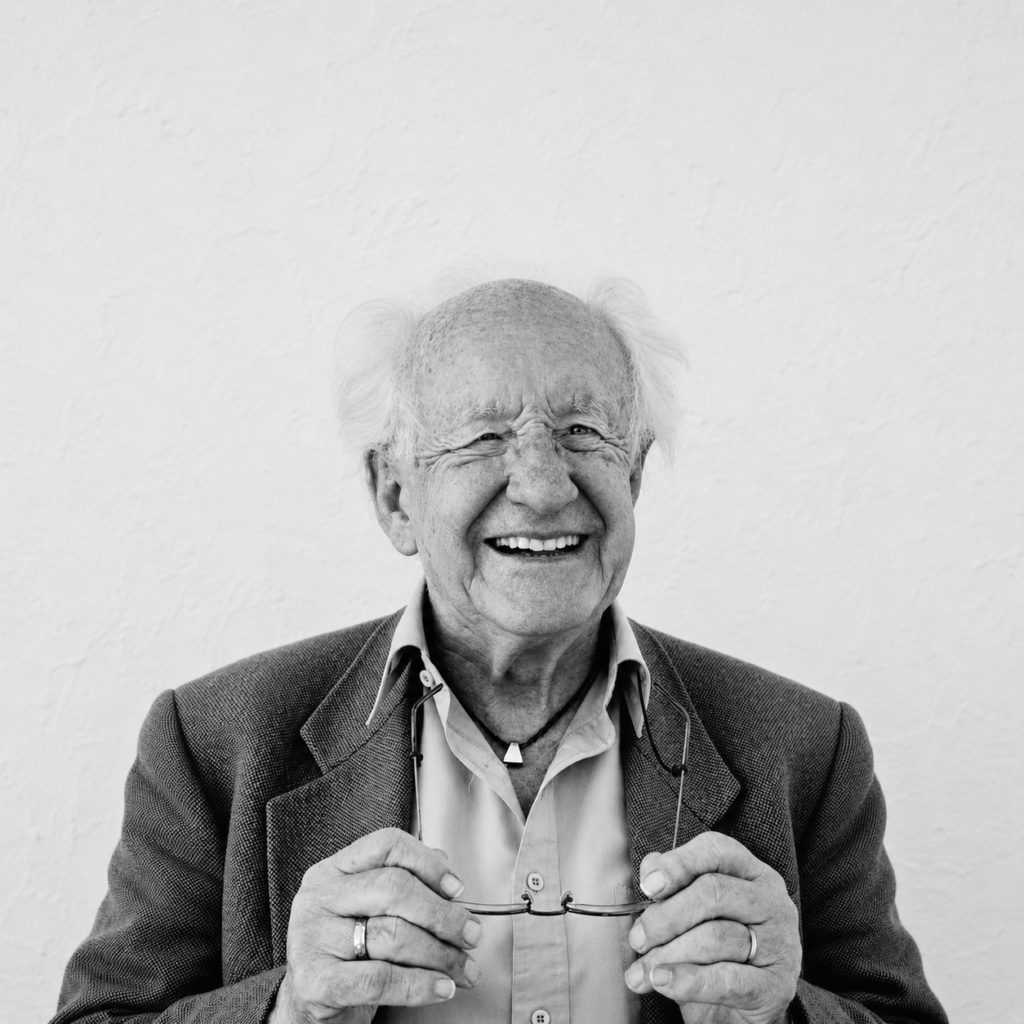
Add to this rising inequality, top wealth unheard of in Norwegian history, but no bottom misery like in Norway’s model, USA; not yet. As the brilliant Swedish sociologist Göran Thernbom, now at Cambridge, points out again and again: a new political alliance between lower and middle classes is needed to handle this. Elections in September 2017 may be won by the Labor Party; as solid middle class as US Democrats.

Moreover, tied to “the Nordic model” with state, employers and employees sharing a growing cake; but only .9%, equality growth being negative. A Third World economy benefiting few; stagnation or worse for the rest.

With the massive problems of atomie–destructuration, loneliness–and anomie–deculturation, meaninglessness–brought about by economists guided by The Bigger, The Better. Example: they want to cut the number of municipalities from 400 to 100. Yet the local community is a major source of care, togetherness, sharing, identity. More rational would be to increase the number to 4,000, average size 1,250 inhabitants, like Jondal in Hardanger. Small is beautiful. Some big is necessary, only build it horizontally, based more on local self-reliance than on Big.

Norway has 1,000 years of peace with Russia since Norwegian Vikings attacked; yet sanctions for problems badly understood. The economy is EU-oriented and the security US-oriented “when the Russians come”.

So, what are the solutions to all these problems? Ten points, some obvious:

• A complete economy, with agriculture, fishing, diverse industries, IT services, a quaternary sector of care for humans and nature;
• Decentralization, less polluting transportation, initiative on more hands, a less company-oriented, more cooperative-oriented economy;
• Increase interest rates to encourage saving and decrease debt;
• More progressive taxation, reintroduce inheritance tax;
• A switch from economic growth materialism to spiritual growth, benefiting from the excellent cultural offering of contemporary Norway;
• More Nordic Community, less German-dominated European Community;
• A non-paranoid, open, relation to Russia in Norway’s interest;
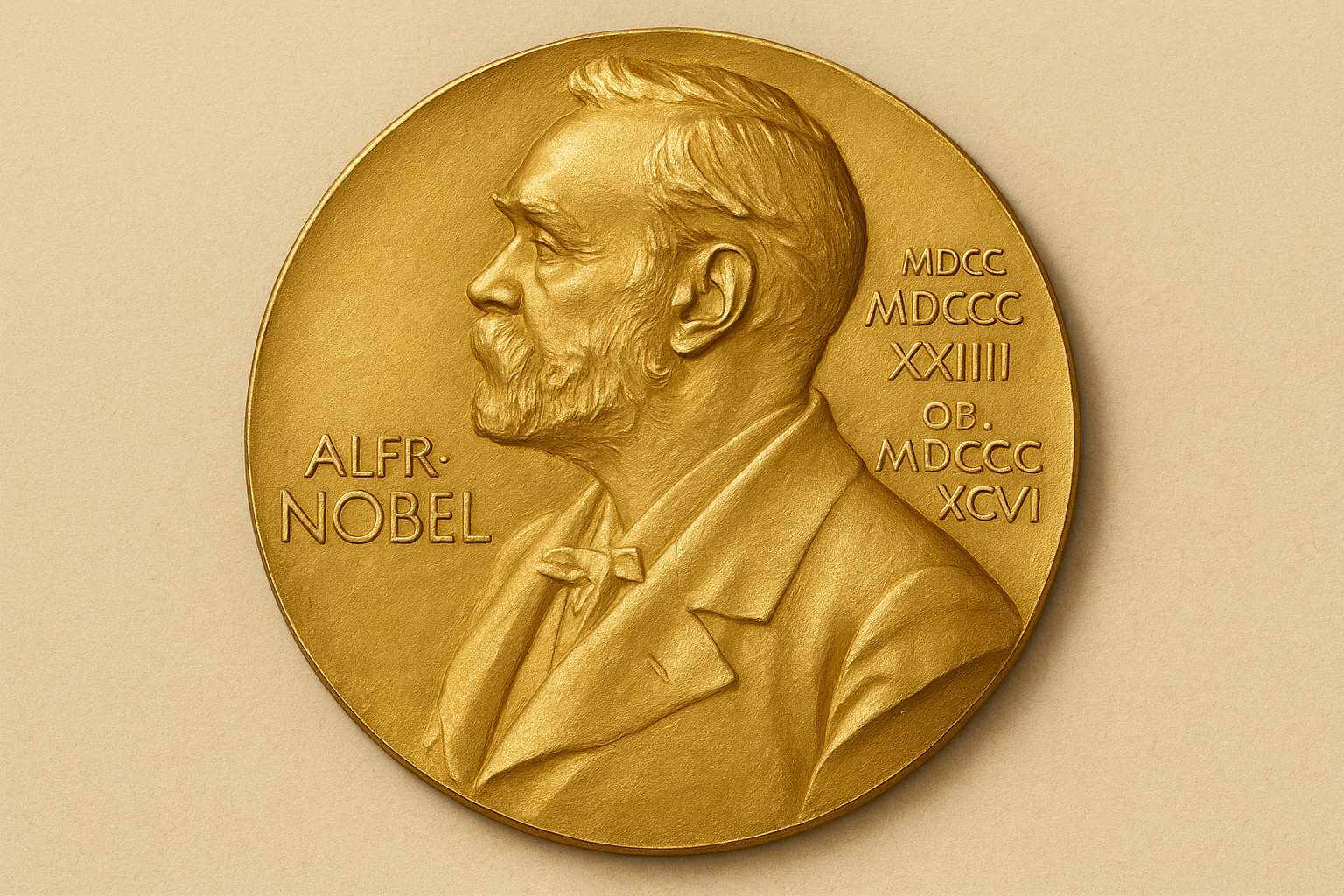
• More China, admitting the error of a Nobel Peace Prize to an advocate of colonialism and US warfare (a prize to the Charter unproblematic);
• Strengthening Norwegian banks with some Islamic banking;
• Use the silent media: let 1,000 dialogues flourish, less “experts” who produced these problems, more common people with local ideas.

Most of this will not happen. Americanization in a bad sense has eroded the elite’s mental capacity; and the US Embassy will be against.

The prognosis for Norway is dim. And the fund is not forever.

Yet, watch this incredibly beautiful country! Cross it, from Norway I in the West to Norway II, the Oslo part in the East, on E134 or [7], both nature gems as roads. Watch the inviting emptiness between the two, speaking different Norwegian, different histories.

Norway III is the North, relating well to Russia beating Napoleon in 1812 paving the way for our independence in 1814; beating Hitler in 1944 paved the way for our freedom in 1945.

Our friend, like the USA.

Originally published at Transcend Media Service here.
Related Posts

The agreement is catastrophic both because of what it says and what it doesn’t mention. It reduces further the major asset of security policies: Freedom of action. Jan Oberg TFF director September 25, 2026 A couple of hours before the agreement was signed on September 22, 2026, I published the following 13 hypotheses about what it would most likely contain on TFF Substack (in English). I was wrong on only the first point. Contrary to what Trump had written on his Truth Social platform, it does not appear to come into force immediately. In fact, it turned out to be worse than even I had anticipated. After these hypotheses now come a number of reflections in light of what the agreement actually contains, and does not contain, as well as the way in which it has generally been presented by major media outlets and by the public-service broadcaster DR. My...
A friendly quarrel while we agree that the US sanctions are a weapon of mass destruction and kill more people than wars do. And that we must talk much more about sanctions than we have so far. Jan Oberg, TFF director March 16, 2026 John Mearsheimer recently stated that U.S. sanctions murdered around 38 million people between 1971 and 2021 – see the video below. It is a dramatic figure, and it has spread quickly because it captures, in one sentence, the enormous human cost of modern sanctions. I share his concern about the destructive effects of economic coercion. But the specific number he cites — and the way he attributes it — deserves a friendly academic clarification. The figure comes from a 2023 Lancet Global Health article estimating the mortality effects of unilateral U.S. and EU sanctions over the past half‑century. This is the first point where Mearsheimer’s shorthand diverges from the text: the study...
Photos © TFF 2000 Read PressInfo 90 “Lift the Sanctions and Bring More Aid to Yugoslavia” See Pictures from Belgrade © TFF 2000 Please reprint, copy, archive, quote or re-post this item, but please retain the source.

Recent Articles

Tony Robinson October 4, 2026 Violence is easy to recognise when someone is being beaten, shot or killed. It becomes more difficult when nobody is holding a weapon. Poverty, discrimination, exploitation and repression can restrict a human life just as effectively, although they do so in very different ways and with very different consequences. Simply adding more categories to an ever-growing list of forms of violence does not really solve the problem. The more interesting question is what all these different situations have in common and why it makes sense to describe them using the same word. Human beings do not simply react to what happens around them. They remember the past, imagine things that do not yet exist, make plans and undertake projects. Workers organise because they imagine different working conditions; people migrate because they imagine another life somewhere else; social movements emerge because people refuse to accept the...
It’s a matter of principles, courage, vision and pulling together – while the militarist world is falling apart… Peter Langille October 3, 2026 “Here, then, is the problem which we present to you, stark and dreadful and inescapable: Shall we put an end to the human race; or shall mankind renounce war?”The Bertrand Russell—Albert Einstein Manifesto, July 9, 1955 ⁕ The forecast for what’s ahead is worrisome. The sharp rise in armed conflicts over the past three years is adding to what was already the highest level in over seventy years. Genocides, which should be prevented are supported. A shared climate emergency that jeopardises survival is ignored. Diverse polls now suggest that people are war-weary, worried and interested in a more effective United Nations. And, there are viable policy options for a more secure world! Yet governments are doubling-down, betting on more war and investing heavily. If current trends persist,...
Johan Galtung 1930-2024October 2015 Published here on October 3, 2026 Let us focus on Civilization for conflict analysis and remedies. Major forms of disorder use violence; war is state organized violence. The most belligerent states are the United States of America and Israel, both with civilization roots. National Evangelism, the US Protestant Christian civilization– more national than evangelical–justifies US warfare as exceptionalism of a people chosen by God, with a manifest destiny to run the world. Orthodox Judaism justifies Israeli warfare to conquer and expand from Nile to Euphrates as a religious right and duty to the Eternal One. The third most belligerent country, the UK, no longer believes it is God-chosen but chosen by the USA; not quite the same but something. But the root cause of global disorder lies in the Occident–with Islam–seeing itself as the single, universal civilization valid for all at all times, all others being...

TFF on Substack

Discover and subscribe to more peace materials on TFF Substack

Most Popular

Tony Robinson October 4, 2026 Violence is easy to recognise when someone is being beaten, shot or killed. It becomes more difficult when nobody is holding a weapon. Poverty, discrimination, exploitation and repression can restrict a human life just as effectively, although they do so in very different ways and with very different consequences. Simply adding more categories to an ever-growing list of forms of violence does not really solve the problem. The more interesting question is what all these different situations have in common and why it makes sense to describe them using the same word. Human beings do not simply react to what happens around them. They remember the past, imagine things that do not yet exist, make plans and undertake projects. Workers organise because they imagine different working conditions; people migrate because they imagine another life somewhere else; social movements emerge because people refuse to accept the...
It’s a matter of principles, courage, vision and pulling together – while the militarist world is falling apart… Peter Langille October 3, 2026 “Here, then, is the problem which we present to you, stark and dreadful and inescapable: Shall we put an end to the human race; or shall mankind renounce war?”The Bertrand Russell—Albert Einstein Manifesto, July 9, 1955 ⁕ The forecast for what’s ahead is worrisome. The sharp rise in armed conflicts over the past three years is adding to what was already the highest level in over seventy years. Genocides, which should be prevented are supported. A shared climate emergency that jeopardises survival is ignored. Diverse polls now suggest that people are war-weary, worried and interested in a more effective United Nations. And, there are viable policy options for a more secure world! Yet governments are doubling-down, betting on more war and investing heavily. If current trends persist,...
Johan Galtung 1930-2024October 2015 Published here on October 3, 2026 Let us focus on Civilization for conflict analysis and remedies. Major forms of disorder use violence; war is state organized violence. The most belligerent states are the United States of America and Israel, both with civilization roots. National Evangelism, the US Protestant Christian civilization– more national than evangelical–justifies US warfare as exceptionalism of a people chosen by God, with a manifest destiny to run the world. Orthodox Judaism justifies Israeli warfare to conquer and expand from Nile to Euphrates as a religious right and duty to the Eternal One. The third most belligerent country, the UK, no longer believes it is God-chosen but chosen by the USA; not quite the same but something. But the root cause of global disorder lies in the Occident–with Islam–seeing itself as the single, universal civilization valid for all at all times, all others being...
Read More
Living-Peace-Sign-Budapest-copy
Tony Robinson October 4, 2026 Violence is easy to recognise when someone is being beaten, shot or killed. It becomes more difficult when nobody is holding a weapon. Poverty, discrimination, exploitation and repression can restrict a human life just as effectively, although they do so in very different ways and with very different consequences. Simply adding more categories to an ever-growing list of forms of violence does not really solve the problem. The more interesting question is what all these different situations have in common and why it makes sense to describe them using the same word. Human beings do not simply react to what happens around them. They remember the past, imagine things that do not yet exist, make plans and undertake projects. Workers organise because they imagine different working conditions; people migrate because they imagine another life somewhere else; social movements emerge because people refuse to accept the...
b54a1f10-8c65-4f0b-9dd5-4abc0a7d04cc_2659x2659
It’s a matter of principles, courage, vision and pulling together – while the militarist world is falling apart… Peter Langille October 3, 2026 “Here, then, is the problem which we present to you, stark and dreadful and inescapable: Shall we put an end to the human race; or shall mankind renounce war?”The Bertrand Russell—Albert Einstein Manifesto, July 9, 1955 ⁕ The forecast for what’s ahead is worrisome. The sharp rise in armed conflicts over the past three years is adding to what was already the highest level in over seventy years. Genocides, which should be prevented are supported. A shared climate emergency that jeopardises survival is ignored. Diverse polls now suggest that people are war-weary, worried and interested in a more effective United Nations. And, there are viable policy options for a more secure world! Yet governments are doubling-down, betting on more war and investing heavily. If current trends persist,...
010
Johan Galtung 1930-2024October 2015 Published here on October 3, 2026 Let us focus on Civilization for conflict analysis and remedies. Major forms of disorder use violence; war is state organized violence. The most belligerent states are the United States of America and Israel, both with civilization roots. National Evangelism, the US Protestant Christian civilization– more national than evangelical–justifies US warfare as exceptionalism of a people chosen by God, with a manifest destiny to run the world. Orthodox Judaism justifies Israeli warfare to conquer and expand from Nile to Euphrates as a religious right and duty to the Eternal One. The third most belligerent country, the UK, no longer believes it is God-chosen but chosen by the USA; not quite the same but something. But the root cause of global disorder lies in the Occident–with Islam–seeing itself as the single, universal civilization valid for all at all times, all others being...
Screenshot 2026-10-02 011738
Jan ObergPhD, director, The Transnational Foundation for Peace and Future Research, TFFLund, Sweden October 2, 2026 This is my full original manuscript. The Chinese Academy of Social Science, CASS, makes two publications out if it. 1. China’s Five-year plan emphasized the capabilities of basic research and original innovation. It is regarded as the goal of the future social development, which, as required, should be significantly enhanced. Can you comment on the importance of original innovation in research and academic study? I believe it is easier to define “original innovation” in the natural sciences than in social sciences. The breaking points of what constitutes something new, or innovative, are not quite as sharp in the latter. But in both fields it is about opening up something that was closed, unseen, unexplored before – making manifest what was earlier latent. Innovations come in many forms and shapes – naming something that was not...
arctic-circle-map
The agreement is catastrophic both because of what it says and what it doesn’t mention. It reduces further the major asset of security policies: Freedom of action. Jan Oberg TFF director September 25, 2026 A couple of hours before the agreement was signed on September 22, 2026, I published the following 13 hypotheses about what it would most likely contain on TFF Substack (in English). I was wrong on only the first point. Contrary to what Trump had written on his Truth Social platform, it does not appear to come into force immediately. In fact, it turned out to be worse than even I had anticipated. After these hypotheses now come a number of reflections in light of what the agreement actually contains, and does not contain, as well as the way in which it has generally been presented by major media outlets and by the public-service broadcaster DR. My...
girl-5894831_1280
Below are TFF-related media mentions, comments, videos and social media posts published elsewhere but not on this homepage. We happen to catch and list only a fraction. Regarding video comments and debates, we recommend that you go to the TFF Video Channel on Substack where many of them are reproduced. Jan Oberg is a contributor to China Daily – 52 million daily clicks – and Global Times, CGTN and CCTV (the national television), China Investment, Xinhua News Agency and several others. Articles and videos on these media very often multiply into countless Chinese (and Western media) that re-post them from these main media. Thanks to The China Academy, his analyses, interviews and comments are frequently posted on YouTube channels such as Thinkers Forum and Wave Media. These videos are often re-posted on Bilibili (China’s YouTube), the China Content Center on TikTok, and on the Chinese edition of TikTok, Douyin.com. This means reaching hundreds of millions of viewers worldwide over a year. While there are too many to catch on all these...