Mrs Merkel should read the history of Hitler’s economy

/10/jonathanpower2.jpg”>
My family is in a bit of a crisis. My earnings are cut by 25%. Writers never did earn a lot and now we have this economic catastrophe. We’ve cut our expenditures severely.

This is what happens to families in financial trouble. Cut. Common sense, eh? But when it comes to our country being in trouble we have to be counter-intuitive. Then a country must spend more. It has to grow faster to produce the wealth that when taxed can pay down the deficit. As the world’s greatest economist, John Maynard Keynes, wrote: “The boom not the slump is the right time for austerity”.

The Germans and the European Union Commission continue to push countries to cut and squeeze. Yet despite the evidence that the patient is not recovering, Chancellor Angela Merkel of Germany seems determined not to allow the Euro-zone members to let up. (The British government is following the same counter-productive policy.)

President Barack Obama has taken a different tack. Keynesian to his finger tips, he has saved the American economy and now growth has returned. Unemployment is falling, housing starts are up and people are spending. He saved the banks from going bust. Also the big auto companies. He won passage of a new health act, “Obamacare”, that will ensure that most of the poor are taken care of.

If Obama had had his way he would have done more and the economy could be growing at double its recent speed. But the Republicans in Congress fought him very inch of the way. De facto Merkel allies, they set out to depress the American economy by a thousand cuts, convinced that only then would the deficit be reduced and the economy become more competitive.

Hitler would not have approved. Yes, Hitler, Mrs Merkel. Remember your German history. When he won power (democratically) the economy was in a deep mess with massive unemployment. By the time of the beginning of the Second World War Germany was the most successful big economy in the Western world. Hitler knew little economics but intuitively he was a Keynesian. He pumped up the economy, ordering the construction of the autobahns, investing in infrastructure, in universities, schools, scientific research and raising pensions and child allowances. He didn’t spend much on armaments because at that time he didn’t expect to go to war. The electorate ate out of his hand.

In the US President Franklin Roosevelt tried to do much the same, albeit on a smaller scale. The Great Depression had sunk the American economy. Tragically when President Herbert Hoover took over he reversed Roosevelt’s growth policies. Only the rich had something to spend.

The US was saved by the war and the re-armament that went with it, creating hundreds of thousands jobs. War, to Keynes’s disgust, proved his thesis.

Recently at a conference in Iceland attended by all the Nordic prime ministers I asked if another war was needed now to end Europe’s recession. The room laughed, but I think I made my point.

Everybody can’t cut their growth at the same time just as they can’t all devalue at the same time. Although it can make sense for one country to try and reduce its debt, if all the states in a currency union do the same simultaneously the result can only be contraction. If they all devalue at the same time no one gains extra competitiveness.

The Germans don’t see that they have got the relationship between spending and saving backwards. They think public frugality will promote private spending. But someone has to spend for others to save, or else the saver will have no income to hold on to.

As Martin Wolf, the Financial Times’ chief economic writer, has put it: “Is everybody supposed to run current account surpluses? If so with whom-Martians?”

The austerity believers point to the fiscal consolidations of the 1990s in a number of countries with small populations, Canada, Australia, Ireland and Denmark. All these countries cut their budgets and devalued, and growth went up. But overlooked is that they did it when Keynes said they should- when they were on an upswing. Their pruning also worked because they exported to larger states which were also growing.

The European Commission and the Germans point to Latvia which after some harsh cuts has emerged as Europe’s fastest growing economy- at 3.5% a year. However, one cannot construct economic theories out of the experience of a country that has a population of 2 million- less than Europe’s main cities. All along it has been an atypical economy, growing at 12% before the crash. Its unemployment remains high.

If nothing else Mrs Merkel must read the history of Hitler’s Germany.

Copyright: Jonathan Power
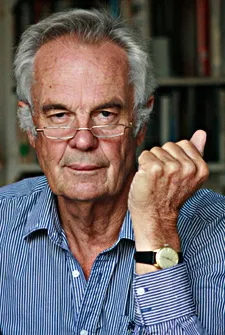
Foreign affairs columnist, film-maker and author

Related Posts

Photos © TFF 2000 Read PressInfo 90 “Lift the Sanctions and Bring More Aid to Yugoslavia” See Pictures from Belgrade © TFF 2000 Please reprint, copy, archive, quote or re-post this item, but please retain the source.
By Jan ObergTFF co-founder and director February 11, 2026 PART 3 — ECONOMICS, TRADE & FINANCIAL SOVEREIGNTY A. Trade Measures & Market Signaling Economic pressure can be applied instantly and scaled without violence. Immediate Measures (within a week) Government boycott US goods and services  A very powerful signal which over time will be felt. Targeted tariffs on selected U.S. goods Symbolic but high-visibility sectors send a clear message. Suspend trade facilitation talks A peaceful pause that signals deep concern. Freeze U.S. participation in public procurement – military procurement in particular A nonviolent way to reduce influence. Competition law review of U.S. corporations A legal tool to scrutinise market dominance. Longer-Term Measures EU–Asia–Africa trade corridors Reducing reliance on U.S. markets. European supply chains for critical minerals Strategic autonomy in resource access. European Strategic Trade Authority Monitoring coercive practices globally. Euro-denominated commodity markets Weakening the dollar’s pricing monopoly. The EU must resume contacts and negotiations with Russia, focusing on energy cooperation To...
Background and CV Dr Pascal Lottaz joined TFF as an Associate in May 2025. Very short bio Dr. Pascal Lottaz is an Associate Professor at Kyoto University’s Graduate School of Law and Hakubi Center (Japan). He researches neutrality in international relations and directs the network neutralitystudies.com. Short bio Dr. Pascal Lottaz is an Associate Professor at Kyoto University, where he investigates neutrality in international relations and directs the research network neutralitystudies.com. He received his MA and PhD from the National Graduate Institute for Policy Studies (GRIPS) and previously researched and taught at Waseda University and Temple University (Japan Campus). His recent books include Sweden, Japan, and the Long Second World War (Routledge, 2022), Neutral Beyond the Cold: Neutral States and the Post-Cold War International System (Lexington Books, 2022), and Notions of Neutralities (Lexington Books, 2019). He also wrote articles on “Neutrality Studies” for Oxford Encyclopedia and “The Politics and Diplomacy of Neutrality”...

Recent Articles

Tony Robinson October 4, 2026 Violence is easy to recognise when someone is being beaten, shot or killed. It becomes more difficult when nobody is holding a weapon. Poverty, discrimination, exploitation and repression can restrict a human life just as effectively, although they do so in very different ways and with very different consequences. Simply adding more categories to an ever-growing list of forms of violence does not really solve the problem. The more interesting question is what all these different situations have in common and why it makes sense to describe them using the same word. Human beings do not simply react to what happens around them. They remember the past, imagine things that do not yet exist, make plans and undertake projects. Workers organise because they imagine different working conditions; people migrate because they imagine another life somewhere else; social movements emerge because people refuse to accept the...
It’s a matter of principles, courage, vision and pulling together – while the militarist world is falling apart… Peter Langille October 3, 2026 “Here, then, is the problem which we present to you, stark and dreadful and inescapable: Shall we put an end to the human race; or shall mankind renounce war?”The Bertrand Russell—Albert Einstein Manifesto, July 9, 1955 ⁕ The forecast for what’s ahead is worrisome. The sharp rise in armed conflicts over the past three years is adding to what was already the highest level in over seventy years. Genocides, which should be prevented are supported. A shared climate emergency that jeopardises survival is ignored. Diverse polls now suggest that people are war-weary, worried and interested in a more effective United Nations. And, there are viable policy options for a more secure world! Yet governments are doubling-down, betting on more war and investing heavily. If current trends persist,...
Johan Galtung 1930-2024October 2015 Published here on October 3, 2026 Let us focus on Civilization for conflict analysis and remedies. Major forms of disorder use violence; war is state organized violence. The most belligerent states are the United States of America and Israel, both with civilization roots. National Evangelism, the US Protestant Christian civilization– more national than evangelical–justifies US warfare as exceptionalism of a people chosen by God, with a manifest destiny to run the world. Orthodox Judaism justifies Israeli warfare to conquer and expand from Nile to Euphrates as a religious right and duty to the Eternal One. The third most belligerent country, the UK, no longer believes it is God-chosen but chosen by the USA; not quite the same but something. But the root cause of global disorder lies in the Occident–with Islam–seeing itself as the single, universal civilization valid for all at all times, all others being...

TFF on Substack

Discover and subscribe to more peace materials on TFF Substack

Most Popular

Tony Robinson October 4, 2026 Violence is easy to recognise when someone is being beaten, shot or killed. It becomes more difficult when nobody is holding a weapon. Poverty, discrimination, exploitation and repression can restrict a human life just as effectively, although they do so in very different ways and with very different consequences. Simply adding more categories to an ever-growing list of forms of violence does not really solve the problem. The more interesting question is what all these different situations have in common and why it makes sense to describe them using the same word. Human beings do not simply react to what happens around them. They remember the past, imagine things that do not yet exist, make plans and undertake projects. Workers organise because they imagine different working conditions; people migrate because they imagine another life somewhere else; social movements emerge because people refuse to accept the...
It’s a matter of principles, courage, vision and pulling together – while the militarist world is falling apart… Peter Langille October 3, 2026 “Here, then, is the problem which we present to you, stark and dreadful and inescapable: Shall we put an end to the human race; or shall mankind renounce war?”The Bertrand Russell—Albert Einstein Manifesto, July 9, 1955 ⁕ The forecast for what’s ahead is worrisome. The sharp rise in armed conflicts over the past three years is adding to what was already the highest level in over seventy years. Genocides, which should be prevented are supported. A shared climate emergency that jeopardises survival is ignored. Diverse polls now suggest that people are war-weary, worried and interested in a more effective United Nations. And, there are viable policy options for a more secure world! Yet governments are doubling-down, betting on more war and investing heavily. If current trends persist,...
Johan Galtung 1930-2024October 2015 Published here on October 3, 2026 Let us focus on Civilization for conflict analysis and remedies. Major forms of disorder use violence; war is state organized violence. The most belligerent states are the United States of America and Israel, both with civilization roots. National Evangelism, the US Protestant Christian civilization– more national than evangelical–justifies US warfare as exceptionalism of a people chosen by God, with a manifest destiny to run the world. Orthodox Judaism justifies Israeli warfare to conquer and expand from Nile to Euphrates as a religious right and duty to the Eternal One. The third most belligerent country, the UK, no longer believes it is God-chosen but chosen by the USA; not quite the same but something. But the root cause of global disorder lies in the Occident–with Islam–seeing itself as the single, universal civilization valid for all at all times, all others being...
Read More
Living-Peace-Sign-Budapest-copy
Tony Robinson October 4, 2026 Violence is easy to recognise when someone is being beaten, shot or killed. It becomes more difficult when nobody is holding a weapon. Poverty, discrimination, exploitation and repression can restrict a human life just as effectively, although they do so in very different ways and with very different consequences. Simply adding more categories to an ever-growing list of forms of violence does not really solve the problem. The more interesting question is what all these different situations have in common and why it makes sense to describe them using the same word. Human beings do not simply react to what happens around them. They remember the past, imagine things that do not yet exist, make plans and undertake projects. Workers organise because they imagine different working conditions; people migrate because they imagine another life somewhere else; social movements emerge because people refuse to accept the...
b54a1f10-8c65-4f0b-9dd5-4abc0a7d04cc_2659x2659
It’s a matter of principles, courage, vision and pulling together – while the militarist world is falling apart… Peter Langille October 3, 2026 “Here, then, is the problem which we present to you, stark and dreadful and inescapable: Shall we put an end to the human race; or shall mankind renounce war?”The Bertrand Russell—Albert Einstein Manifesto, July 9, 1955 ⁕ The forecast for what’s ahead is worrisome. The sharp rise in armed conflicts over the past three years is adding to what was already the highest level in over seventy years. Genocides, which should be prevented are supported. A shared climate emergency that jeopardises survival is ignored. Diverse polls now suggest that people are war-weary, worried and interested in a more effective United Nations. And, there are viable policy options for a more secure world! Yet governments are doubling-down, betting on more war and investing heavily. If current trends persist,...
010
Johan Galtung 1930-2024October 2015 Published here on October 3, 2026 Let us focus on Civilization for conflict analysis and remedies. Major forms of disorder use violence; war is state organized violence. The most belligerent states are the United States of America and Israel, both with civilization roots. National Evangelism, the US Protestant Christian civilization– more national than evangelical–justifies US warfare as exceptionalism of a people chosen by God, with a manifest destiny to run the world. Orthodox Judaism justifies Israeli warfare to conquer and expand from Nile to Euphrates as a religious right and duty to the Eternal One. The third most belligerent country, the UK, no longer believes it is God-chosen but chosen by the USA; not quite the same but something. But the root cause of global disorder lies in the Occident–with Islam–seeing itself as the single, universal civilization valid for all at all times, all others being...
Screenshot 2026-10-02 011738
Jan ObergPhD, director, The Transnational Foundation for Peace and Future Research, TFFLund, Sweden October 2, 2026 This is my full original manuscript. The Chinese Academy of Social Science, CASS, makes two publications out if it. 1. China’s Five-year plan emphasized the capabilities of basic research and original innovation. It is regarded as the goal of the future social development, which, as required, should be significantly enhanced. Can you comment on the importance of original innovation in research and academic study? I believe it is easier to define “original innovation” in the natural sciences than in social sciences. The breaking points of what constitutes something new, or innovative, are not quite as sharp in the latter. But in both fields it is about opening up something that was closed, unseen, unexplored before – making manifest what was earlier latent. Innovations come in many forms and shapes – naming something that was not...
arctic-circle-map
The agreement is catastrophic both because of what it says and what it doesn’t mention. It reduces further the major asset of security policies: Freedom of action. Jan Oberg TFF director September 25, 2026 A couple of hours before the agreement was signed on September 22, 2026, I published the following 13 hypotheses about what it would most likely contain on TFF Substack (in English). I was wrong on only the first point. Contrary to what Trump had written on his Truth Social platform, it does not appear to come into force immediately. In fact, it turned out to be worse than even I had anticipated. After these hypotheses now come a number of reflections in light of what the agreement actually contains, and does not contain, as well as the way in which it has generally been presented by major media outlets and by the public-service broadcaster DR. My...
girl-5894831_1280
Below are TFF-related media mentions, comments, videos and social media posts published elsewhere but not on this homepage. We happen to catch and list only a fraction. Regarding video comments and debates, we recommend that you go to the TFF Video Channel on Substack where many of them are reproduced. Jan Oberg is a contributor to China Daily – 52 million daily clicks – and Global Times, CGTN and CCTV (the national television), China Investment, Xinhua News Agency and several others. Articles and videos on these media very often multiply into countless Chinese (and Western media) that re-post them from these main media. Thanks to The China Academy, his analyses, interviews and comments are frequently posted on YouTube channels such as Thinkers Forum and Wave Media. These videos are often re-posted on Bilibili (China’s YouTube), the China Content Center on TikTok, and on the Chinese edition of TikTok, Douyin.com. This means reaching hundreds of millions of viewers worldwide over a year. While there are too many to catch on all these...