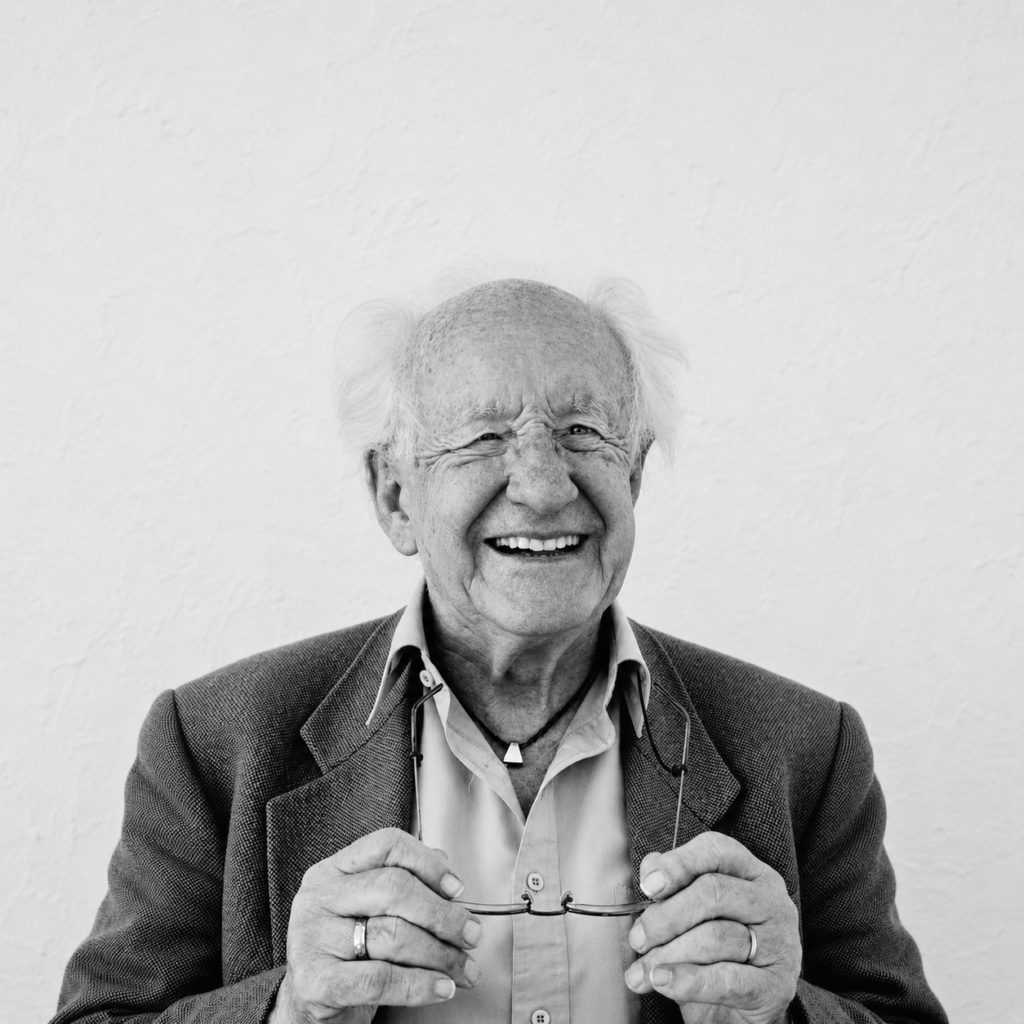
johangaltung

Toluca, Estado De México; Workshop on Drug Traffic and Violence

Background
300.000 kg of cocaine to USA via Mexico annually; 60% of marijuana producers had lived in misery, US$ 2/day; the drug traffic profit in Mexico was US$ 59 billion, 5% of GNP; 80% was spent on corruption; 125,000 were arrested since 2006; with an impunity of 98%.

Background
2,000 weapons from USA to Mexico daily; 5.5 million legal and 20 million illegal arms in Mexico; 100,000 have died in the “war on drugs” from 2006; 30,000 disappeared; 42+ journalists killed (more than in Afghanistan); 50,000 military troops involved by 2006, 130,000 by 2009, 50,000 in 2012, 32,000 in 2013; US$ 16.6 billion spent on insecurity and violence, 1.34% of GNP.

Conclusion
Due process of law and violence did not reduce drug traffic and violence; a drug-arms-violence-police-military complex had evolved. No general prevention, maybe not even individual prevention. A discourse-change took place: the perpetrators were seen less as evil and more as products of the domestic and regional contexts. The new approach was prevention by eliminating causes. The goal is reduction of drug traffic and of violence, and even if related they were seen as two different goals not necessarily served by the same means.

Question
Which are these means, causes to be handled?

* Policing borders? South: 956 kms, yes; North 3250 kms-not feasible.

* Eliminating arms inside? They can kill with knives, machetes.

* Economic growth? No, too much inequality and misery at the bottom.

* Economic distribution? Yes, if it lifts the bottom out of misery.

* More equality? Yes, if it makes dialogue and equal benefit easier.

* More conviviality? Yes, positive peace for security=negative peace.

* Identifying conflicts underlying violence: Yes, like fire to smoke.

* Learning how to solve conflict? Yes, at personal and social levels.

* Learning how to concile traumas? Yes, again at all levels.

Below are 50 ideas about how to do this, divided into 10 sectors with 5 proposals for each; some based on positive experiences abroad.

But take note of the discourse change. Talk violence, and you reap violence; talk causes, and you reap change. Violent and judicial approaches coming second to identify primary causes and do something has already had an impact. There is a modest optimism, well knowing it will take time. But these policies are also good in themselves, changing not only the atmosphere, but the reality of México.

Drug traffic has receded somewhat in the background, yielding to violence as the key problem. But, is it more drugs, or more traffic? Meaning, a long chain from production of cocaine in the white triangle in South America to consumption in the United States, with many links selling-and-buying with commissions charged? If so, could the chain–basic to an economic system with “middlemen”–be the problem? If not drugs, serving women traffic, children traffic, kidney traffic, treating human beings and lives as commodities to be traded? There is much money involved and much to be gained by killing the last seller.

To reduce the traffic the whole chain must be broken up, from beginning to end. And that brings us to the old problem: the countries offering supply, distribution, demand and consumption must all do their parts. Problem: we know nothing about what happens after the drugs pass into the USA, not how much is consumed and how much is buying-and-selling drugs going down the drain when the price has become too high. We do not even know who the dealers are except that many blacks fill US world record prisons accused of drug trade.

USA has to cooperate, making the US chain transparent, removing causes of consumption–comforting losers in a top competitive society? the lonely? filling a spiritual vacuum?–identify causes, do something. Does legalizing marijuana help? How about alcohol, tobacco? An annual report, please, like demanded of producer and distributor countries.

I. México federal level

1. COMNAPAZ, National Commission for Peace=Security + Conviviality

2. Organize bilateral dialogues, 32 entities, for mutual learning

3. Due process of law, publish names of murderers, outlaw arms

4. Dialogue with USA, CELAC, OAS; close borders to drugs and arms

5. Dialogue with China on Two Civilizations; U Yichang-U Querétaro

II. States + DF–32 entities–level

6. Organize dialogues among municipalities; for mutual learning

7. Lift up the poorest; credit to basic needs work by the most needy

8. Identify the most peaceful municipalities; prizes, investment

9. Establish zones of peace of neighboring peaceful municipalities

10. Establish an expanding archipelago of zones of peace in México

III. Municipalities–2,400+–level

11. Lift up the poorest families; subsidize basic needs, whole family

12. Have friend networks and social workers assist the most lonely

13. Have fiestas for conviviality; public transportation free

14. Have centers for trauma conciliation and conflict solution

15. Judicial mediation free for family-neighbor conflicts, etc.

IV. Peace Culture in general, against cultural violence

16. Dialogue, mediation, constructive-concrete-creative, 3C, search

17 Equity: cooperation for mutual and equal benefit

18. Empathy: understanding own and others’ world views and goals

19. Conciliation for Traumas, from past violence; 3 stages

20. Solution for Conflicts, Incompatible Goals; 2 goals->5 outcomes

V. Peace Structure in general, against structural violence

21. Reduce inequality lifting the bottom up to dignity and dialogue

22. Make negative relations neutral and neutral relations positive

23. Social growth: denser webs of positive relations at all levels

24. Link isolates to the rest and peripheries to each other

25. Peace Business attentive to side-effects for equitable relations

VI. Public space

26. Make it beautiful, accessible, affordable, safe

27. Make it multi-cultural in decoration and food served

28. Remove monuments celebrating belligerence

29. Introduce art celebrating love, care, solidarity

30. Un-uniformed karate+ guards for intervention when needed

VII. Media

31. Peace Journalism also focused on underlying conflicts

32. Focus on suffering and acceptable solutions to all sides

33. Serve a culture of solution- rather than victory-orientation

34. Peace Press-Radio-TV multi-angle, more positive news, solutions

35. Generous prizes annually for the best peace media, journalists

VIII. Schools

36. Peace Education covering all 50 points on this list and more

37. Involve students-teachers-parents-administrators; whole school

38. “Bully, what you did is unacceptable, but why did you do it?”

39. Two hours weekly for conflict work: goals, legitimate?, solution

40. At school problems may be structural, not in “difficult persons”

IX. Families

41. Prepare husbands for female emancipation as inevitable

42. Prepare both for parity mutual-equal-benefit in love, sex, work

43. Prepare parents for early children emancipation as inevitable

44. Promote internal family democracy for conflict work, solutions

45. Celebrate parity models for mutuality, emotional resonance, love

X. Work and daily life

46. At work problems may be structural, not in “difficult persons”

47. For peace at work, try more cooperative, less company, structure

48. Identify something good in all, relate to it; be friendly, smile

49. Compete with yourself rather than with others; self-improvement

50. Celebrate life as sacred, normalize peace, marginalize violence

First published at Transcend Media Service here.
Related Posts

Tony Robinson October 4, 2026 Violence is easy to recognise when someone is being beaten, shot or killed. It becomes more difficult when nobody is holding a weapon. Poverty, discrimination, exploitation and repression can restrict a human life just as effectively, although they do so in very different ways and with very different consequences. Simply adding more categories to an ever-growing list of forms of violence does not really solve the problem. The more interesting question is what all these different situations have in common and why it makes sense to describe them using the same word. Human beings do not simply react to what happens around them. They remember the past, imagine things that do not yet exist, make plans and undertake projects. Workers organise because they imagine different working conditions; people migrate because they imagine another life somewhere else; social movements emerge because people refuse to accept the...
It’s a matter of principles, courage, vision and pulling together – while the militarist world is falling apart… Peter Langille October 3, 2026 “Here, then, is the problem which we present to you, stark and dreadful and inescapable: Shall we put an end to the human race; or shall mankind renounce war?”The Bertrand Russell—Albert Einstein Manifesto, July 9, 1955 ⁕ The forecast for what’s ahead is worrisome. The sharp rise in armed conflicts over the past three years is adding to what was already the highest level in over seventy years. Genocides, which should be prevented are supported. A shared climate emergency that jeopardises survival is ignored. Diverse polls now suggest that people are war-weary, worried and interested in a more effective United Nations. And, there are viable policy options for a more secure world! Yet governments are doubling-down, betting on more war and investing heavily. If current trends persist,...
Johan Galtung 1930-2024October 2015 Published here on October 3, 2026 Let us focus on Civilization for conflict analysis and remedies. Major forms of disorder use violence; war is state organized violence. The most belligerent states are the United States of America and Israel, both with civilization roots. National Evangelism, the US Protestant Christian civilization– more national than evangelical–justifies US warfare as exceptionalism of a people chosen by God, with a manifest destiny to run the world. Orthodox Judaism justifies Israeli warfare to conquer and expand from Nile to Euphrates as a religious right and duty to the Eternal One. The third most belligerent country, the UK, no longer believes it is God-chosen but chosen by the USA; not quite the same but something. But the root cause of global disorder lies in the Occident–with Islam–seeing itself as the single, universal civilization valid for all at all times, all others being...

Recent Articles

Tony Robinson October 4, 2026 Violence is easy to recognise when someone is being beaten, shot or killed. It becomes more difficult when nobody is holding a weapon. Poverty, discrimination, exploitation and repression can restrict a human life just as effectively, although they do so in very different ways and with very different consequences. Simply adding more categories to an ever-growing list of forms of violence does not really solve the problem. The more interesting question is what all these different situations have in common and why it makes sense to describe them using the same word. Human beings do not simply react to what happens around them. They remember the past, imagine things that do not yet exist, make plans and undertake projects. Workers organise because they imagine different working conditions; people migrate because they imagine another life somewhere else; social movements emerge because people refuse to accept the...
It’s a matter of principles, courage, vision and pulling together – while the militarist world is falling apart… Peter Langille October 3, 2026 “Here, then, is the problem which we present to you, stark and dreadful and inescapable: Shall we put an end to the human race; or shall mankind renounce war?”The Bertrand Russell—Albert Einstein Manifesto, July 9, 1955 ⁕ The forecast for what’s ahead is worrisome. The sharp rise in armed conflicts over the past three years is adding to what was already the highest level in over seventy years. Genocides, which should be prevented are supported. A shared climate emergency that jeopardises survival is ignored. Diverse polls now suggest that people are war-weary, worried and interested in a more effective United Nations. And, there are viable policy options for a more secure world! Yet governments are doubling-down, betting on more war and investing heavily. If current trends persist,...
Johan Galtung 1930-2024October 2015 Published here on October 3, 2026 Let us focus on Civilization for conflict analysis and remedies. Major forms of disorder use violence; war is state organized violence. The most belligerent states are the United States of America and Israel, both with civilization roots. National Evangelism, the US Protestant Christian civilization– more national than evangelical–justifies US warfare as exceptionalism of a people chosen by God, with a manifest destiny to run the world. Orthodox Judaism justifies Israeli warfare to conquer and expand from Nile to Euphrates as a religious right and duty to the Eternal One. The third most belligerent country, the UK, no longer believes it is God-chosen but chosen by the USA; not quite the same but something. But the root cause of global disorder lies in the Occident–with Islam–seeing itself as the single, universal civilization valid for all at all times, all others being...

TFF on Substack

Discover and subscribe to more peace materials on TFF Substack

Most Popular

Tony Robinson October 4, 2026 Violence is easy to recognise when someone is being beaten, shot or killed. It becomes more difficult when nobody is holding a weapon. Poverty, discrimination, exploitation and repression can restrict a human life just as effectively, although they do so in very different ways and with very different consequences. Simply adding more categories to an ever-growing list of forms of violence does not really solve the problem. The more interesting question is what all these different situations have in common and why it makes sense to describe them using the same word. Human beings do not simply react to what happens around them. They remember the past, imagine things that do not yet exist, make plans and undertake projects. Workers organise because they imagine different working conditions; people migrate because they imagine another life somewhere else; social movements emerge because people refuse to accept the...
It’s a matter of principles, courage, vision and pulling together – while the militarist world is falling apart… Peter Langille October 3, 2026 “Here, then, is the problem which we present to you, stark and dreadful and inescapable: Shall we put an end to the human race; or shall mankind renounce war?”The Bertrand Russell—Albert Einstein Manifesto, July 9, 1955 ⁕ The forecast for what’s ahead is worrisome. The sharp rise in armed conflicts over the past three years is adding to what was already the highest level in over seventy years. Genocides, which should be prevented are supported. A shared climate emergency that jeopardises survival is ignored. Diverse polls now suggest that people are war-weary, worried and interested in a more effective United Nations. And, there are viable policy options for a more secure world! Yet governments are doubling-down, betting on more war and investing heavily. If current trends persist,...
Johan Galtung 1930-2024October 2015 Published here on October 3, 2026 Let us focus on Civilization for conflict analysis and remedies. Major forms of disorder use violence; war is state organized violence. The most belligerent states are the United States of America and Israel, both with civilization roots. National Evangelism, the US Protestant Christian civilization– more national than evangelical–justifies US warfare as exceptionalism of a people chosen by God, with a manifest destiny to run the world. Orthodox Judaism justifies Israeli warfare to conquer and expand from Nile to Euphrates as a religious right and duty to the Eternal One. The third most belligerent country, the UK, no longer believes it is God-chosen but chosen by the USA; not quite the same but something. But the root cause of global disorder lies in the Occident–with Islam–seeing itself as the single, universal civilization valid for all at all times, all others being...
Read More
Living-Peace-Sign-Budapest-copy
Tony Robinson October 4, 2026 Violence is easy to recognise when someone is being beaten, shot or killed. It becomes more difficult when nobody is holding a weapon. Poverty, discrimination, exploitation and repression can restrict a human life just as effectively, although they do so in very different ways and with very different consequences. Simply adding more categories to an ever-growing list of forms of violence does not really solve the problem. The more interesting question is what all these different situations have in common and why it makes sense to describe them using the same word. Human beings do not simply react to what happens around them. They remember the past, imagine things that do not yet exist, make plans and undertake projects. Workers organise because they imagine different working conditions; people migrate because they imagine another life somewhere else; social movements emerge because people refuse to accept the...
b54a1f10-8c65-4f0b-9dd5-4abc0a7d04cc_2659x2659
It’s a matter of principles, courage, vision and pulling together – while the militarist world is falling apart… Peter Langille October 3, 2026 “Here, then, is the problem which we present to you, stark and dreadful and inescapable: Shall we put an end to the human race; or shall mankind renounce war?”The Bertrand Russell—Albert Einstein Manifesto, July 9, 1955 ⁕ The forecast for what’s ahead is worrisome. The sharp rise in armed conflicts over the past three years is adding to what was already the highest level in over seventy years. Genocides, which should be prevented are supported. A shared climate emergency that jeopardises survival is ignored. Diverse polls now suggest that people are war-weary, worried and interested in a more effective United Nations. And, there are viable policy options for a more secure world! Yet governments are doubling-down, betting on more war and investing heavily. If current trends persist,...
010
Johan Galtung 1930-2024October 2015 Published here on October 3, 2026 Let us focus on Civilization for conflict analysis and remedies. Major forms of disorder use violence; war is state organized violence. The most belligerent states are the United States of America and Israel, both with civilization roots. National Evangelism, the US Protestant Christian civilization– more national than evangelical–justifies US warfare as exceptionalism of a people chosen by God, with a manifest destiny to run the world. Orthodox Judaism justifies Israeli warfare to conquer and expand from Nile to Euphrates as a religious right and duty to the Eternal One. The third most belligerent country, the UK, no longer believes it is God-chosen but chosen by the USA; not quite the same but something. But the root cause of global disorder lies in the Occident–with Islam–seeing itself as the single, universal civilization valid for all at all times, all others being...
Screenshot 2026-10-02 011738
Jan ObergPhD, director, The Transnational Foundation for Peace and Future Research, TFFLund, Sweden October 2, 2026 This is my full original manuscript. The Chinese Academy of Social Science, CASS, makes two publications out if it. 1. China’s Five-year plan emphasized the capabilities of basic research and original innovation. It is regarded as the goal of the future social development, which, as required, should be significantly enhanced. Can you comment on the importance of original innovation in research and academic study? I believe it is easier to define “original innovation” in the natural sciences than in social sciences. The breaking points of what constitutes something new, or innovative, are not quite as sharp in the latter. But in both fields it is about opening up something that was closed, unseen, unexplored before – making manifest what was earlier latent. Innovations come in many forms and shapes – naming something that was not...
arctic-circle-map
The agreement is catastrophic both because of what it says and what it doesn’t mention. It reduces further the major asset of security policies: Freedom of action. Jan Oberg TFF director September 25, 2026 A couple of hours before the agreement was signed on September 22, 2026, I published the following 13 hypotheses about what it would most likely contain on TFF Substack (in English). I was wrong on only the first point. Contrary to what Trump had written on his Truth Social platform, it does not appear to come into force immediately. In fact, it turned out to be worse than even I had anticipated. After these hypotheses now come a number of reflections in light of what the agreement actually contains, and does not contain, as well as the way in which it has generally been presented by major media outlets and by the public-service broadcaster DR. My...
girl-5894831_1280
Below are TFF-related media mentions, comments, videos and social media posts published elsewhere but not on this homepage. We happen to catch and list only a fraction. Regarding video comments and debates, we recommend that you go to the TFF Video Channel on Substack where many of them are reproduced. Jan Oberg is a contributor to China Daily – 52 million daily clicks – and Global Times, CGTN and CCTV (the national television), China Investment, Xinhua News Agency and several others. Articles and videos on these media very often multiply into countless Chinese (and Western media) that re-post them from these main media. Thanks to The China Academy, his analyses, interviews and comments are frequently posted on YouTube channels such as Thinkers Forum and Wave Media. These videos are often re-posted on Bilibili (China’s YouTube), the China Content Center on TikTok, and on the Chinese edition of TikTok, Douyin.com. This means reaching hundreds of millions of viewers worldwide over a year. While there are too many to catch on all these...