
Malaysian Territories: Security and Sovereignty

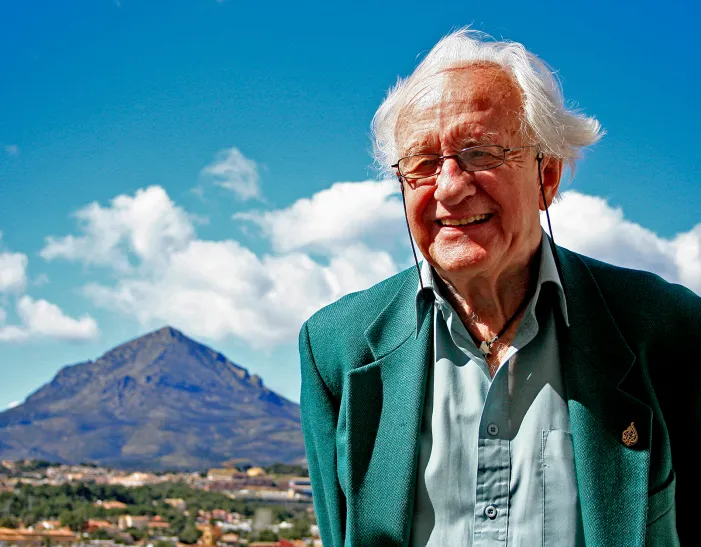
johangaltung

Kuala LumpurMalaysia has recently experienced maximum insecurity for two extra-territorial sovereign territories: Malaysian Airlines flights MH370 to Beijing and MH17 from Amsterdam. Flights are subject to air traffic rules, but sovereignty was deeply insulted for MH17–possibly also for MH370–and so was the security of the close to 600 on board: dead, possibly killed. The finding so far is that MH17 was hit by “numerous high energy objects”, which–looking at the photos of the cabin wall–aka “machine gun fire”; rather than “hit by a BUK rocket”. MH370: a race to locate the wreckage, by submarines, surface vessels; between China to find, and Australia to destroy, any evidence of crimes?

Intentional destruction of planes entails identification of the perpetrators whoever they are; arraigning them into court and if found guilty punishing them for mass murder. Taking place in international space both should be international, like the International Civil Aviation Organization and the ICC-International Criminal Court. For MH17 Malaysia used Netherlands for the investigation and may prefer Malaysia for the adjudication; two unfortunate decisions. We are dealing with one, possibly two, cases of aggression on civilian planes, themselves incapable of aggression; hence no case for self-defense. The cases are clearly criminal.

So much for space. Conventional borders are on land, sea (EEZ-Exclusive Economic Zone aka Economic Exclusion Zone, between EEZs) and in the air; traditionally defended by land, sea, air military forces against insults by other states, and by police for insults by individuals such as smuggling, drugs, kidnapping, illegal immigration and fishing. The borders are territorial, and the military is focused on national territory. Check out: are there problems anywhere, even conflicts, disputed claims? How will they evolve? Diagnosis, prognosis, and if needed, therapy; standard peace research approaches.

Peninsular Malaysia borders on Thailand to the north and across narrow straits on Singapore and Indonesia to the south. Illegal crossings occur in the south but represent no serious threat.

The border to Thailand, however, is problematic, with the three southern provinces of Thailand being 85% Muslim-Malay. Together with the northern province of Malaysia, Kelantan, they were the Pattani Sultanate till the conquest by Thailand in 1785. The Thai rule was then sealed by the English in the Anglo-Siamese treaty of 1909.

Colonial, not sustainable. The Thai military will not solve this “within one year”. Prognosis: from bad to worse. From the reasons for detaching the three provinces from Thailand, however, it does not follow that they belong to Malay-Muslim Malaysia. That is for the people to decide; and they may opt for an independent Pattani Darussalam. Better than continued terrorism and Thai state terrorism.

Singapore. A guess, a prognosis: within 20-25 years, reunited with Malaysia. Much is changing. Malaysia is rich, getting richer; Singapore is competing with other city-states in finance economy and has no land base. Reunion would expose Malaysia to the Chinese Penang-Singapore pincer, but by that time Malaysia may have become better integrated.

Eastern Malaysia. The Malaysia-Indonesia Sarawak-Sabah border is drawn by colonial powers, similar to Africa. They might be made irrelevant rather than changed, with some shared territory and open borders, in a Malaysian-Indonesian Community, MIC; modeled on the 1950 French-German beginning of the European Community, policing what should be policed. Much of the same can be said about the Sabah-Philippine relation with two island bridges; once an archipelago of sultanates from Pattani-Aceh via islands to Mindanao. That archipelago could be given structural presence within an integrating community of states.

Disputed sea territory: Mahathir Mohammed showed the way with the joint Malaysia-Thai zone, and 50-50 sharing of ocean (floor) revenue.

Mediation-negotiation-creativity; by ASEAN-Association of Southeast Asian Nations, with 10 countries: 3 Muslim, 5 Buddhist, 1 Catholic, 1 Chinese; 2 sultanates, 2 kingdoms, 6 republics–a range of human experience–and no debilitating veto power.

From the sea and the air: The real threats to Malaysia are two big powers, USA and China, which might invade Malaysia to preempt the other. Like the war between England and Japan over Malaysia in 1941-45 or between England and Germany over little Norway in 1940. How to handle that?

Symmetrically. Good relations with both. Military assets like ports, airports: neither to one nor to the other; any asymmetry can be seized upon by the other, as mentioned. Preferably both-and; give them a joint base, a port for cooperating in supervising the old silk road from Eastern China to Eastern Africa, keeping it open, pirate-free.

Internal insecurity. Basic faultlines: nation and class, both in Malaysia. A thin European-Christian layer; over a political Malay-Muslim Sultan federation with some democracy (a major threat is TPP-Trans-Pacific Partnership) and Chinese economic dominance; on top of a Tamil-Hindu underclass; and all four on top of the Orang Asli-Naturists. Positive discrimination of the Bumiputera, Malays, economically was a success–no Indonesian 1965-6 disaster but has now gone too far with Malay political dominance and islamization. Malaysia could integrate all, the Portuguese-Dutch-English, Malay-Muslim, Chinese, Tamil-Hindu, indigenous into a cultural pentagon reaching out in all directions and become Asia’s Switzerland.

The Malaysian Army. Is it needed? There are 26 countries without armies, and none of them were ever attacked. Armies are there to show by fight that might is right; no fight, no might can be proven right.

A strong police, yes. But, if disarmament goes too far, transarm, scrap provocative arms that can be used for attack, go for defensive defense. Mark borders with short range arms, militias for inner space and a population versed in non-military defense, non-cooperation and civil disobedience when Malaysia is better integrated.

To summarize: if Malaysia has been the victim of aggression, the answer is criminalization. For other problems the answer is removing war causes, solving underlying conflicts, and building peace.

Originally published at Transcend Media Service.
Related Posts

Tony Robinson October 4, 2026 Violence is easy to recognise when someone is being beaten, shot or killed. It becomes more difficult when nobody is holding a weapon. Poverty, discrimination, exploitation and repression can restrict a human life just as effectively, although they do so in very different ways and with very different consequences. Simply adding more categories to an ever-growing list of forms of violence does not really solve the problem. The more interesting question is what all these different situations have in common and why it makes sense to describe them using the same word. Human beings do not simply react to what happens around them. They remember the past, imagine things that do not yet exist, make plans and undertake projects. Workers organise because they imagine different working conditions; people migrate because they imagine another life somewhere else; social movements emerge because people refuse to accept the...
It’s a matter of principles, courage, vision and pulling together – while the militarist world is falling apart… Peter Langille October 3, 2026 “Here, then, is the problem which we present to you, stark and dreadful and inescapable: Shall we put an end to the human race; or shall mankind renounce war?”The Bertrand Russell—Albert Einstein Manifesto, July 9, 1955 ⁕ The forecast for what’s ahead is worrisome. The sharp rise in armed conflicts over the past three years is adding to what was already the highest level in over seventy years. Genocides, which should be prevented are supported. A shared climate emergency that jeopardises survival is ignored. Diverse polls now suggest that people are war-weary, worried and interested in a more effective United Nations. And, there are viable policy options for a more secure world! Yet governments are doubling-down, betting on more war and investing heavily. If current trends persist,...
Johan Galtung 1930-2024October 2015 Published here on October 3, 2026 Let us focus on Civilization for conflict analysis and remedies. Major forms of disorder use violence; war is state organized violence. The most belligerent states are the United States of America and Israel, both with civilization roots. National Evangelism, the US Protestant Christian civilization– more national than evangelical–justifies US warfare as exceptionalism of a people chosen by God, with a manifest destiny to run the world. Orthodox Judaism justifies Israeli warfare to conquer and expand from Nile to Euphrates as a religious right and duty to the Eternal One. The third most belligerent country, the UK, no longer believes it is God-chosen but chosen by the USA; not quite the same but something. But the root cause of global disorder lies in the Occident–with Islam–seeing itself as the single, universal civilization valid for all at all times, all others being...

Recent Articles

Tony Robinson October 4, 2026 Violence is easy to recognise when someone is being beaten, shot or killed. It becomes more difficult when nobody is holding a weapon. Poverty, discrimination, exploitation and repression can restrict a human life just as effectively, although they do so in very different ways and with very different consequences. Simply adding more categories to an ever-growing list of forms of violence does not really solve the problem. The more interesting question is what all these different situations have in common and why it makes sense to describe them using the same word. Human beings do not simply react to what happens around them. They remember the past, imagine things that do not yet exist, make plans and undertake projects. Workers organise because they imagine different working conditions; people migrate because they imagine another life somewhere else; social movements emerge because people refuse to accept the...
It’s a matter of principles, courage, vision and pulling together – while the militarist world is falling apart… Peter Langille October 3, 2026 “Here, then, is the problem which we present to you, stark and dreadful and inescapable: Shall we put an end to the human race; or shall mankind renounce war?”The Bertrand Russell—Albert Einstein Manifesto, July 9, 1955 ⁕ The forecast for what’s ahead is worrisome. The sharp rise in armed conflicts over the past three years is adding to what was already the highest level in over seventy years. Genocides, which should be prevented are supported. A shared climate emergency that jeopardises survival is ignored. Diverse polls now suggest that people are war-weary, worried and interested in a more effective United Nations. And, there are viable policy options for a more secure world! Yet governments are doubling-down, betting on more war and investing heavily. If current trends persist,...
Johan Galtung 1930-2024October 2015 Published here on October 3, 2026 Let us focus on Civilization for conflict analysis and remedies. Major forms of disorder use violence; war is state organized violence. The most belligerent states are the United States of America and Israel, both with civilization roots. National Evangelism, the US Protestant Christian civilization– more national than evangelical–justifies US warfare as exceptionalism of a people chosen by God, with a manifest destiny to run the world. Orthodox Judaism justifies Israeli warfare to conquer and expand from Nile to Euphrates as a religious right and duty to the Eternal One. The third most belligerent country, the UK, no longer believes it is God-chosen but chosen by the USA; not quite the same but something. But the root cause of global disorder lies in the Occident–with Islam–seeing itself as the single, universal civilization valid for all at all times, all others being...

TFF on Substack

Discover and subscribe to more peace materials on TFF Substack

Most Popular

Tony Robinson October 4, 2026 Violence is easy to recognise when someone is being beaten, shot or killed. It becomes more difficult when nobody is holding a weapon. Poverty, discrimination, exploitation and repression can restrict a human life just as effectively, although they do so in very different ways and with very different consequences. Simply adding more categories to an ever-growing list of forms of violence does not really solve the problem. The more interesting question is what all these different situations have in common and why it makes sense to describe them using the same word. Human beings do not simply react to what happens around them. They remember the past, imagine things that do not yet exist, make plans and undertake projects. Workers organise because they imagine different working conditions; people migrate because they imagine another life somewhere else; social movements emerge because people refuse to accept the...
It’s a matter of principles, courage, vision and pulling together – while the militarist world is falling apart… Peter Langille October 3, 2026 “Here, then, is the problem which we present to you, stark and dreadful and inescapable: Shall we put an end to the human race; or shall mankind renounce war?”The Bertrand Russell—Albert Einstein Manifesto, July 9, 1955 ⁕ The forecast for what’s ahead is worrisome. The sharp rise in armed conflicts over the past three years is adding to what was already the highest level in over seventy years. Genocides, which should be prevented are supported. A shared climate emergency that jeopardises survival is ignored. Diverse polls now suggest that people are war-weary, worried and interested in a more effective United Nations. And, there are viable policy options for a more secure world! Yet governments are doubling-down, betting on more war and investing heavily. If current trends persist,...
Johan Galtung 1930-2024October 2015 Published here on October 3, 2026 Let us focus on Civilization for conflict analysis and remedies. Major forms of disorder use violence; war is state organized violence. The most belligerent states are the United States of America and Israel, both with civilization roots. National Evangelism, the US Protestant Christian civilization– more national than evangelical–justifies US warfare as exceptionalism of a people chosen by God, with a manifest destiny to run the world. Orthodox Judaism justifies Israeli warfare to conquer and expand from Nile to Euphrates as a religious right and duty to the Eternal One. The third most belligerent country, the UK, no longer believes it is God-chosen but chosen by the USA; not quite the same but something. But the root cause of global disorder lies in the Occident–with Islam–seeing itself as the single, universal civilization valid for all at all times, all others being...
Read More
Living-Peace-Sign-Budapest-copy
Tony Robinson October 4, 2026 Violence is easy to recognise when someone is being beaten, shot or killed. It becomes more difficult when nobody is holding a weapon. Poverty, discrimination, exploitation and repression can restrict a human life just as effectively, although they do so in very different ways and with very different consequences. Simply adding more categories to an ever-growing list of forms of violence does not really solve the problem. The more interesting question is what all these different situations have in common and why it makes sense to describe them using the same word. Human beings do not simply react to what happens around them. They remember the past, imagine things that do not yet exist, make plans and undertake projects. Workers organise because they imagine different working conditions; people migrate because they imagine another life somewhere else; social movements emerge because people refuse to accept the...
b54a1f10-8c65-4f0b-9dd5-4abc0a7d04cc_2659x2659
It’s a matter of principles, courage, vision and pulling together – while the militarist world is falling apart… Peter Langille October 3, 2026 “Here, then, is the problem which we present to you, stark and dreadful and inescapable: Shall we put an end to the human race; or shall mankind renounce war?”The Bertrand Russell—Albert Einstein Manifesto, July 9, 1955 ⁕ The forecast for what’s ahead is worrisome. The sharp rise in armed conflicts over the past three years is adding to what was already the highest level in over seventy years. Genocides, which should be prevented are supported. A shared climate emergency that jeopardises survival is ignored. Diverse polls now suggest that people are war-weary, worried and interested in a more effective United Nations. And, there are viable policy options for a more secure world! Yet governments are doubling-down, betting on more war and investing heavily. If current trends persist,...
010
Johan Galtung 1930-2024October 2015 Published here on October 3, 2026 Let us focus on Civilization for conflict analysis and remedies. Major forms of disorder use violence; war is state organized violence. The most belligerent states are the United States of America and Israel, both with civilization roots. National Evangelism, the US Protestant Christian civilization– more national than evangelical–justifies US warfare as exceptionalism of a people chosen by God, with a manifest destiny to run the world. Orthodox Judaism justifies Israeli warfare to conquer and expand from Nile to Euphrates as a religious right and duty to the Eternal One. The third most belligerent country, the UK, no longer believes it is God-chosen but chosen by the USA; not quite the same but something. But the root cause of global disorder lies in the Occident–with Islam–seeing itself as the single, universal civilization valid for all at all times, all others being...
Screenshot 2026-10-02 011738
Jan ObergPhD, director, The Transnational Foundation for Peace and Future Research, TFFLund, Sweden October 2, 2026 This is my full original manuscript. The Chinese Academy of Social Science, CASS, makes two publications out if it. 1. China’s Five-year plan emphasized the capabilities of basic research and original innovation. It is regarded as the goal of the future social development, which, as required, should be significantly enhanced. Can you comment on the importance of original innovation in research and academic study? I believe it is easier to define “original innovation” in the natural sciences than in social sciences. The breaking points of what constitutes something new, or innovative, are not quite as sharp in the latter. But in both fields it is about opening up something that was closed, unseen, unexplored before – making manifest what was earlier latent. Innovations come in many forms and shapes – naming something that was not...
arctic-circle-map
The agreement is catastrophic both because of what it says and what it doesn’t mention. It reduces further the major asset of security policies: Freedom of action. Jan Oberg TFF director September 25, 2026 A couple of hours before the agreement was signed on September 22, 2026, I published the following 13 hypotheses about what it would most likely contain on TFF Substack (in English). I was wrong on only the first point. Contrary to what Trump had written on his Truth Social platform, it does not appear to come into force immediately. In fact, it turned out to be worse than even I had anticipated. After these hypotheses now come a number of reflections in light of what the agreement actually contains, and does not contain, as well as the way in which it has generally been presented by major media outlets and by the public-service broadcaster DR. My...
girl-5894831_1280
Below are TFF-related media mentions, comments, videos and social media posts published elsewhere but not on this homepage. We happen to catch and list only a fraction. Regarding video comments and debates, we recommend that you go to the TFF Video Channel on Substack where many of them are reproduced. Jan Oberg is a contributor to China Daily – 52 million daily clicks – and Global Times, CGTN and CCTV (the national television), China Investment, Xinhua News Agency and several others. Articles and videos on these media very often multiply into countless Chinese (and Western media) that re-post them from these main media. Thanks to The China Academy, his analyses, interviews and comments are frequently posted on YouTube channels such as Thinkers Forum and Wave Media. These videos are often re-posted on Bilibili (China’s YouTube), the China Content Center on TikTok, and on the Chinese edition of TikTok, Douyin.com. This means reaching hundreds of millions of viewers worldwide over a year. While there are too many to catch on all these...