
A Serbian journalist and TFF Associate argues that only a genuine compromise over Kosovo’s future status can guarantee stability.
A true, balanced, and negotiated compromise on Kosovo’s future status would swing the pendulum of Balkan stability towards the European path.


A manipulated, one-sided, and imposed decision would, however, open a Pandora’s box of secessionist movements in the world and release the ghosts of a nationalist past in the Balkans.
As we approach the beginning of talks on the future status of the Kosovo province, it becomes crucial to grasp the full complexity of the Kosovo status issue.
There has been an attempt in the last year and a half to close down international debate before the status talks had even begun by suggesting that only independence is a viable solution for Kosovo.
The truth is, the issue of Kosovo’s status is dependent on so many historical, legal, political, religious, economic, and demographic elements that it deserves, at the very least, a wide international debate on possible solutions and their implications.
To argue thus that only one solution is possible is not only flawed reasoning, but a dangerous and explosive recipe for future frustration, tension, and conflict.
There has also been an attempt to refocus and spin the talks in the direction of Kosovo’s independence, from those who say that these are not really talks on the future status but rather on the terms of Kosovo’s future independence to those who argue that the negotiations should be only about the position of the Kosovo Serbs in an independent Kosovo.
Some also argued that the talks will be about finding a way to impose independence upon Belgrade. While there are a few officials who have, often privately rather than publicly, indicated their preference for such approaches, it must be said that these are completely contrary to international law.


RISKY BUSINESS

The aim of the talks on Kosovo’s future status is to finally provide a fair, stable, long-term solution for this crisis region. The majority Kosovo Albanians must get a maximum of opportunity and real means to manage their future without feeling threatened, but also without endangering the welfare of Kosovo Serbs and other non-Albanians. The interests of Serbia, of which Kosovo is a part, the stability of the Balkans, and the worldwide impact of these negotiations are also crucial factors which must be taken into account.
Within the principles of international law and the preset recommendations of the international community’s informal “Contact Group” – no return to the pre-1999 Milosevic-era situation, no joining of neighboring states, no partition – a number of possible solutions for the future status of Kosovo deserve to be examined.
There is also a number of pre-conditions for successful talks that must be met: artificial deadlines such as end of 2006 must not be used to the detriment of a sound solution; and the outcome should be an agreed, negotiated compromise, not an imposed, one-sided decision.
The breaching of international law and the creation of worldwide precedents should be avoided for the sake of regional and world security.
In this regard, it is of paramount importance that double standards must not be allowed to win over universal standards.
To claim that the Kosovo situation features “unique” characteristics and that its independence would not represent a precedent for triggering other crises elsewhere in the world is unlikely to convince everyone in the international community.
What is it that makes Kosovo so unique? Ten years of institutional discrimination? Several thousand victims of a conflict between a repressive state security force and a separatist guerilla force? A majority ethnic group actively seeking independence? But the very same characteristics are shared by dozens of similar regions around the world. If every such case is seen as unique, international law becomes irrelevant.
Independence for Kosovo would indeed be a risky, unilaterally-imposed and ultimately wrong solution. Why would one side get it all, the other one lose all? Why reward seven years of Albanian violence in post-war Kosovo? Why break up Serbia, the most ethnically diverse country in the Western Balkans and create a second ethnic-Albanian state on one part of its territory? Where is the logic of European integration in this pursuit of Balkanization of the Balkans?


A BLUFFER’S GUIDE TO INDEPENDENCE

Bluffs and spin must not be used as arguments. To say, for example, that Serbia already lost Kosovo in 1999 is only an interpretation and does not stand in any single international document, let alone in the UN Security Council resolution 1244 that ended the conflict.

In the resolution, “self-governing” is mentioned three times, “self-government” four times, “self-administration” once, “substantial autonomy” three times, whereas neither “self-determination” nor “independence” are mentioned at all. Did NATO intervene in 1999 to protect human rights or to provide the basis for secession? If Kosovo was lost to Serbia in 1999, why did it not obtain independence then?

As far as the so-called moral argument that it is the violence of former Yugoslav president Slobodan Milosevic which lost Kosovo for Serbia, the Kosovo Albanians should be least inclined to favor it since their massive and systematic violence and repression of the Serb community in the last seven post-war years has taken all the “moral credit” out of their hands.

The same goes for the often heard assertion that Serbia should choose between Kosovo and the European Union. In fact, under the EU Thessaloniki agenda on the Western Balkans, Serbia has a clear European perspective and as the Western Balkans’ largest country, it certainly won’t remain a black hole inside the EU. To suggest that Serbia should give up a large part of its territory – which has been the cradle of its civilization, culture, and religion for nine centuries now – for the sake of possibly entering a supranational integration process two or three years earlier does not make much sense. No international or domestic campaign aimed at convincing Serbian public opinion on this one would succeed.

One of the most common arguments for the independence of Kosovo is that if the ethnic Albanians do not get what they want, they will stage mass violence against the Serbs, other non-Albanians, and the international troops. The argument points to the massive riots in March 2004 as a warning of what could happen if ethnic Albanian desires are not satisfied. But is the world really so afraid of such threats that it does not dare stand up to them? NATO seems ready to call this bluff. The Alliance’s Secretary-General has warned on several occasions that violence as means of promoting political objectives in the status talks would this time be met with a robust response from 17,000 NATO troops in the province. Indeed, threats of violence must not be legitimized nor used as arguments.

Finally, it is most worrying to suggest that some sort of “conditional independence” should be the outcome of the status talks. This empty formula is even presented by some as a compromise solution, because ethnic Albanians will have to wait a few more years for independence and give up on the idea of Greater Albania. Many of its backers suggest “conditional independence” means that Kosovo will be granted independence in phases, provided the majority ethnic Albanians finally start respecting the human rights of the Serbs and other non-Albanians. But this option is an insult to negotiators and 21st-century human-rights standards. If Belgrade is resolutely opposed to immediate independence, why would it accept independence two or three years from now? If even the most basic standards of human rights are not respected under international supervision, why should we expect that they would be in a conditionally independent Kosovo? And doesn’t the “conditional independence” concept introduce a new kind of trade-off: respect for human rights in exchange for territory?


COMPROMISE: A WIN-WIN SOLUTION

Looking at the situation realistically and fairly, the most sustainable and just solution for the future status of the province lies between the standard type of autonomy, which ethnic Albanians now reject, and independence, which clashes with international law and is unacceptable for the Serbs in general and Serbia as a state.
A solution that would provide for a maximum of autonomy for Kosovo within the borders of Serbia could satisfy all the legitimate demands, including the Kosovo Albanians’ demand to be self-governing, and it can protect the interests of non-Albanians in Kosovo and the interests of Serbia as a state. Such a solution would also comply with the principle of the inviolability of international borders.
Kosovo would enjoy full legislative, executive, and judicial capacity, a limited external representation – in particular regarding its full direct access to the international financial institutions – and most importantly, normalized relations with Serbia.
On the other hand, Serbia still has many positive things to offer Kosovo, including a strong push in its macroeconomic revival, a common market for goods, an integrated energy, electricity and infrastructure network, access to its health and education systems, a common fight against organized crime, and a joint contribution to regional stability and European integration.
At the same time, an autonomous Kosovo would still need to improve its treatment of the Kosovo Serbs and other non-Albanians. A wide-scale decentralization including a horizontal linkage of Serbian municipalities, which would benefit from the education, social, and health system of central Serbia, is a precondition for the survival of Kosovo Serbs, as suggested by UN special envoy Kai Eide.


This horizontal linkage is not a model for partition and conflict but, on the contrary, a model for integration and survival, as these municipalities would be fully integrated in the autonomous Kosovo system run from Pristina, while keeping some political links with Belgrade.
Considering all this, an autonomy for the Kosovo Serbs within a maximum autonomy for Kosovo inside Serbia appears as the most reasonable and viable long-term solution.


A WIN-WIN SOLUTION

More than anything, it is a win-win solution. The Kosovo Albanians would finally get the means to manage their future and so will the Kosovo Serbs; Serbia would not have its borders changed and its historical and religious cradle amputated; Macedonia and Bosnia will receive guarantees that border changes in the Balkans are no longer tolerated; the EU would obtain regional stability and be able fully to take charge of its European perspective; the United States would be able to disengage its troops without losing its diplomatic leverage in both Pristina and Belgrade; Russia, China, India, and many other countries in the world would appreciate not having to deal with a dangerous secessionist precedent; the UN will see a major crisis issue resolved peacefully and with full respect for international law.
It is time to respect international law; it is time to find a long-term solution for Kosovo; it is high time to be patient, fair, sound, and consistent.
It is time for a successful compromise for the first time in Kosovo’s long history.

Aleksandar Mitic is a Brussels-based journalist and one of the authors of the CD-ROM and Internet project Kosovo 2006: The Making of a Compromise.
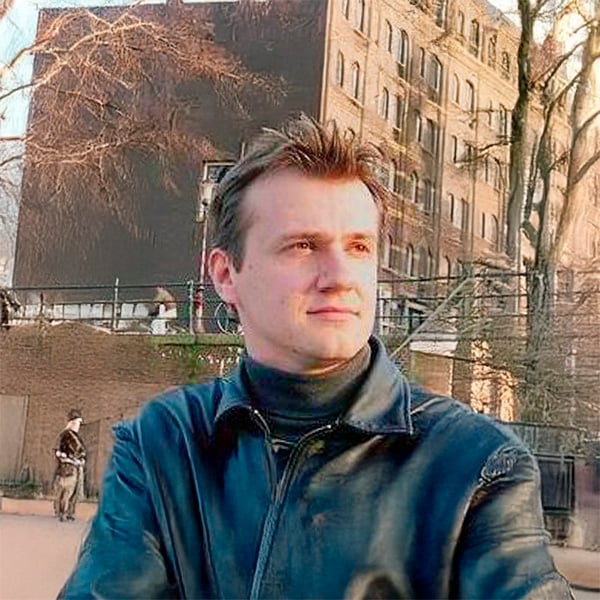
"September 2003 - present: PhD in Journalism and Communications, University of Belgrade. Working on the PhD thesis « Journalistic Responsibility in Crisis Situations : a Case-study Analysis of the Relationship between Media Management and Ethical Reporting ». 1996- 1997: Masters (M.A.) in International Affairs-Conflict Analysis, Carleton University, Ottawa Norman Paterson School of International Affairs, Carleton University, Ottawa. A-level GPA - Defended thesis ""with distinction"": ""Influence of the Media on Preventive Diplomacy: Three Cases from the Yugoslav Conflict"". 1992-1996: Bachelor of Journalism (B.J.) - Highest Honors in Journalism and Political Science, Carleton University, Ottawa"

Related Posts

LONDON – So far so good, at least on the wider level. While internally Iraq seems on the edge of chaos, the much heralded clash of civilizations between the Muslim and Judaeo-Christian worlds has yet to become apparent. We have anger and despair aplenty in the Arab and Muslim worlds. But very little rushing to the standard and there was no great pilgrimage of warriors to join the fight, as happened when the Soviet Union invaded Afghanistan twenty years ago, and then, having driven the Red Army out, were left to ferment in that mountainous redoubt. With the armaments supplied by the CIA the mujahidin were transformed into Al Qaeda that became, for a relatively brief moment as these things go, ‘the greatest threat to the homeland that America has ever known.’ Nevertheless a ‘Cold War’ between much of the Muslim world and the West is certainly in full swing. Winston...
The Challenge of Nuclear Weaponsin the Twenty-first CenturyA Path Forward The peoples and governments of the world face an urgent challenge relating to weaponry of mass destruction and particularly to nuclear weaponry.  At the crossroads of technology, terrorism, geopolitical ambition, and policies of preemption are new and potent dangers for humanity. Despite ending the nuclear standoff of the Cold War era, nuclear weaponry is again menacing the peoples of the world with catastrophic possibilities.  We recognize the need for any government to pursue its security interests in accordance with international law; and further, we recognize that distinctive threats to these interests now exist as a result of an active international terrorist network having declared war on the United States and its allies. Nonetheless, we reject the assessment of the current US administration that upgrading a reliance on nuclear weapons is in any sense justified as a response. We find it...
By Karin Wegestal MP, the Social Democratic Partyon behalf of the Swedish Committee for Solidarity with the Yugoslav People During the last decade, the Federal Republic of Yugoslavia has received more than 500,000 refugees from Croatia and Bosnia, and another 300,000 internally displaced persons, mainly from the province Kosovo and Metohia. For a country with about ten million inhabitants, such an influx of homeless people is obviously a very heavy burden – even under peaceful conditions. But in addition to that, the Federal Republic of Yugoslavia has been the subject to sanctions from the western powers for close to ten years and its infrastructure was badly hurt through Nato’s intense bombardment during 78 days in 1999. The result of all this is that Yugoslavia, once the most developed industrial country in Eastern Europe, is today the poorest country in Europe. In Serbia excluding Kosovo, with about ten million inhabitants and...

Recent Articles

Tony Robinson October 4, 2026 Violence is easy to recognise when someone is being beaten, shot or killed. It becomes more difficult when nobody is holding a weapon. Poverty, discrimination, exploitation and repression can restrict a human life just as effectively, although they do so in very different ways and with very different consequences. Simply adding more categories to an ever-growing list of forms of violence does not really solve the problem. The more interesting question is what all these different situations have in common and why it makes sense to describe them using the same word. Human beings do not simply react to what happens around them. They remember the past, imagine things that do not yet exist, make plans and undertake projects. Workers organise because they imagine different working conditions; people migrate because they imagine another life somewhere else; social movements emerge because people refuse to accept the...
It’s a matter of principles, courage, vision and pulling together – while the militarist world is falling apart… Peter Langille October 3, 2026 “Here, then, is the problem which we present to you, stark and dreadful and inescapable: Shall we put an end to the human race; or shall mankind renounce war?”The Bertrand Russell—Albert Einstein Manifesto, July 9, 1955 ⁕ The forecast for what’s ahead is worrisome. The sharp rise in armed conflicts over the past three years is adding to what was already the highest level in over seventy years. Genocides, which should be prevented are supported. A shared climate emergency that jeopardises survival is ignored. Diverse polls now suggest that people are war-weary, worried and interested in a more effective United Nations. And, there are viable policy options for a more secure world! Yet governments are doubling-down, betting on more war and investing heavily. If current trends persist,...
Johan Galtung 1930-2024October 2015 Published here on October 3, 2026 Let us focus on Civilization for conflict analysis and remedies. Major forms of disorder use violence; war is state organized violence. The most belligerent states are the United States of America and Israel, both with civilization roots. National Evangelism, the US Protestant Christian civilization– more national than evangelical–justifies US warfare as exceptionalism of a people chosen by God, with a manifest destiny to run the world. Orthodox Judaism justifies Israeli warfare to conquer and expand from Nile to Euphrates as a religious right and duty to the Eternal One. The third most belligerent country, the UK, no longer believes it is God-chosen but chosen by the USA; not quite the same but something. But the root cause of global disorder lies in the Occident–with Islam–seeing itself as the single, universal civilization valid for all at all times, all others being...

TFF on Substack

Discover and subscribe to more peace materials on TFF Substack

Most Popular

Tony Robinson October 4, 2026 Violence is easy to recognise when someone is being beaten, shot or killed. It becomes more difficult when nobody is holding a weapon. Poverty, discrimination, exploitation and repression can restrict a human life just as effectively, although they do so in very different ways and with very different consequences. Simply adding more categories to an ever-growing list of forms of violence does not really solve the problem. The more interesting question is what all these different situations have in common and why it makes sense to describe them using the same word. Human beings do not simply react to what happens around them. They remember the past, imagine things that do not yet exist, make plans and undertake projects. Workers organise because they imagine different working conditions; people migrate because they imagine another life somewhere else; social movements emerge because people refuse to accept the...
It’s a matter of principles, courage, vision and pulling together – while the militarist world is falling apart… Peter Langille October 3, 2026 “Here, then, is the problem which we present to you, stark and dreadful and inescapable: Shall we put an end to the human race; or shall mankind renounce war?”The Bertrand Russell—Albert Einstein Manifesto, July 9, 1955 ⁕ The forecast for what’s ahead is worrisome. The sharp rise in armed conflicts over the past three years is adding to what was already the highest level in over seventy years. Genocides, which should be prevented are supported. A shared climate emergency that jeopardises survival is ignored. Diverse polls now suggest that people are war-weary, worried and interested in a more effective United Nations. And, there are viable policy options for a more secure world! Yet governments are doubling-down, betting on more war and investing heavily. If current trends persist,...
Johan Galtung 1930-2024October 2015 Published here on October 3, 2026 Let us focus on Civilization for conflict analysis and remedies. Major forms of disorder use violence; war is state organized violence. The most belligerent states are the United States of America and Israel, both with civilization roots. National Evangelism, the US Protestant Christian civilization– more national than evangelical–justifies US warfare as exceptionalism of a people chosen by God, with a manifest destiny to run the world. Orthodox Judaism justifies Israeli warfare to conquer and expand from Nile to Euphrates as a religious right and duty to the Eternal One. The third most belligerent country, the UK, no longer believes it is God-chosen but chosen by the USA; not quite the same but something. But the root cause of global disorder lies in the Occident–with Islam–seeing itself as the single, universal civilization valid for all at all times, all others being...
Read More
Living-Peace-Sign-Budapest-copy
Tony Robinson October 4, 2026 Violence is easy to recognise when someone is being beaten, shot or killed. It becomes more difficult when nobody is holding a weapon. Poverty, discrimination, exploitation and repression can restrict a human life just as effectively, although they do so in very different ways and with very different consequences. Simply adding more categories to an ever-growing list of forms of violence does not really solve the problem. The more interesting question is what all these different situations have in common and why it makes sense to describe them using the same word. Human beings do not simply react to what happens around them. They remember the past, imagine things that do not yet exist, make plans and undertake projects. Workers organise because they imagine different working conditions; people migrate because they imagine another life somewhere else; social movements emerge because people refuse to accept the...
b54a1f10-8c65-4f0b-9dd5-4abc0a7d04cc_2659x2659
It’s a matter of principles, courage, vision and pulling together – while the militarist world is falling apart… Peter Langille October 3, 2026 “Here, then, is the problem which we present to you, stark and dreadful and inescapable: Shall we put an end to the human race; or shall mankind renounce war?”The Bertrand Russell—Albert Einstein Manifesto, July 9, 1955 ⁕ The forecast for what’s ahead is worrisome. The sharp rise in armed conflicts over the past three years is adding to what was already the highest level in over seventy years. Genocides, which should be prevented are supported. A shared climate emergency that jeopardises survival is ignored. Diverse polls now suggest that people are war-weary, worried and interested in a more effective United Nations. And, there are viable policy options for a more secure world! Yet governments are doubling-down, betting on more war and investing heavily. If current trends persist,...
010
Johan Galtung 1930-2024October 2015 Published here on October 3, 2026 Let us focus on Civilization for conflict analysis and remedies. Major forms of disorder use violence; war is state organized violence. The most belligerent states are the United States of America and Israel, both with civilization roots. National Evangelism, the US Protestant Christian civilization– more national than evangelical–justifies US warfare as exceptionalism of a people chosen by God, with a manifest destiny to run the world. Orthodox Judaism justifies Israeli warfare to conquer and expand from Nile to Euphrates as a religious right and duty to the Eternal One. The third most belligerent country, the UK, no longer believes it is God-chosen but chosen by the USA; not quite the same but something. But the root cause of global disorder lies in the Occident–with Islam–seeing itself as the single, universal civilization valid for all at all times, all others being...
Screenshot 2026-10-02 011738
Jan ObergPhD, director, The Transnational Foundation for Peace and Future Research, TFFLund, Sweden October 2, 2026 This is my full original manuscript. The Chinese Academy of Social Science, CASS, makes two publications out if it. 1. China’s Five-year plan emphasized the capabilities of basic research and original innovation. It is regarded as the goal of the future social development, which, as required, should be significantly enhanced. Can you comment on the importance of original innovation in research and academic study? I believe it is easier to define “original innovation” in the natural sciences than in social sciences. The breaking points of what constitutes something new, or innovative, are not quite as sharp in the latter. But in both fields it is about opening up something that was closed, unseen, unexplored before – making manifest what was earlier latent. Innovations come in many forms and shapes – naming something that was not...
arctic-circle-map
The agreement is catastrophic both because of what it says and what it doesn’t mention. It reduces further the major asset of security policies: Freedom of action. Jan Oberg TFF director September 25, 2026 A couple of hours before the agreement was signed on September 22, 2026, I published the following 13 hypotheses about what it would most likely contain on TFF Substack (in English). I was wrong on only the first point. Contrary to what Trump had written on his Truth Social platform, it does not appear to come into force immediately. In fact, it turned out to be worse than even I had anticipated. After these hypotheses now come a number of reflections in light of what the agreement actually contains, and does not contain, as well as the way in which it has generally been presented by major media outlets and by the public-service broadcaster DR. My...
girl-5894831_1280
Below are TFF-related media mentions, comments, videos and social media posts published elsewhere but not on this homepage. We happen to catch and list only a fraction. Regarding video comments and debates, we recommend that you go to the TFF Video Channel on Substack where many of them are reproduced. Jan Oberg is a contributor to China Daily – 52 million daily clicks – and Global Times, CGTN and CCTV (the national television), China Investment, Xinhua News Agency and several others. Articles and videos on these media very often multiply into countless Chinese (and Western media) that re-post them from these main media. Thanks to The China Academy, his analyses, interviews and comments are frequently posted on YouTube channels such as Thinkers Forum and Wave Media. These videos are often re-posted on Bilibili (China’s YouTube), the China Content Center on TikTok, and on the Chinese edition of TikTok, Douyin.com. This means reaching hundreds of millions of viewers worldwide over a year. While there are too many to catch on all these...





