
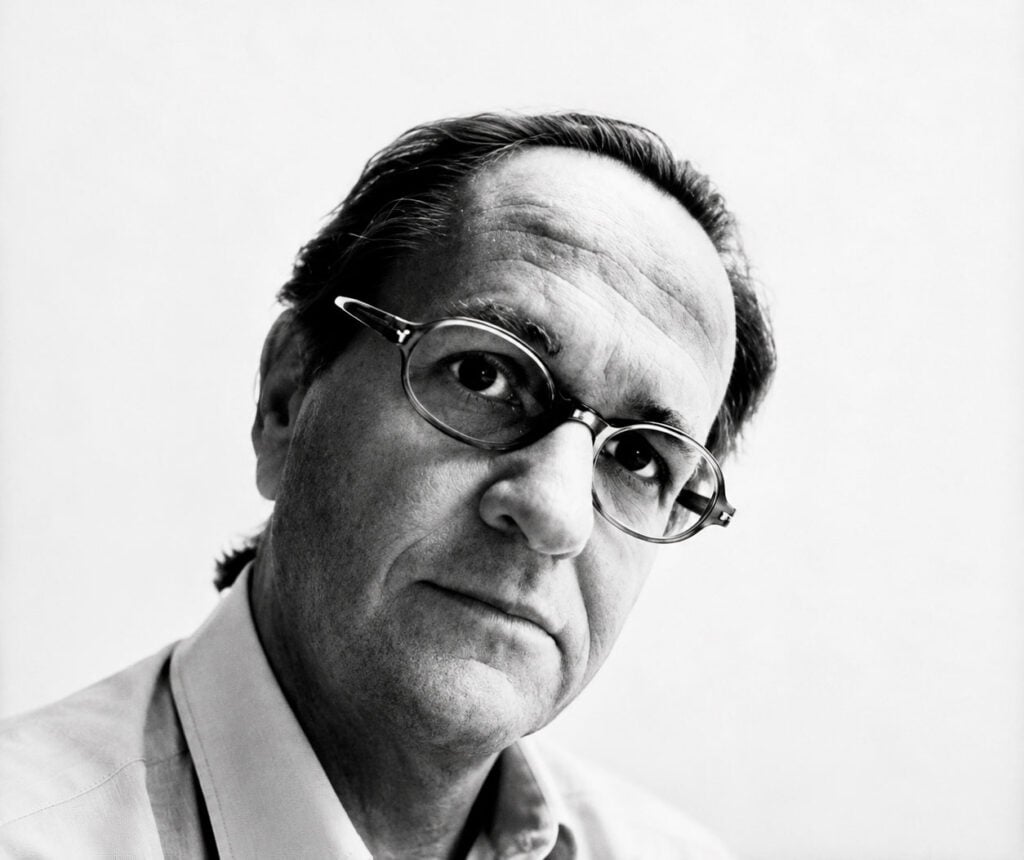
PressInfo #44 – Kosovo/a – Half Truths About How It Began

Lund, August 25, 1998 – “The standard media background
to the conflict tells us that it all started in 1989 when
Slobodan Milosevic, then President of Serbia, repealed the
autonomous status granted the Kosovo province in the 1974
constitution. This is wrong and propagated by journalists
who have not bothered to study root causes, attitudes or
other complexities. It’s a typical example of KISS reporting
– ‘Keep It Simple, Stupid.’ But the deliberate choice of
this particular political action as ‘the cause of all of the
trouble’ conveys the image that the Serb side alone is to
blame,” says Jan Oberg who has been engaged in this conflict
since 1992.

“This is an age-old conflict between two peoples who are
much more different and segregated than any other two
peoples or nations in ex-Yugoslavia.

The basic causes of conflict were and remain: 1)
historically based inter-ethnic mistrust, b) economic
underdevelopment and inequality, and 3) how to – if at all –
integrate the Kosovo province meaningfully in
Serbia/Yugoslavia in terms of politics, culture, education,
economics. Or, alternatively, let it go. These issues cannot
be separated from each other. The economic dimension of this
conflict is grossly underestimated in the media image, in
the generalised story. And so is the structural legacy of
old Yugoslavia. Saying that this conflict STARTED in 1989 is
to kill both complexity and history – and you’ll understand
nothing. And the less you understand, the easier it is to
take sides.

Then as now, Albanians and Serbs simply do not trust each
other; contrary to other republics there are very few
inter-ethnic marriages and on both sides we find, sad to
say, people with either total ignorance and racist attitudes
to the others, or both. Most Serbs have never been to Kosovo
and it will be impossible for the regime to mobilise the
political opinion and motivate the young men to fight for
the monuments, the monasteries there or the memories of what
happened in 1389 at Kosovo Polje.

The autonomous status, to put it crudely, implied that
Kosovo had a de facto but not a de jure republican status.
It became a full constitutive element of the Yugoslav
Federation with direct and equitable representation in all
Party and state bodies. The 1974 Constitution prevented
Serbia from intervening in the internal affairs of the
province against the will of Prishtina. Kosovo’s
parliamentarians could veto any legislation which affected
them; this implied that the Serb Republic had lost full
control of the affairs in its territory. If the autonomous
provinces of Voivodina and Kosovo decided to stop a decision
in the Serb Republican parliament, they could do so – while,
as mentioned, Serbia proper could not do the same. Kosovo
and Voivodina were, in other words, elements in the overall
Federation with the same rights and duties as the six
republics, although the constitution did not give them
statehood like the republics.

In short, the autonomous status of these two provinces
within Serbia had two characteristics: a) they were part of
the overall politico-structural ‘balance of balances’ in the
ex-Yugoslav federation; when it started to fragment, Serbia
could not live with not having full control of its republic;
b) Serbs came to feel that they were weakened in Tito’s
Yugoslavia because 21 % of the Serbs in Serbia were outside
Belgrade’s jurisdiction, namely those living in the two
autonomous provinces. In Croatia, Serbs made up 15 % of the
people but had no special rights or autonomy as minority. In
Serbia, Albanians made up 8 % and had a generous,
constitutionally guaranteed status – in fact, perhaps the
most liberal in terms of education, culture and democratic
participation any minority in the world enjoyed.

Were the Kosovo-Albanians happy with this? Not at
all, and of course they had THEIR good reasons. One of them
was that history unfairly has condemned the Albanian people
to live separately in three states, Albania, Serbia and
Macedonia. In addition, they had not forgotten that
throughout the fifties and sixties, Belgrade – not the least
due to Vice President Alexander Rankovic who controlled the
security police (UDBa) and was purged in 1966 – practised a
systematic policy of discrimination against the Albanian
minority. One of today’s leading Albanian politicians, Adem
Demaci, was imprisoned in 1958 at the age of 22 and spent 27
years there due to a series of mock trials!

The Albanians felt that the autonomous status was
manipulated by Belgrade and only existed on paper. They were
dissatisfied with being defined as a ‘nationality’ (that
could not have a republic but only autonomy within one)
rather than being a ‘nation’ such as Croats and Serbs. So
the 1970s witnessed a series of demonstrations, clashed with
Serb police, imprisonment, increased tension and hatred.
National Liberation Movements and Marxist-Leninist groups
fought, more or less underground, for full independence and
unification with Albania. Violence was the order of the
day.

In summary,” says Jan Oberg, “what we see today is
another serious wave of violence in a protracted and very
complex conflict, a result of accumulated frustrations, if
not decade-long traumatisation, on both sides. The Kosovo
Albanians will not NOW accept what they never accepted as
good enough since 1974 and knew could be taken away from
them any time. The aims of the Albanian leadership was and
is to get out of Serbia – while it is split on whether or
not to unify with Albania. The Serbian leadership can not
NOW re-install the autonomy of the 1974 constitution because
ex-Yugoslavia was its logical and legal basis. The
autonomous status of Voivodina and Kosovo was not abolished
only (if at all) to clamp down on Kosovo, but to regain the
authority and jurisdiction that Serbia had lost in 1974. I
am not aware of any state that voluntarily has given up
exercising authority over its legally recognised
territory.

So, when the media tell us that the whole thing started
when that autonomous status was abolished in 1989 – as if
Albanians were happy then – they are simply ignorant about
historical facts. But the deliberate CHOICE of this starting
point automatically cast the Serb side in the role of devils
and the Albanian side as angels. But I must tell you that
this type of KISS journalism is anything but helpful when it
comes to helping the parties finding a solution,” says Dr.
Oberg.

“You may ask: why do we get such simplified media images
in conflicts? I would answer that they are caused by the
fact that we have ‘WAR REPORTING’ that focus almost
exclusively on behaviour while we lack qualified CONFLICT
JOURNALISM, i.e. media people who understands how to analyse
also root causes, attitudes, cultural norms, and history
underlying these complex conflicts. Journalists who deal
with economics usually know something about the subject, so
do journalist working with culture or sports. In the field
of conflicts, media usually send out front reporters or
correspondents who happen to sit in the vicinity. They have
no training whatsoever in how to analyse conflicts as
such.

I’ve seen them drinking coffee outside the Grand Hotel in
Prishtina, the film crews and journalists who are waiting to
be brought safely out on ‘war safari’ and shoot the great
pictures of death and destruction. By that they cover only
one of the consequence of unresolved conflict – never the
conflict itself and ‘what it is all about’.

‘But it sells, it’s what people want, it’s our duty to
give people the images of reality – and this is what my
editor wants me to do, I hear them explain.’ “This is
nonsense. Within a radius of 500 meter from the Grand Hotel,
they can meet Albanians and Serbs of all walks of life who
will give them vastly more interesting information,
background and a touch of the psychological depths we are
facing here. They would get a complex picture, they would
get perceptions of history and they would come to see that
each side has some respectable viewpoints and understandable
sentiments.

But – to do that you would have to know something before
you can ask good questions and build confidence with
power-politicians as well as ordinary citizens. You must
have had time to do your homework. Few have. So, rather
shoot a film and comment on the pictures – THAT requires
little prior knowledge or analysis.”

TFF’s director continues, “It would be nice if media in
general – of course there are exceptions – had learnt
something from the professional mistakes in the wars since
ex-Yugoslavia fell apart in 1991. What we see now is the
same one-sided, tendentious reporting of half-truths and
omissions in favour basically of one side. In Kosovo, as
everywhere else, there are two sides at least to a conflict.
In the modern age of information and travel there is only
three factors that can explain biased reporting and lack of
comprehensive analyses: a) laziness, b) lack of creativity
and c) the wish to promote particular political causes. In
its accumulated consequences, media thereby become
responsible for (counterproductive) political
decision-making.

To a large extent public opinion is created on the basis
of what people see and hear through the media; we can not
all travel to war zones and form our own opinion. Thus media
create vitally important images and frames of
interpretation. The cry for “do something” is loud again.
Politicians increasingly act on the basis of virtual reality
rather than real reality. The first can be created in a few
hours, the latter requires analysis.

If the image, the vocabulary and the historical
background we now find in the majority of written and
electronic media continues as it has begun around the Kosovo
conflict, we can expect political, if not military, action
that will turn the situation on the ground from bad to
worse. We need conflict reporting, not just war reporting –
as warfare is just a way to act out conflicts. Perhaps this
is too important to be left in the hand of the media? ‘Free
media’ must not degenerate into meaning ‘freedom to be as
biased and simplifying as you wish,” ends Jan Oberg.

Peace & future researcher + ‌Art Photographer

Related Posts

The agreement is catastrophic both because of what it says and what it doesn’t mention. It reduces further the major asset of security policies: Freedom of action. Jan Oberg TFF director September 25, 2026 A couple of hours before the agreement was signed on September 22, 2026, I published the following 13 hypotheses about what it would most likely contain on TFF Substack (in English). I was wrong on only the first point. Contrary to what Trump had written on his Truth Social platform, it does not appear to come into force immediately. In fact, it turned out to be worse than even I had anticipated. After these hypotheses now come a number of reflections in light of what the agreement actually contains, and does not contain, as well as the way in which it has generally been presented by major media outlets and by the public-service broadcaster DR. My...
Below are TFF-related media mentions, comments, videos and social media posts published elsewhere but not on this homepage. We happen to catch and list only a fraction. Regarding video comments and debates, we recommend that you go to the TFF Video Channel on Substack where many of them are reproduced. Jan Oberg is a contributor to China Daily – 52 million daily clicks – and Global Times, CGTN and CCTV (the national television), China Investment, Xinhua News Agency and several others. Articles and videos on these media very often multiply into countless Chinese (and Western media) that re-post them from these main media. Thanks to The China Academy, his analyses, interviews and comments are frequently posted on YouTube channels such as Thinkers Forum and Wave Media. These videos are often re-posted on Bilibili (China’s YouTube), the China Content Center on TikTok, and on the Chinese edition of TikTok, Douyin.com. This means reaching hundreds of millions of viewers worldwide over a year. While there are too many to catch on all these...
Jan Oberg May 15, 2026 Go to this Fox News page and scroll the whole way down: President Donald Trump tells the world that his meeting with President Xi Jinping yielded a lot of very concrete political and economic results – of course, only where the Chinese side, according to him, agreed with him. He does not mention the Taiwan issue, but Secretary of State, Marco Rubio, says that it did not feature prominently in their talks and that the US policy on Taiwan has not changed. Then go to China Daily – or Global Times – and you will see that for the Chinese it is framework, principles, structure of cooperation etc. that matters – all embedded in the overall idea of “constructive bilateral relationship of strategic stability.” Nowhere is any concrete agreement or deal – all that Trump refers to – mentioned. At the general level, this gives you insights into the very different social...

Recent Articles

Tony Robinson October 4, 2026 Violence is easy to recognise when someone is being beaten, shot or killed. It becomes more difficult when nobody is holding a weapon. Poverty, discrimination, exploitation and repression can restrict a human life just as effectively, although they do so in very different ways and with very different consequences. Simply adding more categories to an ever-growing list of forms of violence does not really solve the problem. The more interesting question is what all these different situations have in common and why it makes sense to describe them using the same word. Human beings do not simply react to what happens around them. They remember the past, imagine things that do not yet exist, make plans and undertake projects. Workers organise because they imagine different working conditions; people migrate because they imagine another life somewhere else; social movements emerge because people refuse to accept the...
It’s a matter of principles, courage, vision and pulling together – while the militarist world is falling apart… Peter Langille October 3, 2026 “Here, then, is the problem which we present to you, stark and dreadful and inescapable: Shall we put an end to the human race; or shall mankind renounce war?”The Bertrand Russell—Albert Einstein Manifesto, July 9, 1955 ⁕ The forecast for what’s ahead is worrisome. The sharp rise in armed conflicts over the past three years is adding to what was already the highest level in over seventy years. Genocides, which should be prevented are supported. A shared climate emergency that jeopardises survival is ignored. Diverse polls now suggest that people are war-weary, worried and interested in a more effective United Nations. And, there are viable policy options for a more secure world! Yet governments are doubling-down, betting on more war and investing heavily. If current trends persist,...
Johan Galtung 1930-2024October 2015 Published here on October 3, 2026 Let us focus on Civilization for conflict analysis and remedies. Major forms of disorder use violence; war is state organized violence. The most belligerent states are the United States of America and Israel, both with civilization roots. National Evangelism, the US Protestant Christian civilization– more national than evangelical–justifies US warfare as exceptionalism of a people chosen by God, with a manifest destiny to run the world. Orthodox Judaism justifies Israeli warfare to conquer and expand from Nile to Euphrates as a religious right and duty to the Eternal One. The third most belligerent country, the UK, no longer believes it is God-chosen but chosen by the USA; not quite the same but something. But the root cause of global disorder lies in the Occident–with Islam–seeing itself as the single, universal civilization valid for all at all times, all others being...

TFF on Substack

Discover and subscribe to more peace materials on TFF Substack

Most Popular

Tony Robinson October 4, 2026 Violence is easy to recognise when someone is being beaten, shot or killed. It becomes more difficult when nobody is holding a weapon. Poverty, discrimination, exploitation and repression can restrict a human life just as effectively, although they do so in very different ways and with very different consequences. Simply adding more categories to an ever-growing list of forms of violence does not really solve the problem. The more interesting question is what all these different situations have in common and why it makes sense to describe them using the same word. Human beings do not simply react to what happens around them. They remember the past, imagine things that do not yet exist, make plans and undertake projects. Workers organise because they imagine different working conditions; people migrate because they imagine another life somewhere else; social movements emerge because people refuse to accept the...
It’s a matter of principles, courage, vision and pulling together – while the militarist world is falling apart… Peter Langille October 3, 2026 “Here, then, is the problem which we present to you, stark and dreadful and inescapable: Shall we put an end to the human race; or shall mankind renounce war?”The Bertrand Russell—Albert Einstein Manifesto, July 9, 1955 ⁕ The forecast for what’s ahead is worrisome. The sharp rise in armed conflicts over the past three years is adding to what was already the highest level in over seventy years. Genocides, which should be prevented are supported. A shared climate emergency that jeopardises survival is ignored. Diverse polls now suggest that people are war-weary, worried and interested in a more effective United Nations. And, there are viable policy options for a more secure world! Yet governments are doubling-down, betting on more war and investing heavily. If current trends persist,...
Johan Galtung 1930-2024October 2015 Published here on October 3, 2026 Let us focus on Civilization for conflict analysis and remedies. Major forms of disorder use violence; war is state organized violence. The most belligerent states are the United States of America and Israel, both with civilization roots. National Evangelism, the US Protestant Christian civilization– more national than evangelical–justifies US warfare as exceptionalism of a people chosen by God, with a manifest destiny to run the world. Orthodox Judaism justifies Israeli warfare to conquer and expand from Nile to Euphrates as a religious right and duty to the Eternal One. The third most belligerent country, the UK, no longer believes it is God-chosen but chosen by the USA; not quite the same but something. But the root cause of global disorder lies in the Occident–with Islam–seeing itself as the single, universal civilization valid for all at all times, all others being...
Read More
Living-Peace-Sign-Budapest-copy
Tony Robinson October 4, 2026 Violence is easy to recognise when someone is being beaten, shot or killed. It becomes more difficult when nobody is holding a weapon. Poverty, discrimination, exploitation and repression can restrict a human life just as effectively, although they do so in very different ways and with very different consequences. Simply adding more categories to an ever-growing list of forms of violence does not really solve the problem. The more interesting question is what all these different situations have in common and why it makes sense to describe them using the same word. Human beings do not simply react to what happens around them. They remember the past, imagine things that do not yet exist, make plans and undertake projects. Workers organise because they imagine different working conditions; people migrate because they imagine another life somewhere else; social movements emerge because people refuse to accept the...
b54a1f10-8c65-4f0b-9dd5-4abc0a7d04cc_2659x2659
It’s a matter of principles, courage, vision and pulling together – while the militarist world is falling apart… Peter Langille October 3, 2026 “Here, then, is the problem which we present to you, stark and dreadful and inescapable: Shall we put an end to the human race; or shall mankind renounce war?”The Bertrand Russell—Albert Einstein Manifesto, July 9, 1955 ⁕ The forecast for what’s ahead is worrisome. The sharp rise in armed conflicts over the past three years is adding to what was already the highest level in over seventy years. Genocides, which should be prevented are supported. A shared climate emergency that jeopardises survival is ignored. Diverse polls now suggest that people are war-weary, worried and interested in a more effective United Nations. And, there are viable policy options for a more secure world! Yet governments are doubling-down, betting on more war and investing heavily. If current trends persist,...
010
Johan Galtung 1930-2024October 2015 Published here on October 3, 2026 Let us focus on Civilization for conflict analysis and remedies. Major forms of disorder use violence; war is state organized violence. The most belligerent states are the United States of America and Israel, both with civilization roots. National Evangelism, the US Protestant Christian civilization– more national than evangelical–justifies US warfare as exceptionalism of a people chosen by God, with a manifest destiny to run the world. Orthodox Judaism justifies Israeli warfare to conquer and expand from Nile to Euphrates as a religious right and duty to the Eternal One. The third most belligerent country, the UK, no longer believes it is God-chosen but chosen by the USA; not quite the same but something. But the root cause of global disorder lies in the Occident–with Islam–seeing itself as the single, universal civilization valid for all at all times, all others being...
Screenshot 2026-10-02 011738
Jan ObergPhD, director, The Transnational Foundation for Peace and Future Research, TFFLund, Sweden October 2, 2026 This is my full original manuscript. The Chinese Academy of Social Science, CASS, makes two publications out if it. 1. China’s Five-year plan emphasized the capabilities of basic research and original innovation. It is regarded as the goal of the future social development, which, as required, should be significantly enhanced. Can you comment on the importance of original innovation in research and academic study? I believe it is easier to define “original innovation” in the natural sciences than in social sciences. The breaking points of what constitutes something new, or innovative, are not quite as sharp in the latter. But in both fields it is about opening up something that was closed, unseen, unexplored before – making manifest what was earlier latent. Innovations come in many forms and shapes – naming something that was not...
arctic-circle-map
The agreement is catastrophic both because of what it says and what it doesn’t mention. It reduces further the major asset of security policies: Freedom of action. Jan Oberg TFF director September 25, 2026 A couple of hours before the agreement was signed on September 22, 2026, I published the following 13 hypotheses about what it would most likely contain on TFF Substack (in English). I was wrong on only the first point. Contrary to what Trump had written on his Truth Social platform, it does not appear to come into force immediately. In fact, it turned out to be worse than even I had anticipated. After these hypotheses now come a number of reflections in light of what the agreement actually contains, and does not contain, as well as the way in which it has generally been presented by major media outlets and by the public-service broadcaster DR. My...
girl-5894831_1280
Below are TFF-related media mentions, comments, videos and social media posts published elsewhere but not on this homepage. We happen to catch and list only a fraction. Regarding video comments and debates, we recommend that you go to the TFF Video Channel on Substack where many of them are reproduced. Jan Oberg is a contributor to China Daily – 52 million daily clicks – and Global Times, CGTN and CCTV (the national television), China Investment, Xinhua News Agency and several others. Articles and videos on these media very often multiply into countless Chinese (and Western media) that re-post them from these main media. Thanks to The China Academy, his analyses, interviews and comments are frequently posted on YouTube channels such as Thinkers Forum and Wave Media. These videos are often re-posted on Bilibili (China’s YouTube), the China Content Center on TikTok, and on the Chinese edition of TikTok, Douyin.com. This means reaching hundreds of millions of viewers worldwide over a year. While there are too many to catch on all these...




