
Kalejdoskop 63 – Udenrigsministeriet bør offentliggøre Rambouillet-dokumenterne

Når Jugoslavien og dets Kosovo-provins i disse uger bombes er det en unik og skæbnesvanger begivenhed i Europas og i international historie. Danmark og mange andre lande er i krig. De menneskelige lidelser og den skabte humanitære katastrofes omfang motiverer ekstraordinære indsatser. Vi oplever nu Balkan-dramaets 8. akt.

Akt 1 – Konfliktens økonomiske rødder. Vi begynder i 1970-ernes og 1980ernes forandringer i den globale kapitalisme, der ledte til at de industrigrene, som Jugoslavien byggede sin velfærd på – såsom elektronik, tekstiler, skibsbygning, biler og våben – flyttes til lavtlønslande i Asien. Det skete efter oliekrisen og stoppet for arbejdskraftindvandring i Europa, vigtigt fordi 15% af Jugoslaviens BNP kom derfra. Landets blandøkonomi og selvforvaltning-system bryder sammen.

Akt 2 – Indre, social krise og ydre økonomisk intervention. Nu følger social og økonomisk nedtur, afskedigelser overalt og tilpasning til Verdensbankens og Valutafondens krav. De sidstnævnte krævede en ophævelse af det etniske balancehensyn i Jugoslaviens finansinstitutioner og omfordelingsfond. Kløften mellem Slovenien og Kroatien på den ene side og Montenegro, Kosovo og Makedonien på den anden voksede til cirka 10:1. Trods de store nettobeløb til Kosovo-provinsen blev Serbien fattigere mens albanerne investerede en del penge i Makedonien. Inden tæppet går i denne akt græder millioner ved Tito’s begravelse.

Akt 3 – Kommunismens sammenbrud og traume-mobilisering. Når det går skidt skal nogen have skylden. Ubearbejdede traumer fra Anden Verdenskrig aktualiseres. Men den økonomiske og sociale nedtur fulgte nationalismens opgang. Gamle fortrædeligheder kunne mobiliseres. Hen imod slutningen af 3. Akt falder Sovjetunionen og kommunismen sammen. Jugoslavien var ganske vist alt andet end en traditionel kommunisme, men der opstår et politiskt vakuum, der – sammen med det øvrige sammenbruds centrifugale kræfter – slynger landet ud i en konstitutionel krise.

Selvdestruktionen med krig i Slovenien og Kroatien afslutter disse akter. Herefter tror verdenen at problemet ligger i parternes brug af vold. Og således gør ingen noget for at diagnosticere eller behandle de underliggende konflikter , som de har hobet sig op og som er årag til volden.

Akt 4 – Det internationale samfund på scenen. Efter de skadelige effekter af kapitalismens udvikling og kommunismens afvikling, bidrager man nu til at opløse landet i sine (formodede) bestandsdele. Etnisk rene stater skabes hvor der før var multietnicitet. Anerkendelsen af Kroatien og Slovenien i strid med alle europæiske principper etablerer tre mønstre i vestlige såkaldt konflikthåndtering: a) ignorering af kompleksiteter, b) psyko-kulturel fejlbedømmelse af hvorledes vore tiltag opfattes på Balkan og c) man tager skridt der ikke er en del af en længere sigtende plan. Hvad man skulle stille op med resten af Jugoslavien, vidste man ikke – så lidt som der nu er en fredsplan for Kosovo eller en idé om hvad man skal gribe til efter bombningerne.

Akt 5 – Bosnisk Ballade. Da alt hænger sammen med alt andet i dette drama, måtte Bosnien blive krigsskueplads med blandt andet glemte muslimsk-kroatiske og muslimsk-muslimske krige og en kroatisk ministat i Bosnien, som officielt ikke eksisterer, Herceg-Bosna. Vesten får en “fredsaftale” banket på plads i Dayton, der igen ikke gør noget ved konflikterne men lægger låg på volden. Man glemmer at spørge befolkningen hvilken fremtid den ønskede. Exit FN, NATO ind.

Aftalen tog tre år længere end der var brug for. Forskellen mellem de første planer og Dayton ligger begravet på Bosniens kirkegårde. Og Vesten gjorde sig afhængig af tre præsidenter, der alle – omend på forskellig måde – i samråd med hinanden havde skrevet sørgemusikken og selv dirigerede kapellet i orkestergraven. Det er også i denne akt, i maj 1995, Kroatien med USAs aktive bistand fordriver 300.000 legitime serbisk-kroatiske medborgere, der sammen med godt og vel ligeså mange til gav Serbien Europas største flygtningeproblem. Exit. Ingen har gjort noget for dem siden.

Akt 6 – Stilhed før Stormen. Kosovo var nummer ét på listen over advarsler om konflikter i verden, som ville slå over i krig hvis intet blev gjort. Vestverden der fra begyndelsen gik galt i byen uden diagnose, kører fra nu af friløb på to lige skæbnesvangre rygmarvsreaktioner: a) alt hvad serberne siger og gør er sludder og/eller forbryderisk og 2) derfor er alle andre OK. Det internationale samfund sagde at det vidste at regimet i Beograd skabte en politistat i Kosovo, hvilket var sandt. Det sagde ikke at det vidste at kosovo-albaner siden 1993 med vestlig hjælp opbyggede en befrielseshær, UCK eller KLA. Den dukker op i 1998, i næste akt.

Akt 7 – Krig i Kosovo. Fundamentalister på alle sider – også i det internationale samfund – fik rygvind. Exit moderate som Dr. Rugova og serbiske intellektuelle. USA og EU så albanerne som løftestang for deres helt personificerede konflikt med dramaets udpegede skurk, Milosevic. Albanerne så NATO som kombineret flyvevåben og fødselshjælper for et selvstændigt Kosova og – håber mange – Storalbanien. Omkring 2000 mennesker døde i kamphandlinger, godt 200.000 blev fordrevet fra deres hjem, cirka lige store andele af Kosovos serbiske og den albanske befolkning. Denne akt afsluttes med en aftale mellem Milosevic og Holbrooke i oktober om at jugoslaviske styrker skal trækkes tilbage og OSCE komme ind – derimod ikke at KLA/UCK skal ophøre med sin virksomhed. De erobrer derfor 30% af Kosovo. Bag ryggen på Milosevic opbygger NATO en styrke i Makedonien, officielt for at kunne beskytte OSCE.

Akt 8 – Rambouillet og NATO-krig. Den albanske og den jugoslaviske delegation mødes aldrig ansigt-til-ansigt i Paris, der er ingen forhandling. Den amerikanske ambassadør Hills dokument lægges på bordet og parterne får at vide at de skal undertegne det. Beograd siger ja til selvstyre for Kosovo, men albanerne siger nej fordi de ikke får en selvstændig stat. Der lægges derefter 50 sider til om at NATO skal implementere aftalen, være den højeste myndighed i Kosovo og have frit råderum i det øvrige Jugoslavien, inklusive ret til at bruge vold når det finder for godt. Så siger Beograd nej og KLA ja – de sidste også fordi der nu står at om tre år skal “folkets vilje” afgøre provinsens fremtidige status.

Hundreder af journalister, tusinder af eksperter, opinionsdanner og politiker opdager det ikke. De læser den ikke. Den er jo en “fredsaftale.”

Rambouillet-dokumenterne er et stykke europæisk historie. Det er med henvisning til dem, NATO er gået i krig. Intet vil mere grundlæggende præge Europas fremtid de næste mange år.

Derfor opfordrer jeg det danske udenrigsministerium – eller andet officielt organ – til at offentliggøre det første dokument som lagdes på bordet i Rambouillet, den forandrede tekst af 23. februar samt, for det tredje, den jugoslaviske regerings eget forslag til aftale. På dansk og helst også på engelsk, serbiskt, albansk, makedonsk.

Det vil give interesserede en mulighed for selv at bedømme på hvilket grundlag den nuværende krig mod Jugoslavien føres. Om det der udløste storkrig i Europå må der af mange grunde findes åbenhed – det eneste forsvar demokratiet har mod propganda, uvidenhed og mere vold.
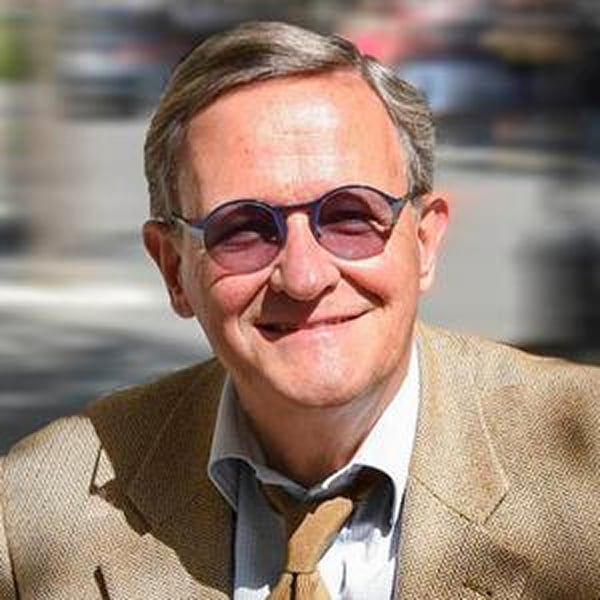

Peace & future researcher + ‌Art Photographer

Related Posts

LONDON – So far so good, at least on the wider level. While internally Iraq seems on the edge of chaos, the much heralded clash of civilizations between the Muslim and Judaeo-Christian worlds has yet to become apparent. We have anger and despair aplenty in the Arab and Muslim worlds. But very little rushing to the standard and there was no great pilgrimage of warriors to join the fight, as happened when the Soviet Union invaded Afghanistan twenty years ago, and then, having driven the Red Army out, were left to ferment in that mountainous redoubt. With the armaments supplied by the CIA the mujahidin were transformed into Al Qaeda that became, for a relatively brief moment as these things go, ‘the greatest threat to the homeland that America has ever known.’ Nevertheless a ‘Cold War’ between much of the Muslim world and the West is certainly in full swing. Winston...
The Challenge of Nuclear Weaponsin the Twenty-first CenturyA Path Forward The peoples and governments of the world face an urgent challenge relating to weaponry of mass destruction and particularly to nuclear weaponry.  At the crossroads of technology, terrorism, geopolitical ambition, and policies of preemption are new and potent dangers for humanity. Despite ending the nuclear standoff of the Cold War era, nuclear weaponry is again menacing the peoples of the world with catastrophic possibilities.  We recognize the need for any government to pursue its security interests in accordance with international law; and further, we recognize that distinctive threats to these interests now exist as a result of an active international terrorist network having declared war on the United States and its allies. Nonetheless, we reject the assessment of the current US administration that upgrading a reliance on nuclear weapons is in any sense justified as a response. We find it...
By Karin Wegestal MP, the Social Democratic Partyon behalf of the Swedish Committee for Solidarity with the Yugoslav People During the last decade, the Federal Republic of Yugoslavia has received more than 500,000 refugees from Croatia and Bosnia, and another 300,000 internally displaced persons, mainly from the province Kosovo and Metohia. For a country with about ten million inhabitants, such an influx of homeless people is obviously a very heavy burden – even under peaceful conditions. But in addition to that, the Federal Republic of Yugoslavia has been the subject to sanctions from the western powers for close to ten years and its infrastructure was badly hurt through Nato’s intense bombardment during 78 days in 1999. The result of all this is that Yugoslavia, once the most developed industrial country in Eastern Europe, is today the poorest country in Europe. In Serbia excluding Kosovo, with about ten million inhabitants and...

Recent Articles

Tony Robinson October 4, 2026 Violence is easy to recognise when someone is being beaten, shot or killed. It becomes more difficult when nobody is holding a weapon. Poverty, discrimination, exploitation and repression can restrict a human life just as effectively, although they do so in very different ways and with very different consequences. Simply adding more categories to an ever-growing list of forms of violence does not really solve the problem. The more interesting question is what all these different situations have in common and why it makes sense to describe them using the same word. Human beings do not simply react to what happens around them. They remember the past, imagine things that do not yet exist, make plans and undertake projects. Workers organise because they imagine different working conditions; people migrate because they imagine another life somewhere else; social movements emerge because people refuse to accept the...
It’s a matter of principles, courage, vision and pulling together – while the militarist world is falling apart… Peter Langille October 3, 2026 “Here, then, is the problem which we present to you, stark and dreadful and inescapable: Shall we put an end to the human race; or shall mankind renounce war?”The Bertrand Russell—Albert Einstein Manifesto, July 9, 1955 ⁕ The forecast for what’s ahead is worrisome. The sharp rise in armed conflicts over the past three years is adding to what was already the highest level in over seventy years. Genocides, which should be prevented are supported. A shared climate emergency that jeopardises survival is ignored. Diverse polls now suggest that people are war-weary, worried and interested in a more effective United Nations. And, there are viable policy options for a more secure world! Yet governments are doubling-down, betting on more war and investing heavily. If current trends persist,...
Johan Galtung 1930-2024October 2015 Published here on October 3, 2026 Let us focus on Civilization for conflict analysis and remedies. Major forms of disorder use violence; war is state organized violence. The most belligerent states are the United States of America and Israel, both with civilization roots. National Evangelism, the US Protestant Christian civilization– more national than evangelical–justifies US warfare as exceptionalism of a people chosen by God, with a manifest destiny to run the world. Orthodox Judaism justifies Israeli warfare to conquer and expand from Nile to Euphrates as a religious right and duty to the Eternal One. The third most belligerent country, the UK, no longer believes it is God-chosen but chosen by the USA; not quite the same but something. But the root cause of global disorder lies in the Occident–with Islam–seeing itself as the single, universal civilization valid for all at all times, all others being...

TFF on Substack

Discover and subscribe to more peace materials on TFF Substack

Most Popular

Tony Robinson October 4, 2026 Violence is easy to recognise when someone is being beaten, shot or killed. It becomes more difficult when nobody is holding a weapon. Poverty, discrimination, exploitation and repression can restrict a human life just as effectively, although they do so in very different ways and with very different consequences. Simply adding more categories to an ever-growing list of forms of violence does not really solve the problem. The more interesting question is what all these different situations have in common and why it makes sense to describe them using the same word. Human beings do not simply react to what happens around them. They remember the past, imagine things that do not yet exist, make plans and undertake projects. Workers organise because they imagine different working conditions; people migrate because they imagine another life somewhere else; social movements emerge because people refuse to accept the...
It’s a matter of principles, courage, vision and pulling together – while the militarist world is falling apart… Peter Langille October 3, 2026 “Here, then, is the problem which we present to you, stark and dreadful and inescapable: Shall we put an end to the human race; or shall mankind renounce war?”The Bertrand Russell—Albert Einstein Manifesto, July 9, 1955 ⁕ The forecast for what’s ahead is worrisome. The sharp rise in armed conflicts over the past three years is adding to what was already the highest level in over seventy years. Genocides, which should be prevented are supported. A shared climate emergency that jeopardises survival is ignored. Diverse polls now suggest that people are war-weary, worried and interested in a more effective United Nations. And, there are viable policy options for a more secure world! Yet governments are doubling-down, betting on more war and investing heavily. If current trends persist,...
Johan Galtung 1930-2024October 2015 Published here on October 3, 2026 Let us focus on Civilization for conflict analysis and remedies. Major forms of disorder use violence; war is state organized violence. The most belligerent states are the United States of America and Israel, both with civilization roots. National Evangelism, the US Protestant Christian civilization– more national than evangelical–justifies US warfare as exceptionalism of a people chosen by God, with a manifest destiny to run the world. Orthodox Judaism justifies Israeli warfare to conquer and expand from Nile to Euphrates as a religious right and duty to the Eternal One. The third most belligerent country, the UK, no longer believes it is God-chosen but chosen by the USA; not quite the same but something. But the root cause of global disorder lies in the Occident–with Islam–seeing itself as the single, universal civilization valid for all at all times, all others being...
Read More
Living-Peace-Sign-Budapest-copy
Tony Robinson October 4, 2026 Violence is easy to recognise when someone is being beaten, shot or killed. It becomes more difficult when nobody is holding a weapon. Poverty, discrimination, exploitation and repression can restrict a human life just as effectively, although they do so in very different ways and with very different consequences. Simply adding more categories to an ever-growing list of forms of violence does not really solve the problem. The more interesting question is what all these different situations have in common and why it makes sense to describe them using the same word. Human beings do not simply react to what happens around them. They remember the past, imagine things that do not yet exist, make plans and undertake projects. Workers organise because they imagine different working conditions; people migrate because they imagine another life somewhere else; social movements emerge because people refuse to accept the...
b54a1f10-8c65-4f0b-9dd5-4abc0a7d04cc_2659x2659
It’s a matter of principles, courage, vision and pulling together – while the militarist world is falling apart… Peter Langille October 3, 2026 “Here, then, is the problem which we present to you, stark and dreadful and inescapable: Shall we put an end to the human race; or shall mankind renounce war?”The Bertrand Russell—Albert Einstein Manifesto, July 9, 1955 ⁕ The forecast for what’s ahead is worrisome. The sharp rise in armed conflicts over the past three years is adding to what was already the highest level in over seventy years. Genocides, which should be prevented are supported. A shared climate emergency that jeopardises survival is ignored. Diverse polls now suggest that people are war-weary, worried and interested in a more effective United Nations. And, there are viable policy options for a more secure world! Yet governments are doubling-down, betting on more war and investing heavily. If current trends persist,...
010
Johan Galtung 1930-2024October 2015 Published here on October 3, 2026 Let us focus on Civilization for conflict analysis and remedies. Major forms of disorder use violence; war is state organized violence. The most belligerent states are the United States of America and Israel, both with civilization roots. National Evangelism, the US Protestant Christian civilization– more national than evangelical–justifies US warfare as exceptionalism of a people chosen by God, with a manifest destiny to run the world. Orthodox Judaism justifies Israeli warfare to conquer and expand from Nile to Euphrates as a religious right and duty to the Eternal One. The third most belligerent country, the UK, no longer believes it is God-chosen but chosen by the USA; not quite the same but something. But the root cause of global disorder lies in the Occident–with Islam–seeing itself as the single, universal civilization valid for all at all times, all others being...
Screenshot 2026-10-02 011738
Jan ObergPhD, director, The Transnational Foundation for Peace and Future Research, TFFLund, Sweden October 2, 2026 This is my full original manuscript. The Chinese Academy of Social Science, CASS, makes two publications out if it. 1. China’s Five-year plan emphasized the capabilities of basic research and original innovation. It is regarded as the goal of the future social development, which, as required, should be significantly enhanced. Can you comment on the importance of original innovation in research and academic study? I believe it is easier to define “original innovation” in the natural sciences than in social sciences. The breaking points of what constitutes something new, or innovative, are not quite as sharp in the latter. But in both fields it is about opening up something that was closed, unseen, unexplored before – making manifest what was earlier latent. Innovations come in many forms and shapes – naming something that was not...
arctic-circle-map
The agreement is catastrophic both because of what it says and what it doesn’t mention. It reduces further the major asset of security policies: Freedom of action. Jan Oberg TFF director September 25, 2026 A couple of hours before the agreement was signed on September 22, 2026, I published the following 13 hypotheses about what it would most likely contain on TFF Substack (in English). I was wrong on only the first point. Contrary to what Trump had written on his Truth Social platform, it does not appear to come into force immediately. In fact, it turned out to be worse than even I had anticipated. After these hypotheses now come a number of reflections in light of what the agreement actually contains, and does not contain, as well as the way in which it has generally been presented by major media outlets and by the public-service broadcaster DR. My...
girl-5894831_1280
Below are TFF-related media mentions, comments, videos and social media posts published elsewhere but not on this homepage. We happen to catch and list only a fraction. Regarding video comments and debates, we recommend that you go to the TFF Video Channel on Substack where many of them are reproduced. Jan Oberg is a contributor to China Daily – 52 million daily clicks – and Global Times, CGTN and CCTV (the national television), China Investment, Xinhua News Agency and several others. Articles and videos on these media very often multiply into countless Chinese (and Western media) that re-post them from these main media. Thanks to The China Academy, his analyses, interviews and comments are frequently posted on YouTube channels such as Thinkers Forum and Wave Media. These videos are often re-posted on Bilibili (China’s YouTube), the China Content Center on TikTok, and on the Chinese edition of TikTok, Douyin.com. This means reaching hundreds of millions of viewers worldwide over a year. While there are too many to catch on all these...




