Kalejdoskop 57 – Volden i Kosovo – nederlag for alle

Kejserne i international politik siger gerne at visse mennesker kun forstår voldens sprog. Situationen i Kosovo sender en boomerang tilbage. Ingen aktør har foretaget en analyse, lagt en strategi eller foretaget sig noget som helst hverken før eller efter Jugoslaviens sammanbrud, der kunne have hjulpet serbere og albanere til at undgå dét forudsigelige, der nu med fortvivlende styrke ruller over skærmen.

De selvsamme kejsere gør altså først noget når en konflikt er gået i vold. Og vold var det eneste, der ikke må ske for en selvstændighedsbevægelse, der pragmatiskt-politisk bekender sig til ikkevold. Så meget om kærnen i modeord som voldsforebyggelse, preventiv diplomati, fredsbevarelse, OSCE’s konfliktforebyggelse, det ny NATO og europæisk sikkerhedsarkitektur og fælles udenrigs- og sikkerhedspolitik i EU. Så meget om den danske fejlslagne aktivistiske udenrigs- og forsvarspolitik i Irak og ligeså fejlslagne mangel på samme i Kosovo-spørgsmålet.
Disse kejsere kan ekspandere NATO og bygge nye atomvåben til ingen verdens nytte, det er udvendighed. Den jordnære Kosovo-konflikt derimod handler om psykologi og historie og kan ikke kan løses med potens, men kun med historisk fornemmelse og psykologisk indlevelse: stille diplomati, ikke udadvendthed.

Og SÅ fiser det sammen for USA, EU, Kontaktgruppen i London etc. Således afklædt til skindet søger kejserne at “gøre noget” – fordømmelse af vold (fra udenrigsministrene Albright og Cook efter deres egne voldstrusler mod Irak!). Der kommer belæringer om europæisk civiliserethed, fordømmelse af terror, trusler om udelukkelse, om sanktioner, visa-restriktioner, våbenembargo, militær intervention, krigsforbryderdomstol. Uden analyse véd kejserne allerede at løsningen er autonom status; de véd derimod ikke at provinsen idag kunne have begrænset autonomi og at albanerne ikke er tilfredse med selv den store autonomi, de havde 1974-1989. Kort sagt: én lang demonstration af intellektuel og moralsk magtesløshed. Intet af det vil bidrage til en løsning (1). Truslen om sanktioner er patetisk: det rammer folkene, inklusive albanerne, styrke Milosevic – og vil påføre mængder af handelspartnere miljardtab i dollars (som om Makedonien ikke har lidt nok hidtil)!

Kun Albanien stillet sig bag albanernes ultimative krav om en fuldstændigt selvstændig stat, Kosova. (2). Verden ønsker ingen kædereaktion i Baskerlandet, Norditalien, Belgien, Skotland, Nordirland. Statens integritet og overlevelse vejer tungere end normer og folkeretslige regler for selvbestemmelse. Og kan Vesten virkelig støtte Kosova når man véd hvor den har ladet hånt om Krajina i Kroatien? Beograd har dermed et hovedkort at spille, men har ikke formået at tage skridt til en løsning. Man hævder at det er et intern anliggende og skal løses uden indblanding udefra. Det har man sagt i 8 år – uden at kunne opvise andet end øget repression. Selv mener jeg at Dr. Rugova’s pragmatiske ikkevoldspolitik måtte være en lettere forhandlingspartner/modstander end en bevæbnet terrororganisation. Nu får Serbien og Jugoslavien meget mere ballade med det internationale samfund, som det er temmeligt afhængig af at holde sig på god fod med – end hvis man havde indledt forhandlinger eller reduceret undertrykkelsen. Iøvrigt klinger argumentet om ikke-indblanding hult. Jugoslavien vil gerne have alt fra det internationale samfund. Dets økonomi er sat 30 år tilbage, det har Europas største flygtningproblem, 650 000 ifølge FN. Det ønsker lån, krediter, handel, ophævelse af de ydre sanktioner og stræber efter re-integration i internatio-nale fora. Og krænker man menneskerettighederne som i Kosovo må regne med at få omverdenens øjne på sig.

For Kosovo-albanerne er det ligeledes et nederlag. Eet vigtig tog kørte dem forbi under premierminister Milan Panic’ korte era i 1992 hvor Panic selv, hans menneskerets-, justits- og undervisningsminister var oprigtigt opsatte på at forhandle. Jeg har som “konfliktlæge” mellem parterne på såvel regerings- som folkeligt niveau siden 1992 konstateret en kompakt albansk modstand mod at forhandle med Beograd – også når andre eller jeg selv bragte en konkret invitation fra præsident Milosevic. Tiden var, sagde man altid, ikke moden endnu. Hvad Prishtina håbede på var – i kraft av bl.a. George Bush’s interventions-løfter og det internationale samfunds anti-serbiske politik – at blive selvstændigt inden det ny Jugoslavien blev anerkendt. Siden håbede man på at indgå i Dayton-aftalen. Begge forhåbninger viste sig helt urealistiske – og derpå har Dr. Rugova og hans medarbejdere ikke kunnet samles om en ny, til realiteterne tilpasset, politik. Symbolpolitiken fortsatte, den interne splittelse blandt albanere voksede. På en mærkelig måde passer det Kosovo-albanene bedre at have en hård ledelse i Beograd end en blød – eftersom ét formål er at trække det internationale samfund ind. Deraf også den imponerende internationale diplomatiske offensiv og informationsvirksomhed. Dr. Rugova har rejst Europa og USA tyndt, er blevet modtaget af regeringer og parlament som om han allerede de facto og de jure var præsident – således også af udenrigsminister Helveg Petersen – samtidig med at ingen af værterne ville røre en repæsentant for Beograd med en ildtang. Således skabtes urealistiske forventninger externt, mens Rugova lovede sine 2 milioner statsborgere mere end han derfor kunne holde. Den selvudråbte stat er konkret nok med alternative skoler, sundheds-kliniker, skatter, udenrigsrepæsentationer, skyggeregering osv – men den fungerer ikke vis-a-vis Serbien. Ingen har fået det økonomiskt bedre. Ikkevoldspolitik forudsætter fleksibilitet så man kan beholde det diplomatiske initiativet.

Perspektiverne skræmmer. Selvom den åbne vold måske aftager er hadet og polariseringen vokset yderligere – og det var større end i Bosnien og Kroatien. Den unge albanske befolkning, der har levet med ballade og social misére de sidste over tyve år, er dybt frustrerede. Alligevel undergraves det ganske vist spinkle håb om at ikkevolds-linjen ville lede til en løsing af den omstændighed at kosovo-albanere (også i udlandet) ikke har taget klar afstand fra albansk terror. Kvinder i Sort og enkelte intellektuelle i Beograd har taget afstand fra den serbiske politivold. Er der noget godt ved hele denne tragedie? Måske, men prisen er høj, at vi endu en gang har fået bevist at vold leder bort fra løsninger og bare gør alting sværere. Men er der længere nogen der lytter? Kejserne har så meget magt at de ikke synes de behøver at lytte. Serberne og albanerne hører formodentlig kun deres egne stemmer om sig selv som ofre. Det internationale samfund kan kun hjælpe parterne, det kan ikke diktere dem noget. En stor hjælp ville det være hvis det for en gangs skyld kunne lytte, analysere og holde kæft. Kontaktgruppens møde mandag giver intet håb i den retning.

1) En serie mulige løsninger findes på Den Transnationale Stiftelses website /

2) Kosova er albanernes navn på provinsen og på den selvudråbte stat. På serbisk hedder området “Kosmet-Metohija.” Mindre politisk og mere internationalt er “Kosovo.”
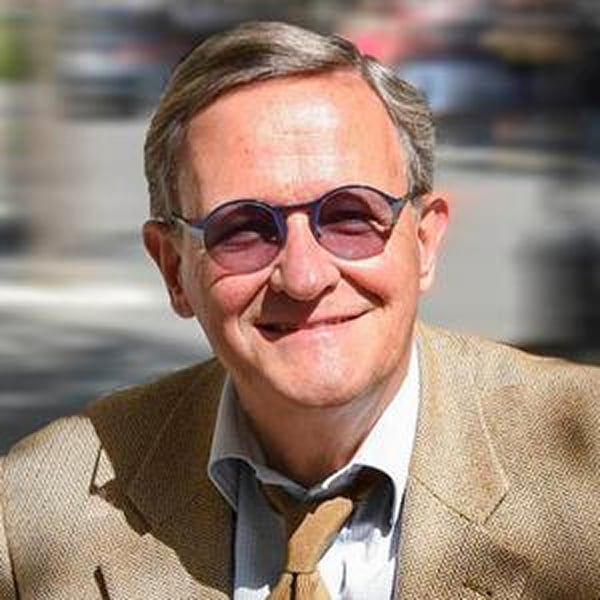

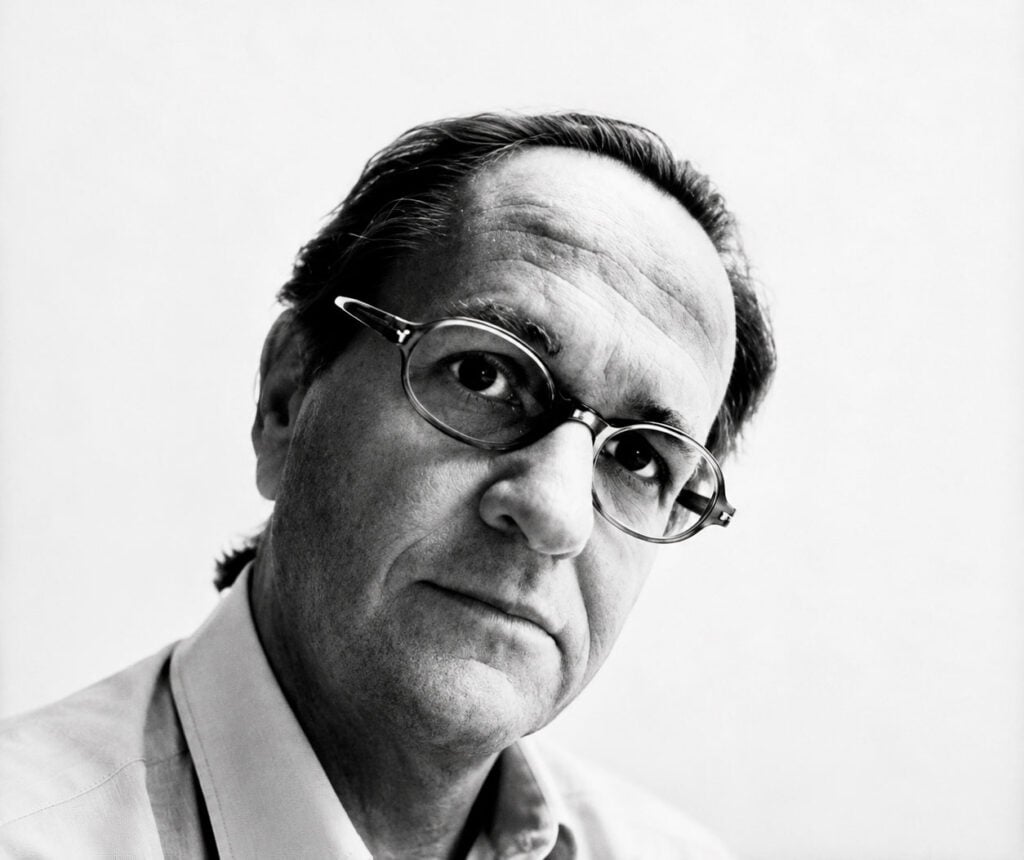
Peace & future researcher + ‌Art Photographer

Related Posts

LONDON – So far so good, at least on the wider level. While internally Iraq seems on the edge of chaos, the much heralded clash of civilizations between the Muslim and Judaeo-Christian worlds has yet to become apparent. We have anger and despair aplenty in the Arab and Muslim worlds. But very little rushing to the standard and there was no great pilgrimage of warriors to join the fight, as happened when the Soviet Union invaded Afghanistan twenty years ago, and then, having driven the Red Army out, were left to ferment in that mountainous redoubt. With the armaments supplied by the CIA the mujahidin were transformed into Al Qaeda that became, for a relatively brief moment as these things go, ‘the greatest threat to the homeland that America has ever known.’ Nevertheless a ‘Cold War’ between much of the Muslim world and the West is certainly in full swing. Winston...
The Challenge of Nuclear Weaponsin the Twenty-first CenturyA Path Forward The peoples and governments of the world face an urgent challenge relating to weaponry of mass destruction and particularly to nuclear weaponry.  At the crossroads of technology, terrorism, geopolitical ambition, and policies of preemption are new and potent dangers for humanity. Despite ending the nuclear standoff of the Cold War era, nuclear weaponry is again menacing the peoples of the world with catastrophic possibilities.  We recognize the need for any government to pursue its security interests in accordance with international law; and further, we recognize that distinctive threats to these interests now exist as a result of an active international terrorist network having declared war on the United States and its allies. Nonetheless, we reject the assessment of the current US administration that upgrading a reliance on nuclear weapons is in any sense justified as a response. We find it...
By Karin Wegestal MP, the Social Democratic Partyon behalf of the Swedish Committee for Solidarity with the Yugoslav People During the last decade, the Federal Republic of Yugoslavia has received more than 500,000 refugees from Croatia and Bosnia, and another 300,000 internally displaced persons, mainly from the province Kosovo and Metohia. For a country with about ten million inhabitants, such an influx of homeless people is obviously a very heavy burden – even under peaceful conditions. But in addition to that, the Federal Republic of Yugoslavia has been the subject to sanctions from the western powers for close to ten years and its infrastructure was badly hurt through Nato’s intense bombardment during 78 days in 1999. The result of all this is that Yugoslavia, once the most developed industrial country in Eastern Europe, is today the poorest country in Europe. In Serbia excluding Kosovo, with about ten million inhabitants and...

Recent Articles

Tony Robinson October 4, 2026 Violence is easy to recognise when someone is being beaten, shot or killed. It becomes more difficult when nobody is holding a weapon. Poverty, discrimination, exploitation and repression can restrict a human life just as effectively, although they do so in very different ways and with very different consequences. Simply adding more categories to an ever-growing list of forms of violence does not really solve the problem. The more interesting question is what all these different situations have in common and why it makes sense to describe them using the same word. Human beings do not simply react to what happens around them. They remember the past, imagine things that do not yet exist, make plans and undertake projects. Workers organise because they imagine different working conditions; people migrate because they imagine another life somewhere else; social movements emerge because people refuse to accept the...
It’s a matter of principles, courage, vision and pulling together – while the militarist world is falling apart… Peter Langille October 3, 2026 “Here, then, is the problem which we present to you, stark and dreadful and inescapable: Shall we put an end to the human race; or shall mankind renounce war?”The Bertrand Russell—Albert Einstein Manifesto, July 9, 1955 ⁕ The forecast for what’s ahead is worrisome. The sharp rise in armed conflicts over the past three years is adding to what was already the highest level in over seventy years. Genocides, which should be prevented are supported. A shared climate emergency that jeopardises survival is ignored. Diverse polls now suggest that people are war-weary, worried and interested in a more effective United Nations. And, there are viable policy options for a more secure world! Yet governments are doubling-down, betting on more war and investing heavily. If current trends persist,...
Johan Galtung 1930-2024October 2015 Published here on October 3, 2026 Let us focus on Civilization for conflict analysis and remedies. Major forms of disorder use violence; war is state organized violence. The most belligerent states are the United States of America and Israel, both with civilization roots. National Evangelism, the US Protestant Christian civilization– more national than evangelical–justifies US warfare as exceptionalism of a people chosen by God, with a manifest destiny to run the world. Orthodox Judaism justifies Israeli warfare to conquer and expand from Nile to Euphrates as a religious right and duty to the Eternal One. The third most belligerent country, the UK, no longer believes it is God-chosen but chosen by the USA; not quite the same but something. But the root cause of global disorder lies in the Occident–with Islam–seeing itself as the single, universal civilization valid for all at all times, all others being...

TFF on Substack

Discover and subscribe to more peace materials on TFF Substack

Most Popular

Tony Robinson October 4, 2026 Violence is easy to recognise when someone is being beaten, shot or killed. It becomes more difficult when nobody is holding a weapon. Poverty, discrimination, exploitation and repression can restrict a human life just as effectively, although they do so in very different ways and with very different consequences. Simply adding more categories to an ever-growing list of forms of violence does not really solve the problem. The more interesting question is what all these different situations have in common and why it makes sense to describe them using the same word. Human beings do not simply react to what happens around them. They remember the past, imagine things that do not yet exist, make plans and undertake projects. Workers organise because they imagine different working conditions; people migrate because they imagine another life somewhere else; social movements emerge because people refuse to accept the...
It’s a matter of principles, courage, vision and pulling together – while the militarist world is falling apart… Peter Langille October 3, 2026 “Here, then, is the problem which we present to you, stark and dreadful and inescapable: Shall we put an end to the human race; or shall mankind renounce war?”The Bertrand Russell—Albert Einstein Manifesto, July 9, 1955 ⁕ The forecast for what’s ahead is worrisome. The sharp rise in armed conflicts over the past three years is adding to what was already the highest level in over seventy years. Genocides, which should be prevented are supported. A shared climate emergency that jeopardises survival is ignored. Diverse polls now suggest that people are war-weary, worried and interested in a more effective United Nations. And, there are viable policy options for a more secure world! Yet governments are doubling-down, betting on more war and investing heavily. If current trends persist,...
Johan Galtung 1930-2024October 2015 Published here on October 3, 2026 Let us focus on Civilization for conflict analysis and remedies. Major forms of disorder use violence; war is state organized violence. The most belligerent states are the United States of America and Israel, both with civilization roots. National Evangelism, the US Protestant Christian civilization– more national than evangelical–justifies US warfare as exceptionalism of a people chosen by God, with a manifest destiny to run the world. Orthodox Judaism justifies Israeli warfare to conquer and expand from Nile to Euphrates as a religious right and duty to the Eternal One. The third most belligerent country, the UK, no longer believes it is God-chosen but chosen by the USA; not quite the same but something. But the root cause of global disorder lies in the Occident–with Islam–seeing itself as the single, universal civilization valid for all at all times, all others being...
Read More
Living-Peace-Sign-Budapest-copy
Tony Robinson October 4, 2026 Violence is easy to recognise when someone is being beaten, shot or killed. It becomes more difficult when nobody is holding a weapon. Poverty, discrimination, exploitation and repression can restrict a human life just as effectively, although they do so in very different ways and with very different consequences. Simply adding more categories to an ever-growing list of forms of violence does not really solve the problem. The more interesting question is what all these different situations have in common and why it makes sense to describe them using the same word. Human beings do not simply react to what happens around them. They remember the past, imagine things that do not yet exist, make plans and undertake projects. Workers organise because they imagine different working conditions; people migrate because they imagine another life somewhere else; social movements emerge because people refuse to accept the...
b54a1f10-8c65-4f0b-9dd5-4abc0a7d04cc_2659x2659
It’s a matter of principles, courage, vision and pulling together – while the militarist world is falling apart… Peter Langille October 3, 2026 “Here, then, is the problem which we present to you, stark and dreadful and inescapable: Shall we put an end to the human race; or shall mankind renounce war?”The Bertrand Russell—Albert Einstein Manifesto, July 9, 1955 ⁕ The forecast for what’s ahead is worrisome. The sharp rise in armed conflicts over the past three years is adding to what was already the highest level in over seventy years. Genocides, which should be prevented are supported. A shared climate emergency that jeopardises survival is ignored. Diverse polls now suggest that people are war-weary, worried and interested in a more effective United Nations. And, there are viable policy options for a more secure world! Yet governments are doubling-down, betting on more war and investing heavily. If current trends persist,...
010
Johan Galtung 1930-2024October 2015 Published here on October 3, 2026 Let us focus on Civilization for conflict analysis and remedies. Major forms of disorder use violence; war is state organized violence. The most belligerent states are the United States of America and Israel, both with civilization roots. National Evangelism, the US Protestant Christian civilization– more national than evangelical–justifies US warfare as exceptionalism of a people chosen by God, with a manifest destiny to run the world. Orthodox Judaism justifies Israeli warfare to conquer and expand from Nile to Euphrates as a religious right and duty to the Eternal One. The third most belligerent country, the UK, no longer believes it is God-chosen but chosen by the USA; not quite the same but something. But the root cause of global disorder lies in the Occident–with Islam–seeing itself as the single, universal civilization valid for all at all times, all others being...
Screenshot 2026-10-02 011738
Jan ObergPhD, director, The Transnational Foundation for Peace and Future Research, TFFLund, Sweden October 2, 2026 This is my full original manuscript. The Chinese Academy of Social Science, CASS, makes two publications out if it. 1. China’s Five-year plan emphasized the capabilities of basic research and original innovation. It is regarded as the goal of the future social development, which, as required, should be significantly enhanced. Can you comment on the importance of original innovation in research and academic study? I believe it is easier to define “original innovation” in the natural sciences than in social sciences. The breaking points of what constitutes something new, or innovative, are not quite as sharp in the latter. But in both fields it is about opening up something that was closed, unseen, unexplored before – making manifest what was earlier latent. Innovations come in many forms and shapes – naming something that was not...
arctic-circle-map
The agreement is catastrophic both because of what it says and what it doesn’t mention. It reduces further the major asset of security policies: Freedom of action. Jan Oberg TFF director September 25, 2026 A couple of hours before the agreement was signed on September 22, 2026, I published the following 13 hypotheses about what it would most likely contain on TFF Substack (in English). I was wrong on only the first point. Contrary to what Trump had written on his Truth Social platform, it does not appear to come into force immediately. In fact, it turned out to be worse than even I had anticipated. After these hypotheses now come a number of reflections in light of what the agreement actually contains, and does not contain, as well as the way in which it has generally been presented by major media outlets and by the public-service broadcaster DR. My...
girl-5894831_1280
Below are TFF-related media mentions, comments, videos and social media posts published elsewhere but not on this homepage. We happen to catch and list only a fraction. Regarding video comments and debates, we recommend that you go to the TFF Video Channel on Substack where many of them are reproduced. Jan Oberg is a contributor to China Daily – 52 million daily clicks – and Global Times, CGTN and CCTV (the national television), China Investment, Xinhua News Agency and several others. Articles and videos on these media very often multiply into countless Chinese (and Western media) that re-post them from these main media. Thanks to The China Academy, his analyses, interviews and comments are frequently posted on YouTube channels such as Thinkers Forum and Wave Media. These videos are often re-posted on Bilibili (China’s YouTube), the China Content Center on TikTok, and on the Chinese edition of TikTok, Douyin.com. This means reaching hundreds of millions of viewers worldwide over a year. While there are too many to catch on all these...