Kalejdoskop 56 – Menneskerettigheder og konfliktløsning

“Pligten er rettighedernes sande kilde.
Handling er pligten; frugten er rettigheden.”
Mohandas K. Gandhi, der døde for 50 år siden.

Forsvaret for de menneskelige rettigheder (MR) er i rivende udvikling. Nationale centre, folkelige bevægelser, kulturpersonligheder, tribunaler og domstole, medier, solidaritetsgrupper, FN og andre mellemstatslige organer kappes om at etablere fakta, overvåge og rapportere, behandle krænkelser og kræve handling og straf samt genemføre projekter, som skal forebygge overgrebene og hjælpe ofrene.

Dette er ubetinget godt. Der er til stadighed brug for vågne øjne overalt og for at befæste de normer, der er nedfældet i nationale og internationale aftaler og adskiller civilisation fra barbari. Det er også ukontroversielt idet man ikke kan være for MR-krænkelser.

MR-politik bør dog diskuteres. Det forblir problematisk at universalisere de hovedsagligt vestlige MR- normer på tværs af kulturelle skillelinjer. Kan og skal én kulturs norm være gældende globalt eller skal en kærne eller fællesnævner, vi alle kan være enige om, stå i centrum mens andre normer tillades at variere? Kort sagt, hvorfor skal kinesere acceptere alle vestlige MR-værdier, når europæere ikke drømmer om at acceptere kinesiske normer for hvad der er borgeres ret og pligt?

Forsvaret for menneskerettighederne vil have en tendens til at følge hvad der er politisk korrekt, fordi det er dér de økonomiske midler findes, som skal bære det konkrete arbejde. Således vil det altid være lettere at pege på naboens krænkelser end på ens egne og på fjenders snarere end på venners forbrydelser. Der ser ud til at være en specielt høj koncentration af moralister i MR-kredse, ikke mindst i USA.

Og hvilke menneskerettigheder bør først og fremmest forsvares? De millioner af mennesker, hvis sociale og økonomiske rettigheder rammes hårdt af globaliseringen under bl.a. Verdensbankens og Valutafondens overhøjhed er der ikke mange MR-organisationer, der er gået i brechen for – ejheller for de uskyldige civile, som ofte rammes af det masseødelæggende våben, der hedder sanktioner. Begivenhederne på den Himmelske Freds Plads i Beijing vejer tungere end de efter sigende 100 millioner migrerende kinesiske bønder, der lever kummerligt uden rettigheder i storbyerne formodentlig fordi MR når det kommer til stykket underordnes den kapitalistiske udvikling, der nu som altid før kræver sine ofre.

De mellem 50 000 og 100 000 mennesker rundt om på kloden, som dør unødvendigt hver dag af mangel på bl.a. rent vand, husly og klæder – henved 20 millioner per år – vækker i MR-kredse og medier mindre debat end f.eks. hr. Karadzic i Bosnien. Jurister er ofte individfikserede og dermed strukturblinde.

Arbejdsfordelingen er et andet problem. I en verden med stærkt begrænsede resourcer til “gode” og humane formål som MR, udføres meget dobbeltarbejde. På Balkan finder vi snesevis af lokale og internationale bevægelser for fred og MR, OSCE, EU, Europarådet, FNs civilpoliti, FNs Højkommissariat for MR, halvstatslige institutioner samt satelliter, der overvåger, rapporterer og behandler MR-problemer i de samme områder.

I MR-debat nævnes sjældent samspillet mellem MR og konflikter. Så godt som alle MR-krænkelser bunder i konflikter. Ægtefæller tæver hinanden fysiskt og psykiskt fordi de ikke har det godt med sig selv og hinanden. En statsleder eller regering, der ikke skammer sig over at forvolde tusindvis af mennesker lidelse eller sende dem på flugt, har det ikke godt med sig selv og sit “projekt” eller føler sig truet.

Forfulgte minoriteter fremstår ofte som uskyldige ofre, fordi mange af os spontant tager parti for den mindste. Det betyder dog ikke altid at alle majoriteter/ stater er kulsorte og minoriteter/løsrivere er kridhvide. Det er naturligt og politiskt korrekt at forsvare den krænkede, ofret. Det skal vi gøre. Og i tilfælde hvor det er soleklart hvem der er offer og bøddel i historiens og nuets perspektiv skal vi tillige fordømme de sidste.

Men de underliggende konflikter, der skaber MR-krænkelser, blir ikke løst ved at vi fordømmer A og udtrykker sympati med B. Fremgangsmåden må variere altefter om vi står over for en symmetrisk eller a-symmetrisk konflikt. Tag eksemplet Kosovo, som jeg selv har været involveret i på alle sider gennem fire år: de fleste MR-organisationer fordømmer entydigt Serbien/ Jugoslavien for sin voldsomme undertrykkelse af den albanske minoritet i Kosovo/a, hvis politiske ledelse anvender ikkevold. De giver uforbeholdent direkte eller indirekte støtte til minoritetens ønske om at blive en selvstændig stat. En del af dem har næppe anvendt megen tid på at tale med serbere i Beograd eller med serberne i Kosovo.

Jeg mener så afgjort at det er den jugoslaviske ledelse, der må tage det første skridt til forsoning i området. Men de som råber “politistat” eller “fascisme” efter Beograd tilfredsstiller i bedste fald kun moralistens overfladiske behov og politiske korrekthed. Man får ikke nogen MR-krænkende aktør til at lytte eller ændre politik ved at krænke dennes ret til at fremstille sagen fra sin side og blive lyttet til. Serberne har en række rimelige forklaringer på sin politik hvilket ikke automatisk indebærer at de har valgt adekvate eller acceptable midler, men de har også – eksakt som albanerne – racister, uforsonlige nationalister og folk som nægter at træffes med “de andre.”

Men serberne er fire gange så mange og militært og politimæssigt stærkere? Javist, men albanerne er stærkere hvis vi måler på informationsstrategi, sympati rundt om i verden og sammenhold og de har en alternativ økonomi mens Serbiens er ødelagt af krig, sanktioner og omkostningerne ved at holde Kosovo på plads.

Det ville være dejligt hvis man kunne bygge på en enkel teori om ondskab som hovedårsag til MR-krænkelser. Men udover fordømmelse og solidaritet må vi altså også gå til de komplicerede historiske, psykologiske, kulturelle og økonomiske rødder, der får mennesker til at krænke medmennesker på krop og sjæl.

Der skal nok være nogen, der læser ovenstående som et angreb på den gode kamp for MR. Det er deres menneskelig ret. Målene er vi enige om, filosofien og metoderne bør dog altid kunne diskuteres.

Mit egentlige ærinde er at pege på nødvendigheden af en langt stærkere koordinering og integration af det humanitære engagement, en innovativ formel for fredsarbejde = MR + voldsforebyggelse + konfliktløsning + social-økonomisk udvikling + kulturel identitet + omsorgsetik for Naturen. Det er, dybest set, én og samme bestræbelse: kampen for en mindre voldelig verden.

En optimal koordinering, erfaringsudveksling og resourceallokering til integrerede projekter parret med en opblødning af grænserne mellem organisationerne inden for alle disse felter, ville være til gavn for verdens nødlidende – og effektivisere de folkelige organisationers kamp for det gode samfund.
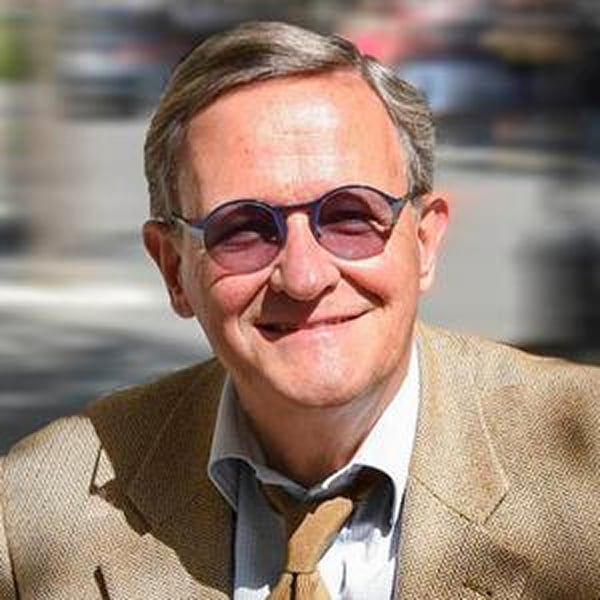

Peace & future researcher + ‌Art Photographer

Related Posts

LONDON – So far so good, at least on the wider level. While internally Iraq seems on the edge of chaos, the much heralded clash of civilizations between the Muslim and Judaeo-Christian worlds has yet to become apparent. We have anger and despair aplenty in the Arab and Muslim worlds. But very little rushing to the standard and there was no great pilgrimage of warriors to join the fight, as happened when the Soviet Union invaded Afghanistan twenty years ago, and then, having driven the Red Army out, were left to ferment in that mountainous redoubt. With the armaments supplied by the CIA the mujahidin were transformed into Al Qaeda that became, for a relatively brief moment as these things go, ‘the greatest threat to the homeland that America has ever known.’ Nevertheless a ‘Cold War’ between much of the Muslim world and the West is certainly in full swing. Winston...
The Challenge of Nuclear Weaponsin the Twenty-first CenturyA Path Forward The peoples and governments of the world face an urgent challenge relating to weaponry of mass destruction and particularly to nuclear weaponry.  At the crossroads of technology, terrorism, geopolitical ambition, and policies of preemption are new and potent dangers for humanity. Despite ending the nuclear standoff of the Cold War era, nuclear weaponry is again menacing the peoples of the world with catastrophic possibilities.  We recognize the need for any government to pursue its security interests in accordance with international law; and further, we recognize that distinctive threats to these interests now exist as a result of an active international terrorist network having declared war on the United States and its allies. Nonetheless, we reject the assessment of the current US administration that upgrading a reliance on nuclear weapons is in any sense justified as a response. We find it...
By Karin Wegestal MP, the Social Democratic Partyon behalf of the Swedish Committee for Solidarity with the Yugoslav People During the last decade, the Federal Republic of Yugoslavia has received more than 500,000 refugees from Croatia and Bosnia, and another 300,000 internally displaced persons, mainly from the province Kosovo and Metohia. For a country with about ten million inhabitants, such an influx of homeless people is obviously a very heavy burden – even under peaceful conditions. But in addition to that, the Federal Republic of Yugoslavia has been the subject to sanctions from the western powers for close to ten years and its infrastructure was badly hurt through Nato’s intense bombardment during 78 days in 1999. The result of all this is that Yugoslavia, once the most developed industrial country in Eastern Europe, is today the poorest country in Europe. In Serbia excluding Kosovo, with about ten million inhabitants and...

Recent Articles

Tony Robinson October 4, 2026 Violence is easy to recognise when someone is being beaten, shot or killed. It becomes more difficult when nobody is holding a weapon. Poverty, discrimination, exploitation and repression can restrict a human life just as effectively, although they do so in very different ways and with very different consequences. Simply adding more categories to an ever-growing list of forms of violence does not really solve the problem. The more interesting question is what all these different situations have in common and why it makes sense to describe them using the same word. Human beings do not simply react to what happens around them. They remember the past, imagine things that do not yet exist, make plans and undertake projects. Workers organise because they imagine different working conditions; people migrate because they imagine another life somewhere else; social movements emerge because people refuse to accept the...
It’s a matter of principles, courage, vision and pulling together – while the militarist world is falling apart… Peter Langille October 3, 2026 “Here, then, is the problem which we present to you, stark and dreadful and inescapable: Shall we put an end to the human race; or shall mankind renounce war?”The Bertrand Russell—Albert Einstein Manifesto, July 9, 1955 ⁕ The forecast for what’s ahead is worrisome. The sharp rise in armed conflicts over the past three years is adding to what was already the highest level in over seventy years. Genocides, which should be prevented are supported. A shared climate emergency that jeopardises survival is ignored. Diverse polls now suggest that people are war-weary, worried and interested in a more effective United Nations. And, there are viable policy options for a more secure world! Yet governments are doubling-down, betting on more war and investing heavily. If current trends persist,...
Johan Galtung 1930-2024October 2015 Published here on October 3, 2026 Let us focus on Civilization for conflict analysis and remedies. Major forms of disorder use violence; war is state organized violence. The most belligerent states are the United States of America and Israel, both with civilization roots. National Evangelism, the US Protestant Christian civilization– more national than evangelical–justifies US warfare as exceptionalism of a people chosen by God, with a manifest destiny to run the world. Orthodox Judaism justifies Israeli warfare to conquer and expand from Nile to Euphrates as a religious right and duty to the Eternal One. The third most belligerent country, the UK, no longer believes it is God-chosen but chosen by the USA; not quite the same but something. But the root cause of global disorder lies in the Occident–with Islam–seeing itself as the single, universal civilization valid for all at all times, all others being...

TFF on Substack

Discover and subscribe to more peace materials on TFF Substack

Most Popular

Tony Robinson October 4, 2026 Violence is easy to recognise when someone is being beaten, shot or killed. It becomes more difficult when nobody is holding a weapon. Poverty, discrimination, exploitation and repression can restrict a human life just as effectively, although they do so in very different ways and with very different consequences. Simply adding more categories to an ever-growing list of forms of violence does not really solve the problem. The more interesting question is what all these different situations have in common and why it makes sense to describe them using the same word. Human beings do not simply react to what happens around them. They remember the past, imagine things that do not yet exist, make plans and undertake projects. Workers organise because they imagine different working conditions; people migrate because they imagine another life somewhere else; social movements emerge because people refuse to accept the...
It’s a matter of principles, courage, vision and pulling together – while the militarist world is falling apart… Peter Langille October 3, 2026 “Here, then, is the problem which we present to you, stark and dreadful and inescapable: Shall we put an end to the human race; or shall mankind renounce war?”The Bertrand Russell—Albert Einstein Manifesto, July 9, 1955 ⁕ The forecast for what’s ahead is worrisome. The sharp rise in armed conflicts over the past three years is adding to what was already the highest level in over seventy years. Genocides, which should be prevented are supported. A shared climate emergency that jeopardises survival is ignored. Diverse polls now suggest that people are war-weary, worried and interested in a more effective United Nations. And, there are viable policy options for a more secure world! Yet governments are doubling-down, betting on more war and investing heavily. If current trends persist,...
Johan Galtung 1930-2024October 2015 Published here on October 3, 2026 Let us focus on Civilization for conflict analysis and remedies. Major forms of disorder use violence; war is state organized violence. The most belligerent states are the United States of America and Israel, both with civilization roots. National Evangelism, the US Protestant Christian civilization– more national than evangelical–justifies US warfare as exceptionalism of a people chosen by God, with a manifest destiny to run the world. Orthodox Judaism justifies Israeli warfare to conquer and expand from Nile to Euphrates as a religious right and duty to the Eternal One. The third most belligerent country, the UK, no longer believes it is God-chosen but chosen by the USA; not quite the same but something. But the root cause of global disorder lies in the Occident–with Islam–seeing itself as the single, universal civilization valid for all at all times, all others being...
Read More
Living-Peace-Sign-Budapest-copy
Tony Robinson October 4, 2026 Violence is easy to recognise when someone is being beaten, shot or killed. It becomes more difficult when nobody is holding a weapon. Poverty, discrimination, exploitation and repression can restrict a human life just as effectively, although they do so in very different ways and with very different consequences. Simply adding more categories to an ever-growing list of forms of violence does not really solve the problem. The more interesting question is what all these different situations have in common and why it makes sense to describe them using the same word. Human beings do not simply react to what happens around them. They remember the past, imagine things that do not yet exist, make plans and undertake projects. Workers organise because they imagine different working conditions; people migrate because they imagine another life somewhere else; social movements emerge because people refuse to accept the...
b54a1f10-8c65-4f0b-9dd5-4abc0a7d04cc_2659x2659
It’s a matter of principles, courage, vision and pulling together – while the militarist world is falling apart… Peter Langille October 3, 2026 “Here, then, is the problem which we present to you, stark and dreadful and inescapable: Shall we put an end to the human race; or shall mankind renounce war?”The Bertrand Russell—Albert Einstein Manifesto, July 9, 1955 ⁕ The forecast for what’s ahead is worrisome. The sharp rise in armed conflicts over the past three years is adding to what was already the highest level in over seventy years. Genocides, which should be prevented are supported. A shared climate emergency that jeopardises survival is ignored. Diverse polls now suggest that people are war-weary, worried and interested in a more effective United Nations. And, there are viable policy options for a more secure world! Yet governments are doubling-down, betting on more war and investing heavily. If current trends persist,...
010
Johan Galtung 1930-2024October 2015 Published here on October 3, 2026 Let us focus on Civilization for conflict analysis and remedies. Major forms of disorder use violence; war is state organized violence. The most belligerent states are the United States of America and Israel, both with civilization roots. National Evangelism, the US Protestant Christian civilization– more national than evangelical–justifies US warfare as exceptionalism of a people chosen by God, with a manifest destiny to run the world. Orthodox Judaism justifies Israeli warfare to conquer and expand from Nile to Euphrates as a religious right and duty to the Eternal One. The third most belligerent country, the UK, no longer believes it is God-chosen but chosen by the USA; not quite the same but something. But the root cause of global disorder lies in the Occident–with Islam–seeing itself as the single, universal civilization valid for all at all times, all others being...
Screenshot 2026-10-02 011738
Jan ObergPhD, director, The Transnational Foundation for Peace and Future Research, TFFLund, Sweden October 2, 2026 This is my full original manuscript. The Chinese Academy of Social Science, CASS, makes two publications out if it. 1. China’s Five-year plan emphasized the capabilities of basic research and original innovation. It is regarded as the goal of the future social development, which, as required, should be significantly enhanced. Can you comment on the importance of original innovation in research and academic study? I believe it is easier to define “original innovation” in the natural sciences than in social sciences. The breaking points of what constitutes something new, or innovative, are not quite as sharp in the latter. But in both fields it is about opening up something that was closed, unseen, unexplored before – making manifest what was earlier latent. Innovations come in many forms and shapes – naming something that was not...
arctic-circle-map
The agreement is catastrophic both because of what it says and what it doesn’t mention. It reduces further the major asset of security policies: Freedom of action. Jan Oberg TFF director September 25, 2026 A couple of hours before the agreement was signed on September 22, 2026, I published the following 13 hypotheses about what it would most likely contain on TFF Substack (in English). I was wrong on only the first point. Contrary to what Trump had written on his Truth Social platform, it does not appear to come into force immediately. In fact, it turned out to be worse than even I had anticipated. After these hypotheses now come a number of reflections in light of what the agreement actually contains, and does not contain, as well as the way in which it has generally been presented by major media outlets and by the public-service broadcaster DR. My...
girl-5894831_1280
Below are TFF-related media mentions, comments, videos and social media posts published elsewhere but not on this homepage. We happen to catch and list only a fraction. Regarding video comments and debates, we recommend that you go to the TFF Video Channel on Substack where many of them are reproduced. Jan Oberg is a contributor to China Daily – 52 million daily clicks – and Global Times, CGTN and CCTV (the national television), China Investment, Xinhua News Agency and several others. Articles and videos on these media very often multiply into countless Chinese (and Western media) that re-post them from these main media. Thanks to The China Academy, his analyses, interviews and comments are frequently posted on YouTube channels such as Thinkers Forum and Wave Media. These videos are often re-posted on Bilibili (China’s YouTube), the China Content Center on TikTok, and on the Chinese edition of TikTok, Douyin.com. This means reaching hundreds of millions of viewers worldwide over a year. While there are too many to catch on all these...