John Pilger: War In Europe And The Rise Of Raw Propaganda

John Pilger

April 5, 2022

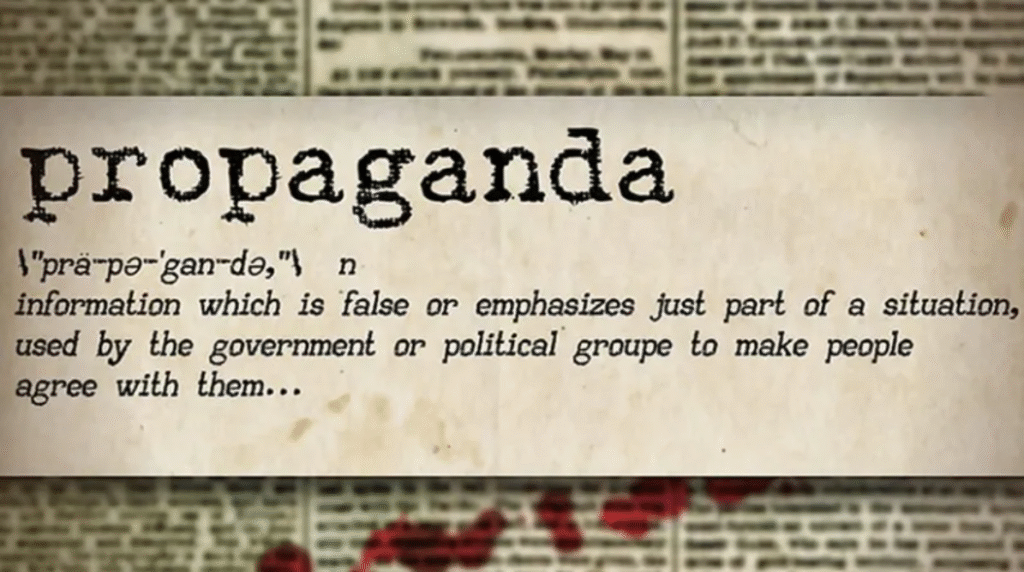
Marshall McLuhan’s prophecy that “the successor to politics will be propaganda” has happened. Raw propaganda is now the rule in Western democracies, especially the US and Britain. On matters of war and peace, ministerial deceit is reported as news. Inconvenient facts are censored, demons are nurtured. The model is corporate spin, the currency of the age.

In 1964, Marshall McLuhan famously declared, “The medium is the message.” The lie is the message now.

Originally published by EurasiaReview on February 19, 2022

But is this new? It is more than a century since Edward Bernays, the father of spin, invented “public relations” as a cover for war propaganda. What is new is the virtual elimination of dissent in the mainstream.

The great editor David Bowman, author of The Captive Press, called this “a defenestration of all who refuse to follow a line and to swallow the unpalatable and are brave”. He was referring to independent journalists and whistleblowers, the honest mavericks to whom media organisations once gave space, often with pride. The space has been abolished.

The war hysteria that has rolled in like a tidal wave in recent weeks and months is the most striking example. Known by its jargon, “shaping the narrative”, much if not most of it is pure propaganda.

The Russians are coming. Russia is worse than bad. Putin is evil, “a Nazi-like Hitler”, salivated the Labour MP Chris Bryant. Ukraine is about to be invaded by Russia – tonight, this week, next week. The sources include an ex CIA propagandist who now speaks for the US State Department and offers no evidence of his claims about Russian actions because “it comes from the US Government”.

The no-evidence rule also applies in London. The British Foreign Secretary, Liz Truss, who spent £500,000 of public money flying to Australia in a private plane to warn the Canberra government that both Russia and China were about to pounce, offered no evidence. Antipodean heads nodded; the “narrative” is unchallenged there. One rare exception, former prime minister Paul Keating, called Truss’s warmongering “demented”.

Truss has blithely confused the countries of the Baltic and the Black Sea. In Moscow, she told the Russian foreign minister that Britain would never accept Russian sovereignty over Rostov and Voronezh – until it was pointed out to her that these places were not part of Ukraine but in Russia. (Read the Russian press about the buffoonery of this pretender to 10 Downing Street and cringe.)

This entire farce, recently starring Boris Johnson in Moscow playing a clownish version of his hero, Churchill, might be enjoyed as satire were it not for its wilful abuse of facts and historical understanding and the real danger of war.

Vladimir Putin refers to the “genocide” in the eastern Donbas region of Ukraine. Following the coup in Ukraine in 2014 – orchestrated by Barack Obama’s “point person” in Kyiv, Victoria Nuland – the coup regime, infested with neo-Nazis, launched a campaign of terror against Russian-speaking Donbas, which accounts for a third of Ukraine’s population.

Overseen by CIA director John Brennan in Kyiv, “special security units” coordinated savage attacks on the people of Donbas, who opposed the coup. Video and eyewitness reports show bussed fascist thugs burning the trade union headquarters in the city of Odessa, killing 41 people trapped inside. The police are standing by. Obama congratulated the “duly elected” coup regime for its “remarkable restraint”.

In the US media, the Odessa atrocity was played down as “murky” and a “tragedy” in which “nationalists” (neo-Nazis) attacked “separatists” (people collecting signatures for a referendum on a federal Ukraine). Rupert Murdoch’s Wall Street Journal damned the victims – “Deadly Ukraine Fire Likely Sparked by Rebels, Government Says”.

Professor Stephen Cohen, acclaimed as America’s leading authority on Russia, wrote, “The pogrom-like burning to death of ethnic Russians and others in Odessa reawakened memories of Nazi extermination squads in Ukraine during world war two. [Today] storm-like assaults on gays, Jews, elderly ethnic Russians, and other ‘impure’ citizens are widespread throughout Kyiv-ruled Ukraine, along with torchlight marches reminiscent of those that eventually inflamed Germany in the late 1920s and 1930s …

“The police and official legal authorities do virtually nothing to prevent these neo-fascist acts or to prosecute them. On the contrary, Kyiv has officially encouraged them by systematically rehabilitating and even memorialising Ukrainian collaborators with Nazi German extermination pogroms, renaming streets in their honour, building monuments to them, rewriting history to glorify them, and more.”

Today, neo-Nazi Ukraine is seldom mentioned. That the British are training the Ukrainian National Guard, which includes neo-Nazis, is not news. (See Matt Kennard’s Declassified report in Consortium 15 February). The return of violent, endorsed fascism to 21st-century Europe, to quote Harold Pinter, “never happened … even while it was happening”.

On 16 December, the United Nations tabled a resolution that called for “combating glorification of Nazism, neo-Nazism and other practices that contribute to fuelling contemporary forms of racism”. The only nations to vote against it were the United States and Ukraine.

Almost every Russian knows that it was across the plains of Ukraine’s “borderland” that Hitler’s divisions swept from the west in 1941, bolstered by Ukraine’s Nazi cultists and collaborators. The result was more than 20 million Russians dead.

•

Setting aside the manoeuvres and cynicism of geopolitics, whomever the players, this historical memory is the driving force behind Russia’s respect-seeking, self-protective security proposals, which were published in Moscow in the week the UN voted 130-2 to outlaw Nazism.

They are:

+ NATO guarantees that it will not deploy missiles in nations bordering Russia. (They are already in place from Slovenia to Romania, with Poland to follow)

+ NATO to stop military and naval exercises in nations and seas bordering Russia.

+ Ukraine will not become a member of NATO.

+ the West and Russia to sign a binding East-West security pact.

+ the landmark treaty between the US and Russia covering intermediate-range nuclear weapons to be restored. (The US abandoned it in 2019).

These amount to a comprehensive draft of a peace plan for all of post-war Europe and ought to be welcomed in the West. But who understands their significance in Britain? What they are told is that Putin is a pariah and a threat to Christendom.

Russian-speaking Ukrainians, under economic blockade by Kyiv for seven years, are fighting for their survival. The “massing” army we seldom hear about are the thirteen Ukrainian army brigades laying siege to Donbas: an estimated 150,000 troops. If they attack, the provocation to Russia will almost certainly mean war.

In 2015, brokered by the Germans and French, the presidents of Russia, Ukraine, Germany and France met in Minsk and signed an interim peace deal. Ukraine agreed to offer autonomy to Donbas, now the self-declared republics of Donetsk and Luhansk.

The Minsk agreement has never been given a chance. In Britain, the line,  amplified by Boris Johnson, is that Ukraine is being “dictated to” by world leaders. For its part, Britain is arming Ukraine and training its army.

•

Since the first Cold War, NATO has effectively marched right up to Russia’s most sensitive border having demonstrated its bloody aggression in Yugoslavia, Afghanistan, Iraq, Libya and broken solemn promises to pull back.  

Having dragged European “allies” into American wars that do not concern them, the great unspoken is that NATO itself is the real threat to European security.

In Britain, a state and media xenophobia is triggered at the very mention of “Russia”. Mark the knee-jerk hostility with which the BBC reports Russia. Why? Is it because the restoration of imperial mythology demands, above all, a permanent enemy? Certainly, we deserve better.

Originally published at EurasiaReview on February 19, 2022

About the author

*John Pilger can be reached through his website: www.johnpilger.com. Pilger is an Australian journalist, writer, scholar, and documentary filmmaker. He has been mainly based in Britain since 1962. He is also currently Visiting Professor at Cornell University in New York.

Please help TFF remain truly independent by contributing if you benefited from this article

Related Posts

The agreement is catastrophic both because of what it says and what it doesn’t mention. It reduces further the major asset of security policies: Freedom of action. Jan Oberg TFF director September 25, 2026 A couple of hours before the agreement was signed on September 22, 2026, I published the following 13 hypotheses about what it would most likely contain on TFF Substack (in English). I was wrong on only the first point. Contrary to what Trump had written on his Truth Social platform, it does not appear to come into force immediately. In fact, it turned out to be worse than even I had anticipated. After these hypotheses now come a number of reflections in light of what the agreement actually contains, and does not contain, as well as the way in which it has generally been presented by major media outlets and by the public-service broadcaster DR. My...
Below are TFF-related media mentions, comments, videos and social media posts published elsewhere but not on this homepage. We happen to catch and list only a fraction. Regarding video comments and debates, we recommend that you go to the TFF Video Channel on Substack where many of them are reproduced. Jan Oberg is a contributor to China Daily – 52 million daily clicks – and Global Times, CGTN and CCTV (the national television), China Investment, Xinhua News Agency and several others. Articles and videos on these media very often multiply into countless Chinese (and Western media) that re-post them from these main media. Thanks to The China Academy, his analyses, interviews and comments are frequently posted on YouTube channels such as Thinkers Forum and Wave Media. These videos are often re-posted on Bilibili (China’s YouTube), the China Content Center on TikTok, and on the Chinese edition of TikTok, Douyin.com. This means reaching hundreds of millions of viewers worldwide over a year. While there are too many to catch on all these...
Jan Oberg May 15, 2026 Go to this Fox News page and scroll the whole way down: President Donald Trump tells the world that his meeting with President Xi Jinping yielded a lot of very concrete political and economic results – of course, only where the Chinese side, according to him, agreed with him. He does not mention the Taiwan issue, but Secretary of State, Marco Rubio, says that it did not feature prominently in their talks and that the US policy on Taiwan has not changed. Then go to China Daily – or Global Times – and you will see that for the Chinese it is framework, principles, structure of cooperation etc. that matters – all embedded in the overall idea of “constructive bilateral relationship of strategic stability.” Nowhere is any concrete agreement or deal – all that Trump refers to – mentioned. At the general level, this gives you insights into the very different social...

Recent Articles

Tony Robinson October 4, 2026 Violence is easy to recognise when someone is being beaten, shot or killed. It becomes more difficult when nobody is holding a weapon. Poverty, discrimination, exploitation and repression can restrict a human life just as effectively, although they do so in very different ways and with very different consequences. Simply adding more categories to an ever-growing list of forms of violence does not really solve the problem. The more interesting question is what all these different situations have in common and why it makes sense to describe them using the same word. Human beings do not simply react to what happens around them. They remember the past, imagine things that do not yet exist, make plans and undertake projects. Workers organise because they imagine different working conditions; people migrate because they imagine another life somewhere else; social movements emerge because people refuse to accept the...
It’s a matter of principles, courage, vision and pulling together – while the militarist world is falling apart… Peter Langille October 3, 2026 “Here, then, is the problem which we present to you, stark and dreadful and inescapable: Shall we put an end to the human race; or shall mankind renounce war?”The Bertrand Russell—Albert Einstein Manifesto, July 9, 1955 ⁕ The forecast for what’s ahead is worrisome. The sharp rise in armed conflicts over the past three years is adding to what was already the highest level in over seventy years. Genocides, which should be prevented are supported. A shared climate emergency that jeopardises survival is ignored. Diverse polls now suggest that people are war-weary, worried and interested in a more effective United Nations. And, there are viable policy options for a more secure world! Yet governments are doubling-down, betting on more war and investing heavily. If current trends persist,...
Johan Galtung 1930-2024October 2015 Published here on October 3, 2026 Let us focus on Civilization for conflict analysis and remedies. Major forms of disorder use violence; war is state organized violence. The most belligerent states are the United States of America and Israel, both with civilization roots. National Evangelism, the US Protestant Christian civilization– more national than evangelical–justifies US warfare as exceptionalism of a people chosen by God, with a manifest destiny to run the world. Orthodox Judaism justifies Israeli warfare to conquer and expand from Nile to Euphrates as a religious right and duty to the Eternal One. The third most belligerent country, the UK, no longer believes it is God-chosen but chosen by the USA; not quite the same but something. But the root cause of global disorder lies in the Occident–with Islam–seeing itself as the single, universal civilization valid for all at all times, all others being...

TFF on Substack

Discover and subscribe to more peace materials on TFF Substack

Most Popular

Tony Robinson October 4, 2026 Violence is easy to recognise when someone is being beaten, shot or killed. It becomes more difficult when nobody is holding a weapon. Poverty, discrimination, exploitation and repression can restrict a human life just as effectively, although they do so in very different ways and with very different consequences. Simply adding more categories to an ever-growing list of forms of violence does not really solve the problem. The more interesting question is what all these different situations have in common and why it makes sense to describe them using the same word. Human beings do not simply react to what happens around them. They remember the past, imagine things that do not yet exist, make plans and undertake projects. Workers organise because they imagine different working conditions; people migrate because they imagine another life somewhere else; social movements emerge because people refuse to accept the...
It’s a matter of principles, courage, vision and pulling together – while the militarist world is falling apart… Peter Langille October 3, 2026 “Here, then, is the problem which we present to you, stark and dreadful and inescapable: Shall we put an end to the human race; or shall mankind renounce war?”The Bertrand Russell—Albert Einstein Manifesto, July 9, 1955 ⁕ The forecast for what’s ahead is worrisome. The sharp rise in armed conflicts over the past three years is adding to what was already the highest level in over seventy years. Genocides, which should be prevented are supported. A shared climate emergency that jeopardises survival is ignored. Diverse polls now suggest that people are war-weary, worried and interested in a more effective United Nations. And, there are viable policy options for a more secure world! Yet governments are doubling-down, betting on more war and investing heavily. If current trends persist,...
Johan Galtung 1930-2024October 2015 Published here on October 3, 2026 Let us focus on Civilization for conflict analysis and remedies. Major forms of disorder use violence; war is state organized violence. The most belligerent states are the United States of America and Israel, both with civilization roots. National Evangelism, the US Protestant Christian civilization– more national than evangelical–justifies US warfare as exceptionalism of a people chosen by God, with a manifest destiny to run the world. Orthodox Judaism justifies Israeli warfare to conquer and expand from Nile to Euphrates as a religious right and duty to the Eternal One. The third most belligerent country, the UK, no longer believes it is God-chosen but chosen by the USA; not quite the same but something. But the root cause of global disorder lies in the Occident–with Islam–seeing itself as the single, universal civilization valid for all at all times, all others being...
Read More
Living-Peace-Sign-Budapest-copy
Tony Robinson October 4, 2026 Violence is easy to recognise when someone is being beaten, shot or killed. It becomes more difficult when nobody is holding a weapon. Poverty, discrimination, exploitation and repression can restrict a human life just as effectively, although they do so in very different ways and with very different consequences. Simply adding more categories to an ever-growing list of forms of violence does not really solve the problem. The more interesting question is what all these different situations have in common and why it makes sense to describe them using the same word. Human beings do not simply react to what happens around them. They remember the past, imagine things that do not yet exist, make plans and undertake projects. Workers organise because they imagine different working conditions; people migrate because they imagine another life somewhere else; social movements emerge because people refuse to accept the...
b54a1f10-8c65-4f0b-9dd5-4abc0a7d04cc_2659x2659
It’s a matter of principles, courage, vision and pulling together – while the militarist world is falling apart… Peter Langille October 3, 2026 “Here, then, is the problem which we present to you, stark and dreadful and inescapable: Shall we put an end to the human race; or shall mankind renounce war?”The Bertrand Russell—Albert Einstein Manifesto, July 9, 1955 ⁕ The forecast for what’s ahead is worrisome. The sharp rise in armed conflicts over the past three years is adding to what was already the highest level in over seventy years. Genocides, which should be prevented are supported. A shared climate emergency that jeopardises survival is ignored. Diverse polls now suggest that people are war-weary, worried and interested in a more effective United Nations. And, there are viable policy options for a more secure world! Yet governments are doubling-down, betting on more war and investing heavily. If current trends persist,...
010
Johan Galtung 1930-2024October 2015 Published here on October 3, 2026 Let us focus on Civilization for conflict analysis and remedies. Major forms of disorder use violence; war is state organized violence. The most belligerent states are the United States of America and Israel, both with civilization roots. National Evangelism, the US Protestant Christian civilization– more national than evangelical–justifies US warfare as exceptionalism of a people chosen by God, with a manifest destiny to run the world. Orthodox Judaism justifies Israeli warfare to conquer and expand from Nile to Euphrates as a religious right and duty to the Eternal One. The third most belligerent country, the UK, no longer believes it is God-chosen but chosen by the USA; not quite the same but something. But the root cause of global disorder lies in the Occident–with Islam–seeing itself as the single, universal civilization valid for all at all times, all others being...
Screenshot 2026-10-02 011738
Jan ObergPhD, director, The Transnational Foundation for Peace and Future Research, TFFLund, Sweden October 2, 2026 This is my full original manuscript. The Chinese Academy of Social Science, CASS, makes two publications out if it. 1. China’s Five-year plan emphasized the capabilities of basic research and original innovation. It is regarded as the goal of the future social development, which, as required, should be significantly enhanced. Can you comment on the importance of original innovation in research and academic study? I believe it is easier to define “original innovation” in the natural sciences than in social sciences. The breaking points of what constitutes something new, or innovative, are not quite as sharp in the latter. But in both fields it is about opening up something that was closed, unseen, unexplored before – making manifest what was earlier latent. Innovations come in many forms and shapes – naming something that was not...
arctic-circle-map
The agreement is catastrophic both because of what it says and what it doesn’t mention. It reduces further the major asset of security policies: Freedom of action. Jan Oberg TFF director September 25, 2026 A couple of hours before the agreement was signed on September 22, 2026, I published the following 13 hypotheses about what it would most likely contain on TFF Substack (in English). I was wrong on only the first point. Contrary to what Trump had written on his Truth Social platform, it does not appear to come into force immediately. In fact, it turned out to be worse than even I had anticipated. After these hypotheses now come a number of reflections in light of what the agreement actually contains, and does not contain, as well as the way in which it has generally been presented by major media outlets and by the public-service broadcaster DR. My...
girl-5894831_1280
Below are TFF-related media mentions, comments, videos and social media posts published elsewhere but not on this homepage. We happen to catch and list only a fraction. Regarding video comments and debates, we recommend that you go to the TFF Video Channel on Substack where many of them are reproduced. Jan Oberg is a contributor to China Daily – 52 million daily clicks – and Global Times, CGTN and CCTV (the national television), China Investment, Xinhua News Agency and several others. Articles and videos on these media very often multiply into countless Chinese (and Western media) that re-post them from these main media. Thanks to The China Academy, his analyses, interviews and comments are frequently posted on YouTube channels such as Thinkers Forum and Wave Media. These videos are often re-posted on Bilibili (China’s YouTube), the China Content Center on TikTok, and on the Chinese edition of TikTok, Douyin.com. This means reaching hundreds of millions of viewers worldwide over a year. While there are too many to catch on all these...