Is Egypt going to have another Tiananmen Square?

Is it going to be the massacre of China’s Tiananmen Square all over again? The new civilian/military regime has promised to break up the large Muslim Brotherhood-led demonstrations now being held in favour of the deposed, democratically elected president, Mohamed Morsi.

The demonstrators look immoveable unless massive amounts of force are used. The television pictures show us that there are significant numbers of families among the demonstrators with their (often small) children. If the police and perhaps the army are unleashed on them and there is massive bloodshed of innocent people Tiananmen Square will look like a tea party in comparison. The whole country will be aflame, with a raging civil war a likely outcome.

We have learnt throughout history that the toppling of a long-standing authoritarian regime is not the end of the process of democratization but the beginning of it. Egypt looks as if it will be no exception.

The Arab Spring is losing its way. Freedom House estimates that today 72% of the countries of the Middle East and North Africa and 85% of the people there still lack basic political rights and civil liberties.

Tunisia, where the Arab Spring originated, is the only country that has evolved from an authoritarian state to an electoral democracy whose new leaders have supported moderation, civil liberties and the rule of law. The press is vibrant and civil society has blossomed. But even in Tunisia there have been of late some worrying indications that all is not well.

In most countries the leaders have only themselves to blame but in Iraq, the most disturbed of all, apart from Syria, the fault is clearly traceable to the invasion mounted by US president, George W. Bush and UK prime minister, Tony Blair. Iraq’s internal violence today, as Sunnis and Shi’ites battle it out, is a warning of the dangers of up-ending too fast a dictatorship and using violence to do it.

Saddam Hussein who ruled most cruelly had to go eventually but this was not the way to do it. (It is often overlooked that for non-dissident Iraqis, Saddam presided over a country rather prosperous, healthy and peaceful.)

But “every surge of democratization over the last century”, wrote Sheri Berman in February’s Foreign Affairs, “after World War 1, after World War 2, has been followed by an undertow, accompanied by widespread questioning of the viability and even desirability of democratic governance.”

When democratization occurs the pent up distrust and animosity often explode – but not always, as we have seen with the democratization of Spain, Portugal and Greece in the 1970s and most of Latin America in the 1980s and 90s.

An explosion certainly occurred in Germany, Italy, and France. In France we should return to the time of the Revolution in 1789. This was a popular uprising against the King. But the new attempt at constructing democracy was hijacked by the radicals who ushered in the rule of Robespierre who terrorised the people with his mass executions. However, the Revolution did lay the base for a stable liberal democracy that became implanted after World War 2. The Revolution had replaced a patronage system based on feudal hierarchies with a market system based on private property and equality before the law. It changed popular attitudes to citizenship, rights and legitimate government.

Italy democratized just before World War 1. The war made for a difficult aftermath. The country’s two largest political parties, the Socialists and Catholics (the latter were analogous to the Muslim Brotherhood) were at loggerheads. In 1922 the King turned the country over to a fascist dictatorship run by Benito Mussolini, a partner of Hitler in World War 2. At war’s end, after Mussolini was strung up from a lamp post, democracy was restored. Italy was able to benefit from its earlier trial run and pick up where the democratic experiment had left off.

Germany democratized during the short-lived democratic wave that swept across Europe after World War 1. But the young Weimar Republic was plagued by social conflict, political instability and extremism. Left and right fought each other on the streets. The Great Depression pulled Germany down as did the Versailles Treaty that demanded enormous reparations to be given to the victors of the Great War. In 1933 Hitler came to power on the back of massive unemployment and democracy was soon shunted aside, not to be revived until the end of World War 2. Beneath the carnage the spirit of the earlier democracy and freedoms remained in the collective memory and was resuscitated without too much trouble.

This was the hard way of learning to value democracy. One hopes the participants of the Arab Spring won’t have to go through so much horror and turmoil.

The Egyptian government must realize just what is at stake if they shoot up the massed supporters of the Muslim Brotherhood. Do they want to follow in the footsteps of Europe’s miserable history?

Copyright: Jonathan Power 2013
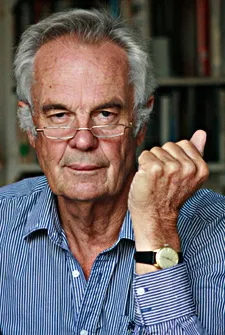
Foreign affairs columnist, film-maker and author

Related Posts

Photos © TFF 2000 Read PressInfo 90 “Lift the Sanctions and Bring More Aid to Yugoslavia” See Pictures from Belgrade © TFF 2000 Please reprint, copy, archive, quote or re-post this item, but please retain the source.
Farhang Jahanpour TFF Associate, former Board member February 11, 2026 Oxford (Special to Informed Comment; Feature) – Today, 11 February, marks the 47th anniversary of the victory of the Islamic Revolution in Iran, and coincidentally, it also marks the 15th anniversary of the ousting of Hosni Mubarak after 30 years of oppressive rule. There were some other uprisings during what came to be known as the Arab Spring, which resulted in the ousting of ruling dictators. Undeterred, Iranian leaders, after the terrible carnage in January this year, are making big plans to celebrate the anniversary of the 1979 Islamic Revolution. Many people optimistically assume that massive popular revolutions against dictators will automatically result in the establishment of democratic governments. Unfortunately, the aftermath of the Iranian revolution and the massive uprisings by Arab masses during the so-called Arab Spring have led to the establishment of even worse regimes. Far from resulting...
LONDON – So far so good, at least on the wider level. While internally Iraq seems on the edge of chaos, the much heralded clash of civilizations between the Muslim and Judaeo-Christian worlds has yet to become apparent. We have anger and despair aplenty in the Arab and Muslim worlds. But very little rushing to the standard and there was no great pilgrimage of warriors to join the fight, as happened when the Soviet Union invaded Afghanistan twenty years ago, and then, having driven the Red Army out, were left to ferment in that mountainous redoubt. With the armaments supplied by the CIA the mujahidin were transformed into Al Qaeda that became, for a relatively brief moment as these things go, ‘the greatest threat to the homeland that America has ever known.’ Nevertheless a ‘Cold War’ between much of the Muslim world and the West is certainly in full swing. Winston...

Recent Articles

Tony Robinson October 4, 2026 Violence is easy to recognise when someone is being beaten, shot or killed. It becomes more difficult when nobody is holding a weapon. Poverty, discrimination, exploitation and repression can restrict a human life just as effectively, although they do so in very different ways and with very different consequences. Simply adding more categories to an ever-growing list of forms of violence does not really solve the problem. The more interesting question is what all these different situations have in common and why it makes sense to describe them using the same word. Human beings do not simply react to what happens around them. They remember the past, imagine things that do not yet exist, make plans and undertake projects. Workers organise because they imagine different working conditions; people migrate because they imagine another life somewhere else; social movements emerge because people refuse to accept the...
It’s a matter of principles, courage, vision and pulling together – while the militarist world is falling apart… Peter Langille October 3, 2026 “Here, then, is the problem which we present to you, stark and dreadful and inescapable: Shall we put an end to the human race; or shall mankind renounce war?”The Bertrand Russell—Albert Einstein Manifesto, July 9, 1955 ⁕ The forecast for what’s ahead is worrisome. The sharp rise in armed conflicts over the past three years is adding to what was already the highest level in over seventy years. Genocides, which should be prevented are supported. A shared climate emergency that jeopardises survival is ignored. Diverse polls now suggest that people are war-weary, worried and interested in a more effective United Nations. And, there are viable policy options for a more secure world! Yet governments are doubling-down, betting on more war and investing heavily. If current trends persist,...
Johan Galtung 1930-2024October 2015 Published here on October 3, 2026 Let us focus on Civilization for conflict analysis and remedies. Major forms of disorder use violence; war is state organized violence. The most belligerent states are the United States of America and Israel, both with civilization roots. National Evangelism, the US Protestant Christian civilization– more national than evangelical–justifies US warfare as exceptionalism of a people chosen by God, with a manifest destiny to run the world. Orthodox Judaism justifies Israeli warfare to conquer and expand from Nile to Euphrates as a religious right and duty to the Eternal One. The third most belligerent country, the UK, no longer believes it is God-chosen but chosen by the USA; not quite the same but something. But the root cause of global disorder lies in the Occident–with Islam–seeing itself as the single, universal civilization valid for all at all times, all others being...

TFF on Substack

Discover and subscribe to more peace materials on TFF Substack

Most Popular

Tony Robinson October 4, 2026 Violence is easy to recognise when someone is being beaten, shot or killed. It becomes more difficult when nobody is holding a weapon. Poverty, discrimination, exploitation and repression can restrict a human life just as effectively, although they do so in very different ways and with very different consequences. Simply adding more categories to an ever-growing list of forms of violence does not really solve the problem. The more interesting question is what all these different situations have in common and why it makes sense to describe them using the same word. Human beings do not simply react to what happens around them. They remember the past, imagine things that do not yet exist, make plans and undertake projects. Workers organise because they imagine different working conditions; people migrate because they imagine another life somewhere else; social movements emerge because people refuse to accept the...
It’s a matter of principles, courage, vision and pulling together – while the militarist world is falling apart… Peter Langille October 3, 2026 “Here, then, is the problem which we present to you, stark and dreadful and inescapable: Shall we put an end to the human race; or shall mankind renounce war?”The Bertrand Russell—Albert Einstein Manifesto, July 9, 1955 ⁕ The forecast for what’s ahead is worrisome. The sharp rise in armed conflicts over the past three years is adding to what was already the highest level in over seventy years. Genocides, which should be prevented are supported. A shared climate emergency that jeopardises survival is ignored. Diverse polls now suggest that people are war-weary, worried and interested in a more effective United Nations. And, there are viable policy options for a more secure world! Yet governments are doubling-down, betting on more war and investing heavily. If current trends persist,...
Johan Galtung 1930-2024October 2015 Published here on October 3, 2026 Let us focus on Civilization for conflict analysis and remedies. Major forms of disorder use violence; war is state organized violence. The most belligerent states are the United States of America and Israel, both with civilization roots. National Evangelism, the US Protestant Christian civilization– more national than evangelical–justifies US warfare as exceptionalism of a people chosen by God, with a manifest destiny to run the world. Orthodox Judaism justifies Israeli warfare to conquer and expand from Nile to Euphrates as a religious right and duty to the Eternal One. The third most belligerent country, the UK, no longer believes it is God-chosen but chosen by the USA; not quite the same but something. But the root cause of global disorder lies in the Occident–with Islam–seeing itself as the single, universal civilization valid for all at all times, all others being...
Read More
Living-Peace-Sign-Budapest-copy
Tony Robinson October 4, 2026 Violence is easy to recognise when someone is being beaten, shot or killed. It becomes more difficult when nobody is holding a weapon. Poverty, discrimination, exploitation and repression can restrict a human life just as effectively, although they do so in very different ways and with very different consequences. Simply adding more categories to an ever-growing list of forms of violence does not really solve the problem. The more interesting question is what all these different situations have in common and why it makes sense to describe them using the same word. Human beings do not simply react to what happens around them. They remember the past, imagine things that do not yet exist, make plans and undertake projects. Workers organise because they imagine different working conditions; people migrate because they imagine another life somewhere else; social movements emerge because people refuse to accept the...
b54a1f10-8c65-4f0b-9dd5-4abc0a7d04cc_2659x2659
It’s a matter of principles, courage, vision and pulling together – while the militarist world is falling apart… Peter Langille October 3, 2026 “Here, then, is the problem which we present to you, stark and dreadful and inescapable: Shall we put an end to the human race; or shall mankind renounce war?”The Bertrand Russell—Albert Einstein Manifesto, July 9, 1955 ⁕ The forecast for what’s ahead is worrisome. The sharp rise in armed conflicts over the past three years is adding to what was already the highest level in over seventy years. Genocides, which should be prevented are supported. A shared climate emergency that jeopardises survival is ignored. Diverse polls now suggest that people are war-weary, worried and interested in a more effective United Nations. And, there are viable policy options for a more secure world! Yet governments are doubling-down, betting on more war and investing heavily. If current trends persist,...
010
Johan Galtung 1930-2024October 2015 Published here on October 3, 2026 Let us focus on Civilization for conflict analysis and remedies. Major forms of disorder use violence; war is state organized violence. The most belligerent states are the United States of America and Israel, both with civilization roots. National Evangelism, the US Protestant Christian civilization– more national than evangelical–justifies US warfare as exceptionalism of a people chosen by God, with a manifest destiny to run the world. Orthodox Judaism justifies Israeli warfare to conquer and expand from Nile to Euphrates as a religious right and duty to the Eternal One. The third most belligerent country, the UK, no longer believes it is God-chosen but chosen by the USA; not quite the same but something. But the root cause of global disorder lies in the Occident–with Islam–seeing itself as the single, universal civilization valid for all at all times, all others being...
Screenshot 2026-10-02 011738
Jan ObergPhD, director, The Transnational Foundation for Peace and Future Research, TFFLund, Sweden October 2, 2026 This is my full original manuscript. The Chinese Academy of Social Science, CASS, makes two publications out if it. 1. China’s Five-year plan emphasized the capabilities of basic research and original innovation. It is regarded as the goal of the future social development, which, as required, should be significantly enhanced. Can you comment on the importance of original innovation in research and academic study? I believe it is easier to define “original innovation” in the natural sciences than in social sciences. The breaking points of what constitutes something new, or innovative, are not quite as sharp in the latter. But in both fields it is about opening up something that was closed, unseen, unexplored before – making manifest what was earlier latent. Innovations come in many forms and shapes – naming something that was not...
arctic-circle-map
The agreement is catastrophic both because of what it says and what it doesn’t mention. It reduces further the major asset of security policies: Freedom of action. Jan Oberg TFF director September 25, 2026 A couple of hours before the agreement was signed on September 22, 2026, I published the following 13 hypotheses about what it would most likely contain on TFF Substack (in English). I was wrong on only the first point. Contrary to what Trump had written on his Truth Social platform, it does not appear to come into force immediately. In fact, it turned out to be worse than even I had anticipated. After these hypotheses now come a number of reflections in light of what the agreement actually contains, and does not contain, as well as the way in which it has generally been presented by major media outlets and by the public-service broadcaster DR. My...
girl-5894831_1280
Below are TFF-related media mentions, comments, videos and social media posts published elsewhere but not on this homepage. We happen to catch and list only a fraction. Regarding video comments and debates, we recommend that you go to the TFF Video Channel on Substack where many of them are reproduced. Jan Oberg is a contributor to China Daily – 52 million daily clicks – and Global Times, CGTN and CCTV (the national television), China Investment, Xinhua News Agency and several others. Articles and videos on these media very often multiply into countless Chinese (and Western media) that re-post them from these main media. Thanks to The China Academy, his analyses, interviews and comments are frequently posted on YouTube channels such as Thinkers Forum and Wave Media. These videos are often re-posted on Bilibili (China’s YouTube), the China Content Center on TikTok, and on the Chinese edition of TikTok, Douyin.com. This means reaching hundreds of millions of viewers worldwide over a year. While there are too many to catch on all these...