
Is a Nuclear Small State Possible? Or Why Does the Danish Prime Minister Not “Rule Out Any Ideas”?

Claus Kold

TFF Associate

February 2, 2026

Introduction

This article was finalised on February 18, 2026. That was ten days before the US/Israeli attack o Iran. On March 2 – today – the Danish government announced that it had accepted the French proposal to discuss the extension of French nuclear forces to play a new, complementary deterrence role to NATO’s in accordance with President Macron’s speech the same day. The Prime Minister’s main argument to do so was, as predicted, the overwhelming threat posed by Russia, whereas Europe’s decreasing trust in the Trump Regime’s willingness to “protect” Europe with its nuclear “umbrella” was not mentioned.
The Danish government states that this does not change the Danish nuclear policy, namely that nuclear weapons will not be stationed in Denmark in peacetime. However, during the press conference, the Danish defence minister also stated that although he would not speculate about nuclear weapons in the future, the new Danish F-35 could be ‘configured’ to carry nuclear weapons. It is, therefore, beyond every doubt that the issue of nuclear weapons is now on the agenda in a way it has never been before. It is worth noting that Sweden has accepted France’s proposal, but neither Norway nor Finland has.
In this perspective, where incrementalism – the tyranny of the small steps – is employed everywhere, it becomes absolutely essential to think a bit ahead and outline what these first innocent-looking steps could imply – and that is what Claus Kold does so well.

Jan Oberg, TFF director and editor

◆

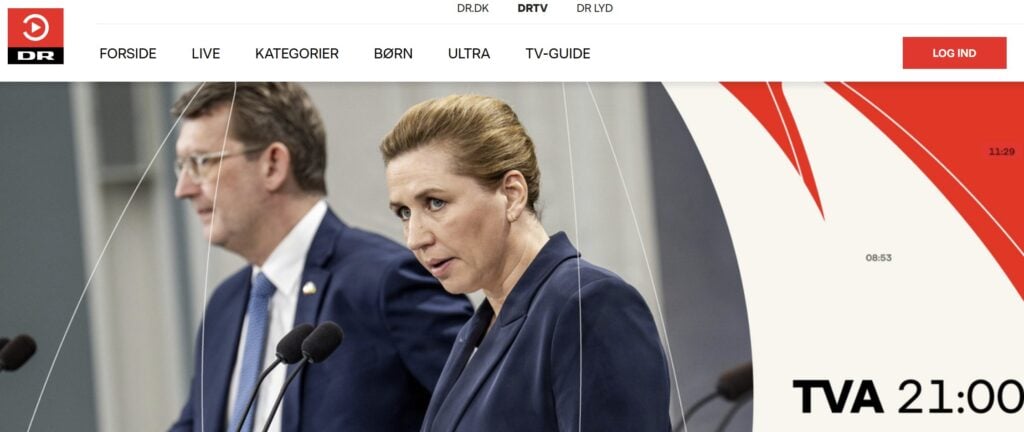
Mette Frederiksen’s recent statements at the Munich Security Conference and her diplomatic soundings in Paris point to a perception that reliance on the US nuclear guarantee can no longer be regarded as stable or predictable. The conflict with the United States over Greenland has exposed a deep mistrust in the idea that great‑power security guarantees are independent of their own territorial and economic interests. At the same time, the Prime Minister has stated in several interviews that she “does not rule out any ideas” – including integration into a French‑led European nuclear umbrella.

Already in March 2025, Mette Frederiksen opened the door to the idea of nuclear armament in Europe and Denmark. When asked by TV2 about nuclear weapons, she replied:

“I am focused on one thing now, and that is the defence of Europe. And I am not going to rule out any ideas about how we secure that as quickly and as effectively as possible. That also applies to the French proposal.”

And most recently, on 13 February 2026, she told Jyllands‑Posten:

“It is very, very difficult to imagine deterrence against Russia without nuclear weapons.”
She continued: “I believe that Europe must do everything itself. I am not saying this in conflict with the Americans, but Europe must be able to defend itself. That is what I believe Europe must do, regardless of what happens in the United States.”

With statements that she does not rule out “any ideas,” she breaks with the small‑state, experience‑based restraint that has otherwise defined Danish defence policy for decades. But what other security‑policy aspects lie behind Mette Frederiksen’s statements?

The Collapse of the International Legal Order?

The erosion of the American nuclear umbrella as a credible guarantee of Danish security marks a fundamental break with the post‑Atlantic world order (NATO), where security had previously been grounded in an asymmetrical but stable protective relationship. It appears to be such considerations that Mette Frederiksen expresses in the Munich interview.

Her statement coincides with the United States, in February 2026, attempting to force Iran to the negotiating table in Geneva, invoking the Non‑Proliferation Treaty (NPT). See the NPT on the UN’s website. The US invocation of the NPT against Iran rests on the legal view that Tehran has violated Article III of the treaty concerning safeguards, however the real driving force is more likely a geopolitical desire to “neutralise” a regional challenger that has demonstrated resilience despite military attacks on its nuclear infrastructure in the summer of 2025.

Isn’t this exactly the consequence of what Mette Frederiksen wants: to show nuclear deterrence against the US and Russia and thereby withdraw from the NPT? Is this Mette Frederiksen’s ‘Iran moment’?

US power projection towards Iran is camouflaged as law enforcement through the institutional framework of the international system. But the dynamics of the negotiations between the US and Iran cannot be reduced to a simple question of either legal authority or raw military force. They must instead be understood as a complex clash between the technical provisions of the NPT and the hegemonic security policy of the United States, which Mette Frederiksen has otherwise approved of so far when it came to countries other than Denmark.

When the US seeks to enforce negotiations with Iran, it formally draws on the authority of the International Atomic Energy Agency’s (IAEA) finding of Iranian treaty violations from June 2025. Here we see a fusion of treaty‑based monitoring and realpolitik pressure, with the US acting as a kind of de facto enforcer of a global order that Iran is formally part of through the NPT, but which Tehran challenges through its enrichment practices. It is therefore not only raw military power the US exercises against Iran, but a form of power articulated as support for legal authority. The US (and the UK) thus operate in a murky and dangerous borderland between UN resolutions and unilateral geopolitical use of force.

National Sovereignty and the Nuclear Security Dilemma

Mette Frederiksen’s openness to Danish acquisition of nuclear weapons and long‑range missiles – Denmark already has the F‑35 aircraft – therefore represents not only a radical shift from a small‑state logic of neutrality or alliance, but a move towards a global doctrine of strategic nuclear autonomy.

For Denmark and Mette Frederiksen even to consider acquiring such a nuclear capability would require Denmark’s de facto withdrawal from the NPT framework’s Article II, which explicitly prohibits non‑nuclear‑weapon states from receiving or producing nuclear warheads.

Article II

Each non‑nuclear‑weapon State Party to the Treaty undertakes not to receive the transfer—from any transferor whatsoever—of nuclear weapons or other nuclear explosive devices or of control over such weapons or explosive devices directly or indirectly; not to manufacture or otherwise acquire nuclear weapons or other nuclear explosive devices; and not to seek or receive any assistance in the manufacture of nuclear weapons or other nuclear explosive devices.

Article III, paragraph 2

Each State Party to the Treaty undertakes not to provide: (a) source or special fissionable material, or (b) equipment or material especially designed or prepared for the processing, use or production of special fissionable material, to any non‑nuclear‑weapon State for peaceful purposes, unless the source or special fissionable material shall be subject to the safeguards required by this Article.

A Danish nuclear armament would be a political declaration that the international legal community has collapsed in favour of a Hobbesian state of nature, where sovereignty can only be guaranteed through ultimate deterrence against external enemies.

Mette Frederiksen’s security thinking thus runs directly into the same NPT barriers as the Iranian programme. Any movement towards sovereign national control over nuclear weapons would – however unlikely it may sound today – likely trigger a diplomatic crisis and isolation of Denmark, in many ways resembling the situation seen in Iran. A Danish solo effort and acquisition of nuclear weapons would trigger the classic “security dilemma”, where the defensive intention behind the acquisition would be interpreted by neighbours and great powers as a direct threat. If Denmark were to pursue a nuclear path, it would directly challenge both US and Russian strategic interests in Europe and in the Arctic, as well as the US monopoly on defining the security architecture of the North Atlantic.

Thus, while Iran challenges US hegemony from the outside, a Danish solo nuclear effort would cause an internal breakdown of Western defence logic and likely trigger sanctions and isolation from the very allies that have so far provided protection. Denmark and Mette Frederiksen therefore face a paradox: the attempt to secure national sovereignty may paradoxically lead to the loss of the international recognition on which that sovereignty rests.

Shared Nuclear Umbrella or Danish Nuclear Weapons?

The idea of sovereign Danish control over allied‑stationed nuclear weapons runs into a treaty‑based barrier in the international system, where the distinction between “possession” and “control” is the very foundation of the Non‑Proliferation Treaty. It is crucial to distinguish between national acquisition and the form of “nuclear sharing” that has existed within NATO. A nuclear‑weapon state such as the US, the UK, or France is legally bound under the NPT never to transfer control of its weapons to others, while a non‑nuclear‑weapon state such as Denmark is bound not to receive such control, directly or indirectly. A formal transfer of launch codes or final decision‑making authority to Danish authorities would therefore constitute a fundamental breach of the NPT and undermine Denmark’s status as a “state in good standing” in the international community.

The existing NATO “nuclear sharing” model already operates in a legal grey zone, maintained only because technical control remains with the US. If Denmark sought actual sovereign national control, it would require a security‑policy transformation that neither Washington, London, nor Paris has historically shown willingness to accept. Here Denmark would collide with the concrete realpolitik of the great powers, as seen in the destruction of Ukraine. The French doctrine of Force de Frappe is especially centred on indivisible national sovereignty; outsourcing this power to an ally would, in French eyes, weaken the very essence of French nuclear signalling and deterrence. The relationship between technical capability and political legitimacy is further complicated by the fact that Danish “sovereign national control” would force Russia to revise its escalation policy. Moscow would hardly accept a distinction between an American warhead and a Danish one, but would instead interpret any “nationalisation” of nuclear capabilities as aggressive proliferation.

One may therefore argue that while the military‑technological power behind the US and Russian arsenals maintains the current balance of terror (MAD), it is the treaty‑based NPT system that provides the legal structure preventing complete anarchy. Mette Frederiksen’s proposal to deviate from this order would be a fundamental signal that the NPT era is definitively over.

Whether such a security‑policy paradigm shift is even practically possible without a total dissolution of NATO is the next logical question underlying Mette Frederiksen’s statement in Munich. Perhaps Mette Frederiksen, the Danish Armed Forces, and the Danish Defence Academy should look more closely at how the US acts in relation to Iran’s security interests. Does Denmark wish to stand in Iran’s place?

And in the longer term: is this the kind of world we want to live in? A world constantly balancing on the edge of nuclear destruction? Is that compatible with security, safety, and peace?

Related Posts

It’s a matter of principles, courage, vision and pulling together – while the militarist world is falling apart… Peter Langille October 3, 2026 “Here, then, is the problem which we present to you, stark and dreadful and inescapable: Shall we put an end to the human race; or shall mankind renounce war?”The Bertrand Russell—Albert Einstein Manifesto, July 9, 1955 ⁕ The forecast for what’s ahead is worrisome. The sharp rise in armed conflicts over the past three years is adding to what was already the highest level in over seventy years. Genocides, which should be prevented are supported. A shared climate emergency that jeopardises survival is ignored. Diverse polls now suggest that people are war-weary, worried and interested in a more effective United Nations. And, there are viable policy options for a more secure world! Yet governments are doubling-down, betting on more war and investing heavily. If current trends persist,...
Johan Galtung 1930-2024October 2015 Published here on October 3, 2026 Let us focus on Civilization for conflict analysis and remedies. Major forms of disorder use violence; war is state organized violence. The most belligerent states are the United States of America and Israel, both with civilization roots. National Evangelism, the US Protestant Christian civilization– more national than evangelical–justifies US warfare as exceptionalism of a people chosen by God, with a manifest destiny to run the world. Orthodox Judaism justifies Israeli warfare to conquer and expand from Nile to Euphrates as a religious right and duty to the Eternal One. The third most belligerent country, the UK, no longer believes it is God-chosen but chosen by the USA; not quite the same but something. But the root cause of global disorder lies in the Occident–with Islam–seeing itself as the single, universal civilization valid for all at all times, all others being...
How Oxford University Press allowed a personality‑driven narrative to masquerade as scholarship. Jan Oberg, dr hc, TFF director This article has also been published on TFF Substack where more readers react and withdraw their interviews from the project. A Special Issue in a scholarly journal is not an ordinary publication. It is a collective, curated […]

Recent Articles

Tony Robinson October 4, 2026 Violence is easy to recognise when someone is being beaten, shot or killed. It becomes more difficult when nobody is holding a weapon. Poverty, discrimination, exploitation and repression can restrict a human life just as effectively, although they do so in very different ways and with very different consequences. Simply adding more categories to an ever-growing list of forms of violence does not really solve the problem. The more interesting question is what all these different situations have in common and why it makes sense to describe them using the same word. Human beings do not simply react to what happens around them. They remember the past, imagine things that do not yet exist, make plans and undertake projects. Workers organise because they imagine different working conditions; people migrate because they imagine another life somewhere else; social movements emerge because people refuse to accept the...
It’s a matter of principles, courage, vision and pulling together – while the militarist world is falling apart… Peter Langille October 3, 2026 “Here, then, is the problem which we present to you, stark and dreadful and inescapable: Shall we put an end to the human race; or shall mankind renounce war?”The Bertrand Russell—Albert Einstein Manifesto, July 9, 1955 ⁕ The forecast for what’s ahead is worrisome. The sharp rise in armed conflicts over the past three years is adding to what was already the highest level in over seventy years. Genocides, which should be prevented are supported. A shared climate emergency that jeopardises survival is ignored. Diverse polls now suggest that people are war-weary, worried and interested in a more effective United Nations. And, there are viable policy options for a more secure world! Yet governments are doubling-down, betting on more war and investing heavily. If current trends persist,...
Johan Galtung 1930-2024October 2015 Published here on October 3, 2026 Let us focus on Civilization for conflict analysis and remedies. Major forms of disorder use violence; war is state organized violence. The most belligerent states are the United States of America and Israel, both with civilization roots. National Evangelism, the US Protestant Christian civilization– more national than evangelical–justifies US warfare as exceptionalism of a people chosen by God, with a manifest destiny to run the world. Orthodox Judaism justifies Israeli warfare to conquer and expand from Nile to Euphrates as a religious right and duty to the Eternal One. The third most belligerent country, the UK, no longer believes it is God-chosen but chosen by the USA; not quite the same but something. But the root cause of global disorder lies in the Occident–with Islam–seeing itself as the single, universal civilization valid for all at all times, all others being...

TFF on Substack

Discover and subscribe to more peace materials on TFF Substack

Most Popular

Tony Robinson October 4, 2026 Violence is easy to recognise when someone is being beaten, shot or killed. It becomes more difficult when nobody is holding a weapon. Poverty, discrimination, exploitation and repression can restrict a human life just as effectively, although they do so in very different ways and with very different consequences. Simply adding more categories to an ever-growing list of forms of violence does not really solve the problem. The more interesting question is what all these different situations have in common and why it makes sense to describe them using the same word. Human beings do not simply react to what happens around them. They remember the past, imagine things that do not yet exist, make plans and undertake projects. Workers organise because they imagine different working conditions; people migrate because they imagine another life somewhere else; social movements emerge because people refuse to accept the...
It’s a matter of principles, courage, vision and pulling together – while the militarist world is falling apart… Peter Langille October 3, 2026 “Here, then, is the problem which we present to you, stark and dreadful and inescapable: Shall we put an end to the human race; or shall mankind renounce war?”The Bertrand Russell—Albert Einstein Manifesto, July 9, 1955 ⁕ The forecast for what’s ahead is worrisome. The sharp rise in armed conflicts over the past three years is adding to what was already the highest level in over seventy years. Genocides, which should be prevented are supported. A shared climate emergency that jeopardises survival is ignored. Diverse polls now suggest that people are war-weary, worried and interested in a more effective United Nations. And, there are viable policy options for a more secure world! Yet governments are doubling-down, betting on more war and investing heavily. If current trends persist,...
Johan Galtung 1930-2024October 2015 Published here on October 3, 2026 Let us focus on Civilization for conflict analysis and remedies. Major forms of disorder use violence; war is state organized violence. The most belligerent states are the United States of America and Israel, both with civilization roots. National Evangelism, the US Protestant Christian civilization– more national than evangelical–justifies US warfare as exceptionalism of a people chosen by God, with a manifest destiny to run the world. Orthodox Judaism justifies Israeli warfare to conquer and expand from Nile to Euphrates as a religious right and duty to the Eternal One. The third most belligerent country, the UK, no longer believes it is God-chosen but chosen by the USA; not quite the same but something. But the root cause of global disorder lies in the Occident–with Islam–seeing itself as the single, universal civilization valid for all at all times, all others being...
Read More
Living-Peace-Sign-Budapest-copy
Tony Robinson October 4, 2026 Violence is easy to recognise when someone is being beaten, shot or killed. It becomes more difficult when nobody is holding a weapon. Poverty, discrimination, exploitation and repression can restrict a human life just as effectively, although they do so in very different ways and with very different consequences. Simply adding more categories to an ever-growing list of forms of violence does not really solve the problem. The more interesting question is what all these different situations have in common and why it makes sense to describe them using the same word. Human beings do not simply react to what happens around them. They remember the past, imagine things that do not yet exist, make plans and undertake projects. Workers organise because they imagine different working conditions; people migrate because they imagine another life somewhere else; social movements emerge because people refuse to accept the...
b54a1f10-8c65-4f0b-9dd5-4abc0a7d04cc_2659x2659
It’s a matter of principles, courage, vision and pulling together – while the militarist world is falling apart… Peter Langille October 3, 2026 “Here, then, is the problem which we present to you, stark and dreadful and inescapable: Shall we put an end to the human race; or shall mankind renounce war?”The Bertrand Russell—Albert Einstein Manifesto, July 9, 1955 ⁕ The forecast for what’s ahead is worrisome. The sharp rise in armed conflicts over the past three years is adding to what was already the highest level in over seventy years. Genocides, which should be prevented are supported. A shared climate emergency that jeopardises survival is ignored. Diverse polls now suggest that people are war-weary, worried and interested in a more effective United Nations. And, there are viable policy options for a more secure world! Yet governments are doubling-down, betting on more war and investing heavily. If current trends persist,...
010
Johan Galtung 1930-2024October 2015 Published here on October 3, 2026 Let us focus on Civilization for conflict analysis and remedies. Major forms of disorder use violence; war is state organized violence. The most belligerent states are the United States of America and Israel, both with civilization roots. National Evangelism, the US Protestant Christian civilization– more national than evangelical–justifies US warfare as exceptionalism of a people chosen by God, with a manifest destiny to run the world. Orthodox Judaism justifies Israeli warfare to conquer and expand from Nile to Euphrates as a religious right and duty to the Eternal One. The third most belligerent country, the UK, no longer believes it is God-chosen but chosen by the USA; not quite the same but something. But the root cause of global disorder lies in the Occident–with Islam–seeing itself as the single, universal civilization valid for all at all times, all others being...
Screenshot 2026-10-02 011738
Jan ObergPhD, director, The Transnational Foundation for Peace and Future Research, TFFLund, Sweden October 2, 2026 This is my full original manuscript. The Chinese Academy of Social Science, CASS, makes two publications out if it. 1. China’s Five-year plan emphasized the capabilities of basic research and original innovation. It is regarded as the goal of the future social development, which, as required, should be significantly enhanced. Can you comment on the importance of original innovation in research and academic study? I believe it is easier to define “original innovation” in the natural sciences than in social sciences. The breaking points of what constitutes something new, or innovative, are not quite as sharp in the latter. But in both fields it is about opening up something that was closed, unseen, unexplored before – making manifest what was earlier latent. Innovations come in many forms and shapes – naming something that was not...
arctic-circle-map
The agreement is catastrophic both because of what it says and what it doesn’t mention. It reduces further the major asset of security policies: Freedom of action. Jan Oberg TFF director September 25, 2026 A couple of hours before the agreement was signed on September 22, 2026, I published the following 13 hypotheses about what it would most likely contain on TFF Substack (in English). I was wrong on only the first point. Contrary to what Trump had written on his Truth Social platform, it does not appear to come into force immediately. In fact, it turned out to be worse than even I had anticipated. After these hypotheses now come a number of reflections in light of what the agreement actually contains, and does not contain, as well as the way in which it has generally been presented by major media outlets and by the public-service broadcaster DR. My...
girl-5894831_1280
Below are TFF-related media mentions, comments, videos and social media posts published elsewhere but not on this homepage. We happen to catch and list only a fraction. Regarding video comments and debates, we recommend that you go to the TFF Video Channel on Substack where many of them are reproduced. Jan Oberg is a contributor to China Daily – 52 million daily clicks – and Global Times, CGTN and CCTV (the national television), China Investment, Xinhua News Agency and several others. Articles and videos on these media very often multiply into countless Chinese (and Western media) that re-post them from these main media. Thanks to The China Academy, his analyses, interviews and comments are frequently posted on YouTube channels such as Thinkers Forum and Wave Media. These videos are often re-posted on Bilibili (China’s YouTube), the China Content Center on TikTok, and on the Chinese edition of TikTok, Douyin.com. This means reaching hundreds of millions of viewers worldwide over a year. While there are too many to catch on all these...




