

Iran won upfront sanctions relief, but with potential snags

Gareth Porter

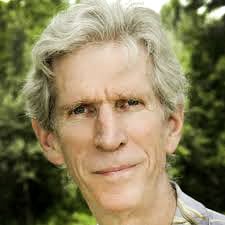
By Gareth Porter, TFF Associate*

The framework agreement reached on Thursday night clearly gives the P5+1 a combination of constraints on Iran’s nuclear programme that should reassure all but the most bellicose opponents of diplomacy. It also provides the basis for at least a minimum of sanctions relief in the early phase of its implementation that Iran required, but some of the conditions on that relief are likely create new issue between Iran and the Western powers over the process.

The agreement’s dependence on decisions by the International Atomic Energy Agency (IAEA) and the penchant of Israeli intelligence for discovering new evidence of illicit Iranian activities will encourage moves to delay or obstruct relief of sanctions.

US and European officials had been telling reporters that they would phase out their sanctions on oil and banking in return for Iranian actions to modify its programme only gradually over several years, and made it clear that the purpose of this strategy was to maintain “leverage” on Iran.

Iran, however, was demanding that those sanctions be lifted immediately upon delivering on their commitments under agreement. And a source close to Iranian negotiators told Middle East Eye that Iran was confident it could deliver on all of the actions related to its enrichment programme and Arak within a matter of months.

The same diplomatic conflict was being fought over UN Security Council sanctions: Iran wanted them to end as soon as they have fulfilled its commitments; the US and its allies were insisting that those sanctions could only be suspended gradually on a schedule that would extend through most or all of the initial ten-year period.

And the P5+1 was also demanding that, in order to get those sanctions lifted, Iran would have to fully satisfy the IAEA that it had cooperated completely in regard to the “possible military dimensions” (PMD) of its programme, and wait for the IAEA to give Iran a clean bill of health that its nuclear programme is for peaceful purposes only.

Figuring out how those pivotal issues were finally resolved requires sifting through evidence that is not entirely clearcut. The two sides apparently agreed that they would not release any official text of the agreement.

The joint statement by EU foreign policy chief Frederica Mogherini and Iranian foreign minister Zarif, which is the closest thing to an official statement, was very brief and general and failed to clarify the provisions on sanctions removal. And the only available text of their statement, a transcript of the English language translation of Zarif’s Farsi language version of the statement, which was published in the Washington Post, unfortunately fails to complete the one sentence on how the issue of sanctions removal was removed, because it was partially inaudible.

The fact that no official text was released has meant that press coverage of the content of the agreement has relied primarily on the much more detailed summary of the agreement by the US State Department and on remarks by Secretary of State John Kerry.

The US interpretation of the agreement, however, is ambiguous on some aspects of the sanctions removal issue, raising serious questions about what was precisely agreed on.

On US and European unilateral sanctions on oil and banking, which are of greatest short-term importance to the Iranian economy, the documents says those sanctions “will be suspended after the IAEA has verified that Iran has taken all of its key nuclear-related steps.” That wording appears to suggest that the sanctions would be suspended immediately upon the verification of the last step taken by Iran.

The US text thus seems to indicate that the Iranians won their demand that the Western powers give up their scheme for a “gradual” or “phased” withdrawal of sanctions. But the Iranians had wanted some of the sanctions removed each time they completed the implementation of a commitment, and instead the payoff comes only after the final step taken.

The US document also makes it clear that the “architecture of sanctions” regarding US unilateral sanctions – meaning the legal and bureaucratic systems underlying the sanctions – “will be retained for much of the duration of the deal and allow for snap back of sanctions in the event of significant non-performance.”

The Iranians have complained that suspending sanctions while leaving the threat of future sanctions in place has an intimidating effect on banks and businesses regarding resumption of relations with Iranian entities. But they didn’t have much leverage over that question.

The UN sanctions issue was resolved in a distinctly different way. According to the US text, all the UN Security Council resolutions on Iran, which impose various sanctions on Iran, “will be lifted with the completion by Iran of nuclear-related actions addressing all key issues (enrichment, Fordow, Arak, PMD and transparency).”

The implication of the US summary is that Iran would get some sanctions relief from the UN Security Council each time it has completed the implementation of one of its key “irreversible” commitments, as Iran had been demanding – not only at the end of all of its performance on all of the commitments.

The inclusion of the PMD (“possible military dimensions”) of the Iranian nuclear programme as an issue on which Iran would have to satisfy the IAEA introduces a potential obstacle to early sanctions relief, because IAEA Director General Yukiya Amano has said it could take several years to complete its assessment of the issue. But at least a delay by the IAEA would not prevent Iran from obtaining relief upon completing the other actions it would take.

Further confusing the interpretation of the agreement, Secretary of State John Kerry referred to the United States and its “international partners” providing sanctions relief “in phases” – a statement that appears inconsistent with the State Department text. In a tweet on Thursday, Zarif cited the Iran/P5+1 joint statement as saying the US would “cease all application of ALL nuclear-related secondary economic and financial sanctions”, and asked rhetorically, “Is this gradual?”

Judging from the US interpretative statements, Iran could get the bulk of the sanctions relief in the initial period of implementation – much of it within the first year or so. But that prospect would depend on the good will of the Obama administration and the IAEA. The Obama administration may well be inclined to facilitate the provision of early sanctions relief. But the political dynamics swirling around US and IAEA policies toward Iran suggest that the processes of IAEA assessment and delivery of sanctions may not go as smoothly as Iran would hope.

Looking even further ahead, Iran is certainly concerned about how a future US administration could and would implement the agreement.

Iran was insisting that the UN Security Council resolution repealing previous resolutions with a new one reflecting the comprehensive agreement be passed before the change in administration in Washington in 2017, according to the source in contact with the negotiators. It remains unclear whether the P5+1 agreed to that demand.

One thing the US text makes clear is that the issue of Iranian research and development on advanced centrifuges research & development (R&D) remains unresolved. The US statement says that for the first ten years of the agreement, enrichment R&D will have to be consistent with maintaining breakout timeline of at least one year – obviously based on further understandings that have not been revealed or are yet to be negotiated. And beyond that period, the Iranian R&D plan will be “pursuant to the JCPOA”, meaning the final Joint Comprehensive Programme of Action” is still to be negotiated.

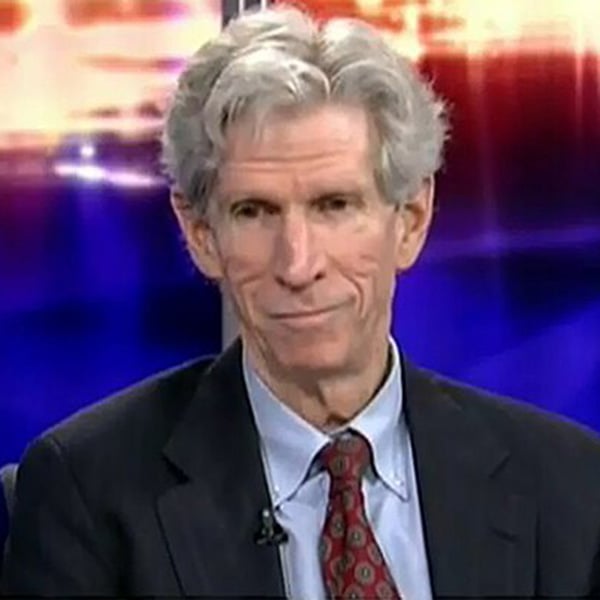
Gareth Porter is an independent investigative journalist and winner of the 2012 Gellhorn Prize for journalism. He is the author of the newly published Manufactured Crisis: The Untold Story of the Iran Nuclear Scare.

This article was first published by Middle East Eye.

Related Posts

The agreement is catastrophic both because of what it says and what it doesn’t mention. It reduces further the major asset of security policies: Freedom of action. Jan Oberg TFF director September 25, 2026 A couple of hours before the agreement was signed on September 22, 2026, I published the following 13 hypotheses about what it would most likely contain on TFF Substack (in English). I was wrong on only the first point. Contrary to what Trump had written on his Truth Social platform, it does not appear to come into force immediately. In fact, it turned out to be worse than even I had anticipated. After these hypotheses now come a number of reflections in light of what the agreement actually contains, and does not contain, as well as the way in which it has generally been presented by major media outlets and by the public-service broadcaster DR. My...
A friendly quarrel while we agree that the US sanctions are a weapon of mass destruction and kill more people than wars do. And that we must talk much more about sanctions than we have so far. Jan Oberg, TFF director March 16, 2026 John Mearsheimer recently stated that U.S. sanctions murdered around 38 million people between 1971 and 2021 – see the video below. It is a dramatic figure, and it has spread quickly because it captures, in one sentence, the enormous human cost of modern sanctions. I share his concern about the destructive effects of economic coercion. But the specific number he cites — and the way he attributes it — deserves a friendly academic clarification. The figure comes from a 2023 Lancet Global Health article estimating the mortality effects of unilateral U.S. and EU sanctions over the past half‑century. This is the first point where Mearsheimer’s shorthand diverges from the text: the study...
Photos © TFF 2000 Read PressInfo 90 “Lift the Sanctions and Bring More Aid to Yugoslavia” See Pictures from Belgrade © TFF 2000 Please reprint, copy, archive, quote or re-post this item, but please retain the source.

Recent Articles

Photo above: Carl Fredrik Reuterswärd’s Non-Violence outside UN Headquarters in New York. Kirill Levin, CC BY-NC-SA 2. Jan Oberg November 3, 2026 I am happy to be published in Horizons which is produced by the Center for International Relations and Sustainable Development, CIRSD, in Belgrade. My contribution brings out a radical re-thinking of what concepts such as defence, security, deterrence – and peace – may mean if we want to create a more peaceful world. It also summarises a few things I have been working with the last few decades. Please read it here Og her er den på dansk, takket være Johnny Baltzersens lynhurtige oversættelse
UNITE-tillid, DREAM-velstand og andre konstruktive komponenter Normally we publish articles in English here. But this is a translation of a very important TFF document that should reach as many as possible in Denmark since this country’s government has been one of the most hardline in Europe and, up till now at least, has refused to use diplomacy and, instead, spent tremendous sums on arming Ukraine with the express goal of defeating Russia. Thus this – unique – article is in Danish. Vi er Johnny Baltzersen og hans Fælles Sikkerhed – Fælles Fremtid på Substack overmåde taknemmelige for at have oversat og publiceret TFF’s 2025-portfølje for fredsidéer med henblik på Ukraines fremtid. Vi håber den nu kan nå mange flere danskere – som også vil sprede den og skabe debat – nu den danske regerings og folketingspartiernes politik på dette område siden 2022 står nu – forudsigeligt – ved vejs ende....
Jan Oberg TFF director October 28, 2026 Exactly one month has now passed since I published my criticism of the introduction to the special issue on Johan Galtung published by the Journal of Global Security Studies, JoGSS, and of Tor Egil Førland’s chapter about Galtung which serves as a preview to his forthcoming biography of Galtung to be published by PRIO. See the original on The Transnational here and the same article on TFF Substack with many general and critical comments and, in particular, the people who decided to withdraw from the biography project in protest. The special issue itself was extraordinary. It was devoted to the intellectual legacy of one of the founders of peace research and contained a number of strong assessments of his personality, scholarship, intellectual trajectory, and public role. Such assessments are, of course, entirely legitimate. No scholar is beyond criticism, and neither was Johan Galtung....

TFF on Substack

Discover and subscribe to more peace materials on TFF Substack

Most Popular

Photo above: Carl Fredrik Reuterswärd’s Non-Violence outside UN Headquarters in New York. Kirill Levin, CC BY-NC-SA 2. Jan Oberg November 3, 2026 I am happy to be published in Horizons which is produced by the Center for International Relations and Sustainable Development, CIRSD, in Belgrade. My contribution brings out a radical re-thinking of what concepts such as defence, security, deterrence – and peace – may mean if we want to create a more peaceful world. It also summarises a few things I have been working with the last few decades. Please read it here Og her er den på dansk, takket være Johnny Baltzersens lynhurtige oversættelse
UNITE-tillid, DREAM-velstand og andre konstruktive komponenter Normally we publish articles in English here. But this is a translation of a very important TFF document that should reach as many as possible in Denmark since this country’s government has been one of the most hardline in Europe and, up till now at least, has refused to use diplomacy and, instead, spent tremendous sums on arming Ukraine with the express goal of defeating Russia. Thus this – unique – article is in Danish. Vi er Johnny Baltzersen og hans Fælles Sikkerhed – Fælles Fremtid på Substack overmåde taknemmelige for at have oversat og publiceret TFF’s 2025-portfølje for fredsidéer med henblik på Ukraines fremtid. Vi håber den nu kan nå mange flere danskere – som også vil sprede den og skabe debat – nu den danske regerings og folketingspartiernes politik på dette område siden 2022 står nu – forudsigeligt – ved vejs ende....
Jan Oberg TFF director October 28, 2026 Exactly one month has now passed since I published my criticism of the introduction to the special issue on Johan Galtung published by the Journal of Global Security Studies, JoGSS, and of Tor Egil Førland’s chapter about Galtung which serves as a preview to his forthcoming biography of Galtung to be published by PRIO. See the original on The Transnational here and the same article on TFF Substack with many general and critical comments and, in particular, the people who decided to withdraw from the biography project in protest. The special issue itself was extraordinary. It was devoted to the intellectual legacy of one of the founders of peace research and contained a number of strong assessments of his personality, scholarship, intellectual trajectory, and public role. Such assessments are, of course, entirely legitimate. No scholar is beyond criticism, and neither was Johan Galtung....
Read More
knotted gun
Photo above: Carl Fredrik Reuterswärd’s Non-Violence outside UN Headquarters in New York. Kirill Levin, CC BY-NC-SA 2. Jan Oberg November 3, 2026 I am happy to be published in Horizons which is produced by the Center for International Relations and Sustainable Development, CIRSD, in Belgrade. My contribution brings out a radical re-thinking of what concepts such as defence, security, deterrence – and peace – may mean if we want to create a more peaceful world. It also summarises a few things I have been working with the last few decades. Please read it here Og her er den på dansk, takket være Johnny Baltzersens lynhurtige oversættelse
TFFPortfolioVign
UNITE-tillid, DREAM-velstand og andre konstruktive komponenter Normally we publish articles in English here. But this is a translation of a very important TFF document that should reach as many as possible in Denmark since this country’s government has been one of the most hardline in Europe and, up till now at least, has refused to use diplomacy and, instead, spent tremendous sums on arming Ukraine with the express goal of defeating Russia. Thus this – unique – article is in Danish. Vi er Johnny Baltzersen og hans Fælles Sikkerhed – Fælles Fremtid på Substack overmåde taknemmelige for at have oversat og publiceret TFF’s 2025-portfølje for fredsidéer med henblik på Ukraines fremtid. Vi håber den nu kan nå mange flere danskere – som også vil sprede den og skabe debat – nu den danske regerings og folketingspartiernes politik på dette område siden 2022 står nu – forudsigeligt – ved vejs ende....
JoGSS-Silent
Jan Oberg TFF director October 28, 2026 Exactly one month has now passed since I published my criticism of the introduction to the special issue on Johan Galtung published by the Journal of Global Security Studies, JoGSS, and of Tor Egil Førland’s chapter about Galtung which serves as a preview to his forthcoming biography of Galtung to be published by PRIO. See the original on The Transnational here and the same article on TFF Substack with many general and critical comments and, in particular, the people who decided to withdraw from the biography project in protest. The special issue itself was extraordinary. It was devoted to the intellectual legacy of one of the founders of peace research and contained a number of strong assessments of his personality, scholarship, intellectual trajectory, and public role. Such assessments are, of course, entirely legitimate. No scholar is beyond criticism, and neither was Johan Galtung....
Screenshot 2026-10-26 115647
An aspect of Iran’s culture and civilisation you’ve probably never heard about. Don’t be surprised if the US and Israel also try to bomb them. Jan ObergTFF director October 26, 2026 Today – under the “USraeli” threat of new “annihilating” bombings – opens the 7th International Conference on Peace and Conflict Resolution at Tehran’s University. As far as I can tell, this is the only permanent, advanced peace research institution in West Asia/the Middle East. Perhaps more countries in that region could be inspired? I mean, how many military “security” institutes and military academies do they have? Many peace research institutes and university departments have been established since the 1950s in the West. They are now all under attack; some have closed down, some have gone mainstream, yet others kept the name but do nothing to research peace and disseminate results or advice; instead, they cooperate with militarism’s platforms such...
Screenshot 2026-10-15 141837
Let’s discuss using AI to create peace – in contrast to boring geopolitics devoid of creative healing and visions. Jan Oberg TFF director October 15, 2026 I asked VEED to create a short video exemplifying how peace is preferable to war, then chose the lady as a template. Simple as that. In less than a minute, it produced this video, which any peace-loving person would appreciate. The only problem is that human intelligence (HI), at least the one that exists among Western decision-makers, isn’t half as moral or smart as AI. I have used AI to dialogue about peace and peace plans, creative conflict resolution and visions of a better future for humankind. It so happens that I am having more stimulating, intelligent, creative and moral discussions with AI than I could possibly have with any EU or NATO leader today. Yes, AI has very problematic and dangerous aspects; used...
girl-5894831_1280
Below are TFF-related media mentions, comments, videos and social media posts published elsewhere but not on this homepage. We happen to catch and list only a fraction. Regarding video comments and debates, we recommend that you go to the TFF Video Channel on Substack where many of them are reproduced. Jan Oberg is a contributor to China Daily – 52 million daily clicks – and Global Times, CGTN and CCTV (the national television), China Investment, Xinhua News Agency and several others. Articles and videos on these media very often multiply into countless Chinese (and Western media) that re-post them from these main media. Thanks to The China Academy, his analyses, interviews and comments are frequently posted on YouTube channels such as Thinkers Forum and Wave Media. These videos are often re-posted on Bilibili (China’s YouTube), the China Content Center on TikTok, and on the Chinese edition of TikTok, Douyin.com. This means reaching hundreds of millions of viewers worldwide over a year. While there are too many to catch on all these...




