TFF launches a new educational series on regime change in the Middle East to help prevent a repetition on Iran – #NotIranToo


TFF is about to publish a series of articles on regime change in the Middle East over the last few decades. The series has a special focus on Iran because it is now abundantly clear that the U.S. under Trump’s formal administration – but perhaps more under the elites that make up the Deep State underlying it – seems bent on building up to at least a political, psychological and economic war on Iran and – in the worst of cases – also to some kind of military action too.

The series consists of sections of Chapter 12 in a forthcoming book by eminent scholar and TFF Board member, Farhang Jahanpour, Oxford University. In a comprehensive preface, he explains his own intellectual path and journalistic work with the BBC and his Iranian background.

The main point is that it is high time for the world to learn the lessons from all the other wars we have witnessed the last couple of decades – in Afghanistan, Iraq, Libya, Syria.

We must look at them in a broader intellectual framework – first, the historical relations between the Middle East and the West and , second, the militarist interventionism that has characterised Western countries and which is, most likely, coming to an end with the soon-to-come dissolution of the U.S. Empire (not the US as such) and its attempt to control – rather than visionarily – lead the world.

When I read professor Jahanpour’s detailed and extremely well-documented analysis of all these cases in their macro-historical perspectives, I began to appreciate that, while there are of course specificities to each conflict, there are also some common elements, concepts and policies that apply to them all albeit in different combinations.

Here is how I would list them:

• A colonial mentality or way of thinking bordering on racism.
There is a clear history-based colonial mentality behind them all – other countries and cultures should learn from “us” or be punished for not doing so;

• Motives stated to the public and real interests are completely separate.
The public is offered various noble motives as pretext – such as promoting freedom, democracy, women’s liberation, change of “regimes” or dictatorships” etc – for what is, in reality, cynical geo-political interests;

• Western mainstream media are basically on the interventionist side
Western mainstream media have conveyed the official motives and seemingly legitimate causes behind all the interventions to a much higher degree than they have attempted to conduct critical research and challenged the various governments’ assumptions – in short, they’ve been on the side of the interventionist forces more than, on the side of the objects of aggression and its victims;

• Extremely deficient analysis
If one takes the official policy legitimations at face value and assume that they are meant to be honest information, the assumptions and calculations the US and NATO governments did before launching their brutal wars on Middle Eastern countries have turned out to be woefully wrong, amateurish and full of wishful thinking. Or, hubris.

• Western decision-makers and media are obsessed with individuals at the top
The analysis show with abundant clarity that the conflict assessments invariably bordered on the absurdly primitive. It was assumed again and again that a) evil is gathered on “their” side and that “we” are the good side that has historically done nothing wrong; b) that evil is embodied in the top leader – being it Saddam Hussein, Mu’ammar Qadhafi or Bashar al-Assad – who, almost from one day to the next changes from having been allies of the U.S. to being its disobedient enemy deserving to be punished and c) if only we can get rid of that top figure and a few people around him, everything will change for the better. In no case this has been true and, also, will not be true if tried in the case of Iran.

• The incredible brutality of Western policies is conveniently hidden, neglected or forgotten
Today, few people seem aware of the millions of fellow citizens in the Middle East who have been killed, psychologically hurt and whose future has been destroyed. Whole countries and economies and cultural sites have been destroyed – and not only once but over and over in one country after the other. The focus, instead, is on what “the dictator” or “the regime” did which is serious crimes, yes, but without exception small compared with the brutality of the Western policies.

• The US and the West have done more to support than to defeat terrorism.
In reality, the US and some Western NATO allies – and friends such as Saudi Arabia and the Gulf States – have done much more to support, finance and arm terrorism than to defeat it. Indeed, ISIS in Iraq and Syria is a consequence of the US-led interventions and occupation policies and mismanagement in Iraq. Iran, Syria and Russia have done more to fight terrorism than the West – while the West, strangely, fight exactly those countries.

• Sanctions is a weapon of mass-destruction, not a soft tool
If applied over a longer time, sanctions lead to poverty and crime, undermine the middle class that can spearhead socio-political change and play into the hands of the hardliners and against the reformers. In short, they are invariably counterproductive from every reasonable, peaceful change perspective.

• It’s easy to start wars but very difficult to end them
Nothing new, you may say – but at least the US decision-makers have not learned that lesson yet since Vietnam – and still drag on with Korea 1953. For instance, Mikhail Gorbachev withdrew the Soviet troops from Afghanistan after 7 years; the US is still there since “10/7” – no, a date not brainwashed into people’s minds like 9/11 but meaning October 7, 2001 – i.e. now 17 years with no end in sight. In 2018, the Iraq quagmire continues in its 15th year.

The consequences of the CIA coup in Iran in 1953 are still with the Iranians and so is the aggression on Iran by Saddam Hussein who, at the time, had the full support of the US/West. Since the violence broke out in Syria in 2011, nothing good has been achieved – and nothing good will be achieved, except if you see some 15 US base facilities, US special troops and criminal occupation of parts of the sovereign state’s territory as something positive – i.e. one huge violation of human rights and international law. The US has stated long ago that it is going to remain in Syria, the war has no end. In summary, in none of all these cases has there been an exit strategy.

• We’ve been lied to every time in the past
The direct and indirect control exercised by the US and its allies over the minds and knowledge of citizens of the West is getting tighter and tighter. While it was possible in the 1970-1990s to criticize and problematize interventionist warfare in the mainstream discourse – media, research and politics – it is virtually impossible today, the Syria conflict and war being a prime example of the moral and intellectual decay – as we have documented here.

• All the wars have been lost on virtually all dimensions
Remember how it was assumed that the Iraqi people would greet the US troops as liberators? I had not been to Baghdad for more than 24 hours before I understood that that would not be the case. The war for the people’s hearts was lost before it commenced. The occupation administration was a disaster – incompetent and corrupt, did not live up to the provisions of international law and laid the ground for Islamic State.

Politically it was a predictable fiasco. Morally, who could possibly defend that around 1 million innocent people were killed by that war and 13 years of cruel sanctions? And in terms of international law, only criminals would argue that this war happened in accordance with the UN Charter and other international law provisions.

And there has been no exit from any of them. The Russians were intelligent enough to pull out of Afghanistan after 7 years. Now it’s 17 in Afghanistan and ongoing.

Much the same could be said about the other interventionist wars. With what comes out of the US concerning Syria these days, it seems that there is nobody in charge in Washington who has learned a single lesson.

They still think the US rules the world – and believe it can do so.

• •

These eleven points are based on my reading of professor Jahanpour’s analysis.

All you’ve got to do is to ask yourself: Why should anything be different in the case of Iran?

Right, it won’t. The warmongers of the world are not interested in learning lessons or doing things more benignly, they are interested in war as such and what it has to offer these small elites. (All these wars have been detrimental to the people in the West, the US in particular, and a major reason behind the decline of the US Empire).

That’s why we have called this series “Not Iran Too”. If it happens, the scenario will repeat itself.

Perhaps with one difference: Military action against Iran is likely to trigger larger changes and more chaos in the Middle East than the preceding wars and is likely also to weaken the US imperial power to an extent that will risk spelling the end of the U.S. Empire as we know it today.

In that sense, it will be a world order issue – and have consequences for the wider Middle East, Central Asia, the BRICS and SCO countries, on the Gulf Cooperation Council and on the largest and most positive infrastructure project on earth, the China-initiated Silk Belt and Road Initiative (BRI).

We have more than enough historical evidence on which to build a worldwide resistance now against a war on Iran.

We have ample opportunity to learn those lessons and not be fooled this time.

This series will help you understand what is at stake and why we must take action now at all levels and through all channels.

Saving Iran from a fate similar to the other countries analysed in this series should have started long ago rather than today – and tomorrow it may well be too late.

This is not about whether or not you like the leadership, culture, religion or whatever in Iran. And beware that, unless you’ve been there yourself, you simply do not know Iran because the general Western media image of it is painted by the brushes of fake and omissions and demonisation. And the nasty real background to the whole nuclear issue – although well-documented by TFF Associate and investigative journalist Gareth Porter – is still not generally known either.

What then is it about?

It is about 85 million goodhearted Iranians who are totally innocent in these irresponsible geo-political win/lose games and who do not, with any stretch of the imagination, deserve to become the victims of such games – as the millions of other innocent people in Afghanistan, Iraq, Libya, Syria, Palestine also never deserved to.


Share and use these hastags

#NotIranToo

#BuildTrustWithIran

#CooperateWithIranNow
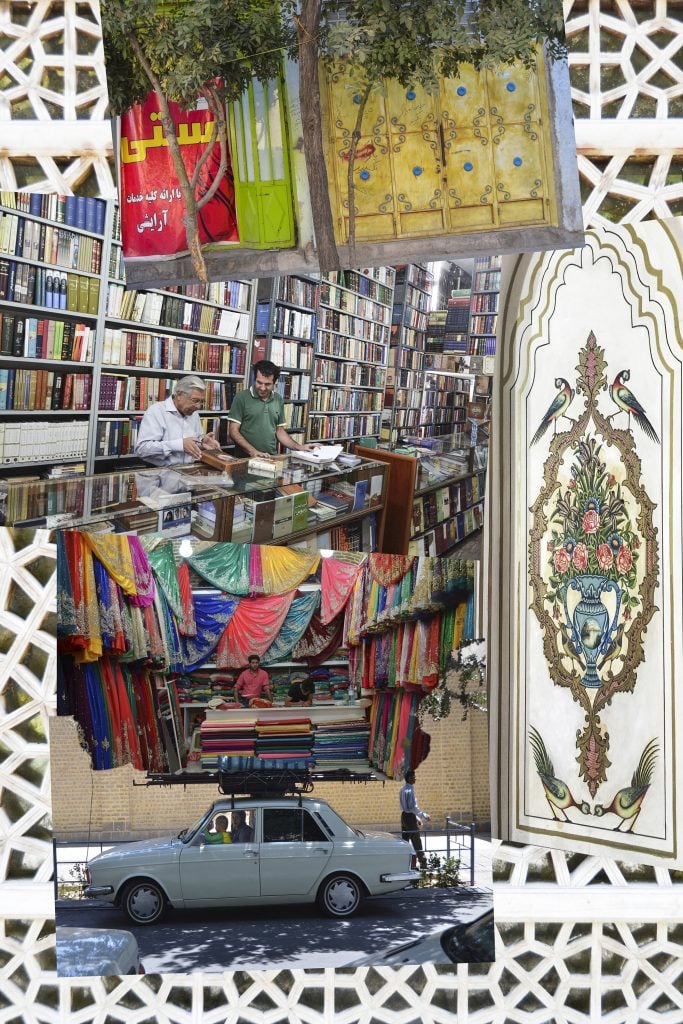


Jan Oberg, Iran Collage # 2 (2017) © Oberg PhotoGraphics


Peace & future researcher + ‌Art Photographer

Related Posts

Tony Robinson October 4, 2026 Violence is easy to recognise when someone is being beaten, shot or killed. It becomes more difficult when nobody is holding a weapon. Poverty, discrimination, exploitation and repression can restrict a human life just as effectively, although they do so in very different ways and with very different consequences. Simply adding more categories to an ever-growing list of forms of violence does not really solve the problem. The more interesting question is what all these different situations have in common and why it makes sense to describe them using the same word. Human beings do not simply react to what happens around them. They remember the past, imagine things that do not yet exist, make plans and undertake projects. Workers organise because they imagine different working conditions; people migrate because they imagine another life somewhere else; social movements emerge because people refuse to accept the...
Johan Galtung 1930-2024October 2015 Published here on October 3, 2026 Let us focus on Civilization for conflict analysis and remedies. Major forms of disorder use violence; war is state organized violence. The most belligerent states are the United States of America and Israel, both with civilization roots. National Evangelism, the US Protestant Christian civilization– more national than evangelical–justifies US warfare as exceptionalism of a people chosen by God, with a manifest destiny to run the world. Orthodox Judaism justifies Israeli warfare to conquer and expand from Nile to Euphrates as a religious right and duty to the Eternal One. The third most belligerent country, the UK, no longer believes it is God-chosen but chosen by the USA; not quite the same but something. But the root cause of global disorder lies in the Occident–with Islam–seeing itself as the single, universal civilization valid for all at all times, all others being...
Jan ObergPhD, director, The Transnational Foundation for Peace and Future Research, TFFLund, Sweden October 2, 2026 This is my full original manuscript. The Chinese Academy of Social Science, CASS, makes two publications out if it. 1. China’s Five-year plan emphasized the capabilities of basic research and original innovation. It is regarded as the goal of the future social development, which, as required, should be significantly enhanced. Can you comment on the importance of original innovation in research and academic study? I believe it is easier to define “original innovation” in the natural sciences than in social sciences. The breaking points of what constitutes something new, or innovative, are not quite as sharp in the latter. But in both fields it is about opening up something that was closed, unseen, unexplored before – making manifest what was earlier latent. Innovations come in many forms and shapes – naming something that was not...

Recent Articles

Tony Robinson October 4, 2026 Violence is easy to recognise when someone is being beaten, shot or killed. It becomes more difficult when nobody is holding a weapon. Poverty, discrimination, exploitation and repression can restrict a human life just as effectively, although they do so in very different ways and with very different consequences. Simply adding more categories to an ever-growing list of forms of violence does not really solve the problem. The more interesting question is what all these different situations have in common and why it makes sense to describe them using the same word. Human beings do not simply react to what happens around them. They remember the past, imagine things that do not yet exist, make plans and undertake projects. Workers organise because they imagine different working conditions; people migrate because they imagine another life somewhere else; social movements emerge because people refuse to accept the...
It’s a matter of principles, courage, vision and pulling together – while the militarist world is falling apart… Peter Langille October 3, 2026 “Here, then, is the problem which we present to you, stark and dreadful and inescapable: Shall we put an end to the human race; or shall mankind renounce war?”The Bertrand Russell—Albert Einstein Manifesto, July 9, 1955 ⁕ The forecast for what’s ahead is worrisome. The sharp rise in armed conflicts over the past three years is adding to what was already the highest level in over seventy years. Genocides, which should be prevented are supported. A shared climate emergency that jeopardises survival is ignored. Diverse polls now suggest that people are war-weary, worried and interested in a more effective United Nations. And, there are viable policy options for a more secure world! Yet governments are doubling-down, betting on more war and investing heavily. If current trends persist,...
Johan Galtung 1930-2024October 2015 Published here on October 3, 2026 Let us focus on Civilization for conflict analysis and remedies. Major forms of disorder use violence; war is state organized violence. The most belligerent states are the United States of America and Israel, both with civilization roots. National Evangelism, the US Protestant Christian civilization– more national than evangelical–justifies US warfare as exceptionalism of a people chosen by God, with a manifest destiny to run the world. Orthodox Judaism justifies Israeli warfare to conquer and expand from Nile to Euphrates as a religious right and duty to the Eternal One. The third most belligerent country, the UK, no longer believes it is God-chosen but chosen by the USA; not quite the same but something. But the root cause of global disorder lies in the Occident–with Islam–seeing itself as the single, universal civilization valid for all at all times, all others being...

TFF on Substack

Discover and subscribe to more peace materials on TFF Substack

Most Popular

Tony Robinson October 4, 2026 Violence is easy to recognise when someone is being beaten, shot or killed. It becomes more difficult when nobody is holding a weapon. Poverty, discrimination, exploitation and repression can restrict a human life just as effectively, although they do so in very different ways and with very different consequences. Simply adding more categories to an ever-growing list of forms of violence does not really solve the problem. The more interesting question is what all these different situations have in common and why it makes sense to describe them using the same word. Human beings do not simply react to what happens around them. They remember the past, imagine things that do not yet exist, make plans and undertake projects. Workers organise because they imagine different working conditions; people migrate because they imagine another life somewhere else; social movements emerge because people refuse to accept the...
It’s a matter of principles, courage, vision and pulling together – while the militarist world is falling apart… Peter Langille October 3, 2026 “Here, then, is the problem which we present to you, stark and dreadful and inescapable: Shall we put an end to the human race; or shall mankind renounce war?”The Bertrand Russell—Albert Einstein Manifesto, July 9, 1955 ⁕ The forecast for what’s ahead is worrisome. The sharp rise in armed conflicts over the past three years is adding to what was already the highest level in over seventy years. Genocides, which should be prevented are supported. A shared climate emergency that jeopardises survival is ignored. Diverse polls now suggest that people are war-weary, worried and interested in a more effective United Nations. And, there are viable policy options for a more secure world! Yet governments are doubling-down, betting on more war and investing heavily. If current trends persist,...
Johan Galtung 1930-2024October 2015 Published here on October 3, 2026 Let us focus on Civilization for conflict analysis and remedies. Major forms of disorder use violence; war is state organized violence. The most belligerent states are the United States of America and Israel, both with civilization roots. National Evangelism, the US Protestant Christian civilization– more national than evangelical–justifies US warfare as exceptionalism of a people chosen by God, with a manifest destiny to run the world. Orthodox Judaism justifies Israeli warfare to conquer and expand from Nile to Euphrates as a religious right and duty to the Eternal One. The third most belligerent country, the UK, no longer believes it is God-chosen but chosen by the USA; not quite the same but something. But the root cause of global disorder lies in the Occident–with Islam–seeing itself as the single, universal civilization valid for all at all times, all others being...
Read More
Living-Peace-Sign-Budapest-copy
Tony Robinson October 4, 2026 Violence is easy to recognise when someone is being beaten, shot or killed. It becomes more difficult when nobody is holding a weapon. Poverty, discrimination, exploitation and repression can restrict a human life just as effectively, although they do so in very different ways and with very different consequences. Simply adding more categories to an ever-growing list of forms of violence does not really solve the problem. The more interesting question is what all these different situations have in common and why it makes sense to describe them using the same word. Human beings do not simply react to what happens around them. They remember the past, imagine things that do not yet exist, make plans and undertake projects. Workers organise because they imagine different working conditions; people migrate because they imagine another life somewhere else; social movements emerge because people refuse to accept the...
b54a1f10-8c65-4f0b-9dd5-4abc0a7d04cc_2659x2659
It’s a matter of principles, courage, vision and pulling together – while the militarist world is falling apart… Peter Langille October 3, 2026 “Here, then, is the problem which we present to you, stark and dreadful and inescapable: Shall we put an end to the human race; or shall mankind renounce war?”The Bertrand Russell—Albert Einstein Manifesto, July 9, 1955 ⁕ The forecast for what’s ahead is worrisome. The sharp rise in armed conflicts over the past three years is adding to what was already the highest level in over seventy years. Genocides, which should be prevented are supported. A shared climate emergency that jeopardises survival is ignored. Diverse polls now suggest that people are war-weary, worried and interested in a more effective United Nations. And, there are viable policy options for a more secure world! Yet governments are doubling-down, betting on more war and investing heavily. If current trends persist,...
010
Johan Galtung 1930-2024October 2015 Published here on October 3, 2026 Let us focus on Civilization for conflict analysis and remedies. Major forms of disorder use violence; war is state organized violence. The most belligerent states are the United States of America and Israel, both with civilization roots. National Evangelism, the US Protestant Christian civilization– more national than evangelical–justifies US warfare as exceptionalism of a people chosen by God, with a manifest destiny to run the world. Orthodox Judaism justifies Israeli warfare to conquer and expand from Nile to Euphrates as a religious right and duty to the Eternal One. The third most belligerent country, the UK, no longer believes it is God-chosen but chosen by the USA; not quite the same but something. But the root cause of global disorder lies in the Occident–with Islam–seeing itself as the single, universal civilization valid for all at all times, all others being...
Screenshot 2026-10-02 011738
Jan ObergPhD, director, The Transnational Foundation for Peace and Future Research, TFFLund, Sweden October 2, 2026 This is my full original manuscript. The Chinese Academy of Social Science, CASS, makes two publications out if it. 1. China’s Five-year plan emphasized the capabilities of basic research and original innovation. It is regarded as the goal of the future social development, which, as required, should be significantly enhanced. Can you comment on the importance of original innovation in research and academic study? I believe it is easier to define “original innovation” in the natural sciences than in social sciences. The breaking points of what constitutes something new, or innovative, are not quite as sharp in the latter. But in both fields it is about opening up something that was closed, unseen, unexplored before – making manifest what was earlier latent. Innovations come in many forms and shapes – naming something that was not...
arctic-circle-map
The agreement is catastrophic both because of what it says and what it doesn’t mention. It reduces further the major asset of security policies: Freedom of action. Jan Oberg TFF director September 25, 2026 A couple of hours before the agreement was signed on September 22, 2026, I published the following 13 hypotheses about what it would most likely contain on TFF Substack (in English). I was wrong on only the first point. Contrary to what Trump had written on his Truth Social platform, it does not appear to come into force immediately. In fact, it turned out to be worse than even I had anticipated. After these hypotheses now come a number of reflections in light of what the agreement actually contains, and does not contain, as well as the way in which it has generally been presented by major media outlets and by the public-service broadcaster DR. My...
girl-5894831_1280
Below are TFF-related media mentions, comments, videos and social media posts published elsewhere but not on this homepage. We happen to catch and list only a fraction. Regarding video comments and debates, we recommend that you go to the TFF Video Channel on Substack where many of them are reproduced. Jan Oberg is a contributor to China Daily – 52 million daily clicks – and Global Times, CGTN and CCTV (the national television), China Investment, Xinhua News Agency and several others. Articles and videos on these media very often multiply into countless Chinese (and Western media) that re-post them from these main media. Thanks to The China Academy, his analyses, interviews and comments are frequently posted on YouTube channels such as Thinkers Forum and Wave Media. These videos are often re-posted on Bilibili (China’s YouTube), the China Content Center on TikTok, and on the Chinese edition of TikTok, Douyin.com. This means reaching hundreds of millions of viewers worldwide over a year. While there are too many to catch on all these...