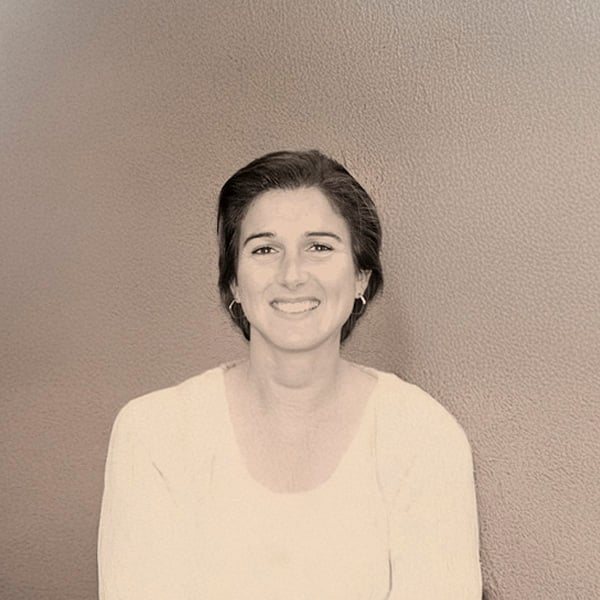
The Center for Conflict Resolution & Reconciliation (CCRR) is a Palestinian non-governmental organisation working for the transformation of conflict within Palestinian society based on the values of peace, reconciliation, forgiveness, respect and hope. CCRR offers most of its Conflict Resolution workshops through a network of freelance trainers. CCRR cooperates with a number of other Palestinian organizations nationally and on the international level it is a working member of both the International Fellowship of Reconciliation (IFOR) and Pax Christi International.
Vicky S Rossi: What does conflict mean to you as a Palestinian and what, in your opinion, is the relationship between conflict and peace?
Noah Salameh: Conflict is part of life. It does not just exist between Palestinians and Israelis. Conflict is inherent in nature. It is all around us. It is a natural thing. With regard to peace, people might say they are working for peace, but what do they understand by the term “peace”. Here at CCRR, when we talk about peace, we are talking about a value. It is not a political agreement between two governments. Peace is a value that is found inside a person. Unless you have inner peace you can never treat other people in a peaceful way. As a value, peace refers to respect for human rights and believing that all people are equal.
I think there are also wrong approaches to peace, for example in the negotiations between Palestinians and Israelis, where one side is much stronger than the other; or the double standards towards peace demonstrated by European countries that talk about democracy and peace, but then apply different standards towards Palestinians than towards Israelis. If Israelis do not respect human rights, Europe does not criticize them because Europeans still feel a sense of guilt towards the Jews and the Palestinians are paying the price for that. Then there is the Jewish lobby in the US which strongly influences the US government’s policy. So where is the value in all of this? The real value of peace is simply that I am a human and you are a human and we are all equal and deserve to be treated equally.
Vicky S Rossi: How influential is the Palestinian lobby in the US and Europe? Has the Palestinian Diaspora been able to organize itself to become a powerful force in the same way as the Jewish lobbies?
Noah Salameh: We have a difficulty with that because the Palestinian population is not so large, so we do not have the same power as the Jewish groups in the world. This reality has impacted our situation ever since 1948 [when the State of Israel came into existence] and still to this day many people around the world do not recognize Palestinians as a people. Going back in history, in the Balfour Declaration in 1917 it stated that “a land without people” [i.e. Palestine] was being given to “a people without land” [i.e. the Jews] as if the Palestinians never existed at that period of time. Do you think that Lord Balfour and the British government of the day didn’t know that there were Palestinians living in Palestine then? And yet they wanted to give that land to another people. What is the democratic value of such policies?
Vicky S Rossi: What would you like to see the European Union doing today to further the peace process between Israel and Palestine?
Noah Salameh: I would like European countries to do justice to themselves by respecting the values they so strongly promote like human rights, democracy and equality – values which are being denied to the Palestinians under Israeli Occupation. I would like European countries to respect themselves by putting an end to their running after the United States. The US as the sole superpower is deciding everything in the world today. In their relations with Israel and Palestine, I would like to see the EU holding a position that is independent of the US and that is in line with the values they so strongly promote. Germany in particular seems incapable of holding an independent position because Germans still feel guilt towards the Jews.
Vicky S Rossi: Many of the projects that are being implemented in Palestine are funded by the EU and the US government. There is also a lot of funding coming from grassroots European and American groups including religious organizations, so there is in fact quite a lot of support for Palestine from Europe and the United States. Would you agree?
Noah Salameh: That’s the thing that gives us Palestinians hope, that there are some people in the world who have the values even if they do not have the power. For example, the peace movement that is trying to support a real peace based on equal rights and justice. But at the governmental level, I don’t think there is a lot of funding being channeled into peace when you compare it with the amounts being spent on arms that are then exported to this region. 50 million dollars might be given to the peace movement, but then billions of dollars are spent on armaments, and then tanks and guns are sent here to the region. For example, Germany has sold submarines to the Israelis and each one costs millions of dollars. How can they spend so much on the arms industry and then blame the peace movement for the continuing violence?
Vicky S Rossi: With this political reality in mind, what are the aims of the CCRR projects? In which way do they hope to make an impact on the harsh realities in the region?
Noah Salameh: The first thing we aim to do is to raise public awareness of the concepts and the value of peace. We are adopting a bottom up approach as opposed to a top down approach to define what peace means to us as Palestinians and then to spread these ideas amongst the community. What is important is the value of peace; it is not whether there are 10 checkpoints or 5 checkpoints. Peace is all about whether you recognize my humanity. If you recognize me as a human being, you have to treat me as a human being. If you treat me as a human being, you give me equal amounts of water, you cancel the British emergency laws that have been imposed on Palestinians since 1945, you give me freedom of speech, freedom of movement, all these things.
If you believe that we are human and that we have equal rights, I think you solve half of the problem and that is how we are working at CCRR. We are working with the principles of peace. We have been working with students, teachers and media representatives, but it is our aim to reach all interested sectors of society as long as we have the funds to do so. We want to reach everyone to talk about the values of peace. The value I give to peace is not conditioned by Sharon or Olmert. I don’t just believe in peace when the Israelis believe in peace. I believe in peace because it is part of who I am. This is the methodology we use here at CCRR.
Let’s take the Young Negotiators Programme as an example. We go to schools and train teachers in conflict resolution, nonviolence and peace through dialogue, empowerment exercises and activities. The programme provides 30 hours of training for all the teachers in the school after which there are 30 hours of training for one of the classes in the school together with the school’s social worker. This social worker then trains students from other classes.
Vicky S Rossi: What kind of reaction do you get from the students and teachers to your methodology?
Noah Salameh: We talk about peace. We talk about negotiation. We talk about nonviolence. Many times we have strong opposition to this. People will ask, “Why do you want me to have peace with people who are occupying my country?” To this I answer, “I am not talking about peace as something external like occupation or no occupation. I am talking about peace as a value, as a way of life.” Nonviolence is a way of life, a way of thinking, a way of behaviour. It is not dependent on the prevailing situation between Israelis and Palestinians. If I believe in the values of peace, I have to act in accordance with that at all times irrespective of the actions and attitudes of the other parties.
Although students and teachers question us at the beginning, once they have experienced our approach they usually agree with it. They see the importance of self-criticism, control of one’s emotional reactions, right action and better communication.
Vicky S Rossi: Are they then able to use these skills to approach conflicts within Palestinian society itself and not only vis-à-vis the conflict with Israel?
Noah Salameh: Of course. That is even more important. To start with once students have learnt these conflict transformation skills, they must be able to act in a better way towards their colleagues and their teachers. Peace is not something you can divide up. You can’t choose to be a peaceful person with somebody and a violent person with somebody else. If I believe in the value of peace, it must be all encompassing.
Vicky S Rossi: CCRR also has a programme for media representatives. What is the focus of that programme?
Noah Salameh: It is a joint programme with Palestinian and Israeli media representatives. In our experience to date we have brought more than 100 media people from both sides together in workshops to discuss the role of the media in conflict and the impact of conflict on the media; basically how media and conflict influence one another. We look at how the media representative deals with conflict inside himself or herself. We look at the relationship between the media person’s values, behaviour, professionalism, objectivity and neutrality in times of conflict: how these things influence a media person’s work, how they influence his/her choice of news items to report on, how they influence the image of the other side that the media person portrays.
Vicky S Rossi: Is the impact of conflict on a media person’s professionalism and objectivity unconscious or conscious?
Noah Salameh: Both. For some media representatives it is a conscious choice, for others it is unconscious. For this reason, it is important to face the other side, to point out to them when they are not being professional despite their claims to the contrary. This CCRR media programme was very interesting. I think it was one of our most successful joint programmes.
Vicky S Rossi: Is it something that is on-going or is the programme finished now?
Noah Salameh: No, it is not on-going. This is one of the criticisms I have of funders like the EU. They give you funds for a programme, but afterwards instead of building on what has been created by providing follow-up funding, they ask you to present new proposals. This doesn’t allow for any continuity in a project. So with this media programme, we wanted to continue with it because it was really very interesting and successful. We had good results in terms of the quality of articles that were subsequently written by the programme participants for their newspapers. There were also improved relations between the media people on both sides. Unfortunately, funders don’t work in this way. They don’t fund the same programme twice. I think the problem is that more often than not the people who are providing the funding are not from the field. Professionally, they are unable to see how things need to continue. Funders seem to be more interested in the technicalities of a project proposal like whether it is written well or not. This is a shame because there are some people who do not write good proposals, but they are very good in the field. It is important to be able to help these kinds of people to continue their work because they have influence in the community.
Vicky S Rossi: If you were responsible for furthering the peace process between Israel and Palestine, what measures and policies would you implement at the governmental or grassroots level?
Noah Salameh: I used to work in the Palestinian Labour Ministry and was involved in negotiations on Palestinian labour issues. From my experience, I don’t think Palestinians know how to negotiate properly. The Israelis tend to be very good at dragging the Palestinians into the minor details of any negotiations instead of discussing the larger principles and values of peace. Palestinians need to focus their efforts in negotiations on talking about things like rights and equality in the eyes of God or in accordance with international law.
The Israeli mentality is fixated on the issue of security. They try to justify this by referring to Massada, Jericho and the Holocaust, but we can’t be held to ransom by these historical events. The Jews were victims of the Nazis, but the Palestinians are now the victims of the Israeli Occupation.
Vicky S Rossi: How would you overcome this tendency for the Israelis to refer back to historical events and the fact that Palestinians and Israelis are unequal partners at the negotiating table?
Noah Salameh: Partly it is down to Palestinians. They are not organized well. They don’t have professional teams of experienced negotiators – they might send just one representative to negotiations. For example, at the time of Arafat, he was the only person who could sign on behalf of the Palestinians.
I think any negotiations need to be conducted in a neutral setting. I would like to see the UN more actively involved in this process instead of the region being so strongly influenced by the United States. The US is not neutral or objective. I think the Palestinians have to refuse to be part of any negotiations led by the Americans. But the Palestinians are very weak and some believe that the only country that can put pressure on Israel is the US. However, in my opinion it is quite the opposite – the only ones who do not put pressure on the Israelis are precisely the Americans.
The first thing Palestinians have to do is to empower themselves, to build experienced teams and viable institutions. After that, they can go to negotiations. If they go to negotiations when they are weak, they can’t achieve anything.
Vicky S Rossi: Can Palestinians rely on any support from the Arab world?
Noah Salameh: In my opinion, no. I don’t hold the Arab world in high esteem. The Arab world is dictatorial. They don’t have democracy and they don’t respect the values of peace, so they can’t help us. I think the Arab countries would like to get rid of the Palestinian issue because their citizens feel sympathy for Palestinians and that puts pressure on the governments to do something, but they haven’t achieved anything yet.
I expect more from the Europeans, who claim to believe in the values of peace, democracy and human rights. The Europeans are part of this conflict. They were instrumental in creating the State of Israel, so they have a responsibility for the current situation.
Vicky S Rossi: But the creation of the State of Israel was voted on by the United Nations. It was not the creation solely of Europe.
Noah Salameh: Well the United Nations voted on the State of Israel in 1947, but the Balfour Declaration came before that in 1917 and Jews began emigrating in large numbers to historical Palestine under the British Mandate. Anyway, the UN today is dominated by the United States. That’s why I say Europe has to take responsibility. Now or in 10 years time, peace is coming. The problem is who will pay the highest price in the meantime. Israelis and Palestinians have to find a way to live together, but the problem is that up until now neither the Americans nor the Europeans have done enough to work for peace here. Even though I respect the Europeans for the values they claim to hold dear, how much money do they give to the peace movement – to projects for peace and dialogue? How much independence from the US do they have? Can they take an independent position in this conflict and lead the initiative in the United Nations with or without the US? Europe has to have more independence and to act. The United Nations has to take responsibility and to act.
There is no way that there can be peace in the Middle East, or in the world, without solving the Palestinian problem. Even Bin Laden, when he went to Afghanistan, said he wanted to liberate Palestine. He used Palestine as an excuse. The unfair situation in which the Palestinians find themselves is used by many parties – sometimes for moral reasons, but sometimes solely to promote their own agendas. Bin Laden for example was just using the Palestinian situation as an excuse. Even when Saddam Hussein occupied Kuwait, he said “I will do it for Palestine”.
The Palestinian problem also highlights the moral and ethical double standards of the Europeans and Americans.
Vicky S Rossi: Could you go further into your comment that there can be no peace in the Middle East, or the world, until the Palestinian problem has been resolved.
Noah Salameh: Well, for example, if you solve the Palestinian problem, you can open the Middle East like an area in Europe. If movement between Palestine and Israel is free, just imagine how much development and cultural exchange there could be.
Vicky S Rossi: So, you see Palestine as a bridge between Europe and the Arab world?
Noah Salameh: The conflict between the West and the East finds its centre in Palestine. Palestine has been on the agenda of the United Nations for the last one hundred years. Have you ever seen Palestine off the world agenda? In the Islamic world they are talking about how the West has double standards with regards rights when it comes to Palestine, again emphasizing this East-West divide.
Vicky S Rossi: So you believe there could be greater reconciliation between the East and the West if Europe and the US give the same importance to human rights in Palestine as they do to human rights in their own countries?
Noah Salameh: For me, before you can resolve the conflict here, you have to respect people. The United Nations Universal Declaration of Human Rights, for example, is not conditional or dependent on a political solution. The Declaration says human beings have these rights. It does not say human beings have these rights if they solve the conflict between Israel and Palestine. But if a so-called “democratic” country like Israel occupies another people using the historical British emergency laws, building checkpoints and Walls, how can you ever hope to convince a simple Arab person of the value of something like the Universal Declaration of Human Rights, or any of the other charters of human rights for that matter? That Arab person would say, “Bring the Universal Declaration of Human Rights, the European Charter on Human Rights, the UN Covenants, the African Charter on Human and People’s Rights, bring any charter and measure the respect of the human rights of Palestinians in the last 100 years.” Are we not human? It seems we have to struggle merely to prove our humanity.
*This transcript represents an accurate but non-verbatim representation of the original interview.
For further information, please contact:
Noah Salameh
Director, Center for Conflict Resolution and Reconciliation
P.O. Box 861, Bethlehem
Palestine
Tel: +972-2-2767745
Fax: +972-2-2745475
E-mail: ccrr@ccrr-pal.org or salamehn@hotmail.com
Website: http://www.ccrr-pal.org/
Links
International Fellowship of Reconciliation (IFOR) http://www.ifor.org/
Pax Christi International http://www.paxchristi.net/
“German Arms Firms Muscle In” http://news.bbc.co.uk/2/hi/europe/4021881.stm
“Israel confirms purchase of German submarines”: http://news.bbc.co.uk/2/hi/middle_east/125022.stm