

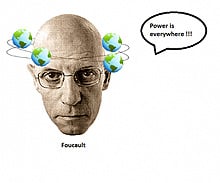
For et par måneder siden erklærede den islandske præsident at folketinget, Det Hvide Hus og traditionelle magtinstanser næsten er blevet et ”side show” i forhold til sociale medier. Ligeså stille bevæger vi os væk fra nationalstaten som den suveræne magtinstans til globale netværk i forskellige udformninger. Med andre ord er det folk som dig og mig, der har ansvar for, hvor verden bevæger sig hen. Men hvilke værdier skal vi handle efter i denne nye verdensorden?
Moralsk tomrum
I Danmark er mange værdier blevet sideordnede. Fordi vi har indset, at jeg ganske rigtigt ser verden fra mit perspektiv, mens du ser verden fra dit, har vi konkluderet at alt er lige godt. Om du bruger dine penge på designermøbler eller sender dem til Afrika er stort set hip som hap. Lige bortset fra at det første er mere hipt. Enhver må leve sit liv som han vil, sålænge han ikke forvolder skade mod andre og iøvrigt betaler sin skat.

I dette normative tomrum opstår en masse divergerende teorier om, hvordan man bør leve sit liv. Hvordan man bør klæde sig, opdrage sine børn, lede sin virksomhed og ikke mindst, hvilket føde man må indtage. Den ene dag giver det kræft at spise æg, den næste dag er det sundt for håret. Det normative input mangler på én gang substans, konsistens og mening, der rækker udover os selv.

Det samme er tilfældet på det religiøse felt. Ligesom bogtrykkerkunsten hjalp til at udbrede biblen har internettet givet anledning til en helt ny tilgang til religion – hvad den danske forfatter, Morten Thomsen Højsgaard, kalder google buddhisme.

Denne form for spiritualitet indebærer, at man krydrer sit ellers sækulære liv med diverse indput fra forskellige spirituelle retninger, som man selv samensætter (jf. søger på google). For at religion ikke blot bliver et projekt på linie med andre narcisistiske foretagender, mangler vi også her et moralsk kompas til at navigere i dette net af ideer, teorier og praksiser.

Globale netværk
Forleden snakkede jeg med en 12 årig pige, der var dybt engageret i Japan med alt fra manga og suchi til japansk humor og politiske forhold. Hun sad klistret til dr-update hele dagen efter tsunamien og føler lige stor forbundethed med hændelser i Japan som i fx Norge.

Og hun er ikke den eneste. Om det er Liberal Alliance der oprigtigt bekymrer sig om den globale konkurrence, soldater der sendes til Afghanistan, patienter der behandles af irakiske læger eller min mormor, der har sat sig for at lære kinesisk.

På finurligvis er vi alle forbundet på kryds og tværs. Mine bukser er syet af børn i Indien, mine bananer er fra Mellem Amerika, min computer fra USA og metallerne heri fra Afrika.

Hvis vi skal tage de fulde konsekvenser af denne forbundethed, må vi erkende vores ansvar. Ligesom vi har empati og ansvar for vores nærmeste familie i kraft af vores indbyrdes afhængighed, kan vi ligeledes have dette for vores nation, religiøse fællesskab – ja sågar for hele kloden. Vi kan udvikle globalt medborgerskab og udvide vores horisont til global bevidsthed.
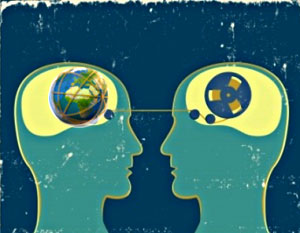
Men er det overhovedet muligt at se verden i et globalt perspektiv? At lægge låg på debatten om en enlig mors budget og fokusere på, hvordan vi kan skabe et velfærdsamfund på verdensplan, så vores arbejdspladser ikke ryger til Kina?

En af de ting der muliggør global bevidsthed er moderne teknologi. De nye medier gør det meget vanskeligt at undgå input fra andre steder på kloden – pludselig står oprørerne fra det arabiske forår midt i vores stue og råber på frihed.

På mange måder er internettet en analogi for de globale netværk som vi alle indgår i, forbundet på kryds og tværs i et net af uendelig kompleksitet. Samtidig er internettet et af de værktøjer, der muliggør globalt engagement. Fx har organisationen Avaaz over ti millioner medlemmer verden over, der skriver emails og støtter sager om klimaaftaler, menneskerettigheder og demokrati.
Ansvar og guldskeer
Men det individuelle ansvar i forhold til verden må række udover ”kliktivisme” og være en del af vores valg i dagligdagen. For at leve op til et sådant ansvar mener jeg vi har brug for to ting: 1) et moralsk kompas og 2) konkrete handlingsmuligheder for at bidrage.

Jeg har her understreget ansvar og empati for folk på den anden side af kloden som passende værdier til den måde verden hænger sammen på i dag. Jo større perspektiv jo bedre.

Problemet er, at det er umuligt at opstille endegyldige regler, der til enhver tid kan fortælle, hvad der er det rigtige at gøre. Tidernerne skifter konstant og hvad der er passende i én situation er måske tåbeligt i en anden. Vi må derfor skærpe vores opmærksomhed og være bevidste i enhver situation for at komme med en passende respons. Hvad er virkelig min intention med denne handling? Gør jeg det også for et højere formål? Har jeg set situationen i det størst mulige perspektiv?

Her kommer problematikken om vores handlemuligheder ind i billedet. For selv hvis jeg oprigtigt ønskede at handle etisk og globalt – hvilke muligheder har jeg herfor uden nødvendigvis at sætte hele mit liv over bord?

Jeg tror der er virkelig mange, som inderligt ønsker at gøre en forskel, men ikke helt ved hvor de skal sætte ind. Vi må skabe flere handlingsmuligheder sammen, undersøge hvordan vi hver især bidrager bedst og bygge skoler hvor initiativ, global bevidsthed og mod på at forandre verden styrkes.

Netop fordi vi ikke længere blot kan slå op i en enkelt bog for at finde svar på de udfordringer vi står overfor i dag, har vi brug for at sætte os sammen og diskutere, i hvilken retning vi gerne vil dreje udviklingen.
Vi er ikke blot ansvarlige for verden, fordi vi er en del af den, men også fordi vi tilhører den mest priviligerede del af den.

Med andre ord: os der er født med en guldske i røven må se at få fingeren ud – der er simpelthen ikke plads til begge dele.
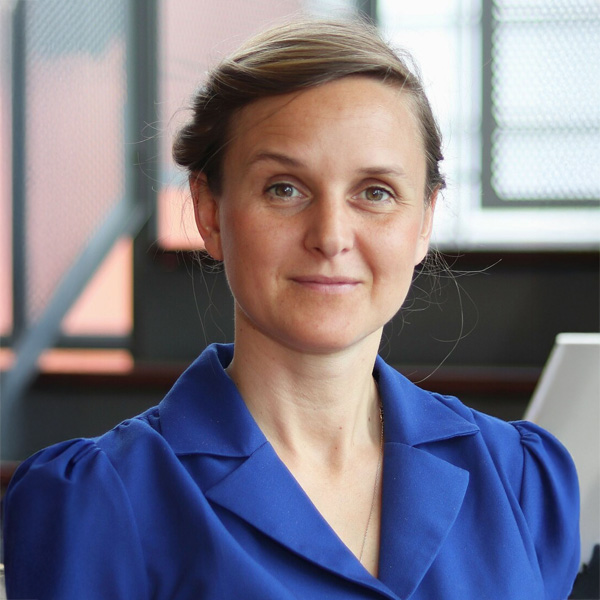

"2011-2012 MA in Peace and Conflict Studies Malmö University 2011 Peace Research (MA level), Oslo University 2011 Peace-building Course at University for Peace (MA level). 2010 Peace and conflict studies in India (BA level). 2008 – 2010 Roskilde university, Cultural encounters and psychology 2008 Testrup Højskole, theatre 2004 – 2007 Rønde High School "

Related Posts

Photos © TFF 2000 Read PressInfo 90 “Lift the Sanctions and Bring More Aid to Yugoslavia” See Pictures from Belgrade © TFF 2000 Please reprint, copy, archive, quote or re-post this item, but please retain the source.
PRESS RELEASE – 6 OCTOBER 2025 LAY DOWN YOUR ARMSPEACE PRIZE FOR 2025 is awarded Francesca Albanese The United Nations Special Rapporteur on the occupied Palestinian territories – as the person who, in accordance with Alfred Nobel’s will, has “done the most or the best work for fraternity between nations and for the abolition or reduction of standing armies as well as for the holding and promotion of peace congresses.” Francesca Albanese has forcefully and unwaveringly worked against Israel’s full-scale war on the occupied Palestinian territories, in particular Israel´s ongoing genocide against the Palestinian people. She has confronted Israel’s systematic war crimes and crimes against humanity in a truly global outreach. Further, she has brought governments, international organisations and people’s groups together to underline the responsibility of the world at large to act and to stop arming, enabling, and profiting from Israel’s ongoing criminal actions. But first of all, Albanese...
Joie De Vivre, 1946 by Pablo Picasso Not recognizing the magic of the present moment may just be a crime against our humanity. David Andersson August 5, 2025 TFF publishes this with particular joy because, while we have always been pro-peace, future-oriented and proposal-making, we need even more of that now: Peace is to be FOR something and go for it. In my recent article, From Personal Development to Human Development, I explored the imbalance between our inner growth and society’s relentless focus on external activity. One of the greatest obstacles to genuine human development today is the sheer level of negativity we encounter daily. As an editor, I regularly receive submissions from Western contributors. Many center on themes like political corruption—even among progressive leaders—technological control, cognitive warfare, genocide, alarming climate forecasts (“only three years left to avoid the worst”), and Europe’s persistent, deadly hypocrisy. The list continues, each entry more...

Recent Articles

Below are TFF-related media mentions, comments, videos and social media posts published elsewhere but not on this homepage. We happen to catch and list only a fraction. Regarding video comments and debates, we recommend that you go to the TFF Video Channel on Substack where many of them are reproduced. Jan Oberg is a contributor to China Daily – 52 million daily clicks – and Global Times, CGTN and CCTV (the national television), China Investment, Xinhua News Agency and several others. Articles and videos on these media very often multiply into countless Chinese (and Western media) that re-post them from these main media. Thanks to The China Academy, his analyses, interviews and comments are frequently posted on YouTube channels such as Thinkers Forum and Wave Media. These videos are often re-posted on Bilibili (China’s YouTube), the China Content Center on TikTok, and on the Chinese edition of TikTok, Douyin.com. This means reaching hundreds of millions of viewers worldwide over a year. While there are too many to catch on all these...
Jan Oberg TFF director October 13, 2026 According to Alfred Nobel’s will, the Nobel Peace Prize shall be awarded: ”to the person who has done the most or best to advance fellowship among nations, the abolition or reduction of standing armies, and the establishment and promotion of peace congresses.” Further down, he also expresses how the prize for the “champions of peace” shall be decided: “that for champions of peace by a committee of five persons to be selected by the Norwegian Storting. Alfred Nobel’s will is remarkably short and clear. But few seem to have read it. Nobel did not say that the committee itself should consist of members of parliament. He entrusted the Storting with appointing five persons. In principle, it could have selected diplomats, mediators, peace researchers, conflict-resolution specialists, or other individuals with recognised expertise in matters of peace from around the world. Instead, the Storting gradually...
The Quest for Humane Survival Richard Falk Professor emeritus, Princeton UniversityTFF Associate since 1986October 12, 2026 After decades of teaching and writing about international law in academic frameworks that were not institutionally situated within law school environments—at Princeton and the University of California, Santa Barbara—I found myself most receptive to the TWAIL outlook. It has been especially illuminating in clarifying the extent to which international law evolved as a dialogical critique of Europe’s efforts to legitimize its colonial undertakings. In particular, TWAIL has exposed how international law has functioned to legalize the subjugation of Third World peoples, securing conditions for exploitative investment and trade relations, the coercive enforcement of public debts, and an ideology of cultural superiority. TWAIL’s exposure of these economic legacies of colonialism has influenced my understanding of the history and development of international law, broadly conceived, as an ideological project of the Western sub-system of the world...

TFF on Substack

Discover and subscribe to more peace materials on TFF Substack

Most Popular

Below are TFF-related media mentions, comments, videos and social media posts published elsewhere but not on this homepage. We happen to catch and list only a fraction. Regarding video comments and debates, we recommend that you go to the TFF Video Channel on Substack where many of them are reproduced. Jan Oberg is a contributor to China Daily – 52 million daily clicks – and Global Times, CGTN and CCTV (the national television), China Investment, Xinhua News Agency and several others. Articles and videos on these media very often multiply into countless Chinese (and Western media) that re-post them from these main media. Thanks to The China Academy, his analyses, interviews and comments are frequently posted on YouTube channels such as Thinkers Forum and Wave Media. These videos are often re-posted on Bilibili (China’s YouTube), the China Content Center on TikTok, and on the Chinese edition of TikTok, Douyin.com. This means reaching hundreds of millions of viewers worldwide over a year. While there are too many to catch on all these...
Jan Oberg TFF director October 13, 2026 According to Alfred Nobel’s will, the Nobel Peace Prize shall be awarded: ”to the person who has done the most or best to advance fellowship among nations, the abolition or reduction of standing armies, and the establishment and promotion of peace congresses.” Further down, he also expresses how the prize for the “champions of peace” shall be decided: “that for champions of peace by a committee of five persons to be selected by the Norwegian Storting. Alfred Nobel’s will is remarkably short and clear. But few seem to have read it. Nobel did not say that the committee itself should consist of members of parliament. He entrusted the Storting with appointing five persons. In principle, it could have selected diplomats, mediators, peace researchers, conflict-resolution specialists, or other individuals with recognised expertise in matters of peace from around the world. Instead, the Storting gradually...
The Quest for Humane Survival Richard Falk Professor emeritus, Princeton UniversityTFF Associate since 1986October 12, 2026 After decades of teaching and writing about international law in academic frameworks that were not institutionally situated within law school environments—at Princeton and the University of California, Santa Barbara—I found myself most receptive to the TWAIL outlook. It has been especially illuminating in clarifying the extent to which international law evolved as a dialogical critique of Europe’s efforts to legitimize its colonial undertakings. In particular, TWAIL has exposed how international law has functioned to legalize the subjugation of Third World peoples, securing conditions for exploitative investment and trade relations, the coercive enforcement of public debts, and an ideology of cultural superiority. TWAIL’s exposure of these economic legacies of colonialism has influenced my understanding of the history and development of international law, broadly conceived, as an ideological project of the Western sub-system of the world...
Read More
girl-5894831_1280
Below are TFF-related media mentions, comments, videos and social media posts published elsewhere but not on this homepage. We happen to catch and list only a fraction. Regarding video comments and debates, we recommend that you go to the TFF Video Channel on Substack where many of them are reproduced. Jan Oberg is a contributor to China Daily – 52 million daily clicks – and Global Times, CGTN and CCTV (the national television), China Investment, Xinhua News Agency and several others. Articles and videos on these media very often multiply into countless Chinese (and Western media) that re-post them from these main media. Thanks to The China Academy, his analyses, interviews and comments are frequently posted on YouTube channels such as Thinkers Forum and Wave Media. These videos are often re-posted on Bilibili (China’s YouTube), the China Content Center on TikTok, and on the Chinese edition of TikTok, Douyin.com. This means reaching hundreds of millions of viewers worldwide over a year. While there are too many to catch on all these...
Nobel-Prize-Plaque
Jan Oberg TFF director October 13, 2026 According to Alfred Nobel’s will, the Nobel Peace Prize shall be awarded: ”to the person who has done the most or best to advance fellowship among nations, the abolition or reduction of standing armies, and the establishment and promotion of peace congresses.” Further down, he also expresses how the prize for the “champions of peace” shall be decided: “that for champions of peace by a committee of five persons to be selected by the Norwegian Storting. Alfred Nobel’s will is remarkably short and clear. But few seem to have read it. Nobel did not say that the committee itself should consist of members of parliament. He entrusted the Storting with appointing five persons. In principle, it could have selected diplomats, mediators, peace researchers, conflict-resolution specialists, or other individuals with recognised expertise in matters of peace from around the world. Instead, the Storting gradually...
law-419057_1280
The Quest for Humane Survival Richard Falk Professor emeritus, Princeton UniversityTFF Associate since 1986October 12, 2026 After decades of teaching and writing about international law in academic frameworks that were not institutionally situated within law school environments—at Princeton and the University of California, Santa Barbara—I found myself most receptive to the TWAIL outlook. It has been especially illuminating in clarifying the extent to which international law evolved as a dialogical critique of Europe’s efforts to legitimize its colonial undertakings. In particular, TWAIL has exposed how international law has functioned to legalize the subjugation of Third World peoples, securing conditions for exploitative investment and trade relations, the coercive enforcement of public debts, and an ideology of cultural superiority. TWAIL’s exposure of these economic legacies of colonialism has influenced my understanding of the history and development of international law, broadly conceived, as an ideological project of the Western sub-system of the world...
images-2
Advocates of nuclear disarmament are regularly dismissed by the champions of nuclear deterrence as naïve and unrealistic, utopian or even irresponsible. Yet this ‘doctrine’ of deterrence, regarded by France as the ‘cornerstone’ of its national security, is based on quasi-religious beliefs, a theory that cannot be proven, risky gambles and fragile assumptions. So much so that one might legitimately ask which side the ‘Care Bears’ are on. Marc FinaudVice-President of Initiatives for Nuclear Disarmament (IDN) October 9, 2026 This article was originally published on Pressenza When it comes to these things being treated as religious concepts, look here. Idealists and realists It was Hubert Védrine, François Mitterrand’s former Foreign Minister, who repeatedly coined the phrase: ‘Europeans are a sort of Care Bears who don’t realise they’re living in Jurassic Park’. He applies this reference to the cartoon for well-behaved children not only to what he regards as weakness or idealism...
8824b09f-33a5-43f9-9fd0-550f28cda24d_1536x1024
What the West Borrowed from Asia and What It Left Behind Jan Krikke October 8, 2026 The article was originally published here In the late 1960s, the musical Hair announced that the Age of Aquarius was dawning. Its opening anthem promised a transformation of human consciousness: an era of peace, harmony and understanding. Half a century later, a familiar echo of that promise is a meditation app offered by your employer. You can find it in the same list of benefits as the pension plan and the gym discount. How did a spiritual revolution become an employee benefit? The answer lies in the history of the movement known as New Age: where it came from, what it borrowed from Asia, and why the meaning of what it borrowed changed in the process. Two definitions will help. New Age is a loose label for a wide range of spiritual practices and...
Screenshot 2026-10-04 210142
Small and different + among the 10% most active + 9,000 texts + 150 Associates + 60 000 a day — and a stubborn belief that peace is smarter and must be secured by peaceful means. In 2026, the Transnational Foundation for Peace and Future Research (TFF) turns 40. On Monday, October 5, 2026, a new TFF homepage will go live — a new gateway to more than 9,000 articles, analyses, research papers and other contributions produced over four decades of independent peace research. But this is not simply a new website. For four decades, TFF has worked from a simple conviction: peace is smarter than militarism and can be brought about by peaceful means. This is not merely an aspiration. It is the principle expressed in the UN Charter and the Gandhian tradition that has guided our work from the beginning. TFF is a research-based, independent and people-financed foundation....




