

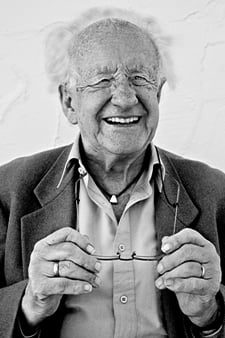
johangaltung

Hindu University, FL USA

Gandhi was born 2 October 1869, was killed 30 January 1948 by a Pune brahmin, Godse. I was a 17 years old boy in Norway who cried when hearing the news. Something unheard of had happened.

But I did not know why I cried, and wanted to know more. Who was Gandhi? So I became a Gandhi scholar as assistant and co-author to the late Arne Næss in his seminal work of extracting from Gandhi’s works and words his Gandhi’s Political Ethics as a norm-system.[i]

The image of the India I love is the image of Gandhi. I know perfectly well that there are other Indias. And Ashis Nandy sensitized me to why the court proceedings against Godse were kept secret: because his arguments were that Gandhi stood in the way of the modern India the government wanted, with industrialization, booming cities, growth, trade, a strong army; the whole package.

Very different from Gandhi’s self-sufficient sarvodaya villages, linked by “oceanic circles”, focused on spiritual rather than material growth.

Very similar to the Buddhist image of the small sangha community. And in line with Gandhi’s idea that he may actually have been a Buddhist; without any vertical ranking of occupations.

Gandhi’s link to Buddhism and rejection of caste may have been on top of Godse’s motivation, adding to modernity. Nehru’s India was also a modern India, with a socialist LSE-Harold Laski, Soviet touch.

Nehru and Gandhi shared anti-colonialism but differed in their images of independent India. Modernity, and even more so, Soviet top-down socialism, were very remote from Gandhi’s bottom-up world.

Gandhi was instrumentalized by Congress to get rid of Britons preaching against caste. India became independent, after a disastrous partition mainly caused by Lord Mountbatten; free to enter modernity, and to keep caste. The Congress Party got the cake and ate it too.

So, I see two Indias, Gandhi and modernity, and knowing there are more.

Two Indian civilizations, with much clash and little dialogue.

And some dwarfs rejecting India’s greatest son. Some time ago there were books on and by Gandhi at New Delhi airport; today we find books on business administration.

A non-dialogue of two civilizations within one country.

This essay opens for that missing dialogue, for the millions touched by the genius of the Gandhi that modern India expelled, like traditional India did to another genius coming out of roughly the same land, the Buddha. The image of India abroad is still shaped by both.

Gandhi, a vaisya prime minister’s son, a lawyer trained in England, struggling with the drives of sex and food, finding his brahmacharya.

Indian themes with as much or more claim on India as the present growth machine serving the upper castes and classes at the expense of growing inequality and the suffering of the 1/3 of the world’s starving, living in one country, India.

An India linked to a falling global empire, USA; and a regional declining empire, Israel.

An India with direct violence by acts of commission; structural violence producing more suffering than direct violence upheld by acts of omission; and cultural violence legitimizing either or both.

And Indo-European class structure, with brahmin specialists on cultural violence, kshatriyas on direct violence, and vaisyas on structural violence; unleashing all three on common people and women.

That tradition of direct violence + steep pyramids of structural violence + legitimacy from a divine mandate also predict well the four most belligerent countries over the last 1,000 years: USA, Israel, UK and Turkey.

Watch for the dangers of guilt by cooperation and association with those four.

Gandhi will survive this perverted Indian modernity.

Gandhi’s four S’s, satyagraha-swaraj-swadeshi-sarvodaya, are better approaches to the three UN goals sustainable peace, development and environment.

Satyagraha: holding on to Satya, a Truth-Love-God trinity, his unity-of-human beings. As factual truth, as togetherness-compassion-love, and as embodying the divine.

The word ahimsa, nonviolence, reflects this badly.

More than 100 years ago Gandhi coined satyagraha drawing on vasudaiva kuttumbakam-the world is my family. Very Indian.

But not practiced by 700,000 Hindu soldiers in Kashmir ruling over the Muslims, and in even more misery and inequality by driving tribals and casteless off the land and killing Naxalites with drones.

Swaraj: self-rule, swa, the Self of identity, with Raj, rule.

Gandhi praised openness refusing to be blown off his feet. Be rooted, deepen the rootedness, develop your self, your spirit, be in command of your identity; concepts beyond an independence ceremony with flags lowered and raised. Gandhi even did not attend; he fought the Lord Mountbatten-twisted partition with its devastating consequences.

Swadeshi: meeting needs for food, shelter, clothing, self-made. No to English textiles-Yes to khadi. Gandhi even collected money for Bombay textile merchants; the textiles, not they, were the problem.

Sarvodaya: the uplift of the poor, inspired by Gandhi’s dictum, there is enough for everybody’s need, but not for everybody’s greed.

Gandhi was for need, modernity for greed.

Gandhi for local self-reliance, modernity for unlimited trade.

Gandhi for building on own identity, modernity for americanization as neo-nirvana.

Gandhi for nonviolent conflict resolution, modernity for police, military, war.

India’s modernity suffers a crash landing, with revolts from Orissa to Kerala. Even worse: massive suicide by desperate, indebted farmers being driven off the land, even selling their daughters.

Both Delhi and the Naxalites would be better off with Gandhi’s Four S’s than with New Delhi state terrorism-torturism and Naxalite terrorism.

A blessing to have Gandhi on the reserve shelf. But Gandhi’s philsophy is needed in reality, not on any shelf, and backed by political power.

APPENDIX: The Gandhi Conflict Norms

GOALS AND CONFLICT
N11 Act in conflicts!

N111 Act now!

N112 Act here!

N113 Act for your own group!

N114 Act out of identity!

N115 Act out of conviction!

N12 Define the conflict well!

N121 State your own goal clearly!

N122 Try to understand your opponent’s goal!

N123 Emphasize common and compatible goals!

N124 State the conflict relevant facts objectively!

N13 Have a positive approach to conflict!

N131 Give the conflict a positive emphasis!

N132 See conflict as opportunity to meet the opponent!

N133 See conflict as opportunity to transform society!

N134 See conflict as opportunity to transform yourself!

CONFLICT STRUGGLE
N21 Act non-violently in conflicts!

N211 Do not hurt or harm with deeds!

N212 Do not hurt or harm with words!

N213 Do not hurt or harm with thoughts!

N214 Do not harm the opponent’s property!

N215 Prefer violence to cowardice!

N216 Do good even to the evil‑doer!

N22 Act in a goal‑consistent manner!

N221 Always include a constructive element!

N222 Use goal‑revealing forms of struggle!

N223 Act openly, not secretly!

N224 Aim the struggle at the correct point!

N23 Do not cooperate with evil!

N231 Non‑cooperation with evil structure!

N232 Non‑cooperation with evil status!

N233 Non‑cooperation with evil action!

N234 Non‑cooperation with those who cooperate with evil!

N24 Be willing to sacrifice!

N241 Do not escape from punishment!

N242 Be willing to die if necessary!

N25 Do not polarize!

N251 Distinguish between antagonism and antagonist!

N252 Distinguish between person and status!

N253 Maintain contact!

N254 Empathy with your opponent’s position!

N255 Be flexible in defining parties and positions!

N26 Do not escalate!

N261 Remain as loyal as possible!

N262 Do not provoke or let yourself be provoked!

N263 Do no humiliate or let yourself be humiliated!

N264 Do no expand the goals for the conflict!

N265 Use the mildest possible forms of conflict behavior!

CONFLICT RESOLUTION
N31 Solve conflict!

N311 Do not continue conflict struggle forever!

N312 Always seek negotiation with the opponent!

N313 Seek positive social transformations!

N314 Seek human transformation!

‑ of yourself

‑ of the opponent

N32 Insist on the essentials, not on non‑essentials!

N321 Do not trade with essentials!

N322 Be willing to compromise on non‑essentials!

N33 See yourself as fallible!

N331 Remember that you may be wrong!

N332 Admit your mistakes openly!

N333 Consistency over time not very important!

N34 Be generous in your view of the opponent!

N341 Do not exploit the opponent’s weaknesses!

N342 Do not judge the opponent harder than yourself!

N343 Trust your opponent!

N35 Conversion, not coercion!

N351 Always seek solutions that are accepted!

‑ by yourself

‑ by the opponent!

N352 Never coerce your opponent!

N353 Convert your opponent into a believer in the cause!

NOTE:

[i]. For my own version of that system please see the Appendix, taken from my The Way is the Goal, Ahmdavad: Navajivan, 1995 (also reprinted on the back of the cover-pages of A Theory of Conflict, TRANSCEND University Press, 2010).

Originally published by Transcend Media Service, TMS, here.

Related Posts

Jan Oberg TFF director October 13, 2026 According to Alfred Nobel’s will, the Nobel Peace Prize shall be awarded: ”to the person who has done the most or best to advance fellowship among nations, the abolition or reduction of standing armies, and the establishment and promotion of peace congresses.” Further down, he also expresses how the prize for the “champions of peace” shall be decided: “that for champions of peace by a committee of five persons to be selected by the Norwegian Storting. Alfred Nobel’s will is remarkably short and clear. But few seem to have read it. Nobel did not say that the committee itself should consist of members of parliament. He entrusted the Storting with appointing five persons. In principle, it could have selected diplomats, mediators, peace researchers, conflict-resolution specialists, or other individuals with recognised expertise in matters of peace from around the world. Instead, the Storting gradually...
Advocates of nuclear disarmament are regularly dismissed by the champions of nuclear deterrence as naïve and unrealistic, utopian or even irresponsible. Yet this ‘doctrine’ of deterrence, regarded by France as the ‘cornerstone’ of its national security, is based on quasi-religious beliefs, a theory that cannot be proven, risky gambles and fragile assumptions. So much so that one might legitimately ask which side the ‘Care Bears’ are on. Marc FinaudVice-President of Initiatives for Nuclear Disarmament (IDN) October 9, 2026 This article was originally published on Pressenza When it comes to these things being treated as religious concepts, look here. Idealists and realists It was Hubert Védrine, François Mitterrand’s former Foreign Minister, who repeatedly coined the phrase: ‘Europeans are a sort of Care Bears who don’t realise they’re living in Jurassic Park’. He applies this reference to the cartoon for well-behaved children not only to what he regards as weakness or idealism...
What the West Borrowed from Asia and What It Left Behind Jan Krikke October 8, 2026 The article was originally published here In the late 1960s, the musical Hair announced that the Age of Aquarius was dawning. Its opening anthem promised a transformation of human consciousness: an era of peace, harmony and understanding. Half a century later, a familiar echo of that promise is a meditation app offered by your employer. You can find it in the same list of benefits as the pension plan and the gym discount. How did a spiritual revolution become an employee benefit? The answer lies in the history of the movement known as New Age: where it came from, what it borrowed from Asia, and why the meaning of what it borrowed changed in the process. Two definitions will help. New Age is a loose label for a wide range of spiritual practices and...

Recent Articles

Below are TFF-related media mentions, comments, videos and social media posts published elsewhere but not on this homepage. We happen to catch and list only a fraction. Regarding video comments and debates, we recommend that you go to the TFF Video Channel on Substack where many of them are reproduced. Jan Oberg is a contributor to China Daily – 52 million daily clicks – and Global Times, CGTN and CCTV (the national television), China Investment, Xinhua News Agency and several others. Articles and videos on these media very often multiply into countless Chinese (and Western media) that re-post them from these main media. Thanks to The China Academy, his analyses, interviews and comments are frequently posted on YouTube channels such as Thinkers Forum and Wave Media. These videos are often re-posted on Bilibili (China’s YouTube), the China Content Center on TikTok, and on the Chinese edition of TikTok, Douyin.com. This means reaching hundreds of millions of viewers worldwide over a year. While there are too many to catch on all these...
Jan Oberg TFF director October 13, 2026 According to Alfred Nobel’s will, the Nobel Peace Prize shall be awarded: ”to the person who has done the most or best to advance fellowship among nations, the abolition or reduction of standing armies, and the establishment and promotion of peace congresses.” Further down, he also expresses how the prize for the “champions of peace” shall be decided: “that for champions of peace by a committee of five persons to be selected by the Norwegian Storting. Alfred Nobel’s will is remarkably short and clear. But few seem to have read it. Nobel did not say that the committee itself should consist of members of parliament. He entrusted the Storting with appointing five persons. In principle, it could have selected diplomats, mediators, peace researchers, conflict-resolution specialists, or other individuals with recognised expertise in matters of peace from around the world. Instead, the Storting gradually...
The Quest for Humane Survival Richard Falk Professor emeritus, Princeton UniversityTFF Associate since 1986October 12, 2026 After decades of teaching and writing about international law in academic frameworks that were not institutionally situated within law school environments—at Princeton and the University of California, Santa Barbara—I found myself most receptive to the TWAIL outlook. It has been especially illuminating in clarifying the extent to which international law evolved as a dialogical critique of Europe’s efforts to legitimize its colonial undertakings. In particular, TWAIL has exposed how international law has functioned to legalize the subjugation of Third World peoples, securing conditions for exploitative investment and trade relations, the coercive enforcement of public debts, and an ideology of cultural superiority. TWAIL’s exposure of these economic legacies of colonialism has influenced my understanding of the history and development of international law, broadly conceived, as an ideological project of the Western sub-system of the world...

TFF on Substack

Discover and subscribe to more peace materials on TFF Substack

Most Popular

Below are TFF-related media mentions, comments, videos and social media posts published elsewhere but not on this homepage. We happen to catch and list only a fraction. Regarding video comments and debates, we recommend that you go to the TFF Video Channel on Substack where many of them are reproduced. Jan Oberg is a contributor to China Daily – 52 million daily clicks – and Global Times, CGTN and CCTV (the national television), China Investment, Xinhua News Agency and several others. Articles and videos on these media very often multiply into countless Chinese (and Western media) that re-post them from these main media. Thanks to The China Academy, his analyses, interviews and comments are frequently posted on YouTube channels such as Thinkers Forum and Wave Media. These videos are often re-posted on Bilibili (China’s YouTube), the China Content Center on TikTok, and on the Chinese edition of TikTok, Douyin.com. This means reaching hundreds of millions of viewers worldwide over a year. While there are too many to catch on all these...
Jan Oberg TFF director October 13, 2026 According to Alfred Nobel’s will, the Nobel Peace Prize shall be awarded: ”to the person who has done the most or best to advance fellowship among nations, the abolition or reduction of standing armies, and the establishment and promotion of peace congresses.” Further down, he also expresses how the prize for the “champions of peace” shall be decided: “that for champions of peace by a committee of five persons to be selected by the Norwegian Storting. Alfred Nobel’s will is remarkably short and clear. But few seem to have read it. Nobel did not say that the committee itself should consist of members of parliament. He entrusted the Storting with appointing five persons. In principle, it could have selected diplomats, mediators, peace researchers, conflict-resolution specialists, or other individuals with recognised expertise in matters of peace from around the world. Instead, the Storting gradually...
The Quest for Humane Survival Richard Falk Professor emeritus, Princeton UniversityTFF Associate since 1986October 12, 2026 After decades of teaching and writing about international law in academic frameworks that were not institutionally situated within law school environments—at Princeton and the University of California, Santa Barbara—I found myself most receptive to the TWAIL outlook. It has been especially illuminating in clarifying the extent to which international law evolved as a dialogical critique of Europe’s efforts to legitimize its colonial undertakings. In particular, TWAIL has exposed how international law has functioned to legalize the subjugation of Third World peoples, securing conditions for exploitative investment and trade relations, the coercive enforcement of public debts, and an ideology of cultural superiority. TWAIL’s exposure of these economic legacies of colonialism has influenced my understanding of the history and development of international law, broadly conceived, as an ideological project of the Western sub-system of the world...
Read More
girl-5894831_1280
Below are TFF-related media mentions, comments, videos and social media posts published elsewhere but not on this homepage. We happen to catch and list only a fraction. Regarding video comments and debates, we recommend that you go to the TFF Video Channel on Substack where many of them are reproduced. Jan Oberg is a contributor to China Daily – 52 million daily clicks – and Global Times, CGTN and CCTV (the national television), China Investment, Xinhua News Agency and several others. Articles and videos on these media very often multiply into countless Chinese (and Western media) that re-post them from these main media. Thanks to The China Academy, his analyses, interviews and comments are frequently posted on YouTube channels such as Thinkers Forum and Wave Media. These videos are often re-posted on Bilibili (China’s YouTube), the China Content Center on TikTok, and on the Chinese edition of TikTok, Douyin.com. This means reaching hundreds of millions of viewers worldwide over a year. While there are too many to catch on all these...
Nobel-Prize-Plaque
Jan Oberg TFF director October 13, 2026 According to Alfred Nobel’s will, the Nobel Peace Prize shall be awarded: ”to the person who has done the most or best to advance fellowship among nations, the abolition or reduction of standing armies, and the establishment and promotion of peace congresses.” Further down, he also expresses how the prize for the “champions of peace” shall be decided: “that for champions of peace by a committee of five persons to be selected by the Norwegian Storting. Alfred Nobel’s will is remarkably short and clear. But few seem to have read it. Nobel did not say that the committee itself should consist of members of parliament. He entrusted the Storting with appointing five persons. In principle, it could have selected diplomats, mediators, peace researchers, conflict-resolution specialists, or other individuals with recognised expertise in matters of peace from around the world. Instead, the Storting gradually...
law-419057_1280
The Quest for Humane Survival Richard Falk Professor emeritus, Princeton UniversityTFF Associate since 1986October 12, 2026 After decades of teaching and writing about international law in academic frameworks that were not institutionally situated within law school environments—at Princeton and the University of California, Santa Barbara—I found myself most receptive to the TWAIL outlook. It has been especially illuminating in clarifying the extent to which international law evolved as a dialogical critique of Europe’s efforts to legitimize its colonial undertakings. In particular, TWAIL has exposed how international law has functioned to legalize the subjugation of Third World peoples, securing conditions for exploitative investment and trade relations, the coercive enforcement of public debts, and an ideology of cultural superiority. TWAIL’s exposure of these economic legacies of colonialism has influenced my understanding of the history and development of international law, broadly conceived, as an ideological project of the Western sub-system of the world...
images-2
Advocates of nuclear disarmament are regularly dismissed by the champions of nuclear deterrence as naïve and unrealistic, utopian or even irresponsible. Yet this ‘doctrine’ of deterrence, regarded by France as the ‘cornerstone’ of its national security, is based on quasi-religious beliefs, a theory that cannot be proven, risky gambles and fragile assumptions. So much so that one might legitimately ask which side the ‘Care Bears’ are on. Marc FinaudVice-President of Initiatives for Nuclear Disarmament (IDN) October 9, 2026 This article was originally published on Pressenza When it comes to these things being treated as religious concepts, look here. Idealists and realists It was Hubert Védrine, François Mitterrand’s former Foreign Minister, who repeatedly coined the phrase: ‘Europeans are a sort of Care Bears who don’t realise they’re living in Jurassic Park’. He applies this reference to the cartoon for well-behaved children not only to what he regards as weakness or idealism...
8824b09f-33a5-43f9-9fd0-550f28cda24d_1536x1024
What the West Borrowed from Asia and What It Left Behind Jan Krikke October 8, 2026 The article was originally published here In the late 1960s, the musical Hair announced that the Age of Aquarius was dawning. Its opening anthem promised a transformation of human consciousness: an era of peace, harmony and understanding. Half a century later, a familiar echo of that promise is a meditation app offered by your employer. You can find it in the same list of benefits as the pension plan and the gym discount. How did a spiritual revolution become an employee benefit? The answer lies in the history of the movement known as New Age: where it came from, what it borrowed from Asia, and why the meaning of what it borrowed changed in the process. Two definitions will help. New Age is a loose label for a wide range of spiritual practices and...
Screenshot 2026-10-04 210142
Small and different + among the 10% most active + 9,000 texts + 150 Associates + 60 000 a day — and a stubborn belief that peace is smarter and must be secured by peaceful means. In 2026, the Transnational Foundation for Peace and Future Research (TFF) turns 40. On Monday, October 5, 2026, a new TFF homepage will go live — a new gateway to more than 9,000 articles, analyses, research papers and other contributions produced over four decades of independent peace research. But this is not simply a new website. For four decades, TFF has worked from a simple conviction: peace is smarter than militarism and can be brought about by peaceful means. This is not merely an aspiration. It is the principle expressed in the UN Charter and the Gandhian tradition that has guided our work from the beginning. TFF is a research-based, independent and people-financed foundation....





