LONDON – Time moves on so rapidly that policy makers may forget that acronyms that were the common currency of a decade or two ago are now nothing to younger people today. Stop people in the street or even on the university campus and ask what MAD means and you’ll get a glassy stare.

The leaders of the seven major Western countries themselves, meeting this weekend in Genoa, are not that well informed either. Most of them at the time of the Cold War were immersed more in the domestic nitty gritty of their countries; political advancement rarely came from knowing the nuts and bolts of foreign and defence policy.

Thus it is the civilian experts – the Donald Rumsfelds of the world – who set the pace on these things and who win their political prowess by playing unashamedly on the deepest fears of an uninformed but easily worried public.

MAD in its heyday was a useful concept. It said something sophisticated to the political decision makers and it rang bells with the public at large. It is the acronym for Mutually Assured Destruction- that if you, the enemy, set out to destroy my country with a nuclear bombardment you will be destroyed too. It was codified by Presidents Richard Nixon and Leonid Brezhnev, both Cold War warriors, but shrewd enough to know when enough was enough. Thus between them they created the Anti- Ballistic Missile Treaty in an attempt to stabilise a nuclear warhead competition that had got way out of control.

The requirements of MAD had become relative, not absolute. If one side seemed to be gaining a quantitative or qualitative advantage in nuclear forces, the other had to respond and arsenals went through the ceiling. The ABM treaty put a stop to that. By foregoing national missile defences the two countries made themselves openly vulnerable to the other side. Deterrence- the threat of total retaliation- was left as the dose of ice-cold water that compelled both sides to abjure the use of nuclear weapons.

Now Rumsfeld and his acolyte President George Bush seem determined to put all this on one side. Strangely, they argue that deterrence is no longer enough. What was good for the goose of the Soviet Union is apparently not good enough for the gander of North Korea or even China. These states would not be rational like the old USSR, they appear to argue. They would not fear total retaliation. They are obviously a different breed of men who have no fear.

But to unilaterally break a solemn international treaty should be no easy matter and yet, despite the chorus of criticism from nearly every American ally, Bush and Rumsfeld have not only held steady to their plan for missile defences they have now declared they are accelerating it and the treaty will be breached in a matter of months. Moreover, there is little sign of the great cuts in nuclear armaments that Bush has averred are the policy’s corollary.

Bush and Rumsfeld are conceivably right to dismiss the arguments of those who will say this will start a new Cold War. Russia is now so reduced in stature it has a national budget the same size as Belgium’s. Its nuclear forces are becoming nearly obsolete. And President Vladimir Putin has wisely set his political sights on becoming an accepted part of Europe. Yet this is only part of it.

The other part is what happens to the chemistry of the rest of the world when the one superpower unilitaterally breaks one of the post war world’s most solemn international treaties, and does it for reasons that everyone else judges are less than grave, if not trivial. What does it do to the Nuclear Non-Proliferation Treaty that American presidents since Kennedy have struggled to create and then to sustain? It is a treaty that has had a profound effect, avoiding the proliferation of nuclear weapons to most of the 30 or so countries that Kennedy foresaw would have them by the end of the last century.

If the ABM is torpedoed we should reasonably expect to see the rapid spread of nuclear weapons’ states- immature ones with poor command and control and weak supervision of nuclear materials that can be easily trafficked to terrorist groups. Thus, the launch of a program of U.S. national missile defences will create the very problem that it sets out to head off. Even now there is a honourable way out. It is to concentrate less on a national missile defence for continental America, which is a vast and unbelievably costly undertaking, and concentrate instead on theatre missile defences i.e. where U.S. troops overseas are threatened or where friendly but small allies are threatened in the course of a war by missiles, as was Israel during the Gulf War and Taiwan could be during a conflict with China. There are some inside the Pentagon who have argued for this.

More important, President Putin has argued a form of this- concentrating on destroying missiles shortly after the point of take-off. This is both easier to do and it speaks more to current issues- short-range missiles that pose far greater threats to U.S. allies and American forces abroad than missiles able to reach U.S. soil.

Neither do theatre defences give the Russians and the Chinese the impression that the U.S. is trying to neutralize the potential effectiveness of their intercontinental nuclear forces, which in turn would make it less necessary for India (and then Pakistan) to build itself an ever larger nuclear armoury.

Cooperation with Russia is everything- not to avoid all out nuclear war between enemies- that is long past- but to avoid an accidental launch of an antiquated unreliable Russian nuclear missile kept on a hair trigger alert. And to continue the under-reported Cooperative Threat Reduction Programmes with Russia.

By the end of 2000 this joint American-Russian effort had secured the deactivation of 5,014 Russian nuclear warheads, destroyed 407 intercontinental missiles and 366 missile silos, eliminated 68 strategic bombers and 256 launchers from ballistic missile-carrying submarines, and destroyed 17 ballistic missile submarines and 204 long-range cruise missiles.

Bush and Rumsfeld, despite all they say, are leading us all into a dangerous new world of unlimited MAD. What does it take to stop them? This surely is the big question for this weekend’s summit. The leaders of the Seven have to find an answer – or allow us to be driven madder.
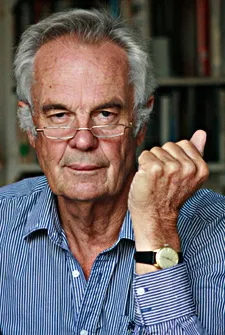

Foreign affairs columnist, film-maker and author

Related Posts

LONDON – So far so good, at least on the wider level. While internally Iraq seems on the edge of chaos, the much heralded clash of civilizations between the Muslim and Judaeo-Christian worlds has yet to become apparent. We have anger and despair aplenty in the Arab and Muslim worlds. But very little rushing to the standard and there was no great pilgrimage of warriors to join the fight, as happened when the Soviet Union invaded Afghanistan twenty years ago, and then, having driven the Red Army out, were left to ferment in that mountainous redoubt. With the armaments supplied by the CIA the mujahidin were transformed into Al Qaeda that became, for a relatively brief moment as these things go, ‘the greatest threat to the homeland that America has ever known.’ Nevertheless a ‘Cold War’ between much of the Muslim world and the West is certainly in full swing. Winston...
The Challenge of Nuclear Weaponsin the Twenty-first CenturyA Path Forward The peoples and governments of the world face an urgent challenge relating to weaponry of mass destruction and particularly to nuclear weaponry.  At the crossroads of technology, terrorism, geopolitical ambition, and policies of preemption are new and potent dangers for humanity. Despite ending the nuclear standoff of the Cold War era, nuclear weaponry is again menacing the peoples of the world with catastrophic possibilities.  We recognize the need for any government to pursue its security interests in accordance with international law; and further, we recognize that distinctive threats to these interests now exist as a result of an active international terrorist network having declared war on the United States and its allies. Nonetheless, we reject the assessment of the current US administration that upgrading a reliance on nuclear weapons is in any sense justified as a response. We find it...
By Karin Wegestal MP, the Social Democratic Partyon behalf of the Swedish Committee for Solidarity with the Yugoslav People During the last decade, the Federal Republic of Yugoslavia has received more than 500,000 refugees from Croatia and Bosnia, and another 300,000 internally displaced persons, mainly from the province Kosovo and Metohia. For a country with about ten million inhabitants, such an influx of homeless people is obviously a very heavy burden – even under peaceful conditions. But in addition to that, the Federal Republic of Yugoslavia has been the subject to sanctions from the western powers for close to ten years and its infrastructure was badly hurt through Nato’s intense bombardment during 78 days in 1999. The result of all this is that Yugoslavia, once the most developed industrial country in Eastern Europe, is today the poorest country in Europe. In Serbia excluding Kosovo, with about ten million inhabitants and...

Recent Articles

Tony Robinson October 4, 2026 Violence is easy to recognise when someone is being beaten, shot or killed. It becomes more difficult when nobody is holding a weapon. Poverty, discrimination, exploitation and repression can restrict a human life just as effectively, although they do so in very different ways and with very different consequences. Simply adding more categories to an ever-growing list of forms of violence does not really solve the problem. The more interesting question is what all these different situations have in common and why it makes sense to describe them using the same word. Human beings do not simply react to what happens around them. They remember the past, imagine things that do not yet exist, make plans and undertake projects. Workers organise because they imagine different working conditions; people migrate because they imagine another life somewhere else; social movements emerge because people refuse to accept the...
It’s a matter of principles, courage, vision and pulling together – while the militarist world is falling apart… Peter Langille October 3, 2026 “Here, then, is the problem which we present to you, stark and dreadful and inescapable: Shall we put an end to the human race; or shall mankind renounce war?”The Bertrand Russell—Albert Einstein Manifesto, July 9, 1955 ⁕ The forecast for what’s ahead is worrisome. The sharp rise in armed conflicts over the past three years is adding to what was already the highest level in over seventy years. Genocides, which should be prevented are supported. A shared climate emergency that jeopardises survival is ignored. Diverse polls now suggest that people are war-weary, worried and interested in a more effective United Nations. And, there are viable policy options for a more secure world! Yet governments are doubling-down, betting on more war and investing heavily. If current trends persist,...
Johan Galtung 1930-2024October 2015 Published here on October 3, 2026 Let us focus on Civilization for conflict analysis and remedies. Major forms of disorder use violence; war is state organized violence. The most belligerent states are the United States of America and Israel, both with civilization roots. National Evangelism, the US Protestant Christian civilization– more national than evangelical–justifies US warfare as exceptionalism of a people chosen by God, with a manifest destiny to run the world. Orthodox Judaism justifies Israeli warfare to conquer and expand from Nile to Euphrates as a religious right and duty to the Eternal One. The third most belligerent country, the UK, no longer believes it is God-chosen but chosen by the USA; not quite the same but something. But the root cause of global disorder lies in the Occident–with Islam–seeing itself as the single, universal civilization valid for all at all times, all others being...

TFF on Substack

Discover and subscribe to more peace materials on TFF Substack

Most Popular

Tony Robinson October 4, 2026 Violence is easy to recognise when someone is being beaten, shot or killed. It becomes more difficult when nobody is holding a weapon. Poverty, discrimination, exploitation and repression can restrict a human life just as effectively, although they do so in very different ways and with very different consequences. Simply adding more categories to an ever-growing list of forms of violence does not really solve the problem. The more interesting question is what all these different situations have in common and why it makes sense to describe them using the same word. Human beings do not simply react to what happens around them. They remember the past, imagine things that do not yet exist, make plans and undertake projects. Workers organise because they imagine different working conditions; people migrate because they imagine another life somewhere else; social movements emerge because people refuse to accept the...
It’s a matter of principles, courage, vision and pulling together – while the militarist world is falling apart… Peter Langille October 3, 2026 “Here, then, is the problem which we present to you, stark and dreadful and inescapable: Shall we put an end to the human race; or shall mankind renounce war?”The Bertrand Russell—Albert Einstein Manifesto, July 9, 1955 ⁕ The forecast for what’s ahead is worrisome. The sharp rise in armed conflicts over the past three years is adding to what was already the highest level in over seventy years. Genocides, which should be prevented are supported. A shared climate emergency that jeopardises survival is ignored. Diverse polls now suggest that people are war-weary, worried and interested in a more effective United Nations. And, there are viable policy options for a more secure world! Yet governments are doubling-down, betting on more war and investing heavily. If current trends persist,...
Johan Galtung 1930-2024October 2015 Published here on October 3, 2026 Let us focus on Civilization for conflict analysis and remedies. Major forms of disorder use violence; war is state organized violence. The most belligerent states are the United States of America and Israel, both with civilization roots. National Evangelism, the US Protestant Christian civilization– more national than evangelical–justifies US warfare as exceptionalism of a people chosen by God, with a manifest destiny to run the world. Orthodox Judaism justifies Israeli warfare to conquer and expand from Nile to Euphrates as a religious right and duty to the Eternal One. The third most belligerent country, the UK, no longer believes it is God-chosen but chosen by the USA; not quite the same but something. But the root cause of global disorder lies in the Occident–with Islam–seeing itself as the single, universal civilization valid for all at all times, all others being...
Read More
Living-Peace-Sign-Budapest-copy
Tony Robinson October 4, 2026 Violence is easy to recognise when someone is being beaten, shot or killed. It becomes more difficult when nobody is holding a weapon. Poverty, discrimination, exploitation and repression can restrict a human life just as effectively, although they do so in very different ways and with very different consequences. Simply adding more categories to an ever-growing list of forms of violence does not really solve the problem. The more interesting question is what all these different situations have in common and why it makes sense to describe them using the same word. Human beings do not simply react to what happens around them. They remember the past, imagine things that do not yet exist, make plans and undertake projects. Workers organise because they imagine different working conditions; people migrate because they imagine another life somewhere else; social movements emerge because people refuse to accept the...
b54a1f10-8c65-4f0b-9dd5-4abc0a7d04cc_2659x2659
It’s a matter of principles, courage, vision and pulling together – while the militarist world is falling apart… Peter Langille October 3, 2026 “Here, then, is the problem which we present to you, stark and dreadful and inescapable: Shall we put an end to the human race; or shall mankind renounce war?”The Bertrand Russell—Albert Einstein Manifesto, July 9, 1955 ⁕ The forecast for what’s ahead is worrisome. The sharp rise in armed conflicts over the past three years is adding to what was already the highest level in over seventy years. Genocides, which should be prevented are supported. A shared climate emergency that jeopardises survival is ignored. Diverse polls now suggest that people are war-weary, worried and interested in a more effective United Nations. And, there are viable policy options for a more secure world! Yet governments are doubling-down, betting on more war and investing heavily. If current trends persist,...
010
Johan Galtung 1930-2024October 2015 Published here on October 3, 2026 Let us focus on Civilization for conflict analysis and remedies. Major forms of disorder use violence; war is state organized violence. The most belligerent states are the United States of America and Israel, both with civilization roots. National Evangelism, the US Protestant Christian civilization– more national than evangelical–justifies US warfare as exceptionalism of a people chosen by God, with a manifest destiny to run the world. Orthodox Judaism justifies Israeli warfare to conquer and expand from Nile to Euphrates as a religious right and duty to the Eternal One. The third most belligerent country, the UK, no longer believes it is God-chosen but chosen by the USA; not quite the same but something. But the root cause of global disorder lies in the Occident–with Islam–seeing itself as the single, universal civilization valid for all at all times, all others being...
Screenshot 2026-10-02 011738
Jan ObergPhD, director, The Transnational Foundation for Peace and Future Research, TFFLund, Sweden October 2, 2026 This is my full original manuscript. The Chinese Academy of Social Science, CASS, makes two publications out if it. 1. China’s Five-year plan emphasized the capabilities of basic research and original innovation. It is regarded as the goal of the future social development, which, as required, should be significantly enhanced. Can you comment on the importance of original innovation in research and academic study? I believe it is easier to define “original innovation” in the natural sciences than in social sciences. The breaking points of what constitutes something new, or innovative, are not quite as sharp in the latter. But in both fields it is about opening up something that was closed, unseen, unexplored before – making manifest what was earlier latent. Innovations come in many forms and shapes – naming something that was not...
arctic-circle-map
The agreement is catastrophic both because of what it says and what it doesn’t mention. It reduces further the major asset of security policies: Freedom of action. Jan Oberg TFF director September 25, 2026 A couple of hours before the agreement was signed on September 22, 2026, I published the following 13 hypotheses about what it would most likely contain on TFF Substack (in English). I was wrong on only the first point. Contrary to what Trump had written on his Truth Social platform, it does not appear to come into force immediately. In fact, it turned out to be worse than even I had anticipated. After these hypotheses now come a number of reflections in light of what the agreement actually contains, and does not contain, as well as the way in which it has generally been presented by major media outlets and by the public-service broadcaster DR. My...
girl-5894831_1280
Below are TFF-related media mentions, comments, videos and social media posts published elsewhere but not on this homepage. We happen to catch and list only a fraction. Regarding video comments and debates, we recommend that you go to the TFF Video Channel on Substack where many of them are reproduced. Jan Oberg is a contributor to China Daily – 52 million daily clicks – and Global Times, CGTN and CCTV (the national television), China Investment, Xinhua News Agency and several others. Articles and videos on these media very often multiply into countless Chinese (and Western media) that re-post them from these main media. Thanks to The China Academy, his analyses, interviews and comments are frequently posted on YouTube channels such as Thinkers Forum and Wave Media. These videos are often re-posted on Bilibili (China’s YouTube), the China Content Center on TikTok, and on the Chinese edition of TikTok, Douyin.com. This means reaching hundreds of millions of viewers worldwide over a year. While there are too many to catch on all these...