
Inga bomber fälldes över Balkan dessa oroliga oktoberdagar. Vi som tror att bomber sällan fungerar som konstruktiv problemlösning kan andas ut. Men vad var det som hände? Och hur kunde de dramatiska förhandlingarna mellan kontaktgruppens medlare Richard Holbrooke och Jugoslaviens president Slobodan Milosevic i så många sammanhang skildras som en ödesmättad strid mellan det goda och det onda. Nu var det Holbrooke som fixade freden. Hade det blivit krig hade Milosevic varit den skyldige. Så kunde det verka. Hur kunde vi överlåta åt dessa två prestigefyllda medelålders maktuppfyllda herrar att avgöra Kosovos öde?

Varför insisterade åtminstone inte vi i det fortfarande alliansfria Sverige på att frågan skulle behandlas i FN:s säkerhetsråd? Visst, Ryssland och Kina hade inlagt veto mot bombningar. Men kanske kunde ett sådant veto trots allt ha bäddat för överläggningar utifrån andra förutsättningar, inte bara som ett Dayton två, utan som verkliga förhandlingar med representanter för de olika viktiga parterna i konflikten.

Att “göra något” behöver inte betyda att bomba.

Trots allt har Holbrooke gjort mycket lite när det gäller att verkligen lindra eller ta steg mot en lösning av de konflikter som gjort Kosovo till orkanens öga på Balkan alltsedan Tito dog. Det Holbrooke åstadkommit är att för en tid avföra Kosovo från den storpolitiska dagordningen och från krigshetsande CNN:s fokus.

Nu ska val hållas inom nio månader, har herrarna i Belgrad bestämt. Problemet är bara att det var länge sedan albanerna accepterade att delta i val, därför att man menar att valhandlingen skulle innebära att man accepterar den nya jugoslaviska statsbildningen. Sannolikheten är mycket stor att också detta val kommer att bojkottas, vilket innebär återgång till ruta ett.

Redan har förhandlingsresultatet förkastats av den albanska sidan som inte fick vara med i förhandlingarna. Varken den informelle presidenten Ibrahim Rugova eller gerillan UCK kan acceptera autonomi inom Serbien utan kräver fullt självstyre. Ett sådant självstyre är internationellt oacceptabelt. Men varför diskuterades inte förslaget med Kosovo som en tredje republik inom det nya Jugoslavien (jämte Serbien och Montenegro)? Det skulle möjligen albanerna kunnat ha acceptera.

Två tusen OSSE-observatörer ska sändas till Kosovo. Europa betalar. Men chefen ska vara amerikansk. USA bestämmer. Situationen i Kosovo har länge varit fullständigt oacceptabel, med terror på låg växel och ett apartheidliknande samhälle, där albanerna varit andra klassens medborgare, utsatta för ständiga polistrakasserier. Till saken hör också att provinsen med sina tv miljoner invånare är en av Europas fattigaste regioner. Under hela nittiotalet har den akuta krisen i Kosovo gjort att få arbetsplatser har fungerat. Skolor och sjukhus har i huvudsak varit segregerade och albanerna har byggt upp ett alternativt samhälle, byggt på icke-samverkan med de serbiska myndigheterna.

Efter det politiska sönderfallet i Albanien förra året fick landet massiv ekonomisk hjälp. Något liknande skulle ha behövts för Kosovo, insatser för att återupprätta det civila samhället och skapa förutsättningar för att återge människor (albaner liksom serber) en framtidstro. Efter allt som hänt kommer en sådan process att ta lång tid. Men finns det något alternativ?

Till militära insatser finns hur mycket pengar som helst. Amerikanska femte flottan har legat beredd i Medelhavet. 260 amerikanska stridsplan ingick i den stridsklara styrkan, varav två Stealth-plan, världshistoriens dyraste vapen, varje plan kostar 16 miljarder kronor.

För bråkdelar av de kostnader som bara förberedelserna till bombningar måste ha kostat skulle mycket ha kunnat uträttas i Kosovo för civilbefolkningen. Men Holbrookes medlande har ju inte gällt deras sak utan snarare gått ut p att ännu en gång låta USA visa musklerna som ensam världsdominerande stat.

I själva verket var ju USA och Nato berett att drastiskt försämra möjligheterna till hjälp åt de bortåt 300.000 kosovoalbanska flyktingarna. Det var mindre viktigt att säkra deras överlevnad än att straffa Milosevic och serberna. Om Nato hade bombat militära mål i Kosovo och Serbien kunde konsekvenserna ha blivit långtgående och oförutsägbara.

Bomberna skulle i maktkampen mellan Milosevic och hans fascistiske vicepremiär-minister Vojislav Seselj ha stärkt den senare. Seselj har de senaste veckorna gått ut med absurda och brutala hotelser mot oberoende medier, internationella hjälparbetare och andra. Han har utlovat hämnd mot SFOR i Bosnien där en partikamrat är president i den serbiska enheten.

Bomber skulle slagit hårt mot oppositionen i Serbien och framförallt i Montenegro, som mer och mer gått sina egna vägar och inte st’ller upp bakom Milosevics Kosovopolitik. Därmed skulle bomber ha förvärrat de konflikter som gjort situationen så akut i Kosovo.

Hur kunde till synes fredliga länder som Danmark och Norge genom att ställa stridsplan till Natos förfogande i praktiken nästintill förklara krig mot Jugoslavien?

Danmark skulle ha deltagit i Nato-aktionen med 115 soldater och en handfull stridsflygplan, vilket regering och Folketing godkänt. Fredsforskaren Bjørn Møller vid Center for Freds- och Konfliktforskning i Köpenhamn, konstaterade i tisdags i en artikel i dagstidningen Information att Danmark och Nato genom hotet om bombningar gör sig skyldiga till klara brott mot folkrätten. Därmed undergrävs den internationella rättsordning, som särskilt har till syfte att skydda de mindre staterna.

Utan respekt för det internationella regelsystemen, var hamnar vi då? Valet – också i Kosovo – står ju högst konkret mellan ett FN grundat för konfliktlösning genom framförallt icke-våld och ett Nato, som bygger på vapenmakt och vapenskrammel. Redan har röster höjts i den ryska duman och ifrågasatt varför Ryssland ska acceptera FN:s vapenembargo till Jugoslavien (Serbien och Montenegro), när Nato med USA i spetsen så oblygt struntar i FN?

Hade Nato bombat Serbien och Kosovo hade det i all synnerhet gått ut över Förenta Nationerna. Jag menar att konflikter och krig p Balkan i hög grad hänger samman med det kalla krigets slut och den nya världsordningen efter Berlinmurens fall, som förvandlade USA till ensam supermakt. USA har använt Bosnien för sina syften. I Bosnien marginaliserades FN medan Nato fick ett nytt existensberättigande. I bakgrunden skymtar bra business för vapenindustrin, som också kammar hem nya stora order p Natos utvidgning.

En av de amerikanska politiker som lett de senaste veckornas häxjakt på Bill Clinton är Newt Gingrich, ärkekonservativ republikan och kongressens talman. Samme Gingrich är en av de republikaner som legat bakom de amerikanska attackerna mot FN, där USA fortfarande inte betalt sina mångmiljardskulder. Senast motiverades detta med att FN också ger stöd åt organisationer som sysslar med abortrådgivning!

I ett tal 1995 sa denne Gingrich: “Utan vårt ledarskap kommer länderna i tredje världen att plundra sina grannar. Utan amerikanskt ledarskap väntar våra barn och barnbarn en mörk och blodig planet i stället för frihet och välstånd. En sådan politiker behöver onda män, ena dagen Saddam Hussein, nästa Slobodan Milosevic.

Frågan är om vi i de små europeiska länderna vill leva i en värld under amerikanskt ledarskap, ytterst byggt på vapenmakt och på den starkares rätt, på superbombplan som detta Stealth. Var bombplanet Stealth svaret på våra drömmar om en bättre värld efter det kalla krigets slut? Är Stealth bättre än FN? Alltför många tycks tro det genom att aningslöst heja p USA brutala våldspolitik.

Så var det ocks under kriget i Bosnien. Men i själva verket förlängde USA kriget där med två Âr. FN-medlaren och förre norske utrikesministern Thorvald Stoltenberg konstaterar i sin bok “De tusen dagarna” att fred i Bosnien skulle ha kunnat slutits redan i december 1993 (i stället för Dayton i december 1995) och att största skillnaden mellan de båda avtalen finns på kyrkogårdarna i flyktinglägren. Det var Washington som i realiteten knäckte det första avtalet.

Också med tanke på detta finns det sannerligen anledning till att vara skeptisk gentemot USA:s aktuella agerande på Balkan, som är en lek med elden. Om Nato hade bombat Serbien, vad hade då hänt i Ryssland? Ger Natos agerande ryska ultranationalister vind i seglen? Vad innebär det för Baltikum? Och vad kan den starkt proserbiska regimen i Vitryssland åstadkomma? Ingen kunde förutspå att det kalla kriget som genom ett trollslag skulle upphöra utan blodspillan. Det som sker nu med aktörer som framförallt USA, Nato och Ryssland kan göra att den fredliga världsordningen knakar i fogarna. Tack och lov för att Sverige än så länge står utanför Nato.

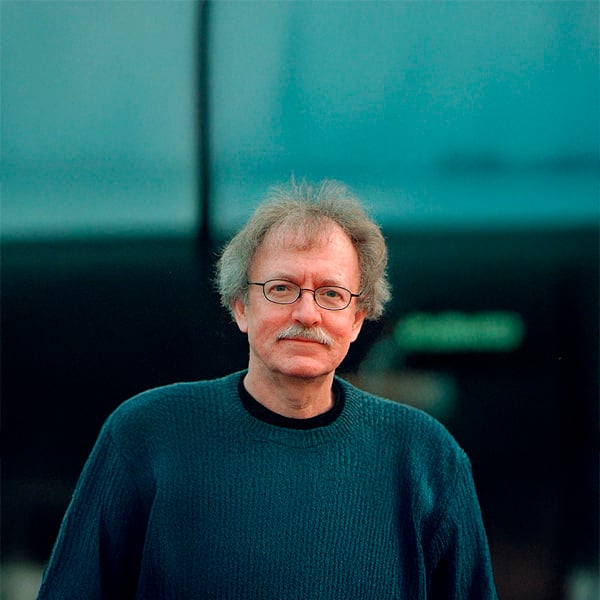
Kulturredaktör på Helsingborgs Dagblad, författare till flera böcker om konflikter och krig p Balkan, bland annat “Kosova utan stjärna” (Carlsson 1993) och medlem i TFF:s konfliktläkningsgrupp, där TFF står för Transnationella Stiftelsen för Freds- och Framtidsforskning i Lund.

Artiklen har också varit tryckt i GöteborgsPosten.
Related Posts

LONDON – So far so good, at least on the wider level. While internally Iraq seems on the edge of chaos, the much heralded clash of civilizations between the Muslim and Judaeo-Christian worlds has yet to become apparent. We have anger and despair aplenty in the Arab and Muslim worlds. But very little rushing to the standard and there was no great pilgrimage of warriors to join the fight, as happened when the Soviet Union invaded Afghanistan twenty years ago, and then, having driven the Red Army out, were left to ferment in that mountainous redoubt. With the armaments supplied by the CIA the mujahidin were transformed into Al Qaeda that became, for a relatively brief moment as these things go, ‘the greatest threat to the homeland that America has ever known.’ Nevertheless a ‘Cold War’ between much of the Muslim world and the West is certainly in full swing. Winston...
The Challenge of Nuclear Weaponsin the Twenty-first CenturyA Path Forward The peoples and governments of the world face an urgent challenge relating to weaponry of mass destruction and particularly to nuclear weaponry.  At the crossroads of technology, terrorism, geopolitical ambition, and policies of preemption are new and potent dangers for humanity. Despite ending the nuclear standoff of the Cold War era, nuclear weaponry is again menacing the peoples of the world with catastrophic possibilities.  We recognize the need for any government to pursue its security interests in accordance with international law; and further, we recognize that distinctive threats to these interests now exist as a result of an active international terrorist network having declared war on the United States and its allies. Nonetheless, we reject the assessment of the current US administration that upgrading a reliance on nuclear weapons is in any sense justified as a response. We find it...
By Karin Wegestal MP, the Social Democratic Partyon behalf of the Swedish Committee for Solidarity with the Yugoslav People During the last decade, the Federal Republic of Yugoslavia has received more than 500,000 refugees from Croatia and Bosnia, and another 300,000 internally displaced persons, mainly from the province Kosovo and Metohia. For a country with about ten million inhabitants, such an influx of homeless people is obviously a very heavy burden – even under peaceful conditions. But in addition to that, the Federal Republic of Yugoslavia has been the subject to sanctions from the western powers for close to ten years and its infrastructure was badly hurt through Nato’s intense bombardment during 78 days in 1999. The result of all this is that Yugoslavia, once the most developed industrial country in Eastern Europe, is today the poorest country in Europe. In Serbia excluding Kosovo, with about ten million inhabitants and...

Recent Articles

Tony Robinson October 4, 2026 Violence is easy to recognise when someone is being beaten, shot or killed. It becomes more difficult when nobody is holding a weapon. Poverty, discrimination, exploitation and repression can restrict a human life just as effectively, although they do so in very different ways and with very different consequences. Simply adding more categories to an ever-growing list of forms of violence does not really solve the problem. The more interesting question is what all these different situations have in common and why it makes sense to describe them using the same word. Human beings do not simply react to what happens around them. They remember the past, imagine things that do not yet exist, make plans and undertake projects. Workers organise because they imagine different working conditions; people migrate because they imagine another life somewhere else; social movements emerge because people refuse to accept the...
It’s a matter of principles, courage, vision and pulling together – while the militarist world is falling apart… Peter Langille October 3, 2026 “Here, then, is the problem which we present to you, stark and dreadful and inescapable: Shall we put an end to the human race; or shall mankind renounce war?”The Bertrand Russell—Albert Einstein Manifesto, July 9, 1955 ⁕ The forecast for what’s ahead is worrisome. The sharp rise in armed conflicts over the past three years is adding to what was already the highest level in over seventy years. Genocides, which should be prevented are supported. A shared climate emergency that jeopardises survival is ignored. Diverse polls now suggest that people are war-weary, worried and interested in a more effective United Nations. And, there are viable policy options for a more secure world! Yet governments are doubling-down, betting on more war and investing heavily. If current trends persist,...
Johan Galtung 1930-2024October 2015 Published here on October 3, 2026 Let us focus on Civilization for conflict analysis and remedies. Major forms of disorder use violence; war is state organized violence. The most belligerent states are the United States of America and Israel, both with civilization roots. National Evangelism, the US Protestant Christian civilization– more national than evangelical–justifies US warfare as exceptionalism of a people chosen by God, with a manifest destiny to run the world. Orthodox Judaism justifies Israeli warfare to conquer and expand from Nile to Euphrates as a religious right and duty to the Eternal One. The third most belligerent country, the UK, no longer believes it is God-chosen but chosen by the USA; not quite the same but something. But the root cause of global disorder lies in the Occident–with Islam–seeing itself as the single, universal civilization valid for all at all times, all others being...

TFF on Substack

Discover and subscribe to more peace materials on TFF Substack

Most Popular

Tony Robinson October 4, 2026 Violence is easy to recognise when someone is being beaten, shot or killed. It becomes more difficult when nobody is holding a weapon. Poverty, discrimination, exploitation and repression can restrict a human life just as effectively, although they do so in very different ways and with very different consequences. Simply adding more categories to an ever-growing list of forms of violence does not really solve the problem. The more interesting question is what all these different situations have in common and why it makes sense to describe them using the same word. Human beings do not simply react to what happens around them. They remember the past, imagine things that do not yet exist, make plans and undertake projects. Workers organise because they imagine different working conditions; people migrate because they imagine another life somewhere else; social movements emerge because people refuse to accept the...
It’s a matter of principles, courage, vision and pulling together – while the militarist world is falling apart… Peter Langille October 3, 2026 “Here, then, is the problem which we present to you, stark and dreadful and inescapable: Shall we put an end to the human race; or shall mankind renounce war?”The Bertrand Russell—Albert Einstein Manifesto, July 9, 1955 ⁕ The forecast for what’s ahead is worrisome. The sharp rise in armed conflicts over the past three years is adding to what was already the highest level in over seventy years. Genocides, which should be prevented are supported. A shared climate emergency that jeopardises survival is ignored. Diverse polls now suggest that people are war-weary, worried and interested in a more effective United Nations. And, there are viable policy options for a more secure world! Yet governments are doubling-down, betting on more war and investing heavily. If current trends persist,...
Johan Galtung 1930-2024October 2015 Published here on October 3, 2026 Let us focus on Civilization for conflict analysis and remedies. Major forms of disorder use violence; war is state organized violence. The most belligerent states are the United States of America and Israel, both with civilization roots. National Evangelism, the US Protestant Christian civilization– more national than evangelical–justifies US warfare as exceptionalism of a people chosen by God, with a manifest destiny to run the world. Orthodox Judaism justifies Israeli warfare to conquer and expand from Nile to Euphrates as a religious right and duty to the Eternal One. The third most belligerent country, the UK, no longer believes it is God-chosen but chosen by the USA; not quite the same but something. But the root cause of global disorder lies in the Occident–with Islam–seeing itself as the single, universal civilization valid for all at all times, all others being...
Read More
Living-Peace-Sign-Budapest-copy
Tony Robinson October 4, 2026 Violence is easy to recognise when someone is being beaten, shot or killed. It becomes more difficult when nobody is holding a weapon. Poverty, discrimination, exploitation and repression can restrict a human life just as effectively, although they do so in very different ways and with very different consequences. Simply adding more categories to an ever-growing list of forms of violence does not really solve the problem. The more interesting question is what all these different situations have in common and why it makes sense to describe them using the same word. Human beings do not simply react to what happens around them. They remember the past, imagine things that do not yet exist, make plans and undertake projects. Workers organise because they imagine different working conditions; people migrate because they imagine another life somewhere else; social movements emerge because people refuse to accept the...
b54a1f10-8c65-4f0b-9dd5-4abc0a7d04cc_2659x2659
It’s a matter of principles, courage, vision and pulling together – while the militarist world is falling apart… Peter Langille October 3, 2026 “Here, then, is the problem which we present to you, stark and dreadful and inescapable: Shall we put an end to the human race; or shall mankind renounce war?”The Bertrand Russell—Albert Einstein Manifesto, July 9, 1955 ⁕ The forecast for what’s ahead is worrisome. The sharp rise in armed conflicts over the past three years is adding to what was already the highest level in over seventy years. Genocides, which should be prevented are supported. A shared climate emergency that jeopardises survival is ignored. Diverse polls now suggest that people are war-weary, worried and interested in a more effective United Nations. And, there are viable policy options for a more secure world! Yet governments are doubling-down, betting on more war and investing heavily. If current trends persist,...
010
Johan Galtung 1930-2024October 2015 Published here on October 3, 2026 Let us focus on Civilization for conflict analysis and remedies. Major forms of disorder use violence; war is state organized violence. The most belligerent states are the United States of America and Israel, both with civilization roots. National Evangelism, the US Protestant Christian civilization– more national than evangelical–justifies US warfare as exceptionalism of a people chosen by God, with a manifest destiny to run the world. Orthodox Judaism justifies Israeli warfare to conquer and expand from Nile to Euphrates as a religious right and duty to the Eternal One. The third most belligerent country, the UK, no longer believes it is God-chosen but chosen by the USA; not quite the same but something. But the root cause of global disorder lies in the Occident–with Islam–seeing itself as the single, universal civilization valid for all at all times, all others being...
Screenshot 2026-10-02 011738
Jan ObergPhD, director, The Transnational Foundation for Peace and Future Research, TFFLund, Sweden October 2, 2026 This is my full original manuscript. The Chinese Academy of Social Science, CASS, makes two publications out if it. 1. China’s Five-year plan emphasized the capabilities of basic research and original innovation. It is regarded as the goal of the future social development, which, as required, should be significantly enhanced. Can you comment on the importance of original innovation in research and academic study? I believe it is easier to define “original innovation” in the natural sciences than in social sciences. The breaking points of what constitutes something new, or innovative, are not quite as sharp in the latter. But in both fields it is about opening up something that was closed, unseen, unexplored before – making manifest what was earlier latent. Innovations come in many forms and shapes – naming something that was not...
arctic-circle-map
The agreement is catastrophic both because of what it says and what it doesn’t mention. It reduces further the major asset of security policies: Freedom of action. Jan Oberg TFF director September 25, 2026 A couple of hours before the agreement was signed on September 22, 2026, I published the following 13 hypotheses about what it would most likely contain on TFF Substack (in English). I was wrong on only the first point. Contrary to what Trump had written on his Truth Social platform, it does not appear to come into force immediately. In fact, it turned out to be worse than even I had anticipated. After these hypotheses now come a number of reflections in light of what the agreement actually contains, and does not contain, as well as the way in which it has generally been presented by major media outlets and by the public-service broadcaster DR. My...
girl-5894831_1280
Below are TFF-related media mentions, comments, videos and social media posts published elsewhere but not on this homepage. We happen to catch and list only a fraction. Regarding video comments and debates, we recommend that you go to the TFF Video Channel on Substack where many of them are reproduced. Jan Oberg is a contributor to China Daily – 52 million daily clicks – and Global Times, CGTN and CCTV (the national television), China Investment, Xinhua News Agency and several others. Articles and videos on these media very often multiply into countless Chinese (and Western media) that re-post them from these main media. Thanks to The China Academy, his analyses, interviews and comments are frequently posted on YouTube channels such as Thinkers Forum and Wave Media. These videos are often re-posted on Bilibili (China’s YouTube), the China Content Center on TikTok, and on the Chinese edition of TikTok, Douyin.com. This means reaching hundreds of millions of viewers worldwide over a year. While there are too many to catch on all these...





