Foreign policy in the U.S. presidential elections

/10/jonathanpower2.jpg”>
The US presidential election, if it goes according to Mitt Romney’s script, will not centre on foreign policy, although he is happy to suggest a tougher attitude to Iran, Russia, Palestine and China. But President Barack Obama will make it a key item in his script.

He will focus on his successful decision to kill Obama bin Laden and decapitate much of Al Qaeda’s leadership. He will make much of the US withdrawal from Iraq and his plan to be out of Afghanistan by the year after next. By election time he hopes to have an agreement with Iran on nuclear enrichment so as to head off the Iranians’ ability to make a nuclear bomb and an Israeli strike. He will emphasise the US’s good relationship with China, his substantial nuclear arms’ deal with Russia and his other work towards non-proliferation. Both countries have joined with the US effort to persuade nuclear North Korea to disarm and to limit Iran’s nuclear ambitions.

Not least, he will welcome the Arab Spring pointing out that the US policy of quietly (although belatedly) supporting regime change in Tunisia, Libya, Yemen, Somalia and, most important, Egypt has paid off. On Israel and Palestine he will try to dilute the fact that he has failed to make progress while making it clear that the US is right behind Israel, a viewpoint that goes down well with many voters.

Adding that up produces a formidable list that will make Romney’s foreign policy message look thin.

But looking at the electoral calculation is to miss much of the point. Obama has a very mixed bag of results even though after the presidency of George W. Bush he has significantly changed the attitude of US policy.

Further nuclear arms’ cuts with Russia are on hold although Obama did tell President Dmitri Medvedev that if he is re-elected he will work towards another round of cuts. He has made little progress with North Korea. At the moment negotiations with Iran are seemingly running into the sand.

His policy towards Israel seems to have been naïve, allowing Prime Minister Benjamin Netanyahu to checkmate him on the crucial issue of stalling more settlements. A deal between Palestine and Israel seems light years away. The most that can be hoped for is that Palestine with European Union aid will continue with its fast economic growth.

In Afghanistan Obama clearly failed to turn the tide in the central government’s favour despite his misconceived “surge” of troops. US negotiations with the Taliban seem to be stuck, even though it is pretty clear that it won’t take the Taliban long to take over once US and Nato troops leave. It is fair to ask what does the US think it is doing when the initial target because of 9/11 was Al Qaeda. The policy of trying to bring democracy and social change to Afghanistan was not on the agenda and it has not had great success even after eleven years of war. That agenda should not have been changed.

By switching much of the war to Pakistan, despite his success in killing Al Qaeda terrorists hiding out there, he has alienated many, furious at the killing of civilians by drone attacks and charged the batteries of the country’s Islamist militants who now set the pace in Pakistani politics despite only winning 5% or less at the polls. The corrupt, inefficient and self-serving government has effectively been destabilised which could well lead to yet another military coup.

This is a big part of the reason why the polls in the Arab world have shown a rapid fall in support since their high at the time of Obama’s great speech in Cairo near the beginning of his presidency which appeared to promise a lot. With the Arab Spring it is difficult to claim a role since it has been self-generated and, in the case of Libya, the one direct military intervention (with the UK and France taking the lead) was ill thought out since the opposition to Mohammar Gadhaffi seems to be at each other’s throats.

It has certainly been counterproductive with China and Russia who felt that in supporting the West in the UN Security Council they were deceived- Nato went far beyond its UN mandate in its use of force. This is one important reason why China and Russia are being cautious about Syria now (not that Obama to his credit wants to use force).

Finally, the closing Guantanamo. Obama has broken his promise although he has been able to forbid the use of torture. But for this he can rightly blame Congress which made it impossible for him to close the prison and bring those accused of terrorism to trial on the mainland.

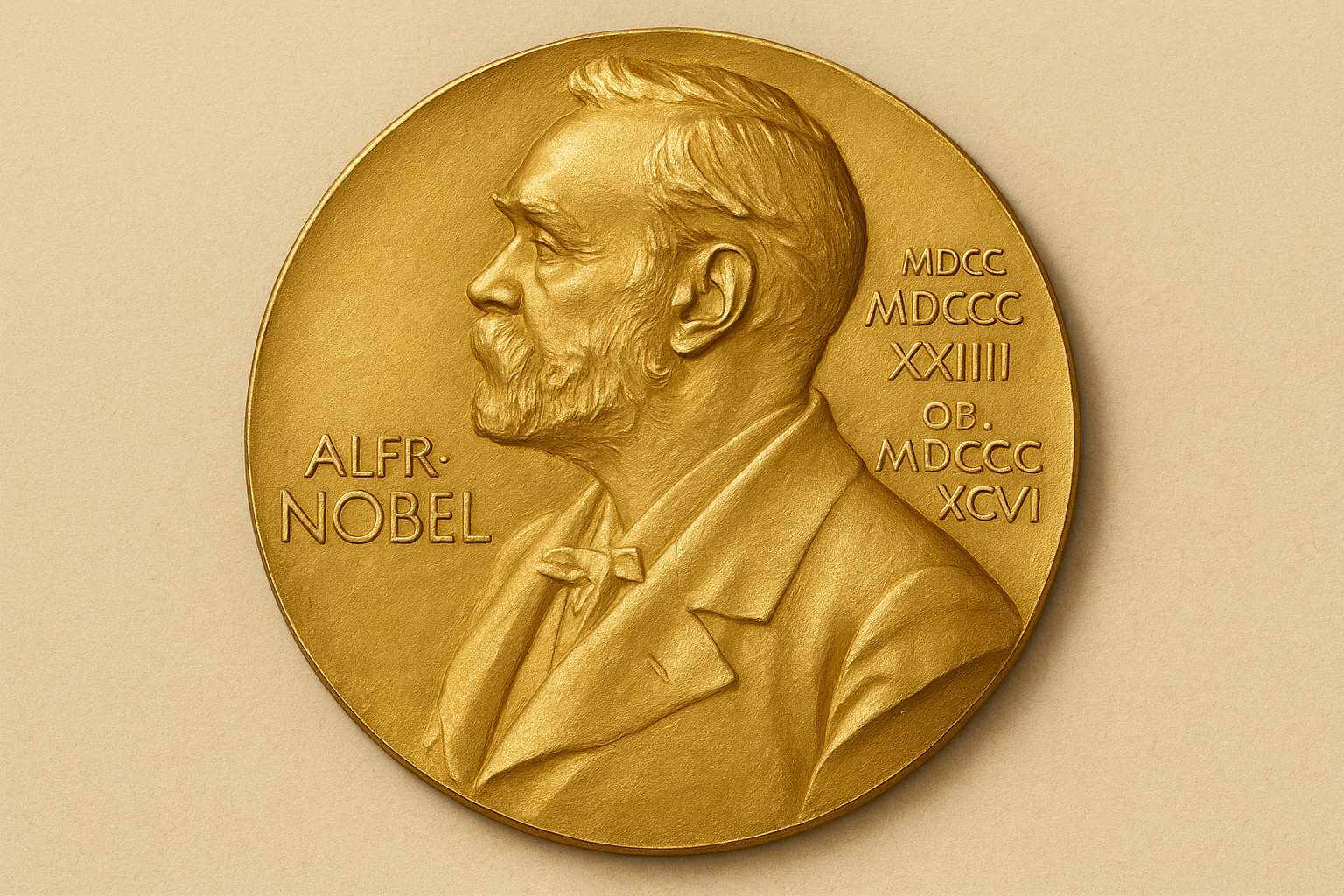
Better than Romney for sure, but if he was being considered for the Nobel Prize today he probably would not have been awarded it.

© Jonathan Power 2012
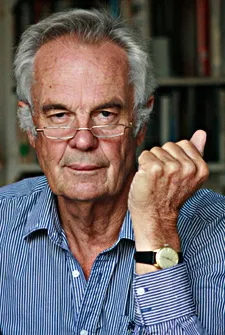
Foreign affairs columnist, film-maker and author

Related Posts

Photos © TFF 2000 Read PressInfo 90 “Lift the Sanctions and Bring More Aid to Yugoslavia” See Pictures from Belgrade © TFF 2000 Please reprint, copy, archive, quote or re-post this item, but please retain the source.
By Jan ObergTFF co-founder and director February 11, 2026 PART 3 — ECONOMICS, TRADE & FINANCIAL SOVEREIGNTY A. Trade Measures & Market Signaling Economic pressure can be applied instantly and scaled without violence. Immediate Measures (within a week) Government boycott US goods and services  A very powerful signal which over time will be felt. Targeted tariffs on selected U.S. goods Symbolic but high-visibility sectors send a clear message. Suspend trade facilitation talks A peaceful pause that signals deep concern. Freeze U.S. participation in public procurement – military procurement in particular A nonviolent way to reduce influence. Competition law review of U.S. corporations A legal tool to scrutinise market dominance. Longer-Term Measures EU–Asia–Africa trade corridors Reducing reliance on U.S. markets. European supply chains for critical minerals Strategic autonomy in resource access. European Strategic Trade Authority Monitoring coercive practices globally. Euro-denominated commodity markets Weakening the dollar’s pricing monopoly. The EU must resume contacts and negotiations with Russia, focusing on energy cooperation To...
Background and CV Dr Pascal Lottaz joined TFF as an Associate in May 2025. Very short bio Dr. Pascal Lottaz is an Associate Professor at Kyoto University’s Graduate School of Law and Hakubi Center (Japan). He researches neutrality in international relations and directs the network neutralitystudies.com. Short bio Dr. Pascal Lottaz is an Associate Professor at Kyoto University, where he investigates neutrality in international relations and directs the research network neutralitystudies.com. He received his MA and PhD from the National Graduate Institute for Policy Studies (GRIPS) and previously researched and taught at Waseda University and Temple University (Japan Campus). His recent books include Sweden, Japan, and the Long Second World War (Routledge, 2022), Neutral Beyond the Cold: Neutral States and the Post-Cold War International System (Lexington Books, 2022), and Notions of Neutralities (Lexington Books, 2019). He also wrote articles on “Neutrality Studies” for Oxford Encyclopedia and “The Politics and Diplomacy of Neutrality”...

Recent Articles

Tony Robinson October 4, 2026 Violence is easy to recognise when someone is being beaten, shot or killed. It becomes more difficult when nobody is holding a weapon. Poverty, discrimination, exploitation and repression can restrict a human life just as effectively, although they do so in very different ways and with very different consequences. Simply adding more categories to an ever-growing list of forms of violence does not really solve the problem. The more interesting question is what all these different situations have in common and why it makes sense to describe them using the same word. Human beings do not simply react to what happens around them. They remember the past, imagine things that do not yet exist, make plans and undertake projects. Workers organise because they imagine different working conditions; people migrate because they imagine another life somewhere else; social movements emerge because people refuse to accept the...
It’s a matter of principles, courage, vision and pulling together – while the militarist world is falling apart… Peter Langille October 3, 2026 “Here, then, is the problem which we present to you, stark and dreadful and inescapable: Shall we put an end to the human race; or shall mankind renounce war?”The Bertrand Russell—Albert Einstein Manifesto, July 9, 1955 ⁕ The forecast for what’s ahead is worrisome. The sharp rise in armed conflicts over the past three years is adding to what was already the highest level in over seventy years. Genocides, which should be prevented are supported. A shared climate emergency that jeopardises survival is ignored. Diverse polls now suggest that people are war-weary, worried and interested in a more effective United Nations. And, there are viable policy options for a more secure world! Yet governments are doubling-down, betting on more war and investing heavily. If current trends persist,...
Johan Galtung 1930-2024October 2015 Published here on October 3, 2026 Let us focus on Civilization for conflict analysis and remedies. Major forms of disorder use violence; war is state organized violence. The most belligerent states are the United States of America and Israel, both with civilization roots. National Evangelism, the US Protestant Christian civilization– more national than evangelical–justifies US warfare as exceptionalism of a people chosen by God, with a manifest destiny to run the world. Orthodox Judaism justifies Israeli warfare to conquer and expand from Nile to Euphrates as a religious right and duty to the Eternal One. The third most belligerent country, the UK, no longer believes it is God-chosen but chosen by the USA; not quite the same but something. But the root cause of global disorder lies in the Occident–with Islam–seeing itself as the single, universal civilization valid for all at all times, all others being...

TFF on Substack

Discover and subscribe to more peace materials on TFF Substack

Most Popular

Tony Robinson October 4, 2026 Violence is easy to recognise when someone is being beaten, shot or killed. It becomes more difficult when nobody is holding a weapon. Poverty, discrimination, exploitation and repression can restrict a human life just as effectively, although they do so in very different ways and with very different consequences. Simply adding more categories to an ever-growing list of forms of violence does not really solve the problem. The more interesting question is what all these different situations have in common and why it makes sense to describe them using the same word. Human beings do not simply react to what happens around them. They remember the past, imagine things that do not yet exist, make plans and undertake projects. Workers organise because they imagine different working conditions; people migrate because they imagine another life somewhere else; social movements emerge because people refuse to accept the...
It’s a matter of principles, courage, vision and pulling together – while the militarist world is falling apart… Peter Langille October 3, 2026 “Here, then, is the problem which we present to you, stark and dreadful and inescapable: Shall we put an end to the human race; or shall mankind renounce war?”The Bertrand Russell—Albert Einstein Manifesto, July 9, 1955 ⁕ The forecast for what’s ahead is worrisome. The sharp rise in armed conflicts over the past three years is adding to what was already the highest level in over seventy years. Genocides, which should be prevented are supported. A shared climate emergency that jeopardises survival is ignored. Diverse polls now suggest that people are war-weary, worried and interested in a more effective United Nations. And, there are viable policy options for a more secure world! Yet governments are doubling-down, betting on more war and investing heavily. If current trends persist,...
Johan Galtung 1930-2024October 2015 Published here on October 3, 2026 Let us focus on Civilization for conflict analysis and remedies. Major forms of disorder use violence; war is state organized violence. The most belligerent states are the United States of America and Israel, both with civilization roots. National Evangelism, the US Protestant Christian civilization– more national than evangelical–justifies US warfare as exceptionalism of a people chosen by God, with a manifest destiny to run the world. Orthodox Judaism justifies Israeli warfare to conquer and expand from Nile to Euphrates as a religious right and duty to the Eternal One. The third most belligerent country, the UK, no longer believes it is God-chosen but chosen by the USA; not quite the same but something. But the root cause of global disorder lies in the Occident–with Islam–seeing itself as the single, universal civilization valid for all at all times, all others being...
Read More
Living-Peace-Sign-Budapest-copy
Tony Robinson October 4, 2026 Violence is easy to recognise when someone is being beaten, shot or killed. It becomes more difficult when nobody is holding a weapon. Poverty, discrimination, exploitation and repression can restrict a human life just as effectively, although they do so in very different ways and with very different consequences. Simply adding more categories to an ever-growing list of forms of violence does not really solve the problem. The more interesting question is what all these different situations have in common and why it makes sense to describe them using the same word. Human beings do not simply react to what happens around them. They remember the past, imagine things that do not yet exist, make plans and undertake projects. Workers organise because they imagine different working conditions; people migrate because they imagine another life somewhere else; social movements emerge because people refuse to accept the...
b54a1f10-8c65-4f0b-9dd5-4abc0a7d04cc_2659x2659
It’s a matter of principles, courage, vision and pulling together – while the militarist world is falling apart… Peter Langille October 3, 2026 “Here, then, is the problem which we present to you, stark and dreadful and inescapable: Shall we put an end to the human race; or shall mankind renounce war?”The Bertrand Russell—Albert Einstein Manifesto, July 9, 1955 ⁕ The forecast for what’s ahead is worrisome. The sharp rise in armed conflicts over the past three years is adding to what was already the highest level in over seventy years. Genocides, which should be prevented are supported. A shared climate emergency that jeopardises survival is ignored. Diverse polls now suggest that people are war-weary, worried and interested in a more effective United Nations. And, there are viable policy options for a more secure world! Yet governments are doubling-down, betting on more war and investing heavily. If current trends persist,...
010
Johan Galtung 1930-2024October 2015 Published here on October 3, 2026 Let us focus on Civilization for conflict analysis and remedies. Major forms of disorder use violence; war is state organized violence. The most belligerent states are the United States of America and Israel, both with civilization roots. National Evangelism, the US Protestant Christian civilization– more national than evangelical–justifies US warfare as exceptionalism of a people chosen by God, with a manifest destiny to run the world. Orthodox Judaism justifies Israeli warfare to conquer and expand from Nile to Euphrates as a religious right and duty to the Eternal One. The third most belligerent country, the UK, no longer believes it is God-chosen but chosen by the USA; not quite the same but something. But the root cause of global disorder lies in the Occident–with Islam–seeing itself as the single, universal civilization valid for all at all times, all others being...
Screenshot 2026-10-02 011738
Jan ObergPhD, director, The Transnational Foundation for Peace and Future Research, TFFLund, Sweden October 2, 2026 This is my full original manuscript. The Chinese Academy of Social Science, CASS, makes two publications out if it. 1. China’s Five-year plan emphasized the capabilities of basic research and original innovation. It is regarded as the goal of the future social development, which, as required, should be significantly enhanced. Can you comment on the importance of original innovation in research and academic study? I believe it is easier to define “original innovation” in the natural sciences than in social sciences. The breaking points of what constitutes something new, or innovative, are not quite as sharp in the latter. But in both fields it is about opening up something that was closed, unseen, unexplored before – making manifest what was earlier latent. Innovations come in many forms and shapes – naming something that was not...
arctic-circle-map
The agreement is catastrophic both because of what it says and what it doesn’t mention. It reduces further the major asset of security policies: Freedom of action. Jan Oberg TFF director September 25, 2026 A couple of hours before the agreement was signed on September 22, 2026, I published the following 13 hypotheses about what it would most likely contain on TFF Substack (in English). I was wrong on only the first point. Contrary to what Trump had written on his Truth Social platform, it does not appear to come into force immediately. In fact, it turned out to be worse than even I had anticipated. After these hypotheses now come a number of reflections in light of what the agreement actually contains, and does not contain, as well as the way in which it has generally been presented by major media outlets and by the public-service broadcaster DR. My...
girl-5894831_1280
Below are TFF-related media mentions, comments, videos and social media posts published elsewhere but not on this homepage. We happen to catch and list only a fraction. Regarding video comments and debates, we recommend that you go to the TFF Video Channel on Substack where many of them are reproduced. Jan Oberg is a contributor to China Daily – 52 million daily clicks – and Global Times, CGTN and CCTV (the national television), China Investment, Xinhua News Agency and several others. Articles and videos on these media very often multiply into countless Chinese (and Western media) that re-post them from these main media. Thanks to The China Academy, his analyses, interviews and comments are frequently posted on YouTube channels such as Thinkers Forum and Wave Media. These videos are often re-posted on Bilibili (China’s YouTube), the China Content Center on TikTok, and on the Chinese edition of TikTok, Douyin.com. This means reaching hundreds of millions of viewers worldwide over a year. While there are too many to catch on all these...