

Following Gandhi’s Path – Part 6 – Gandhi’s Ashram by the Sabarmati River

“It is good that Gandhi was shot…” – Hindutva

The bus ride from Bombay to Ahmedabad, also called ” India’s Manchester”, takes 17 hours. My neighbour for the trip is a businessman who deals in gold and famous Hyderabad pearls. That is to say the pearls originally came from Basra, Iraq, but with Saddam and everything happening there, they are now said to come from China.

“India’s latest budget is really good for us business people, but otherwise politicians have just managed to ruin this country. Corruption and shit everywhere. Just look at the streets, this bus, or the schools”.

The young energetic capitalist goes on:

“You know, what we need is a revolution! You can’t keep a country together where everyone only thinks about themselves. We can’t be independent unless we start acting like a community. We are also far too many. The Chinese left us behind long ago”.
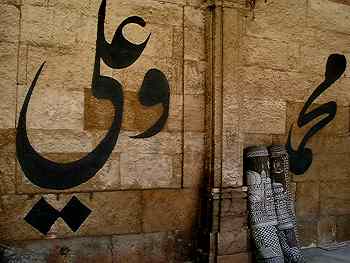
The mosque of Ahmedabad – Photo Jan Öberg, © TFF 2001

When he hears that I’m interested in Gandhi, he says:

“He was for peaceful coexistence, which is really great! But the Muslims wanted to have a country of their own, Pakistan, and ought to have moved to that country, all of them! Here they refer to their religion, Islam, and argue that it’s all right to have four wives, but when a Muslim criminal is about to get his hand chopped off, they immediately invoke Indian law. If I may say so, I think it was good that Gandhi was shot…”.

With the rapid spreading of Hindutva, the new Hindu fundamentalism, such ideas are getting more and more popular. India is the biggest Muslim country in the world. Evacuation of a little over 110 million people would really deserve the epithet of ‘ethnic cleansing’.

I wake up to a grey and misty morning when the bus arrives in Ahmedabad, capital of the state of Gujarat. Luckily, I can’t see much of the earthquake now.

Ahmedabad – Vidyapith

In 1920, Gandhi founded Gujarat Vidyapith here, one of the two big universities of the town. I visit the small idealistic troop at the peace institute, where some of the best research on Gandhi has been done -partly by Navajivan Publishers just around the corner. It is the Navajivan Trust that owns the copyright to Gandhi’s complete works (100 volumes!). They have published the now classic biographies as well as hundreds of minor publications.
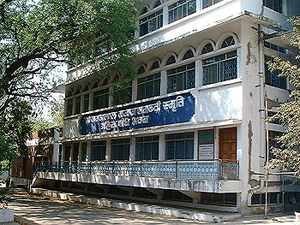
The peace research institute of Gujarat Vidyapith, founded by Gandhi – Photo Jan Öberg, © TFF 2001

So here was where they had printed most of my Gandhi library’s dusty, mildew-smelling books, I thought.

Gandhi was born in Porbandar in Gujarat and Gujarati was his main language. Ahmedabad is a dynamic, industrial town, where Gandhi acted as a mediator in a very complicated conflict between striking textile workers and capitalists, with whom he was on friendly terms – a thrilling story described in the psycho-analyst Erik H. Eriksson’s classic, Gandhi’s Truth. On the Origins of Militant Non-violence (1969).

It was also from here that Gandhi, together with some seventy “satyagrahi” – truth warriors – started one of the most remarkable political demonstrations of our time, the Salt March.

Sabarmati

Gandhi’s “Sabarmati”-ashram is beautifully located near the river Sabarmati. A range of low, white cottages are situated near the prayer meeting-place, with Gandhi’s own “kurti” (hut) closest to the water. At least, that’s how it was then, before the big river nearly dried up, so that now there are only a few buffaloes wandering among the puddles of water many meters below the ashram. Entire rivers and villages disappear in India as a consequence of gigantic dam constructions, as is described in Arundhati Roy’s touching narrative, The Cost of Living (Flamenco, London 1999).
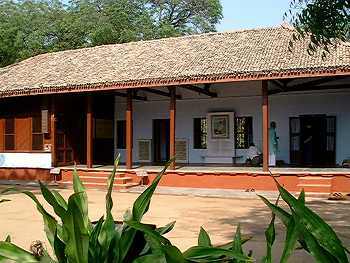
The Sabarmati Ashram, Ahmedabad – Photo Jan Öberg, © TFF 2001

The ashram – today a museum – consists of the buildings in which Gandhi, his wife and the rest of the large family lived, as well as a larger complex of open exhibition halls under giant trees that shelter fantastic bird-life.

Most visitors are probably unaware of the fact that in the neighbourhood there are several institutions and even factories being run in the spirit of Gandhi. They manufacture latrines and equipment for alternative energy and waste management, very beautiful handmade paper, khadi fabrics, looms, soap, and many other products. There is also a school for girls belonging to the Harijan caste of untouchables. Two thousand people are employed, but, unfortunately, not all the units can make ends meet. The ashram raises money, but is not granted any support from the state.
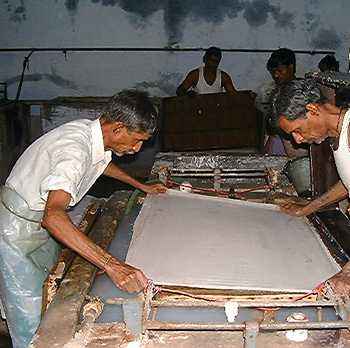
Paper production in connection with the Sabarmati ashram – Photo Jan Öberg, © TFF 2001

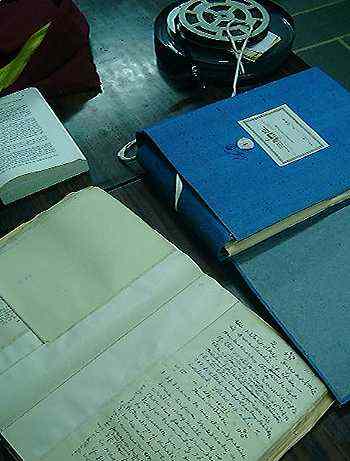
This is the right place for those of you who are interested in researching the “Ghandian” archive material. Sabarmati has namely a library containing 34,000 letters written by Gandhi and thousands of original photographs from his life. You have to negotiate in order to come near this, in my opinion, Holy of the Holies. There is a steel cupboard with double locks full of old folio-files, where the yellowish letters and photographs are hidden. Although all of them can also be seen on microfilm and as copies, I can’t help wondering when this historical treasure will disappear due to the moist climate.
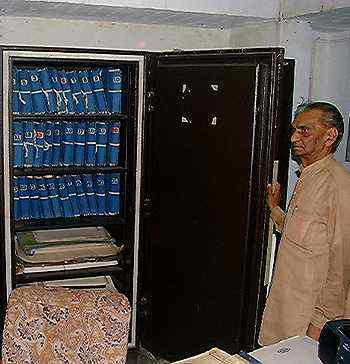
Sabarmati’s Gandhi archive – Photo Jan Öberg, © TFF 2001
Gandhi’s handwritten letters and a film roll – Photo Jan Öberg, © TFF 2001

With deep respect, I browse through and read the pages Gandhi filled with his Parker fountain-pen. I would love to sit here for weeks, at some point…

Translated by Alice Moncada
Translation edited by Sara E. Ellis

Peace & future researcher + ‌Art Photographer

Related Posts

LONDON – So far so good, at least on the wider level. While internally Iraq seems on the edge of chaos, the much heralded clash of civilizations between the Muslim and Judaeo-Christian worlds has yet to become apparent. We have anger and despair aplenty in the Arab and Muslim worlds. But very little rushing to the standard and there was no great pilgrimage of warriors to join the fight, as happened when the Soviet Union invaded Afghanistan twenty years ago, and then, having driven the Red Army out, were left to ferment in that mountainous redoubt. With the armaments supplied by the CIA the mujahidin were transformed into Al Qaeda that became, for a relatively brief moment as these things go, ‘the greatest threat to the homeland that America has ever known.’ Nevertheless a ‘Cold War’ between much of the Muslim world and the West is certainly in full swing. Winston...
The Challenge of Nuclear Weaponsin the Twenty-first CenturyA Path Forward The peoples and governments of the world face an urgent challenge relating to weaponry of mass destruction and particularly to nuclear weaponry.  At the crossroads of technology, terrorism, geopolitical ambition, and policies of preemption are new and potent dangers for humanity. Despite ending the nuclear standoff of the Cold War era, nuclear weaponry is again menacing the peoples of the world with catastrophic possibilities.  We recognize the need for any government to pursue its security interests in accordance with international law; and further, we recognize that distinctive threats to these interests now exist as a result of an active international terrorist network having declared war on the United States and its allies. Nonetheless, we reject the assessment of the current US administration that upgrading a reliance on nuclear weapons is in any sense justified as a response. We find it...
By Karin Wegestal MP, the Social Democratic Partyon behalf of the Swedish Committee for Solidarity with the Yugoslav People During the last decade, the Federal Republic of Yugoslavia has received more than 500,000 refugees from Croatia and Bosnia, and another 300,000 internally displaced persons, mainly from the province Kosovo and Metohia. For a country with about ten million inhabitants, such an influx of homeless people is obviously a very heavy burden – even under peaceful conditions. But in addition to that, the Federal Republic of Yugoslavia has been the subject to sanctions from the western powers for close to ten years and its infrastructure was badly hurt through Nato’s intense bombardment during 78 days in 1999. The result of all this is that Yugoslavia, once the most developed industrial country in Eastern Europe, is today the poorest country in Europe. In Serbia excluding Kosovo, with about ten million inhabitants and...

Recent Articles

Jan Oberg TFF director October 28, 2026 Exactly one month has now passed since I published my criticism of the introduction to the special issue on Johan Galtung published by the Journal of Global Security Studies, JoGSS, and of Tor Egil Førland’s chapter about Galtung which serves as a preview to his forthcoming biography of Galtung to be published by PRIO. See the original on The Transnational here and the same article on TFF Substack with many general and critical comments and, in particular, the people who decided to withdraw from the biography project in protest. The special issue itself was extraordinary. It was devoted to the intellectual legacy of one of the founders of peace research and contained a number of strong assessments of his personality, scholarship, intellectual trajectory, and public role. Such assessments are, of course, entirely legitimate. No scholar is beyond criticism, and neither was Johan Galtung....
An aspect of Iran’s culture and civilisation you’ve probably never heard about. Don’t be surprised if the US and Israel also try to bomb them. Jan ObergTFF director October 26, 2026 Today – under the “USraeli” threat of new “annihilating” bombings – opens the 7th International Conference on Peace and Conflict Resolution at Tehran’s University. As far as I can tell, this is the only permanent, advanced peace research institution in West Asia/the Middle East. Perhaps more countries in that region could be inspired? I mean, how many military “security” institutes and military academies do they have? Many peace research institutes and university departments have been established since the 1950s in the West. They are now all under attack; some have closed down, some have gone mainstream, yet others kept the name but do nothing to research peace and disseminate results or advice; instead, they cooperate with militarism’s platforms such...
Let’s discuss using AI to create peace – in contrast to boring geopolitics devoid of creative healing and visions. Jan Oberg TFF director October 15, 2026 I asked VEED to create a short video exemplifying how peace is preferable to war, then chose the lady as a template. Simple as that. In less than a minute, it produced this video, which any peace-loving person would appreciate. The only problem is that human intelligence (HI), at least the one that exists among Western decision-makers, isn’t half as moral or smart as AI. I have used AI to dialogue about peace and peace plans, creative conflict resolution and visions of a better future for humankind. It so happens that I am having more stimulating, intelligent, creative and moral discussions with AI than I could possibly have with any EU or NATO leader today. Yes, AI has very problematic and dangerous aspects; used...

TFF on Substack

Discover and subscribe to more peace materials on TFF Substack

Most Popular

Jan Oberg TFF director October 28, 2026 Exactly one month has now passed since I published my criticism of the introduction to the special issue on Johan Galtung published by the Journal of Global Security Studies, JoGSS, and of Tor Egil Førland’s chapter about Galtung which serves as a preview to his forthcoming biography of Galtung to be published by PRIO. See the original on The Transnational here and the same article on TFF Substack with many general and critical comments and, in particular, the people who decided to withdraw from the biography project in protest. The special issue itself was extraordinary. It was devoted to the intellectual legacy of one of the founders of peace research and contained a number of strong assessments of his personality, scholarship, intellectual trajectory, and public role. Such assessments are, of course, entirely legitimate. No scholar is beyond criticism, and neither was Johan Galtung....
An aspect of Iran’s culture and civilisation you’ve probably never heard about. Don’t be surprised if the US and Israel also try to bomb them. Jan ObergTFF director October 26, 2026 Today – under the “USraeli” threat of new “annihilating” bombings – opens the 7th International Conference on Peace and Conflict Resolution at Tehran’s University. As far as I can tell, this is the only permanent, advanced peace research institution in West Asia/the Middle East. Perhaps more countries in that region could be inspired? I mean, how many military “security” institutes and military academies do they have? Many peace research institutes and university departments have been established since the 1950s in the West. They are now all under attack; some have closed down, some have gone mainstream, yet others kept the name but do nothing to research peace and disseminate results or advice; instead, they cooperate with militarism’s platforms such...
Let’s discuss using AI to create peace – in contrast to boring geopolitics devoid of creative healing and visions. Jan Oberg TFF director October 15, 2026 I asked VEED to create a short video exemplifying how peace is preferable to war, then chose the lady as a template. Simple as that. In less than a minute, it produced this video, which any peace-loving person would appreciate. The only problem is that human intelligence (HI), at least the one that exists among Western decision-makers, isn’t half as moral or smart as AI. I have used AI to dialogue about peace and peace plans, creative conflict resolution and visions of a better future for humankind. It so happens that I am having more stimulating, intelligent, creative and moral discussions with AI than I could possibly have with any EU or NATO leader today. Yes, AI has very problematic and dangerous aspects; used...
Read More
JoGSS-Silent
Jan Oberg TFF director October 28, 2026 Exactly one month has now passed since I published my criticism of the introduction to the special issue on Johan Galtung published by the Journal of Global Security Studies, JoGSS, and of Tor Egil Førland’s chapter about Galtung which serves as a preview to his forthcoming biography of Galtung to be published by PRIO. See the original on The Transnational here and the same article on TFF Substack with many general and critical comments and, in particular, the people who decided to withdraw from the biography project in protest. The special issue itself was extraordinary. It was devoted to the intellectual legacy of one of the founders of peace research and contained a number of strong assessments of his personality, scholarship, intellectual trajectory, and public role. Such assessments are, of course, entirely legitimate. No scholar is beyond criticism, and neither was Johan Galtung....
Screenshot 2026-10-26 115647
An aspect of Iran’s culture and civilisation you’ve probably never heard about. Don’t be surprised if the US and Israel also try to bomb them. Jan ObergTFF director October 26, 2026 Today – under the “USraeli” threat of new “annihilating” bombings – opens the 7th International Conference on Peace and Conflict Resolution at Tehran’s University. As far as I can tell, this is the only permanent, advanced peace research institution in West Asia/the Middle East. Perhaps more countries in that region could be inspired? I mean, how many military “security” institutes and military academies do they have? Many peace research institutes and university departments have been established since the 1950s in the West. They are now all under attack; some have closed down, some have gone mainstream, yet others kept the name but do nothing to research peace and disseminate results or advice; instead, they cooperate with militarism’s platforms such...
Screenshot 2026-10-15 141837
Let’s discuss using AI to create peace – in contrast to boring geopolitics devoid of creative healing and visions. Jan Oberg TFF director October 15, 2026 I asked VEED to create a short video exemplifying how peace is preferable to war, then chose the lady as a template. Simple as that. In less than a minute, it produced this video, which any peace-loving person would appreciate. The only problem is that human intelligence (HI), at least the one that exists among Western decision-makers, isn’t half as moral or smart as AI. I have used AI to dialogue about peace and peace plans, creative conflict resolution and visions of a better future for humankind. It so happens that I am having more stimulating, intelligent, creative and moral discussions with AI than I could possibly have with any EU or NATO leader today. Yes, AI has very problematic and dangerous aspects; used...
girl-5894831_1280
Below are TFF-related media mentions, comments, videos and social media posts published elsewhere but not on this homepage. We happen to catch and list only a fraction. Regarding video comments and debates, we recommend that you go to the TFF Video Channel on Substack where many of them are reproduced. Jan Oberg is a contributor to China Daily – 52 million daily clicks – and Global Times, CGTN and CCTV (the national television), China Investment, Xinhua News Agency and several others. Articles and videos on these media very often multiply into countless Chinese (and Western media) that re-post them from these main media. Thanks to The China Academy, his analyses, interviews and comments are frequently posted on YouTube channels such as Thinkers Forum and Wave Media. These videos are often re-posted on Bilibili (China’s YouTube), the China Content Center on TikTok, and on the Chinese edition of TikTok, Douyin.com. This means reaching hundreds of millions of viewers worldwide over a year. While there are too many to catch on all these...
Nobel-Prize-Plaque
Jan Oberg TFF director October 13, 2026 According to Alfred Nobel’s will, the Nobel Peace Prize shall be awarded: ”to the person who has done the most or best to advance fellowship among nations, the abolition or reduction of standing armies, and the establishment and promotion of peace congresses.” Further down, he also expresses how the prize for the “champions of peace” shall be decided: “that for champions of peace by a committee of five persons to be selected by the Norwegian Storting. Alfred Nobel’s will is remarkably short and clear. But few seem to have read it. Nobel did not say that the committee itself should consist of members of parliament. He entrusted the Storting with appointing five persons. In principle, it could have selected diplomats, mediators, peace researchers, conflict-resolution specialists, or other individuals with recognised expertise in matters of peace from around the world. Instead, the Storting gradually...
law-419057_1280
The Quest for Humane Survival Richard Falk Professor emeritus, Princeton UniversityTFF Associate since 1986October 12, 2026 After decades of teaching and writing about international law in academic frameworks that were not institutionally situated within law school environments—at Princeton and the University of California, Santa Barbara—I found myself most receptive to the TWAIL outlook. It has been especially illuminating in clarifying the extent to which international law evolved as a dialogical critique of Europe’s efforts to legitimize its colonial undertakings. In particular, TWAIL has exposed how international law has functioned to legalize the subjugation of Third World peoples, securing conditions for exploitative investment and trade relations, the coercive enforcement of public debts, and an ideology of cultural superiority. TWAIL’s exposure of these economic legacies of colonialism has influenced my understanding of the history and development of international law, broadly conceived, as an ideological project of the Western sub-system of the world...





