
Håller USA på att med vapenmakt bygga ett eget globalt imperium, där man ger sig själv en maktens rätt i olika sammanhang?

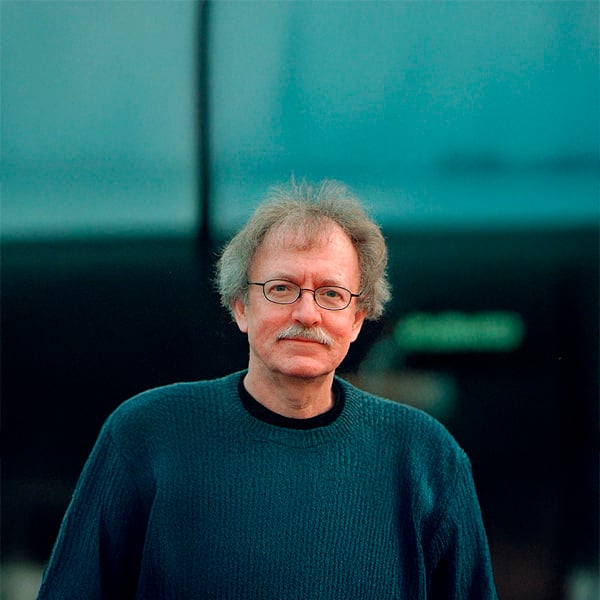
 Recension av Sören Sommelius,
TFF konfliktläkare och kulturredaktör på Helsingborg Dagblad

FORTRESS AMERICA
The American Military and the Consequences of Peace.
William Greider
Public Affairs
New York 1998

UTANFÖR DEN LILLA staden Killeen i Texas, USA, ligger USA:s största armébas, Fort Hood där 43.000 man är stationerade. Fyrtio procent av den amerikanska arméns utrustning, 11.000 pansarfordon, 2.400 stridsvagnar och en stor mängd helikoptrar, finns uppställda i närheten av staden här, på en rad av inhägnade fält som sträcker sig sammanlagt tio kilometer.

Efter det kalla krigets slut har det skett vissa nedskärningar av den amerikanska försvarsbudgeten, skriver William Greider i en ny bok, “Fortress America” med undertiteln “The American Military and the Consequences of Peace” (Fort Amerika. Den amerikanska militären och fredens konsekvenser).

Men, fortsätter Greider, USA är fortfarande rustat för att utkämpa ett världskrig mot en fiende som inte längre finns. Och landets militära utgifter (årlig budget över 2.000 miljarder kronor) ligger nu på samma nivå som kring 1980, under det kalla krigets värsta kapprustningsår.

Greider är redaktör för tidskriften Rolling Stone och har tidigare arbetat som journalist på Washington Post. Hans bok är ett stycke kvalificerad undersökande journalistik, om ett ämne som sannerligen har globala konsekvenser. I olika kapitel i boken skildrar han i reportageform militära anläggningar eller sådant som vapenhandel.

DAGENS USA ÄR ett tungt rustat fort. Hur har det kunnat förbli så?

Greider pekar inte oväntat på det militär-industriella komplexet, på de intrikata sambanden mellan militären, vapenindustrin och politiska allianser. Dessa strukturer formades särskilt efter andra världskriget och har i bara liten utsträckning påverkats av att världen utanför USA förändrats. Och demokraterna och republikanerna överbjuder varandra med utfästelser om ökade försvarsanslag.

Vapenindustrin producerar ständigt nya generationer vapen. Nyligen sänktes hundra något äldre stridsvagnar i Mexikanska golfen för att skapa ett konstgjort rev för fisk. Häromåret skänktes 45 stridsvagnar till Bosnien och 50 till Jordanien. Och Egypten fick hela 700 stridsvagnar mot att man stod för transportkostnaderna.

USA:s militära industrier söker nu efter nya marknader. Greider menar att östutvidgningen av NATO som skett i dagarna har just detta som främsta syfte. Att Polen, Ungern och Tjeckien är fattiga länder är ett mindre problem. De nya länderna får stora rabatter på sina köp &endash; och fördelaktiga lån. Och inte nog med detta. Man förlägger också viss tillverkning av komponenter till de nya länderna.

EFTER DET KALLA KRIGETS slut har USA:s andel av den internationella vapenhandeln ökat markant &endash; och utgör nu 44 procent. 1995 sålde USA vapen för 100 miljarder kronor, varav tre fjärdedelar till u-länder.

Centraleuropa är inom en femårsperiod en attraktiv marknad för bland annat två hundra stridsflygplan &endash; eller 80 miljarder i rena order, konstaterar Greider.

Eftersom Ryssland har svårt att konkurrera med de amerikanska villkoren bidrar de nya “marknadsvillkoren” att landet i stället säljer till länder som USA lagt handelsembargo på, som Nordkorea, Irak och Algeriet. Det var ju för övrigt tidigare amerikansk och fransk vapenhandel som skapade förutsättningarna för Saddam Husseins angrepp mot Kuwait.

För några år sedan inledde Pentagon ett samarbete med Kina, varifrån man sände upp kommersiell satelliter. Sannolikt överfördes samtidigt avancerad missilteknik till den kinesiska militären, vilket skapade panik i grannländerna och blev en starkt bidragande orsak till den indisk-pakistanska kärnvapenkapprustningen (sedan Kina i sin tur försett Pakistan med missilteknologi för kärnvapen).

Har USA sin stora militärapparat för att försvara mänskliga rättigheter eller för att försvara de transnationella företagens globala marknader, undrar Greider retoriskt. Håller USA på att med vapenmakt bygga ett eget globalt imperium, där man ger sig själv en maktens rätt i olika sammanhang?

Han tar USA:s attacker förra året mot Afghanistan och Sudan som ett exempel på hur USA sätter sig över internationell rätt, på ett vis som man aldrig skulle acceptera från andra länder.

Dagens amerikanska politik är i mycket riktad mot Förenta Nationerna. Greider visar hur detta inte har något stöd bland amerikanska väljare. I gallupundersökningar har över 80 procent sagt sig föredra FN-aktioner i krisområden framför operationer där USA agerar ensamt. Och hela 83 procent av amerikanerna menade att FN borde beskatta internationell vapenhandel och använda pengarna till humanitära ändamål.

GREIDERS BOK ÄR en frän och väldokumenterad kritik både mot dagens amerikanska utrikespolitik som syftar till amerikansk global dominans och mot de militärindustriella amerikanska strukturer som i mycket ligger bakom denna destruktiva politik.

“Omvärlden är inte blind. Den kan se hur USA planerar och producerar spektakulära nya vapensystem, när landets vapenarsenal redan innan är överväldigande överlägsen.”

Greider menar att USA i stället borde använda sin makt till att stärka FN och bidra till att skapa andra institutioner för konfliktlösning och internationell säkerhet.

En ny amerikansk politik skulle förstås krympa det militär-industriella komplexets ekonomiska och politiska makt. De flesta militärer är mentalt förberedda på förändringar i den riktningen &endash; vilket dock inte gäller de transnationella militära gigantiska företagen, vars dolda agenda styr mycket av amerikansk utrikespolitik.

Related Posts

The Challenge of Nuclear Weaponsin the Twenty-first CenturyA Path Forward The peoples and governments of the world face an urgent challenge relating to weaponry of mass destruction and particularly to nuclear weaponry.  At the crossroads of technology, terrorism, geopolitical ambition, and policies of preemption are new and potent dangers for humanity. Despite ending the nuclear standoff of the Cold War era, nuclear weaponry is again menacing the peoples of the world with catastrophic possibilities.  We recognize the need for any government to pursue its security interests in accordance with international law; and further, we recognize that distinctive threats to these interests now exist as a result of an active international terrorist network having declared war on the United States and its allies. Nonetheless, we reject the assessment of the current US administration that upgrading a reliance on nuclear weapons is in any sense justified as a response. We find it...
LONDON – I walk up Sonia Gandhi’s drive way, past  guards with Uzi machine guns, and can’t help thinking that when I came to interview Mrs. Indira Gandhi (Sonia’s mother-in-law) on the eve of her great comeback and massive electoral win, I walked up to her front door and knocked. There were no guards and only one servant to let me in. I am ushered into Sonia G’s office. She barely acknowledges my presence. “Buon giorno”, I say. There is no reply. I have been warned that she’s cold and she doesn’t offer me a hand. She walks over to me and asks me to sit down. I look her in the eye and ask my first question to the Italian widow of Prime Minister Rajiv Gandhi, who was cruelly blown to smithereens by a female Tamil terrorist, a member of the now defeated Tamil independence struggle in neighbouring Sri...
Om Afghanistan Af Ulla Fasting,TFF Ven og medlem af Det Radikale Venstre Læs også Ulla Fastings “Indtryk fra Afghanistan” Dag 1 Afghanistan ved en ny tids begyndelse I denne uge tager vi til Afghanistan, som jeg har besøgt to gange i sommer og hvor jeg samtidig læste Khaled Hosseinis bog* om sin barndoms Afghanistan. En barndom, hvor drengen Amir vinder den store drageturnering og sin fars anerkendelse, men samtidig svigter sin bedste ven Hassan. Det er dette svigt og vejen til soning, bogen handler om, men den fortæller også om det Afghanistan, som var før den russiske besættelse og før Taleban kom til magten.Det er det Afghanistan, som i dag skyder op hist og her og som mange afghanere forsøger at bygge en fremtid på. Bogen er god at have med sig, for i manges bevidsthed er Afghanistan kun det 6. fattigste land i verden, talebansk mørke, kvinder i burka,...

Recent Articles

Tony Robinson October 4, 2026 Violence is easy to recognise when someone is being beaten, shot or killed. It becomes more difficult when nobody is holding a weapon. Poverty, discrimination, exploitation and repression can restrict a human life just as effectively, although they do so in very different ways and with very different consequences. Simply adding more categories to an ever-growing list of forms of violence does not really solve the problem. The more interesting question is what all these different situations have in common and why it makes sense to describe them using the same word. Human beings do not simply react to what happens around them. They remember the past, imagine things that do not yet exist, make plans and undertake projects. Workers organise because they imagine different working conditions; people migrate because they imagine another life somewhere else; social movements emerge because people refuse to accept the...
It’s a matter of principles, courage, vision and pulling together – while the militarist world is falling apart… Peter Langille October 3, 2026 “Here, then, is the problem which we present to you, stark and dreadful and inescapable: Shall we put an end to the human race; or shall mankind renounce war?”The Bertrand Russell—Albert Einstein Manifesto, July 9, 1955 ⁕ The forecast for what’s ahead is worrisome. The sharp rise in armed conflicts over the past three years is adding to what was already the highest level in over seventy years. Genocides, which should be prevented are supported. A shared climate emergency that jeopardises survival is ignored. Diverse polls now suggest that people are war-weary, worried and interested in a more effective United Nations. And, there are viable policy options for a more secure world! Yet governments are doubling-down, betting on more war and investing heavily. If current trends persist,...
Johan Galtung 1930-2024October 2015 Published here on October 3, 2026 Let us focus on Civilization for conflict analysis and remedies. Major forms of disorder use violence; war is state organized violence. The most belligerent states are the United States of America and Israel, both with civilization roots. National Evangelism, the US Protestant Christian civilization– more national than evangelical–justifies US warfare as exceptionalism of a people chosen by God, with a manifest destiny to run the world. Orthodox Judaism justifies Israeli warfare to conquer and expand from Nile to Euphrates as a religious right and duty to the Eternal One. The third most belligerent country, the UK, no longer believes it is God-chosen but chosen by the USA; not quite the same but something. But the root cause of global disorder lies in the Occident–with Islam–seeing itself as the single, universal civilization valid for all at all times, all others being...

TFF on Substack

Discover and subscribe to more peace materials on TFF Substack

Most Popular

Tony Robinson October 4, 2026 Violence is easy to recognise when someone is being beaten, shot or killed. It becomes more difficult when nobody is holding a weapon. Poverty, discrimination, exploitation and repression can restrict a human life just as effectively, although they do so in very different ways and with very different consequences. Simply adding more categories to an ever-growing list of forms of violence does not really solve the problem. The more interesting question is what all these different situations have in common and why it makes sense to describe them using the same word. Human beings do not simply react to what happens around them. They remember the past, imagine things that do not yet exist, make plans and undertake projects. Workers organise because they imagine different working conditions; people migrate because they imagine another life somewhere else; social movements emerge because people refuse to accept the...
It’s a matter of principles, courage, vision and pulling together – while the militarist world is falling apart… Peter Langille October 3, 2026 “Here, then, is the problem which we present to you, stark and dreadful and inescapable: Shall we put an end to the human race; or shall mankind renounce war?”The Bertrand Russell—Albert Einstein Manifesto, July 9, 1955 ⁕ The forecast for what’s ahead is worrisome. The sharp rise in armed conflicts over the past three years is adding to what was already the highest level in over seventy years. Genocides, which should be prevented are supported. A shared climate emergency that jeopardises survival is ignored. Diverse polls now suggest that people are war-weary, worried and interested in a more effective United Nations. And, there are viable policy options for a more secure world! Yet governments are doubling-down, betting on more war and investing heavily. If current trends persist,...
Johan Galtung 1930-2024October 2015 Published here on October 3, 2026 Let us focus on Civilization for conflict analysis and remedies. Major forms of disorder use violence; war is state organized violence. The most belligerent states are the United States of America and Israel, both with civilization roots. National Evangelism, the US Protestant Christian civilization– more national than evangelical–justifies US warfare as exceptionalism of a people chosen by God, with a manifest destiny to run the world. Orthodox Judaism justifies Israeli warfare to conquer and expand from Nile to Euphrates as a religious right and duty to the Eternal One. The third most belligerent country, the UK, no longer believes it is God-chosen but chosen by the USA; not quite the same but something. But the root cause of global disorder lies in the Occident–with Islam–seeing itself as the single, universal civilization valid for all at all times, all others being...
Read More
Living-Peace-Sign-Budapest-copy
Tony Robinson October 4, 2026 Violence is easy to recognise when someone is being beaten, shot or killed. It becomes more difficult when nobody is holding a weapon. Poverty, discrimination, exploitation and repression can restrict a human life just as effectively, although they do so in very different ways and with very different consequences. Simply adding more categories to an ever-growing list of forms of violence does not really solve the problem. The more interesting question is what all these different situations have in common and why it makes sense to describe them using the same word. Human beings do not simply react to what happens around them. They remember the past, imagine things that do not yet exist, make plans and undertake projects. Workers organise because they imagine different working conditions; people migrate because they imagine another life somewhere else; social movements emerge because people refuse to accept the...
b54a1f10-8c65-4f0b-9dd5-4abc0a7d04cc_2659x2659
It’s a matter of principles, courage, vision and pulling together – while the militarist world is falling apart… Peter Langille October 3, 2026 “Here, then, is the problem which we present to you, stark and dreadful and inescapable: Shall we put an end to the human race; or shall mankind renounce war?”The Bertrand Russell—Albert Einstein Manifesto, July 9, 1955 ⁕ The forecast for what’s ahead is worrisome. The sharp rise in armed conflicts over the past three years is adding to what was already the highest level in over seventy years. Genocides, which should be prevented are supported. A shared climate emergency that jeopardises survival is ignored. Diverse polls now suggest that people are war-weary, worried and interested in a more effective United Nations. And, there are viable policy options for a more secure world! Yet governments are doubling-down, betting on more war and investing heavily. If current trends persist,...
010
Johan Galtung 1930-2024October 2015 Published here on October 3, 2026 Let us focus on Civilization for conflict analysis and remedies. Major forms of disorder use violence; war is state organized violence. The most belligerent states are the United States of America and Israel, both with civilization roots. National Evangelism, the US Protestant Christian civilization– more national than evangelical–justifies US warfare as exceptionalism of a people chosen by God, with a manifest destiny to run the world. Orthodox Judaism justifies Israeli warfare to conquer and expand from Nile to Euphrates as a religious right and duty to the Eternal One. The third most belligerent country, the UK, no longer believes it is God-chosen but chosen by the USA; not quite the same but something. But the root cause of global disorder lies in the Occident–with Islam–seeing itself as the single, universal civilization valid for all at all times, all others being...
Screenshot 2026-10-02 011738
Jan ObergPhD, director, The Transnational Foundation for Peace and Future Research, TFFLund, Sweden October 2, 2026 This is my full original manuscript. The Chinese Academy of Social Science, CASS, makes two publications out if it. 1. China’s Five-year plan emphasized the capabilities of basic research and original innovation. It is regarded as the goal of the future social development, which, as required, should be significantly enhanced. Can you comment on the importance of original innovation in research and academic study? I believe it is easier to define “original innovation” in the natural sciences than in social sciences. The breaking points of what constitutes something new, or innovative, are not quite as sharp in the latter. But in both fields it is about opening up something that was closed, unseen, unexplored before – making manifest what was earlier latent. Innovations come in many forms and shapes – naming something that was not...
arctic-circle-map
The agreement is catastrophic both because of what it says and what it doesn’t mention. It reduces further the major asset of security policies: Freedom of action. Jan Oberg TFF director September 25, 2026 A couple of hours before the agreement was signed on September 22, 2026, I published the following 13 hypotheses about what it would most likely contain on TFF Substack (in English). I was wrong on only the first point. Contrary to what Trump had written on his Truth Social platform, it does not appear to come into force immediately. In fact, it turned out to be worse than even I had anticipated. After these hypotheses now come a number of reflections in light of what the agreement actually contains, and does not contain, as well as the way in which it has generally been presented by major media outlets and by the public-service broadcaster DR. My...
girl-5894831_1280
Below are TFF-related media mentions, comments, videos and social media posts published elsewhere but not on this homepage. We happen to catch and list only a fraction. Regarding video comments and debates, we recommend that you go to the TFF Video Channel on Substack where many of them are reproduced. Jan Oberg is a contributor to China Daily – 52 million daily clicks – and Global Times, CGTN and CCTV (the national television), China Investment, Xinhua News Agency and several others. Articles and videos on these media very often multiply into countless Chinese (and Western media) that re-post them from these main media. Thanks to The China Academy, his analyses, interviews and comments are frequently posted on YouTube channels such as Thinkers Forum and Wave Media. These videos are often re-posted on Bilibili (China’s YouTube), the China Content Center on TikTok, and on the Chinese edition of TikTok, Douyin.com. This means reaching hundreds of millions of viewers worldwide over a year. While there are too many to catch on all these...




