VIDEO – TV Comments

Category

Year

Author / Contributor

Region

Sort by

Showing 1-10 of 37 stories

Screenshot
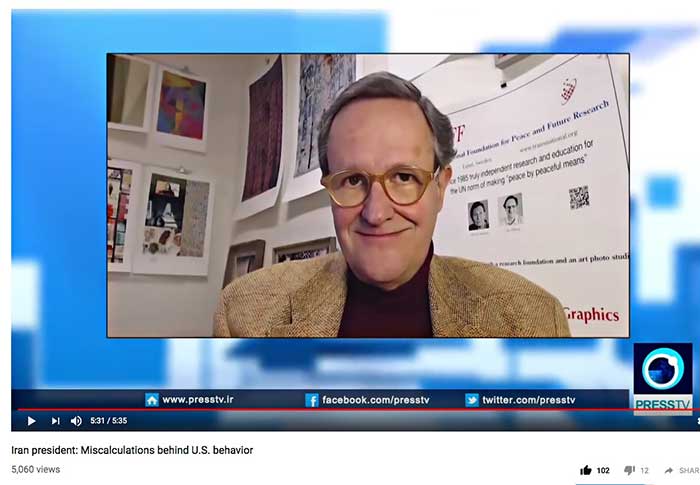
  • On July 6, 2018 there was a meeting in Vienna concerning the JCPOA, or the Iran nuclear deal, and how to handle it after the U.S. withdrawal from the deal and the U.S. attempts to isolate Iran further and suffocate its 85 million people even more by trying to prevent it from selling its oil and simultaneously have Saudi Arabia increase its production. The participants were China, Russia, Germany, France and the UK and the meeting was chaired by the EU foreign policy chief, Federica Mogherini. Here is a PressTV report about it. And here is the EU’s document that was produced at the meeting. According to TFF director, Jan Oberg, the major problems with this is that the EU, Russia and China have known for many months that President Trump would withdraw from the deal and also has an almost personal hate of the country and of...

Screenshot
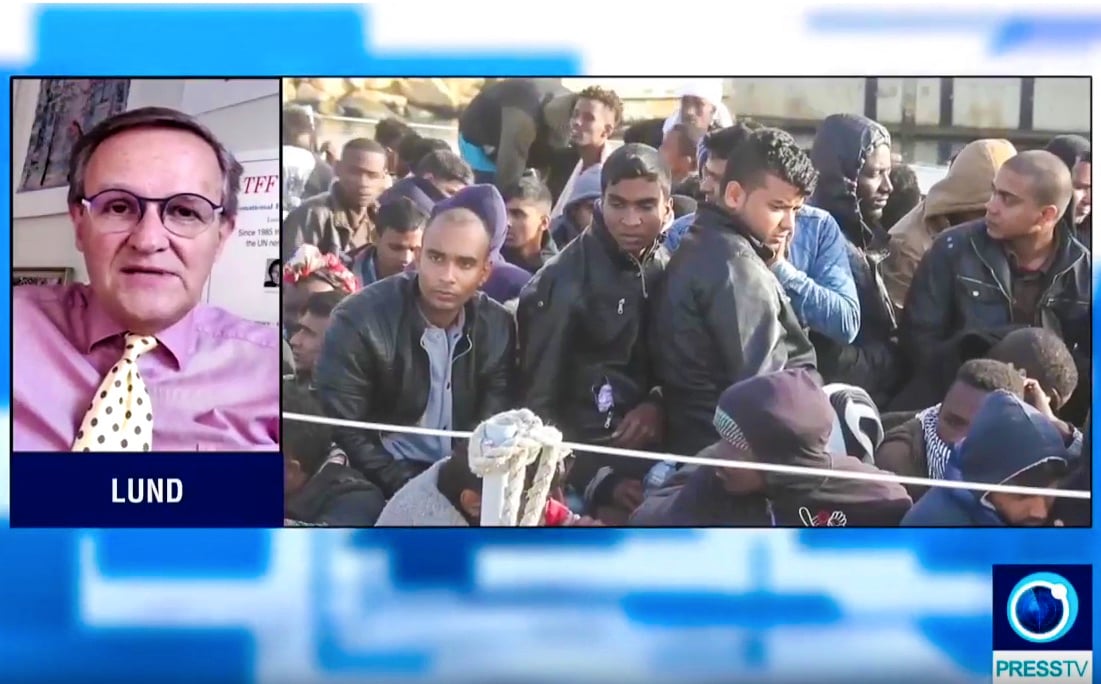
Oberg comments directly after the EU Summit on a series of issues, among them also defence and security. Here is the document from the European Council and nobody seem to contemplate the link between EU/NATO armament (arms exports), military intervention and NATO/EU countries ravaging one country after the other and the refugee flows. So, there is no end in sight unless the EU/NATO fundamentally changes interventionist and war policies which they are not likely to do (see the document) – and that may spell the end of the EU itself. Like terrorism, Europe’s refugee “problem” will be a perpetuum mobile until somebody has the moral and intellectual courage to stop and think and ask: What are the basic reasons we face these problems? That is why the discussion is now about borders, border control and reception centres far away – and not about refugees, asylum seekers (but ‘migration’ which is...
Screenshot
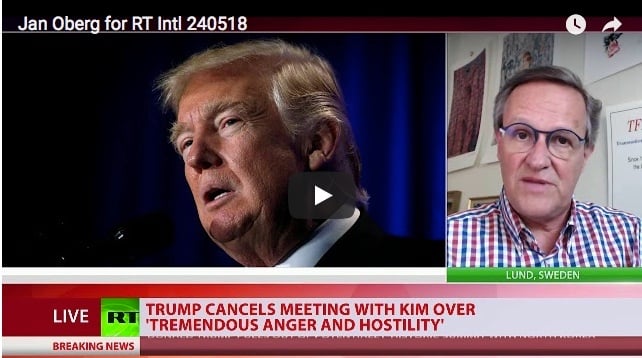
  About an hour after President Trump had announced another US withdrawal – this time from the Summit with North Korea on June 12 – I commented on RT (formerly Russia Today) and got quite a long time until we were broken off by Trump appearing in the White House lawn to speak about it.      
Screenshot
  Originally published here and produced by Physics-Astronomy.com
Imagen-thumbnail-The-Transnational
Shock. It’s a word that has come up a lot since November – for obvious reasons.I’ve spent a lot of time thinking about shock. Ten years ago, I published “The Shock Doctrine,” an investigation that spanned four decades from Pinochet’s U.S.-backed coup in 1970s Chile to Hurricane Katrina in 2005. I noticed a brutal and recurring tactic by right wing governments. After a shocking event – a war, coup, terrorist attack, market crash or natural disaster – exploit the public’s disorientation. Suspend democracy. Push through radical “free market” policies that enrich the 1 percent at the expense of the poor and middle class. The Trump administration is creating chaos. Daily. Of course many of the scandals are the result of the president’s ignorance and blunders – not some nefarious strategy. But there is also no doubt that some savvy people around Trump are using the daily shocks as cover to...
Imagen-thumbnail-The-Transnational
  By Jan Oberg A few comments in advance of President Trump’s speech on January 11 concerning the nuclear deal, JCPOA, with Iran and why it would be stupid of him to isolate the US by violating the agreement’s letter and spirit. Iran’s response will also be very important and here it is essential to build on the goodwill of the world rather than risking giving the US a pretext for more Iranophobia and future military action. January 10, 2018 on PressTV.    
maxresdefault-1
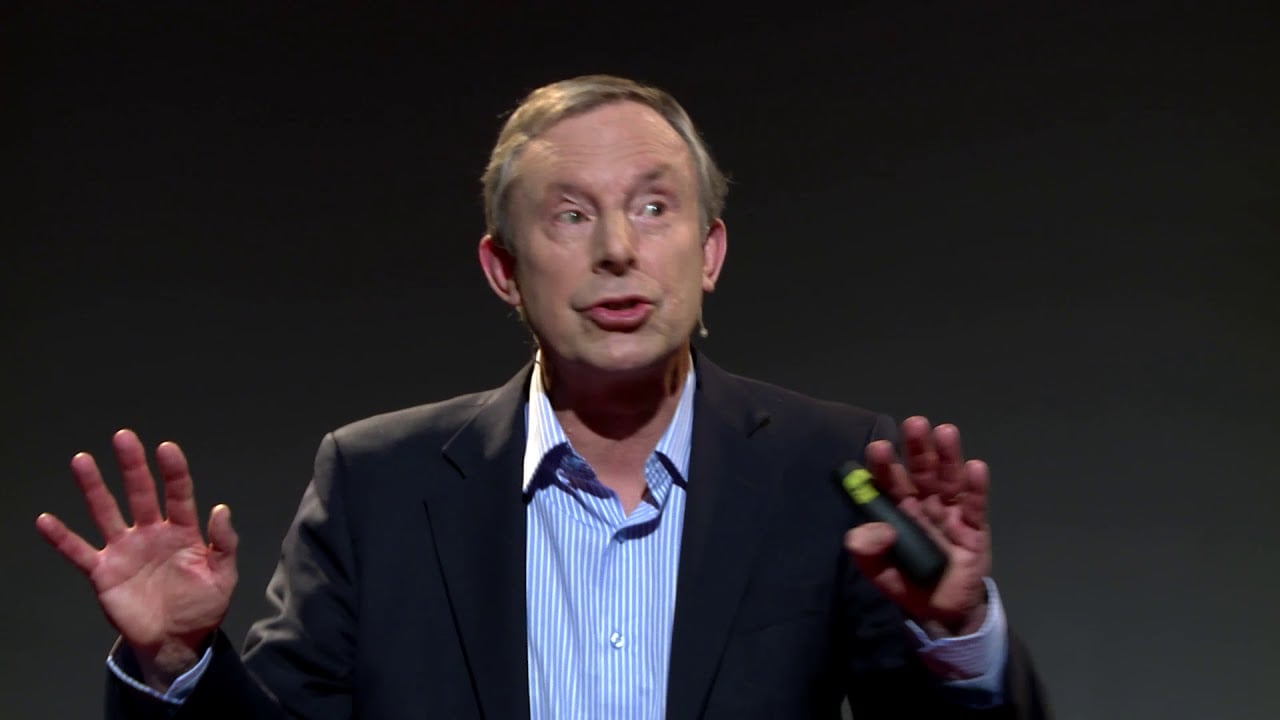
  By Robert Green   Robert Green Commander, The British Royal Navy, Retired. When nuclear-armed nations face off, the threat of mutually assured destruction is expected to keep the worst from happening. But is this a rational strategy? Or is it one that is doomed to failure? In this eye-opening and powerful talk, Commander Robert Green shares his experience piloting nuclear-armed aircraft – and his shift to becoming a staunch opponent of nuclear deterrence. Commander Robert Green served for twenty years in the British Royal Navy. As a bombardier-navigator, he flew in Buccaneer nuclear strike aircraft and anti-submarine helicopters equipped with nuclear depth-bombs. His final appointment was as Staff Officer (Intelligence) to the Commander-in-Chief Fleet during the 1982 Falklands War. He chaired the UK affiliate of the World Court Project, which led to the International Court of Justice judgment in 1996 that the threat or use of nuclear weapons would...
hqdefault
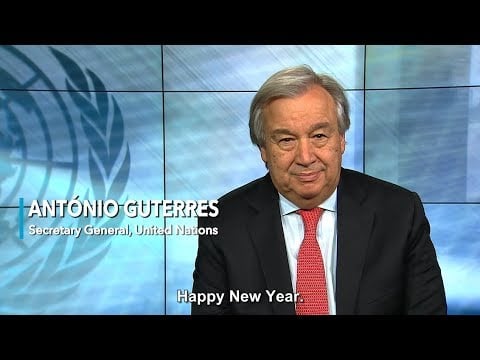
Jan Oberg comments: This is certainly important, although there are limits to what António Guterres can say. I wish he would have said “reduction of all kinds of violence” or emphasised the UN Charter’s Article one that says that peace shall be built by peaceful means. But anyhow – I applaud him for speaking up on December 31, 2017.
f67f17e1df4e8d46cdddc96c2ddd77b03128e49d_800x600
  By Julia Bacha A spot-on talk about nonviolence in conflict in general and the role it plays in the Palestine-Israel conflict. Most often the people who struggle with non-violent means are simply overlooked by the media.   See more…
1d820f03fa5087a20e14a0294d1a65fbcde13566_800x600-1
By Scilla Elworthy Via ted.com • How do you deal with a bully without becoming a thug? In this wise and soulful talk, peace activist Scilla Elworthy maps out the skills we need — as nations and individuals — to fight extreme force without using force in return. To answer the question of why and how nonviolence works, she evokes historical heroes — Aung San Suu Kyi, Mahatma Gandhi, Nelson Mandela — and the personal philosophies that powered their peaceful protests.  
Categories

Year

Author / Contributor

Region