US Empire

Category

Year

Author / Contributor

Region

Sort by

Showing 1-10 of 636 stories

richardfalk
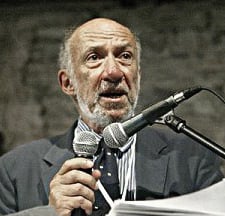
[Prefatory Note: this text is based on my presentation at the conference listed below, which brought together a wide array of scholars, media people, and persons concerned with the future of Palestine] Second Annual Conference of Research Centers in the Arab World, Doha, Qatar, 7-9 December 2013, THE PALESTINIAN CAUSE AND THE FUTURE OF THE PALESTINIAN NATIONAL MOVEMENT. A preliminary remark: A sacrifical peace It is a welcome development that the theme of such a major conference as this one should have as its theme ‘the future of the Palestinian movement,’ so well articulated in the opening address by Azmi Bishara. It is often overlooked that as early as 1988, and possibly earlier, the unified Palestinian leadership has decisively opted for what I would call a ‘sacrificial’ peace. By sacrificial I mean an acceptance of peace and normalization with Israel that is premised upon the relinquishment of significant Palestinian rights...
farhangjahanpour
By Farhang Jahanpour Despite strong opposition by the White House and the States Department and despite the pleadings of some of the most prominent bipartisan US foreign policy luminaries who have warned that additional sanctions would jeopardize ongoing diplomatic efforts, (1) many US senators are pushing forward with a new resolution that is supported by the same neocons that brought us the Iraq war. (2) It seems that the majority of Congressmen and Senators know very little about Iranian history or what is going on in Iran at present.
johangaltung
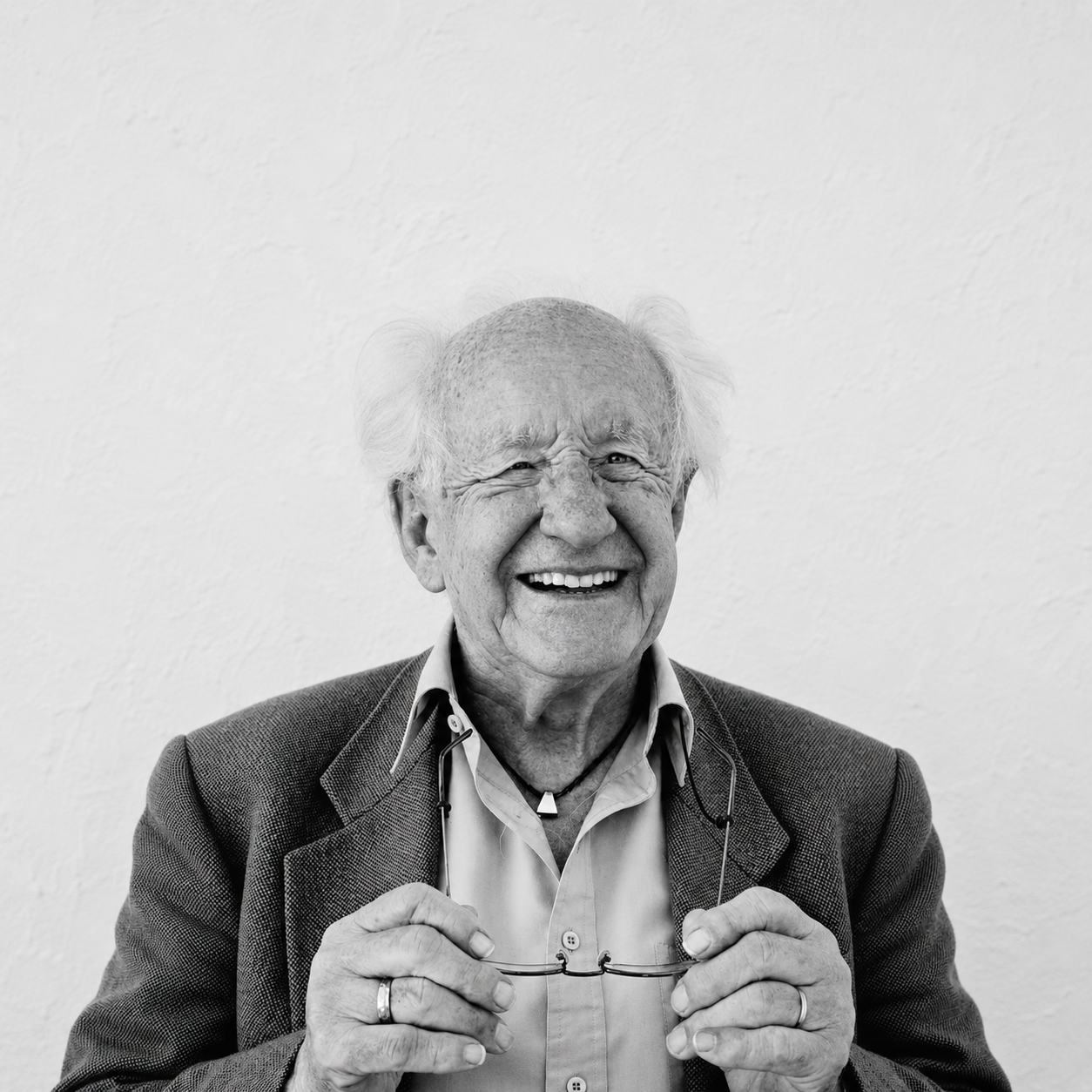
2014: there are conflicts old and new crying for solution and conciliation, not violence; with reasonable, realistic ways out. Take the South Sudan conflict between the Nuer and the Dinka. We know the story of the borders drawn by the colonial powers, confirmed in Berlin in 1884. Change a border by splitting a country – referendum or not – and what do you expect opening Pandora’s Box? More Pandora. There is a solution: not drawing borders, making them irrelevant. The former Sudan could have become a federation with much autonomy, keeping some apart and others together in confederations-communities, also across borders. Much to learn from Switzerland, EU and ASEAN.
ChatGPT Image 9 jun 2026, 11_11_33
/10/jonathanpower2.jpg”> Hippocrates, the father of modern medicine who lived 460-357 BC, concluded that diseases were naturally caused and were cured by natural remedies. Opium, he wrote, was one of the latter. But he was also of the opinion that it should be used sparingly and under control. If only our governments today could take such a sanguine and informed view of the use of opiates in medicine today. No one needs a more enlightened attitude than the Western forces now operating in Afghanistan where for years they have been committed to destroying the peasants’ main source of income. Afghanistan produces more opium that anywhere else in the world. Some observers say this eradication programme has done much to push country people into the Taliban camp. The West has long been shooting itself in the foot.
richardfalk
In a little noted initiative the General Assembly on November 26, 2013 voted to proclaim 2014 the International Year of Solidarity with the Palestinian People. The UN Committee on the Exercise of the Inalienable Rights of the Palestinian People was requested to organize relevant activities in cooperation with governments, the UN system, intergovernmental organizations, and significantly, civil society. The vote was 110-7, with 56 abstentions, which is more or less reflective of the sentiments now present in international society. Among the seven opponents of the initiative, in addition to Israel, were unsurprisingly its three staunchest supporters, each once a British colony: the United States, Canada, Australia, with the addition of such international heavyweight states as Micronesia, Palau, and the Marshall Islands. Europe and assorted states around the world were among the 56 abstentions, with virtually the entire non-West solidly behind the idea of highlighting solidarity with the Palestinian people in...
Imagen-thumbnail-The-Transnational-1
An interview with the Iranian Fars News Agency of December 8, 2013 in which the TFF Associate pulls the Western media image of what happens in Syria – and why – apart. She also tells you why she feels a bit more optimistic than most and how foreign fighters must leave Syria to enable the Syrians to pursue an all-inclusive process towards a settlement.
richardfalk
Having visited Belfast the last few days during some negotiations about unresolved problems between Unionist and Republican (or Nationalist) political parties, I was struck by the absolute dependence for any kind of credibility of this process upon the unblemished perceived neutrality of the mediating third party. It would have been so totally unacceptable to rely on Ireland or Britain to play such a role, and the mere suggestion of such a partisan intermediary would have occasioned ridicule by the opposing, and confirmed suspicions that its intention must have been to scuttle the proposed negotiations. In the background of such a reflection is the constructive role played by the United States more than a decade ago when it actively encouraged a process of reconciliation through a historic abandonment of violence by the antagonists. That peace process was based on the justly celebrated Good Friday Agreement that brought the people of Northern...
richardfalk
My friend and former collaborator, Howard Friel, has written an intriguing book contrasting the worldviews and polemical styles of two Jewish American intellectuals with world class reputations, Noam Chomsky and Alan Dershowitz (Friel, Chomsky and Dershowitz: On Endless War and the End of Civil Liberties, Olive Branch Press, 2014). The book is much more than a comparison of two influential voices, one critical the other apologetic, with respect to the Israel/Palestine struggle and the subordination of private liberties to the purveyors of state-led security at home and abroad. Friel convincingly favors Chomsky’s approach both with respect to the substance of their fundamental disagreements and in relation to sharply contrasting styles of argument. Chomsky is depicted, accurately I believe, as someone consistently dedicated to evidenced based reasoning reinforced by an abiding respect for the relevance and authority of international law and morality. Chomsky has also been a tireless opponent of American...
ObergPhoto2cmB-W-3
This Sunday morning, I stumble upon this article on BBC’s homepage – the French foreign minister is “pessimistic” about the negotiations to be held in January in Montreaux, Switzerland about Syria. This is a slightly expanded version on what I jotted down on TFF Facebook: And then You are surprised and pessimistic that perhaps these negotiations won’t be a success !! Is that because you really always wanted peace so much? Or are you just systematically behaving as conflict illiterates, doing more harm than good?
johangaltung
Washington-DC In the shorter run, till around 2020, not good; in the longer run, from 2030, not bad at all. Short-run possibilities: Politically: post-democracy, Congress more accountable to business than to people for election; the top executive power possibly sliding from the president to the supreme court justice, with money steering politics, protected as “freedom of expression”; Snowden-type revelations coming from once a year to once a month, once a week. Economically: runaway inflation; accelerating inequality; deep misery affecting one third to a half of the population; depression. Militarily: coup by evangelical fundamentalists to “give us our country back”/”give our, empire, our world”; using war to restore the economy; a temporary strong hand “to get things going”. Culturally: declining faith in a covenant with a universal God as the Exceptional Chosen People; anomie, absence of compelling norms. Socially: atomie, lacking social tissue, leading to collective and individual depression; increase in...
johangaltung
Washington-DC Charles Darwin, in The Voyage of the Beagle, has a passage where he condemns an egalitarian native people on the tip of South America to stay primitive. Development presupposes inequality, having chiefs – human, animals, races – to look up to and learn from; no word wasted on the humans, animals or races at the bottom. And the evolution theory emerging from a mind thus pre-programmed is obvious: competition, struggle for survival, not mutual aid, as the substitute narrative for Genesis 1:20-28, 4th to 6th day–but without God. However, a man of God, Pope Francis – if anyone is saving Western civilization from itself it is he, not economic growth presidents/PMs – comes out and decries inequality and “trickle-down economics” in particular as a “crude and naive trust in the goodness of those wielding economic power” (Washington Post, 27 Nov 2013, p. 1). Or, maybe “those wielding intellectual power”,...

richardfalk
This material below was distributed by John Whitbeck, distinguished American lawyer and author, living in Paris, and doing his best to keep a group concerned with world affairs informed about latest developments, especially inthe Middle East. I also add a slightly edited text of a message sent by Robert Stiver from Hawaii, who has exhibited consistent empathy for the suffering of the Palestinian people. My press release below, although far less emotional than the cri de coeur that Robert Stiver wrote, issues from the same place of urgent concern for the brave and resolute people of Gaza. I hope that Robert is wrong however when he ends with self-tormenting words of despair: “What to do, in the name of common justice? I know not; it seems useless, all useless.” Such feelings of futility are quite understandable, but let us do all within our power to make sure that this unfolding...
Categories

Year

Author / Contributor

Region