US Empire

Category

Year

Author / Contributor

Region

Sort by

Showing 1-10 of 636 stories

Imagen-thumbnail-The-Transnational-1
With India-US ties hitting a nadir, Shastri Ramachandaran takes a look at what went wrong in big power diplomacy The world’s two largest democracies may have much in common. But far from common interests prevailing over contentious issues, India-US relations are in for an uncommon spell of stresses and strains. These are unlikely to ease any time soon in an election year, regardless of Washington’s about-turn in cosying up to Narendra Modi. Political changes in India cannot banish overnight the causes and conditions in the US responsible for the souring of what was, until recently, toasted as the “defining relationship” of the 21st century. Devyani Khobragade’s arrest and strip-search drove India-US relationship to its lowest point in 15 years. Not since the 1998 nuclear test, when the US-led “international community” imposed sanctions, has the relationship between the two been so bad.
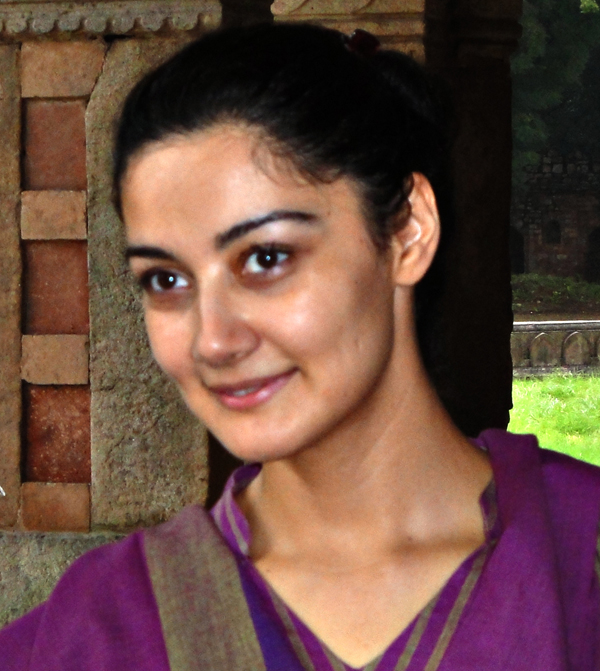
Heela
The daughter of Afghanistan’s last communist president reflects on politics and pluralism in the strife-riven state. Heela Najibullah was only 10-years-old when her father became the president of Afghanistan. To Heela, Mohammad Najibullah was Aba, father, trying to create reconciliation among an Afghan nation divided between communists and Mujhaideen, religious warriors fighting the Soviet occupation. Though Heela saw her father working towards an inclusive solution to the Afghan conflict, few in the general population could separate Najibullah the communist from Najibullah the president calling for reconciliation. In the decades since, however, Najibullah’s image has undergone a transformation. Pictures of a man once tied to communism now hang in people’s cars, windows and shops. In an interview Al Jazeera, Heela Najibullah talks about her father’s changing image 25 years after the Soviet withdrawal. Continue reading the interview here…
johangaltung
Contemporary reality, but what is real? Two of the above were killed under Obama’s watch; Osama executed by Obama extra-judicially, in cold blood, the other two by proxies (Chávez: we do not quite know). Two of them were dictators; Osama had no state, Chávez had, but won elections apparently not more rigged than Florida 2004, Ohio 2008. What were the problems, how might they have been solved?
stephenzunes
In preparing my syllabus for my introductory course on the Middle East this semester, it gives me pause that the California Assembly is still on record declaring that discussing certain well-documented historic incidents in modern Middle Eastern history should “not be tolerated in the classroom.” This unprecedented attack on academic freedom came in the form of a resolution (HR 35), co-sponsored by 66 of the 88 Assembly members, which passed by a voice vote in 2012. Continue reading here…. The resolution purports to be in opposition to anti-Semitic activities on university campuses, yet defines “anti-Semitism” so broadly as to include student activism targeting certain policies of Israel’s right-wing government as well as professors and others who acknowledge certain well-documented war crimes committed by Israeli forces.
stephenzunes
The tragic upsurge of violence in Iraq in recent months, including the temporary takeover of sections of two major Iraqi cities by al-Qaida affiliates, is a direct consequence of the repression of peaceful dissent by the U.S.-backed government in Baghdad and, ultimately, of the 2003 U.S. invasion and occupation. Continue here…
ChatGPT Image 9 jun 2026, 11_11_33
/10/jonathanpower2.jpg”> On Saturday Libya beat Ghana to win the African Nations Football Championship. A return to normalcy? To win a team must have a first class pitch and a non-stressed out team. Does this indicate that Libya, two and a half years after the fall of dictator, Muammar Gaddafi, is getting back on its feet? Alas, the football win is out of the ordinary in Libyan life, made by a team that has found a way to the top by hard practice and severe self-discipline. The rest of Libya is not like that. Its government is wobbly, self-appointed militias still rule in many parts and the rule of law is ignored as often as it’s obeyed. An increasing number of its people yearn for the peace and order of the dictatorial Gaddafi regime where the economy grew, life was improving and even human rights were being more respected. Inspired by...
farhangjahanpour
By Farhang Jahanpour In his State of the Union Address on 28th February, President Barack Obama bluntly pointed out that if the hawks in Congress pushed for a bill to impose new sanctions on Iran he would veto that bill. This brave and almost unprecedented move by President Obama has silenced, at least for the time being, the opposition to the Joint Plan of Action that was agreed by Iran and the P5+1 (the five permanent Security Council members plus Germany) last November. This was a major setback for AIPAC (American Israeli Public Affairs Committee) and other pro-Israeli lobbies that had mobilized all their forces to block the deal. In fact, some of the Democratic Senators that had sponsored the bill to impose additional sanctions on Iran have already distanced themselves from it. Furthermore, at least seventy Members of Congress are organizing a letter to the President supporting U.S.-Iran diplomacy...
farhangjahanpour
By Farhang Jahanpour In a radio broadcast in October 1939, Winston Churchill described communist Russia as “a riddle, wrapped in a mystery, inside an enigma.” Many people in the West today have the same feeling about Iran under the ayatollahs. One hears many pundits refer to Iranian politics as mysterious, inscrutable, baffling and unpredictable. Churchill continued his sentence by adding, “but perhaps there is a key. That key is Russian national interest.” I believe that if we apply the same key to Iran it becomes much easier to understand Iranian policies and actions. Although the Islamic revolution of 1978-79 brought about many political changes, yet many facts about Iran have remained the same. They include the main elements of Iranian culture, an attachment to Iran’s long history, and a desire for a better life. The main slogans chanted by the people on the eve of the revolution were “freedom, independence...
johangaltung
This is not the way to do it. A major party to the conflicts cannot be at the same time the conference manager; to the point of making the UN Secretary General disinvite a major invited party. Whether this is due to AIPAC-American Israel Public Affairs Committee buying US Senators, or whatever process internal to the USA-Israel system, or it comes out of Secretary Kerry’s genuine conviction, is immaterial. This looks like a court where the prosecutor is also the judge, having decided who the major culprit is and instructed the judge to proceed accordingly from Court I to II, with only those agreeing to Court I being in the jury of Court II. Had Ban Ki-moon been a man honoring UN authority he would have disinvited himself instead, claiming undue pressure. Disinvite a major party and two things are guaranteed: a lost chance to find a solution to what...
ObergPhoto2cmB-W-3
Introduction Sinbad is in his mid-20s and he took up studies in Europe before his native Syria began falling apart in senseless violence. He used to live in Damascus, his father being an officer in the Syrian Army but retired well before hell broke loose. Sinbad is one of his country’s many young intellectuals, extremely knowledgeable about international, regional and national politics and also a man who, from a distance, has done what he possibly could to maintain links with his society – which is not just Syria but civil society. Among other things he established a website on which everybody could dialogue freely under one condition: that they advocate political and other civil strategies and tools and no violence or expressions of hatred. It turned out to be very difficult to maintain such a website. Today he is disillusioned. He did not have the slightest hunch that the Arab...
ChatGPT Image 9 jun 2026, 11_11_33
/10/jonathanpower2.jpg”> The West, the US especially, has got itself into a fretful mood over the rise of China. Quite unnecessarily so. The Chinese growth rate is slowing. As a BBC commentator said today, reviewing this week’s government-issued statistics, China never will hit double digit growth again. Glitzy Shanghai, Guangzhou, Chengdu and their like, where growth is still well over 10% a year, make up only a part of China’s economy. Much of the country has an income per head more akin to Ecuador.
johangaltung
Alfaz, Spain An optimistic prediction held by some; but what does it mean? Let us define that “middle” as thousand years, 250-1250, from the start of the West Roman Empire declining (completed in 476 – 500), to the rise of the Hanseatic League transalpina as another Europe (completed around 1500 with protestantisms, Luther-Zwingli-Calvin; Anglicans). Apart from the Crusades, 1095-1291, an early introduction to the “Modern Period”, this was a peaceful time in Europe due to the integrative forces of the “Holy Roman Empire of the German Nation” – not Holy, not Roman, not German they say – and the Vatican – Holy? – hm; Roman? Yes. 217 of the 266 popes Italian, so far; No. 2: 16 French. The Kings ruled by intermarriages, and the Popes by theocracy, in harmony till the 11th century investiture conflict: who appoints the bishops!? The war on Islam, the Crusades 1095-1291 (Pope Urban II)...

Categories

Year

Author / Contributor

Region