United States – Empire and domestic

Category

Year

Author / Contributor

Region

Sort by

Showing 1-10 of 477 stories

41617359_403
Press Release at the bottom An Open Letter on the INF & START treaties, nuclear risk-reduction and disarmament measures to preserve peace and achieve sustainable securityAdopted in Basel, Switzerland on January 15, 2019. To: Donald Trump, President of the United StatesVladimir Putin, President of the Russian FederationJens Stoltenberg, Secretary-General of NATOMiroslav Lajčák, Chair of the OSCEFederica Mogherini, EU High Representative for Security and Foreign AffairsEliot Engel, Chair of the US House Foreign Affairs CommitteeAdam Smith, Chair of the House Armed Services CommitteeJames Inhofe, Chair of the US Senate Armed Services CommitteeJames Risch, Chair of the US Senate Foreign Relations Committee Leonid Slutsky, Chair of the Russian Duma Committee on Foreign AffairsVladimir Shamanov, Chair of the Russian Duma Committee on DefenceKonstantin Kosachev, Chair of the Russian Federation Council Committee on Foreign Affairs Viktor Bondarev, Chair of the Russian Federation Council Committee on Defence and Security CC: Xi Jinping, President of ChinaTheresa May, Prime...

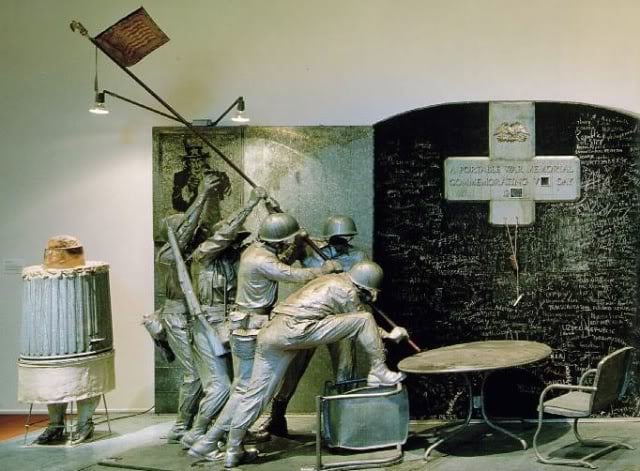
Portable-War-Memorial
By Dragana Maksimovic January 28, 2019 The author, MA student at University of Belgrade, become a TFF Associate in 2018. More here. There is one thing about which many peace researchers disagree and constantly debate: Are we really living in the most peaceful era ever, or are we facing a dangerous era of conflicts and struggles for global supremacy – very often masked as a fight for human rights but which can lead to a global war? There are those who agree with Steven Pinker when he claims that “today we are living in a most peaceful time in our species’ existence” (1) or with Barack Obama, the 44th president of The United States, who wanted to highlight how “worth it is reminding ourselves of how lucky we are to be living in the most peaceful, most prosperous, most progressive era in human history.’’ (2) Trying to validate his claims,...
ChatGPT Image 9 jun 2026, 11_11_33
Crown Prince Mohammed bin Salman remains at large, the unapologetic murderer (according to the CIA) of the respected dissident journalist, Jamal Khashoggi. Even though President Donald Trump came close to accusing him of the deed, he has pulled back, citing Saudi Arabia’s importance as an oil producer and arms buyer. The prime minister of the UK, Theresa May, is too preoccupied with Brexit to want to give up an important market. President Emanuel Macron of France is silent after an initial outburst. Now pressed by the demands of the demonstrators, he also wants to keep sources of revenue that come from sales of jets. Last week King Salman stepped into the crisis. Whatever admonishment he may have given his son, he is clearly not prepared to sideline him from his seat of power. Instead he has compromised by merely reshuffling the cabinet. The acceptance of the status quo must be...
Imagen-thumbnail-The-Transnational
I have long believed that the three red lines in Washington that no elected president can significantly transgress without being ejected from the Oval Office are unwavering support for the priorities of Wall Street, the Pentagon, and Israel. With the announced withdrawal of American troops in Syria (and their 50% cut in Afghanistan), transgressed one of these red lines. What is more, he upset what the mainstream media has been calling ‘the last adult in the room,’ the Secretary of Defense, James Mattis, who made the country critically ponder Trump’s transgression by his thinly veiled rebuke in the form of a letter of resignation that has been treated as scripture by such hegemonic media outlets as CNN and the NY Times. It has become clear that Trump transgressed two of the three red lines, a reality further aggravated by the Christmas shutdown of the Federal Government and his babyish tantrum...
reza-pahlavi
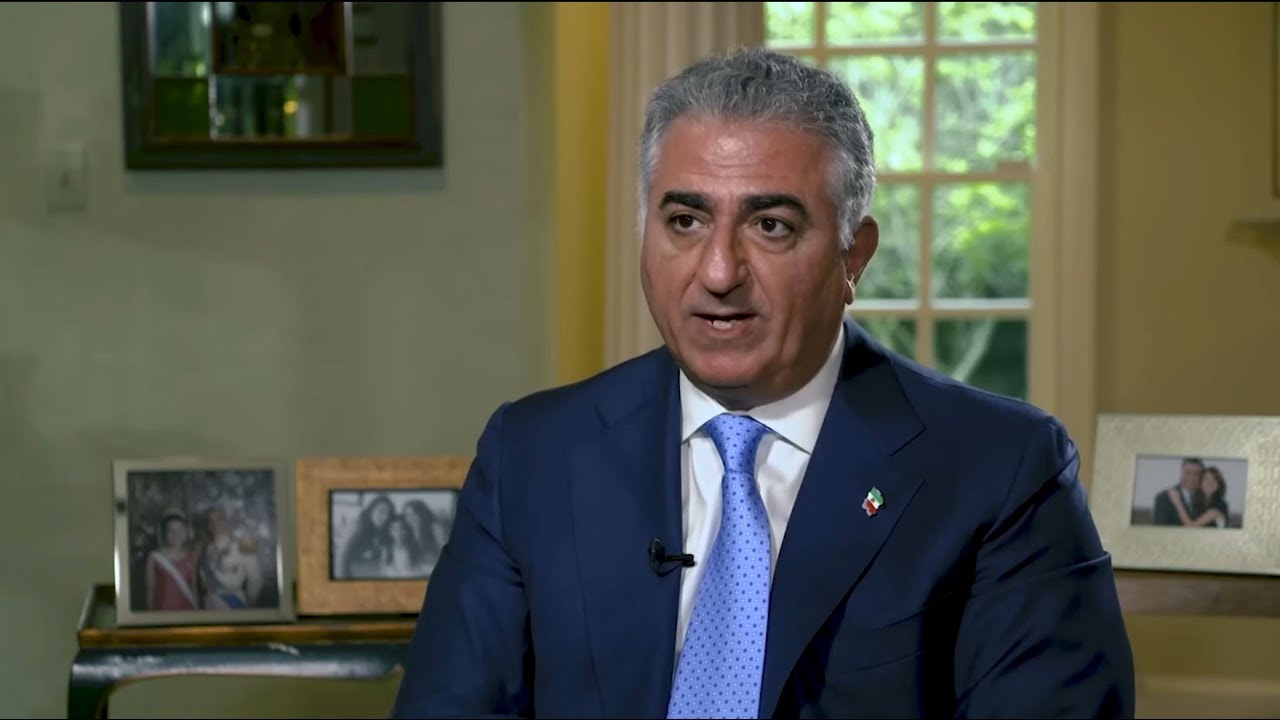
After a long period of relative silence, Reza Pahlavi, the son of the deposed Iranian Shah who has lived in the United States for more than 40 years, recently made a rare public appearance, calling for a U.S.-backed regime change in Iran. Speaking at the pro-Israel Washington Institute for Near East Policy on Friday, December 14, he called for “non-Military actions” in support of Iranians to replace the Islamic Republic with a secular democracy. Since coming to office and even during the 2016 election campaign, President Donald Trump has adopted a very hostile attitude towards Iran and the landmark nuclear deal (the Joint Comprehensive Plan of Action or JCPOA) negotiated under President Barack Obama. Some of the more hawkish members of his team have received huge fees speaking at the annual meetings of the Mojahedin-e Khalq (MEK) that are held outside Paris, and have openly called for regime change in...
krieger
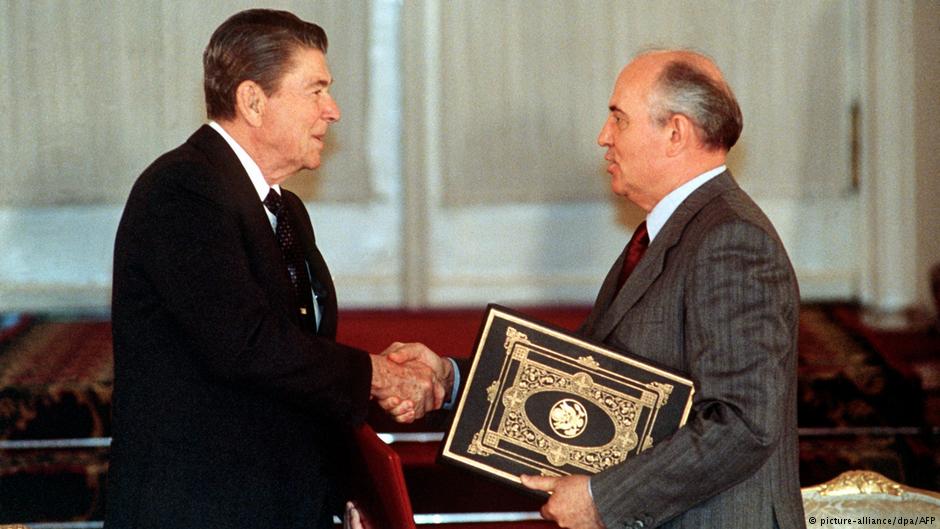
By David Krieger December 4, 2018 It would be a mistake of significant proportions for the U.S. to unilaterally withdraw from the Intermediate-range Nuclear Forces (INF) Treaty. It would end an important arms limitation treaty, one that eliminated a whole category of nuclear-armed missiles with a range from 500 km to 5,500 km. The treaty eliminated 846 U.S. nuclear missiles and 1,846 Soviet nuclear missiles, for a combined total of 2,692 nuclear missiles. President Reagan and Soviet leader Mikhail Gorbachev signed the treaty in 1987. It was an agreement that followed their realization, “A nuclear war cannot be won, and must never be fought.” Fast forward to President Trump and his national security advisor, John Bolton announcing their intention to jettison the treaty that ended the Cold War; took Europe out of the cross-hairs of nuclear war; and allowed for major reductions in nuclear arms. After the signing of the...
Saudi-og-trump
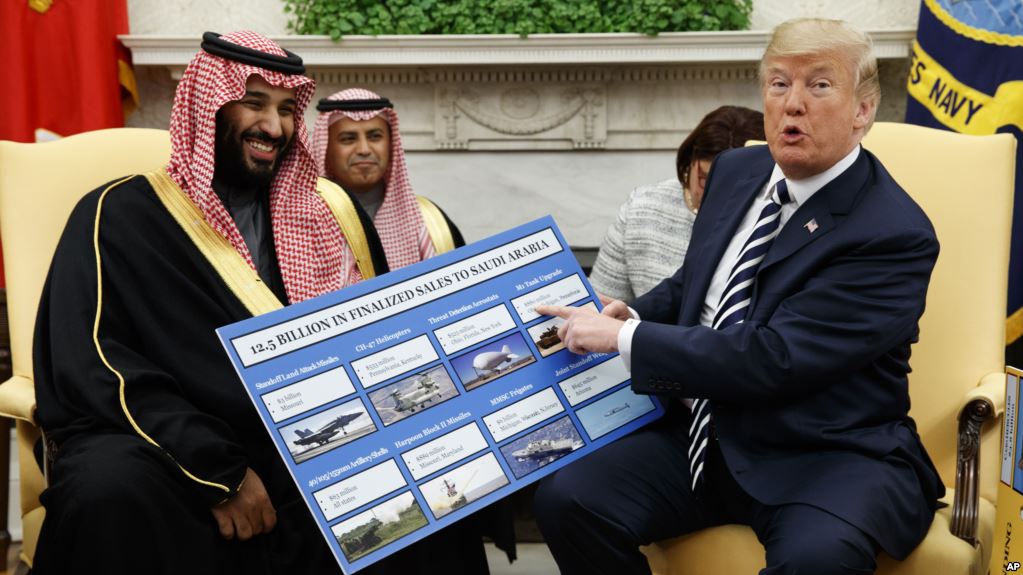
Photo: March 20, 2018. President Donald Trump and Saudi Crown Prince Mohammed bin Salman in the White House in Washington. (Photo credit: voanews.com).   By Emile Nakhleh* November 30, 2018 The Middle East, like the rest of the world, is a “very dangerous place!” according to President Trump. The Saudis, with America’s tacit help, made it so. President Trump’s bizarre and strange recent statement giving Saudi Crown Prince Mohammed bin Salman (MbS) a pass on his involvement in journalist Jamal Khashoggi’s murder raises a number of serious issues that Trump cavalierly dismisses or doesn’t know about in the first place. Beyond the half-truths and the lame rationale he has offered in defense of MbS, the president is in fact undermining America’s long-term interests in the region and putting the lives of American citizens – civilians, diplomats, and military – in that part of the world at risk. Originally published at lobelog.com To...
ChatGPT Image 9 jun 2026, 11_11_33
  How can Saudi Arabia be brought low? If the King won’t remove from power his 33 old son, Prince Mohammad bin Salman, there may be no alternative but to do battle (non-violently) with its regime. There seems to be no doubt that it was bin Salman who gave the order to murder Saudi Arabia’s dissident journalist, Jamal Khashoggi. This is not the only reason to take up (non-violent) arms against Saudi Arabia. Others are its massive buying of Western military hardware. Another is its war in Yemen where it has killed tens of thousands of civilians. Another is that it still follows the intolerant strictures of the Wahabi sect of Islam. In 2015 the German vice-chancellor, Sigmar Gabriel, publicly accused Saudi Arabia of financing Islamic extremism in the West and warned that it must stop. He said that the Saudi regime was funding extremist mosques and communities that pose...
000_1A55LN
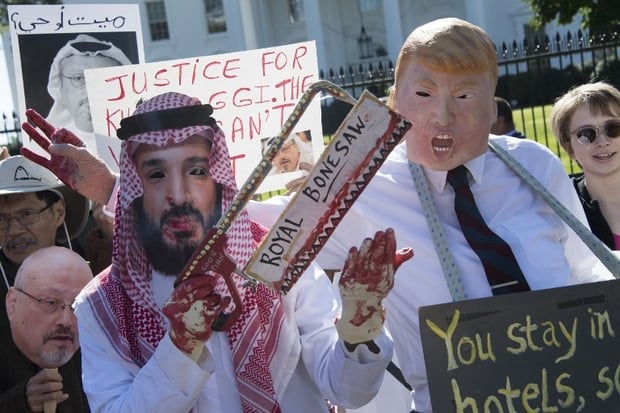
Photo: Demonstrators dressed as Saudi Crown Prince Mohammed bin Salman and US President Donald Trump protest outside the White House in Washington on 19 October 2018, demanding justice for missing Saudi journalist Jamal Khashoggi (AFP) (Photo credit: middleeasteye.net).   Tehran has repeatedly delivered on its promises, while Washington has fallen short and backed Riyadh’s disastrous regional adventures. November 22, 2018   By Seyed Hossein Mousavian In a recent op-ed in The New York Times, Thomas Friedman criticised former US President Barack Obama’s bet on Iran and President Donald Trump’s bet on Saudi Arabia, noting that both countries responded with their worst impulses. Friedman argues that the Iran nuclear deal was a bet worth making, but like many critics of the deal, he claims that it enabled Iran’s overreach in four Arab capitals: Baghdad, Damascus, Sanaa and Beirut. I believe he is wrong. In the Iran-US wrangling over the past three decades, Tehran...
TV
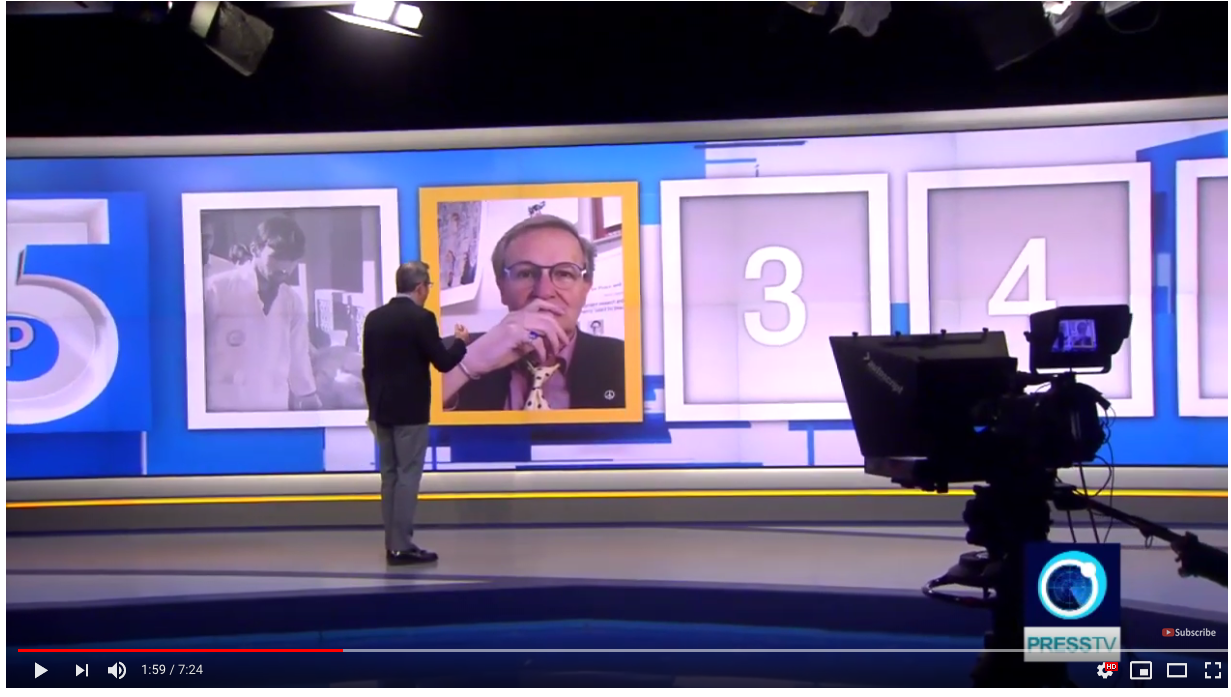
Iran’s PressTV today asked me to comment on an official Turkish comment on President Trumps statement concerning the Saudi Arabian murder of Mr. Khashoggi. That gave me the opportunity to say a bit about the relationsship between these two countries, the two largest military powers in NATO – and what that may mean. Furthermore, I was asked to say a few words about whether or not the world situation can become better. In that part I speak about the net destructive role of today’s United States of America and what we may be facing the next few years. If you are busy, my participation begins about 1:35 min into the clip.      
GarethPorter-e1540558470864
Eisenhower’s worst nightmare has come true, as defense mega-contractors climb into the cockpit to ensure we stay overextended   By Gareth Porter November 20, 2018 What President Dwight D. Eisenhower dubbed the “military-industrial complex” has been constantly evolving over the decades, adjusting to shifts in the economic and political system as well as international events. The result today is a “permanent-war complex,” which is now engaged in conflicts in at least eight countries across the globe, none of which are intended to be temporary. This new complex has justified its enhanced power and control over the country’s resources primarily by citing threats to U.S. security posed by Islamic terrorists. But like the old military-industrial complex, it is really rooted in the evolving relationship between the national security institutions themselves and the private arms contractors allied with them. Originally published at theamericanconservative.com The first phase of this transformation was a far-reaching privatization...
Hamid-Dabashi1-1
  There is a widely accepted idea among some Americans that Trump does not reflect American values. They are wrong   By Hamid Dabashi In an erudite and timely piece for the New York Times, published just a few days before the midterm elections in early November 2018, my distinguished Columbia University colleague Andrew Delbanco wrote a poignant essay about “The Long Struggle for America’s Soul.” In this learned piece, Professor Delbanco writes passionately about the long US history of human suffering that had come before the cruel behaviours and policies of the democratically elected President Donald Trump, focusing specifically on slavery. “Even free black people in the North …” we learn in this piece, “found their lives infused with terror of being seized and deported on the pretext that they had once belonged to someone in the South. The Fugitive Slave Act forced them to dread every footstep on the...
Categories

Year

Author / Contributor

Region