Theories and concepts

Category

Year

Author / Contributor

Region

Sort by

Showing 1-10 of 214 stories

RichardFalk20141
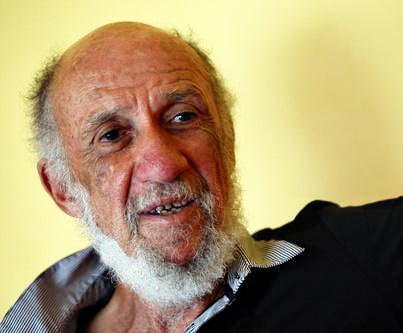
Prefatory Note The text below is drawn from a talk given at the Spring Festival of the Arts in Beirut, Lebanon on 15 June 2017. Comments welcome. How can we understand the present unfolding world order, with special reference to its relevance for developments in the Middle East? In my view a fundamental reversal of political expectations has taken place that calls for a new assessment of what is going on, and where the region and the world seem to be heading. Twenty-five years ago there were three widely held beliefs about future trends on a global level: the assured preeminence of the United States; the continuing globalization of the world economy; and the expanding democratization of national governance arrangements. It was also assumed that these trends were more or less descriptive of regional realities, including the Middle East. Each of these trends that seemed so descriptive 25 years ago...
RichardFalk20141
By Richard Falk* and David Krieger** TFF PressInfo # 420 Prefatory NoteThis jointly authored essay was initially published in The Hill on May 30, 2017 under the title, “Averting the Ticking Time Bomb of Nukes in North Korea.” We did not choose such a title that is doubly misleading: our contention is not that North Korea is the core of the problem, but rather the retention of nuclear weapons by all of the states pose both crises in the context of counter-proliferation geopolitics and with respect to the possession, deployment, and development of the weaponry itself; a second objection is with the title given the piece by editors at The Hill. While acknowledging the practice of media outlets to decide on titles without seeking prior approval from authors, this title is particularly objectionable. The term ‘nukes’ gives an almost friendly shorthand to these most horrific of weapons, and strikes a...
ChatGPT Image 9 jun 2026, 11_11_33
Frederick the Great of Prussia was a friend of Voltaire and enjoyed ribald evenings with the philosopher discussing the intricacies of life’s dos and don’ts. Before becoming king he was persuaded by Voltaire to become a pacifist. Copyright: Jonathan Power.
ObergPhoto2cmB-W-3
There should be a lower level to the statements by a US Secretary of Defence. There should be a debunking of the unethical behaviour that repeatedly state that there is only a political solution to Syria and continue to use only violence. There should be a discussion about international law here. There should be a discussion of what is morally defensible in this case, even assuming for the sake of argument that President al-Assad is the worst guy on earth. Why isn’t there – after so many years and so much human suffering and destruction. We need a very different discourse about Syria – ASAP.
ObergPhoto2cmB-W-3
Last night “The Debate” on PressTV was devoted to the future of European-US relations in the wake of the NATO Summit, President Trump’s words and omissions and the – historic – words, in particular, of Chancellor Angela Merkel immediately after. Undoubtedly, we are at a turning point in these relations in general and for the NATO alliance in particular. To discuss these issues – past, present and future perspectives – were Jim Walsh, senior research associate at MIT’s Security Studies Program, Masschusetts, and Jan Oberg, director of TFF, Lund. Thanks to PressTV’s excellently structured program and interviewer we touched upon a series of aspects and dimensions around which we found both agreements and slight disagreements – all in a sober tone fit for public education and personal reflection. We hope this debate will stimulate your own thoughts about the future of war, security and peace. We’d be grateful for your...
ObergPhoto2cmB-W-3
This is TFF Live on Facebook on the occasion of NATO’s Summit in Brussels on May 25, 2017. We use TFF Live on Facebook because it is handy, personal and interactive and because such live broadcasts have a larger organic spread that texts, images, links and even YouTube videos. And we want to make use of the technological developments as they help TFF reach out to ever more. I feel very strongly about the harmful modes of operation of this US$ 900 billion giant element of the global Military-Industrial-Media-Academic Complex (MIMAC) and shall therefore be most grateful if you would spread it. This is the url of it. Thanks!
ObergPhoto2cmB-W-3
Part A here The role – again – of marketing companies in selling wars Few wars have been so thoroughly media-managed and marketing-loaded as that on Syria. No wonder arms deals are too – otherwise citizens around the world would protest loudly that their tax money is spent on destruction and more destruction and all the promises of the past that this – or that – arms deal will increase security and peace in the world have turned out to be fake information – disinformation – and an integral part of what can only be termed “fearology” by governments against their own people. One must therefore welcome Russia Today’s excellent research by Alexey Yaroshevsky also on this dimension. This report is high-speed but listen carefully to it as it points out two US companies associated with this deal and US-Saudi relations with questionable image – a report that also highlight to some extent the...
ObergPhoto2cmB-W-3
The Secretary-General also said this new home’s “potential is enormous”. President Trump arrived on his first trip abroad to Saudi Arabia on May 19, 2017 and big things are supposed to happen, including Saudi Arabia presenting itself as a innovative, visionary leader of the region. His visit must be seen in the light of a number of events and trends, and in what follows we do like the military when it scans the horizon for enemies: we look for patterns – not the least Saudi Arabia’s “surprising new military goals” as Forbes’ Ellen Wald appropriately calls them. Or, as they say – we connect some dots that, invariable, Western mainstream media have no capacity and probably also no interest in connecting. This pattern consists of at least these events and long-term trends: 1. The broadening of NATO cooperation with Gulf countries – one may even see a Middle Eastern NATO branch emerge. 2. Saudi Arabia’s evident leadership...
johangaltung
A key slogan during the student revolt in Paris May 1968, soon 50 years ago, was Imagination au pouvoir! Bring imagination to power! We were there, walking with thousands from Champs-Élysées to Place Etoile where a stentorian voice commanded us to sit in small groups in the circles under the Arch to “discuss the situation”. So we did. France is now suffering from more imagination deficit than ever. To call Le Pen-Front National “extreme right” when the issue is for or against the EU is not helpful. Left-right was 20th century politics. Why not think bigger, beyond EU: for or against EURASIA, Russia-China are ready? Trade fills trains London-Beijing; a West-East axis, not the old colonial obsession with North-South (neo)colonialism. And how about both, EURASIAFRICA? They hang together geographically. Another word for imagination is creativity.
ChatGPT Image 9 jun 2026, 11_51_46
By Gunnar Westberg TFF Board member April 17, 2017 North Korea was utterly destroyed in the Korean war. The people of DPRK, the Democratic People’s Republic of Korea, are not allowed to forget that USA considered using nuclear weapons against them. There are frequent exercises when the population is rushed into underground shelters where they have to stay for days. The perceived, and maybe overblown, threats from the South are an effective way in raising support for the political leaders. The leaders of DPRK believe that their nuclear weapons will deter an attack from the south. Look at Khadafi in Libya, they say, he gave up his nukes and was attacked. Saddam Hussein had no nukes, he was attacked. We shall not give up the nuclear deterrent as long as we are under threat. In 1991 USA withdraw all nuclear weapons from South Korea. Subsequently North Korea and South Korea...
johangaltung
Very well known is post trauma stress disorder, PTSD; no doubt a very painful disorder experienced by many, most, maybe by all of us. Something went very wrong: a shock, violence, physical, verbal, by and to individuals, groups in society, societies, groups of societies. Not only by and to individuals: PTSD does not belong to psychology only. However, as Buddhist epistemology informs us: there is symmetry to the world. Anything can be seen from at least two angles: to “I walk down the street” add “the street moves toward me, ‘walks me up’”. Was Einstein inspired by Buddhism when he asked his famous question, “Does Zurich stop at this train?” Maybe not; his relativity, “moving relative to each other”, forced that question upon him anyhow. For Buddhism, however, this thinking goes far beyond movement, into concepts and discourses. What would be the opposite of trauma? Evidently something positive. For one,...
Categories

Year

Author / Contributor

Region