TFF Blog

The roll-down menus give you access to (almost) everything TFF Associates have produced since end of 2017 – their writings and videos, their media comment, broadcasts, essays and poetry.

The Treasures of their writings 2006-2012 can be found here.

And all that we published by them 2012-2017 is here.

Time to explore and see how world developments were processed over the years by one of the finest communities of genuine peace intellectuals and practitioners.
 

Category

Year

Author / Contributor

Region

Sort by

Showing 1-10 of 766 stories

1719099
  By Farhang Jahanpour September 26   Last year I wrote that Trump’s speech at the UN General Assembly was perhaps the worst speech ever delivered from that podium, certainly by a Western leader. This year he surpassed himself. Why is there no rule to say that someone who openly violates the basic norms of the United Nations continuously threatens other countries in contravention of the UN Charter’s Article 2.4 condemns internationalism and multilateralism advocates a narrow nationalism/patriotism (to make America great again) stops funding the UNESCO condemns the International Criminal Court (ICC) and threatens its officials withdraws from UNRWA withdraws from the Paris Climate Accord withdraws from the UN Human Rights Commission withdraws from the UN Security Council-based nuclear deal with Iran (JCPOA) etc. – can not automatically expect to remain a member of the UN world body that is in charge of those organisations and advocates those principles...
ChatGPT Image 9 jun 2026, 11_11_33
  Last year the office of the prosecutor of the International Criminal Court released a report which for the first time explicitly named US military forces and CIA operatives in secret prisons as possible war crimes culprits for the alleged use of torture and rape. Because the American soldiers were based in Afghanistan which is an ICC member the ICC has broad jurisdiction over crimes committed by combatants on Afghan soil. However, since the US is not a member, it can’t be prosecuted for alleged crimes committed in non-member ICC countries – for example in Iraq or Syria. It can also refuse for any of its citizens to be prosecuted on its own soil. According to Sarah Sanders, the White House press secretary, the Court had recently informed the US that it was “on the verge” of making a decision. Now John Bolton, President Donald Trump’s National Security Advisor, has...
Ina_portrait_1_800_cropped-kopia-300x270
September 21, 2018 – Peace Day  “Home To Gaia” – An illustrated storybook about finding peace and love inside to share it outside – Age 3 and up Can we work for peace in the world when being conflict-ridden inside? Are we collectively responsible for the conflicts and violence in the world? These are questions and conversations we’ve had many times with professionals in the peacebuilding field. Going for both/and as well as the link between inner and outer realities is a good start when we become aware that everything we are, think and act upon influences our whole environment and the collective consciousness. Political peace is not just about envisioning with the heart but also about putting forward reasonable possibilities to actually create harmony inside out. Fair chances to co-create together wonderful visions for all humankind may appear when we are secure about our own worthiness to be loved...
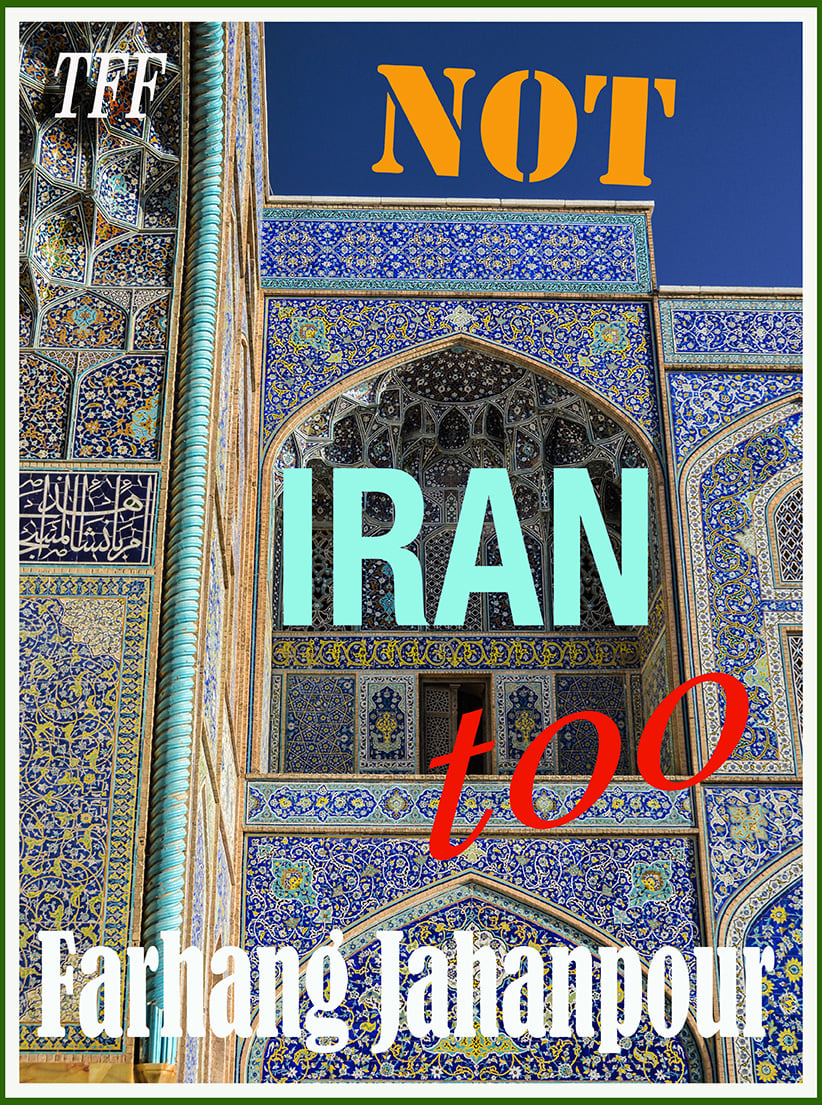
NotIranToo_FR_4_72dpi_ForNet
  Utterly destructive, self-defeating and spelling the end of the U.S. Empire   By Farhang Jahanpour September 22, 2018 In view of the macro-historical perspective on the Middle East-West relations and the concrete cases referred to in this series – Afghanistan, Iraq, Libya and Syria – it is clear that the demonization of Middle Eastern leaders as a prelude to invasion and their downfall has a long history. Such rulers are often used to serve the economic and political interests of various Western countries, in the same way that the Saudi Crown Prince Mohammed Bin Salman and the United Arab Emirates’ Crown Prince Mohammad Bin Zayed are being used at the moment to make them purchase tens of billions of dollars’ worth of US, British and French weapons. When they have outlived their usefulness, they will probably meet the same fate as that of Qadhafi or Saddam Hussein. However, despite...
NotIranToo_FR_4_72dpi_ForNet
    By Farhang Jahanpour September 20, 2018   1. An ally in warfare and torture Although the tragic events in Syria are too close to us to pass a definitive judgement about what has happened there and we need some perspective before we can make any definitive statements, nevertheless, some of the outlines of what led to that catastrophe are already clear for all to see. When the United States invaded Kuwait in order to dislodge the Iraqi forces that had occupied that country, Syria was one of the countries that joined the US-led coalition. Shortly after the invasion of Iraq in 2003, Syria was one of the main destinations for rendered suspects to be tortured in Syrian black sites. In the chilling words of former CIA agent Robert Baer in 2004: “If you want a serious interrogation, you send a prisoner to Jordan. If you want them to be tortured,...
NotIranToo_FR_4_72dpi_ForNet
    By Farhang Jahanpour September 20, 2018   On 20 March 2018, the former French President Nicolas Sarkozy was taken into police custody in Paris to be questioned over allegations that he received millions of Euros in illegal funding from Qadhafi for his presidential campaign. Investigators were examining claims that Qadhafi’s regime secretly gave Sarkozy €50 million overall for the 2007 campaign. Such a sum would be more than double the legal campaign funding limit and also violates French rules against foreign financing of elections. (See: “Former French President Nicolas Sarkozy in police custody over investigation into Gaddafi funding”, The Independent, 20 March 2018. Sarkozy entertained Qadhafi lavishly at the Elyse Palace, even allowing him to pitch his tent in the grounds of the palace. Yet, later on, Sarkozy was the cheerleader for the attack on Libya, which resulted in the brutal murder of Qadhafi and the destruction of...
ChatGPT Image 9 jun 2026, 11_11_33
  Zimbabwe messed up its land reform. Now South Africa has decided to give a great push to its slow moving land reform. We’ll see if it can avoid Zimbabwe’s mistakes. President Donald Trump tweeted that he’d asked his secretary of state to look into “farm seizures and expropriations and the large scale killing of white farmers” in South Africa. That sounds more like what happened in Zimbabwe 25 years ago than what is going to happen in South Africa today, albeit the killings were not on a “large-scale”. Shortly after independence I remember interviewing the minister of finance in Zimbabwe and asked him why the land reform that had been promised as an urgent priority was not underway. He fudged his answer. Later I learned why. White farmers’ land was confiscated and handed over to fellow ministers, top officials and well-to-do government supporters, not to the poor peasantry. Some...
NotIranToo_FR_4_72dpi_ForNet
    By Farhang Jahanpour September 18, 2018   1. Some omitted facts and perspectives Prior to the Iraq war, the only thing that one heard on most Western channels about that country was Saddam Hussein and his alleged chemical and nuclear weapons. Saddam Hussein became synonymous with Iraq. Nothing was said of Iraq’s long history as a cradle of civilisation or its people who, like people all over the world, simply wished to live in peace and pursue a normal life. The same was done to Afghanistan, Libya and Syria, when the Taliban, Mu’ammar Qadhafi and Bashar al-Assad were continuously demonised – while it was omitted and forgotten that the West had befriended, and in some cases supported, and sponsored those rulers in the past. Initially, Saddam Hussein was supported by the CIA to fight against Abd al-Karim Qasim who had toppled the Hashemite monarchy and had formed an...
NotIranToo_FR_4_72dpi_ForNet
    By Farhang Jahanpour September 18, 2018   1. The Carter Doctrine, Brzezinski and the Stinger missiles

 After the Soviet invasion of Afghanistan on Christmas Day 1979, President Jimmy Carter issued his Carter Declaration, stating that the Persian Gulf was part of America’s vital interest and America would defend it by all means possible. A policy proclaimed by President Jimmy Carter in his State of the Union Address on 23 January 1980 stressed that the United States would use military force, if necessary, to defend its “national interests” in the Persian Gulf. The statement that came to be known as the “Carter Doctrine” concluded: “Let our position be absolutely clear: An attempt by any outside force to gain control of the Persian Gulf region will be regarded as an assault on the vital interests of the United States of America, and such an assault will be repelled by any...
NotIranToo_FR_4_72dpi_ForNet
    By Farhang Jahanpour September 18, 2018   1. Israel: The policy’s background As a small country with a tiny population surrounded by large and hostile countries, Israel’s policy ever since its establishment has been to rely on some external forces, the British Empire at the beginning of its creation and later on the American superpower to protect herself. It has also involved the creation of a nuclear arsenal in contravention of the Non-Proliferation Treaty (the NPT) and by means of lies and deception, while being the most vociferous opponent of any other country in the Middle East to even have a peaceful nuclear programme for producing energy. Another aspect of this policy of self-preservation has been to divide and partition the neighbouring countries so that they would lose their advantage of larger size and greater population vis-à-vis Israel. As early as 1982, the Israeli scholar Oded Yinon authored...
NotIranToo_FR_4_72dpi_ForNet
    By Farhang Jahanpour September 17, 2018   1. The western demonization of Islam We have often heard about Osama bin-Laden’s outrageous remarks about the West (if not Christianity), but we often seem to ignore the remarks made by some influential writers, thinkers and politicians in the West about Islam, which are as harsh and outrageous to Muslims as the remarks of Muslim fanatics seem to us. Here are just a few examples: Influential columnist Ann Coulter wrote: “We should invade [Muslim] countries, kill their leaders and convert them to Christianity.” See National Review Online, September 13, 2001. It seems that the NRO no longer has her column on its website but here is how the column made NRO drop her as a columnist). And the quotation inside this article. And here). Senator Clarence Saxby Chambliss, former chairman of the House Subcommittee on Terrorism and Homeland security, in a...
NotIranToo_FR_4_72dpi_ForNet
    By Farhang Jahanpour September 17, 2018 1. Islam as the new post-Cold War enemy The journalistic attitudes towards Islam that we referred to above have their counterparts in the academic writing on the Middle East and Islam. In recent years there have been many academic writings portraying Islam as the new enemy of the West. After the end of the Cold War, the increasing intensity of this historical antagonism has again emerged by portraying Muslims as inherently different from Western people. Almost immediately after the collapse of the Soviet Union in 1991, many scholars started writing about a new era of hostility between Islam and the West, and Muslims have assumed a prominence on the security agenda that they have not held since before the establishment of the modern European states system. For instance, Barry Buzan, Emeritus Professor of International Relations at the London School of Economics and...
Categories

Year

Author / Contributor

Region