security

Category

Year

Author / Contributor

Region

Sort by

Showing 1-10 of 306 stories

richardfalk
There is no more reliable guardian of entrenched conventional wisdom than The Economist. And so when its cover proclaims ‘the new world order,’ and removes any ambiguity from its intentions, by its portrayal of Putin as a shirtless tank commander with menacing features. No such iconography accompanied the last notable invocation of the phrase ‘new world order’ by George H. W. Bush in mobilizing support for a forcible response to the Iraqi invasion and annexation of Kuwait in 1990, the dirty work of Saddam Hussein.
johangaltung
Depends, of course, on the criteria. A state has an inside towards its citizens, and an outside toward the state system. Depends on domestic and foreign policy, in other words. That means it can fail in two ways, by not catering to its citizens and by not coming to terms with other states. Actually the two are closely related as often pointed out: a regime (running the state) may compensate for failure at home by victories abroad. And, conversely, compensate for failures abroad by taking good care of its citizens. And, success at home used to mobilize grateful citizens for patriotic wars abroad. America, or the USA rather, at present does not take good care of its citizens. A recent study cited in Nation of Change, More Evidence That Half of America Is in or Near Poverty, 24 March 2014, by Paul Buchheit: The Center on Budget and Policy Priorities...
richardfalk
I have been struck by the unhelpfulness of ideology to my own efforts to think through the complexities of recommended or preferred policy in relation to Syria, and more recently, the Ukraine. There is no obvious posture to be struck by referencing a ‘left’ or ‘right’ identity. A convincing policy proposal depends on sensitivity to context and the particulars of the conflict. To insist that the left/right distinction obscures more than it reveals is not the end of the story. To contend that ideology is unhelpful as a guide for action is not the same as saying that it is irrelevant to the public debate. In the American context, to be on the left generally implies an anti-interventionist stance, while being on the right is usually associated with being pro-interventionist. Yet, these first approximations can be misleading, even ideologically. Liberals, who are deliberately and consigned to the left by the...
MC-cover-final-684x1024
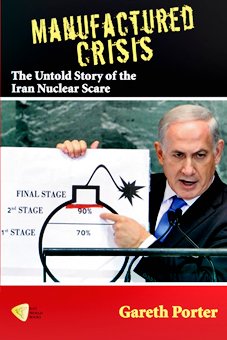
By Farhang Jahanpour As Iran and the world powers resume nuclear talks in Vienna with the hope of reaching a comprehensive agreement over Iran’s nuclear program by mid-July, the Israelis and their lobbyists in Washington are intensifying their efforts to scuttle the talks. In addition to all the efforts in the US Congress to impose additional sanctions on Iran, thus bringing the talks to a premature end, there are indications that Israel and her friends are continuing with various acts of sabotage against Iranian nuclear facilities. In 2010, the so-called Stuxnet virus temporarily disrupted the operation of thousands of Iranian centrifuges. At least five Iranian nuclear scientists have been assassinated. Iran has also said that it has discovered tiny timed explosives planted on centrifuges but has disabled them before they could go off. On Monday 17 March 2014, Iran said that an alleged attempt to sabotage one of its nuclear...
richardfalk
There is a new mood of moral desperation associated with the ongoing strife in Syria that has resulted in at least 135,000 deaths, 9.3 millions Syrians displaced, countless atrocities, Palestinian refugee communities attacked, blockaded, and dispersed, and urban sieges designed to starve civilians perceived to be hostile. As the second round of negotiations in Geneva-2 ended as fruitlessly as the earlier round, there is a sense that diplomacy is a performance ritual without any serious intent to engage in conflict-resolving negotiations. Expectations couldn’t be lower for the as yet unscheduled, but still planned, third round of this Geneva-2 process. The Damascus regime wants an end to armed opposition, while the insurgency insists upon setting up a transition process that is independently administered and committed to the election of a new political leadership. The gap between the parties is too big, and getting bigger, especially as the Damascus government correctly perceives...
johangaltung
Contemporary reality, but what is real? Two of the above were killed under Obama’s watch; Osama executed by Obama extra-judicially, in cold blood, the other two by proxies (Chávez: we do not quite know). Two of them were dictators; Osama had no state, Chávez had, but won elections apparently not more rigged than Florida 2004, Ohio 2008. What were the problems, how might they have been solved?
richardfalk
[Prefatory Note: this text is based on my presentation at the conference listed below, which brought together a wide array of scholars, media people, and persons concerned with the future of Palestine] Second Annual Conference of Research Centers in the Arab World, Doha, Qatar, 7-9 December 2013, THE PALESTINIAN CAUSE AND THE FUTURE OF THE PALESTINIAN NATIONAL MOVEMENT. A preliminary remark: A sacrifical peace It is a welcome development that the theme of such a major conference as this one should have as its theme ‘the future of the Palestinian movement,’ so well articulated in the opening address by Azmi Bishara. It is often overlooked that as early as 1988, and possibly earlier, the unified Palestinian leadership has decisively opted for what I would call a ‘sacrificial’ peace. By sacrificial I mean an acceptance of peace and normalization with Israel that is premised upon the relinquishment of significant Palestinian rights...
farhangjahanpour
By Farhang Jahanpour Despite strong opposition by the White House and the States Department and despite the pleadings of some of the most prominent bipartisan US foreign policy luminaries who have warned that additional sanctions would jeopardize ongoing diplomatic efforts, (1) many US senators are pushing forward with a new resolution that is supported by the same neocons that brought us the Iraq war. (2) It seems that the majority of Congressmen and Senators know very little about Iranian history or what is going on in Iran at present.
richardfalk
In a little noted initiative the General Assembly on November 26, 2013 voted to proclaim 2014 the International Year of Solidarity with the Palestinian People. The UN Committee on the Exercise of the Inalienable Rights of the Palestinian People was requested to organize relevant activities in cooperation with governments, the UN system, intergovernmental organizations, and significantly, civil society. The vote was 110-7, with 56 abstentions, which is more or less reflective of the sentiments now present in international society. Among the seven opponents of the initiative, in addition to Israel, were unsurprisingly its three staunchest supporters, each once a British colony: the United States, Canada, Australia, with the addition of such international heavyweight states as Micronesia, Palau, and the Marshall Islands. Europe and assorted states around the world were among the 56 abstentions, with virtually the entire non-West solidly behind the idea of highlighting solidarity with the Palestinian people in...

Imagen-thumbnail-The-Transnational-1
An interview with the Iranian Fars News Agency of December 8, 2013 in which the TFF Associate pulls the Western media image of what happens in Syria – and why – apart. She also tells you why she feels a bit more optimistic than most and how foreign fighters must leave Syria to enable the Syrians to pursue an all-inclusive process towards a settlement.
richardfalk
My friend and former collaborator, Howard Friel, has written an intriguing book contrasting the worldviews and polemical styles of two Jewish American intellectuals with world class reputations, Noam Chomsky and Alan Dershowitz (Friel, Chomsky and Dershowitz: On Endless War and the End of Civil Liberties, Olive Branch Press, 2014). The book is much more than a comparison of two influential voices, one critical the other apologetic, with respect to the Israel/Palestine struggle and the subordination of private liberties to the purveyors of state-led security at home and abroad. Friel convincingly favors Chomsky’s approach both with respect to the substance of their fundamental disagreements and in relation to sharply contrasting styles of argument. Chomsky is depicted, accurately I believe, as someone consistently dedicated to evidenced based reasoning reinforced by an abiding respect for the relevance and authority of international law and morality. Chomsky has also been a tireless opponent of American...
johangaltung
Washington-DC In the shorter run, till around 2020, not good; in the longer run, from 2030, not bad at all. Short-run possibilities: Politically: post-democracy, Congress more accountable to business than to people for election; the top executive power possibly sliding from the president to the supreme court justice, with money steering politics, protected as “freedom of expression”; Snowden-type revelations coming from once a year to once a month, once a week. Economically: runaway inflation; accelerating inequality; deep misery affecting one third to a half of the population; depression. Militarily: coup by evangelical fundamentalists to “give us our country back”/”give our, empire, our world”; using war to restore the economy; a temporary strong hand “to get things going”. Culturally: declining faith in a covenant with a universal God as the Exceptional Chosen People; anomie, absence of compelling norms. Socially: atomie, lacking social tissue, leading to collective and individual depression; increase in...
Categories

Year

Author / Contributor

Region