Saudi Arabia and Gulf States

Category

Year

Author / Contributor

Region

Sort by

Showing 1-10 of 25 stories

Saudi-og-trump
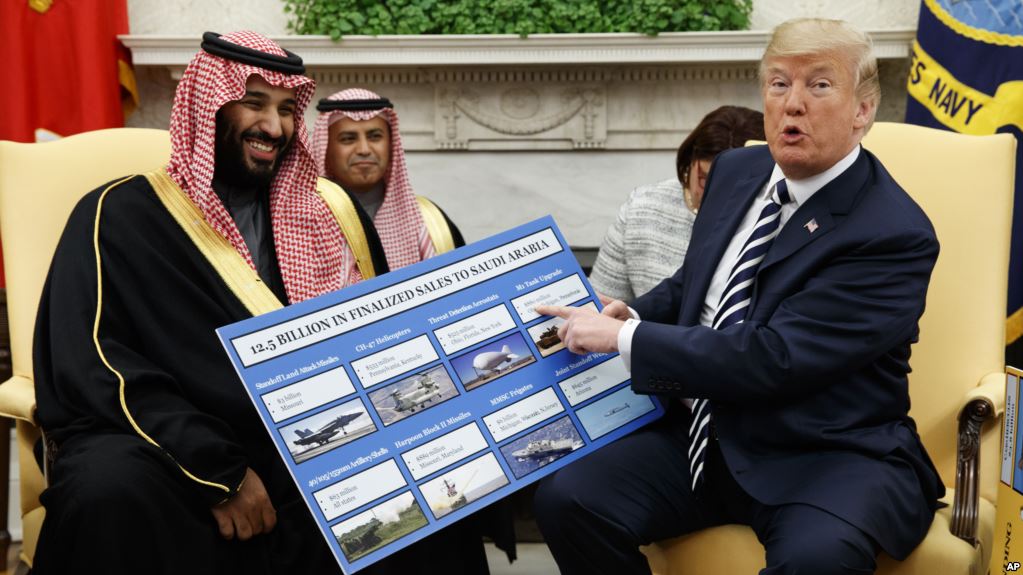
Photo: March 20, 2018. President Donald Trump and Saudi Crown Prince Mohammed bin Salman in the White House in Washington. (Photo credit: voanews.com).   By Emile Nakhleh* November 30, 2018 The Middle East, like the rest of the world, is a “very dangerous place!” according to President Trump. The Saudis, with America’s tacit help, made it so. President Trump’s bizarre and strange recent statement giving Saudi Crown Prince Mohammed bin Salman (MbS) a pass on his involvement in journalist Jamal Khashoggi’s murder raises a number of serious issues that Trump cavalierly dismisses or doesn’t know about in the first place. Beyond the half-truths and the lame rationale he has offered in defense of MbS, the president is in fact undermining America’s long-term interests in the region and putting the lives of American citizens – civilians, diplomats, and military – in that part of the world at risk. Originally published at lobelog.com To...
ChatGPT Image 9 jun 2026, 11_11_33
  How can Saudi Arabia be brought low? If the King won’t remove from power his 33 old son, Prince Mohammad bin Salman, there may be no alternative but to do battle (non-violently) with its regime. There seems to be no doubt that it was bin Salman who gave the order to murder Saudi Arabia’s dissident journalist, Jamal Khashoggi. This is not the only reason to take up (non-violent) arms against Saudi Arabia. Others are its massive buying of Western military hardware. Another is its war in Yemen where it has killed tens of thousands of civilians. Another is that it still follows the intolerant strictures of the Wahabi sect of Islam. In 2015 the German vice-chancellor, Sigmar Gabriel, publicly accused Saudi Arabia of financing Islamic extremism in the West and warned that it must stop. He said that the Saudi regime was funding extremist mosques and communities that pose...
1719099
  By Farhang Jahanpour September 26   Last year I wrote that Trump’s speech at the UN General Assembly was perhaps the worst speech ever delivered from that podium, certainly by a Western leader. This year he surpassed himself. Why is there no rule to say that someone who openly violates the basic norms of the United Nations continuously threatens other countries in contravention of the UN Charter’s Article 2.4 condemns internationalism and multilateralism advocates a narrow nationalism/patriotism (to make America great again) stops funding the UNESCO condemns the International Criminal Court (ICC) and threatens its officials withdraws from UNRWA withdraws from the Paris Climate Accord withdraws from the UN Human Rights Commission withdraws from the UN Security Council-based nuclear deal with Iran (JCPOA) etc. – can not automatically expect to remain a member of the UN world body that is in charge of those organisations and advocates those principles...
ChatGPT Image 9 jun 2026, 11_11_33
The evidence that has come out from the UN and NGOs makes clear, without any reservation or ambiguity, that on August 9th dozens of school children on a bus in Yemen were killed by a Saudi Arabian air-strike, and that American supplied weapons had been used, and probably British too. Criticism of Saudi Arabia and its partner in crime, the United Arab Republic, has been increasing over the last year. The US is not a partner in the actual fighting but, started by President Barack Obama and continued on a larger scale by President Donald Trump, the US doesn’t only provide weapons it has provided intelligence, warplane refueling and guidance technology for missiles and bombs. This is reminiscent of when the US supported Saddam Hussein’s war against Iran, some years before Saddam himself became the West’s opponent. Although Saddam used a weapon of mass destruction – chemicals – the US,...
786be20f99b4493b9782507b9ca84abf_18
  – all about this agreement and its text here). Noteworthy is that the nuclear deal is incorporated into international law by UN Security Council Resolution 2231, even though the U.S. already at that point stated – as an exceptionalist state – that it did not consider the deal binding for it. With the exception of Germany, the deal was negotiated – cynically, of course – by countries which have themselves thousands of nuclear weapons. It never mentioned the only state in the region that possesses them, against international law in the form of UN resolutions and, additionally, has not signed the Non-Proliferation Treaty (NPT). That state is Israel whose nuclear weapons Western politicians and their loyal, politically correct media omit mention of – as systematically and uniformly as if orchestrated by an invisible hand from above. Back in 2014-15, many of us stated that the alternative to a negotiated...
Logo2018-Green-1
Lund, Sweden – April 14, 2018 Statement by Associates of TFF – The Transnational Foundation for Peace and Future Research Summary The US-British-French attack is a clear and indisputable case of aggression according to international law, and to the UN Charter in particular. And it lacks, like many unilateral wars before it, a UN Security Council mandate. It comes as a consequence of interventionist impulses and militarism and lacks every element of a comprehensive conflict analysis, or diagnosis. Even if one assumes that the government and president of Syria are the main/only culprits and the worst violaters of human rights on earth, the way that the Syrian conflict has been handled by Western governments over the past seven years has been outrageously wrong and counterproductive. It’s been deliberate conflict-mismanagement combined with peace-prevention. Conspicuously, this aggression on Syria takes place before there is a shred of evidence of what chemical weapons...
Russia-Saudi-meet-630x378
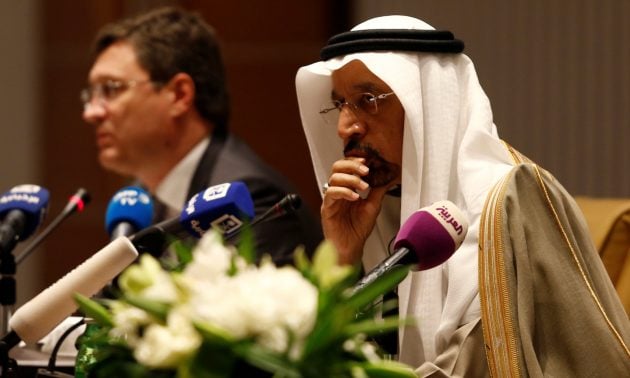
Hardly 10 months after honoring the visiting US president, the Saudis are open to a Russian-Chinese consortium investing in the upcoming Aramco IPO*   By M. K. Bhadrakumar February 16, 2018 In the slideshow that is Middle Eastern politics, the series of still images seldom add up to make an enduring narrative. And the probability is high that when an indelible image appears, it might go unnoticed – such as Russia and Saudi Arabia wrapping up huge energy deals on Wednesday underscoring a new narrative in regional and international security. Originally published by Asia Times here The ebb and flow of events in Syria – Turkey’s campaign in Afrin and its threat to administer an “Ottoman slap” to the United States, and the shooting down of an Israeli F-16 jet – hogged the attention. But something of far greater importance was unfolding in Riyadh, as Saudi and Russian officials met...
mousavian
  By Seyed Hossein Mousavian The conflict between Saudi Arabia and Iran marks a deepening division between regional powers and international hegemons in the Persian Gulf. The Saudis and Iranians have to learn to cooperate or risk further confrontation.   Via thecairoreview.com New regional and international coalitions are forming with respect to the Middle East and Persian Gulf. An alliance of Donald Trump-led America, Israel, Saudi Arabia, and the United Arab Emirates faces a new coalition of Iran, Russia, Iraq, Bashar Al-Assad controlled-Syria, Hezbollah and grassroots regional forces such as the Popular Mobilization Forces in Iraq and the Syrian Defense Forces. The geopolitical competition between these opposing sides can more specifically be described as between the regional states seeking U.S. security guarantees and the creation and consolidation of a U.S.-led regional security order, and those states – such as Iran, Russia, and Syria – who despite their interests not wholly...
C-Span
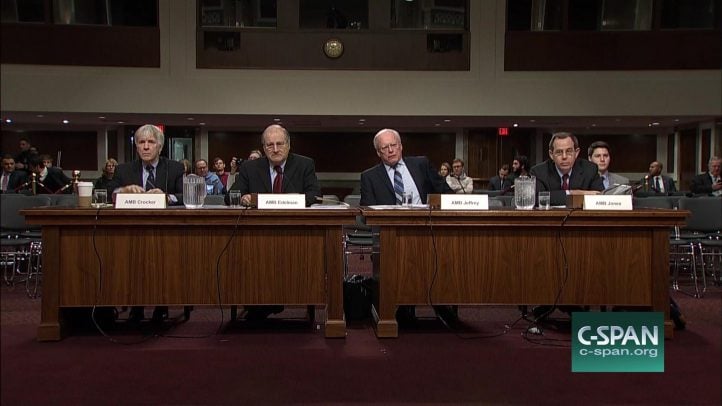
The U.S. foreign policy elite still wants the Middle East for its oil and its strategic location. By Edward Hunt, January 19, 2018. Originally published by Foreign Policy In Focus here • In recent testimony before the Senate Armed Services Committee, four former U.S. diplomats provided remarkably candid commentary on recent U.S. involvement in the Middle East, revealing a number of the most closely guarded secrets of U.S. diplomacy. The four former diplomats emphasized the importance of the region’s oil, spoke critically about the weaknesses of U.S. strategy, made a number of crude comments about U.S. partners, displayed little concern about ongoing violence, and called for more “discipline” throughout the region. One of the former diplomats, James Jeffrey, criticized the Obama administration for withdrawing U.S. forces from Iraq in 2011 rather than going through with a secret deal to maintain a secret network of military bases in the country. Even...
JuanCole
By Juan Cole   Informed Comment, January 7, 2018 Michael Wolff in his new book Fire and Fury makes a number of allegations about Trump’s role in the Gulf crisis that, if true, help explain the mess in that part of the Middle East. Wolff asserts that Trump and his then inner circle – Jared Kushner, Steve Bannon, Gary Cohn, Hope Hicks, etc. – hoped the mid-May foreign policy jaunt would change the conversation in Washington, DC, about Trump’s having fired FBI director James Comey and about the investigation of special counsel Robert Mueller. So the first thing to say is that the whole trip and the announcements around it were for the purpose of hype. Originally published at Juan Cole’s blog, Informed Comment In ancient Greece, Bion of Borysthenes observed that “Boys throw stones at frogs in sport, but the frogs die in earnest.” Trump and his cronies glibly...

3333-14
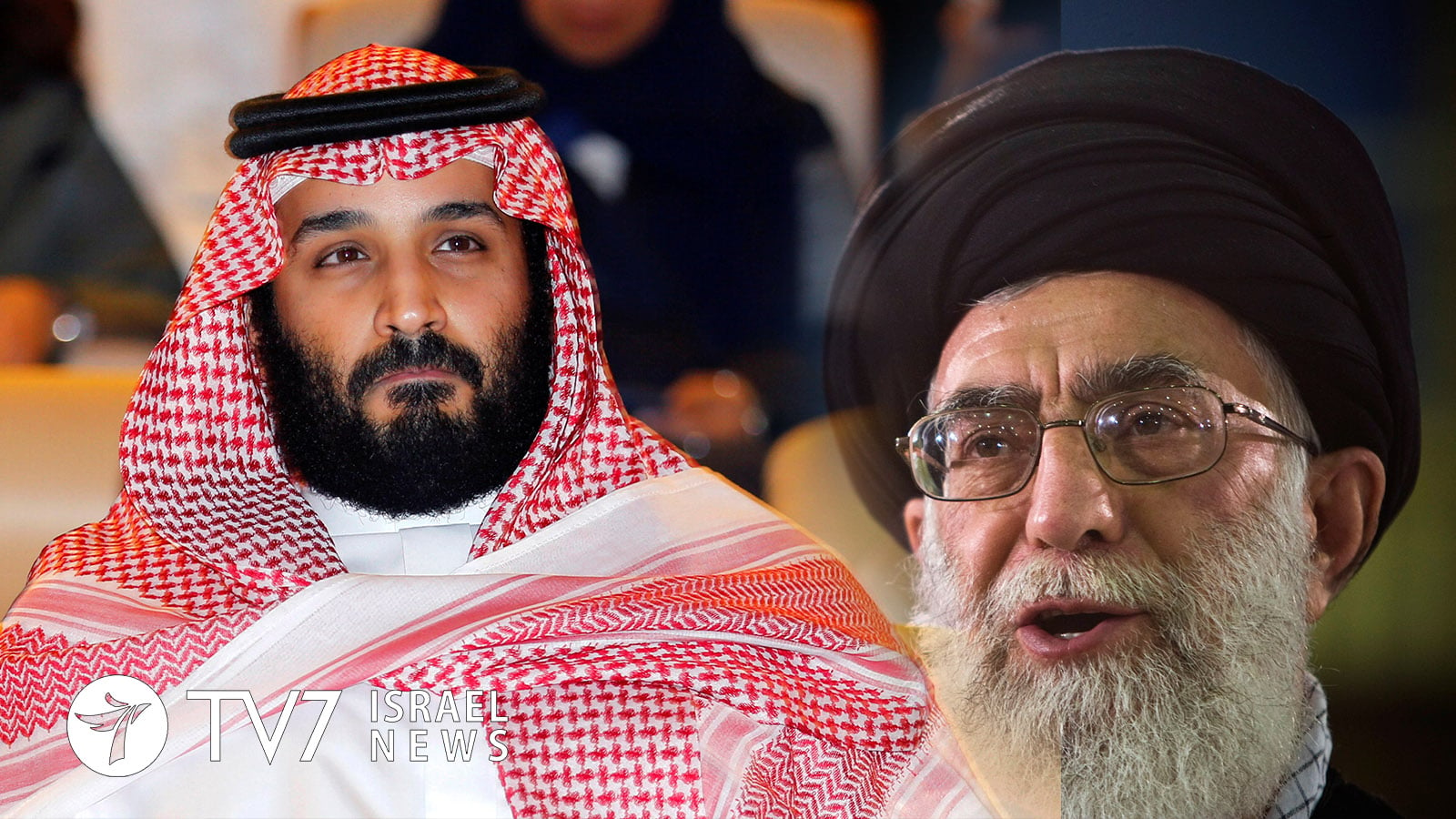
By Seyed Hossein Mousavian • Saudi Crown Prince Mohammad bin Salman (MBS) is steadily consolidating power in Riyadh and positioning himself to become the most powerful ruler in Saudi history. His rise has been accompanied with a ratcheting up of hostilities against Iran and even war rhetoric. As Saudi-Iran tensions increase, the lived experiences and leadership styles of the 78-year-old Iranian Supreme Leader Ayatollah Ali Khamenei and 32-year-old MBS will decide the future of peace and stability in the region. Via LobeLog Before Iran’s 1979 Islamic revolution, Ayatollah Khamenei was a political activist who opposed the dictatorship of the Shah and endured 15 years of prison, torture, and exile. He rose through the revolutionary ranks after the revolution and in 1981, was elected president. During the Iran-Iraq war (1980-1988)—which saw the United States and other global powers as well as regional Arab states support the aggressor Saddam Hussein—Ayatollah Khamenei played a key role in overseeing...
prince-bandar-2
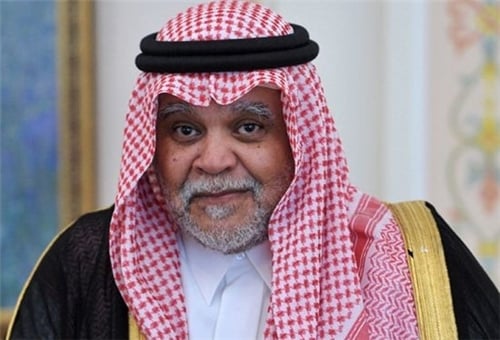
  Via lobelog.com November 28, 2017 By Emile Nakhleh • Saudi-Israeli relations, especially between their intelligence services, started several years back under the direction of Bandar bin Sultan, a former Saudi ambassador to Washington and a former director of the Saudi national security council. These relations, however, accelerated significantly during the P5+1 negotiations over the Iran nuclear deal, and especially since Muhammad bin Salman (MbS) became the de facto ruler of Saudi Arabia. Saudi Arabia and Israel joined forces in a vigorous lobbying campaign in Washington to thwart the nuclear deal, to no avail. Despite failing to derail it, they have since collaborated closely to undermine the agreement and demonise Iran. Their claims that Iran has violated the conditions imposed on it under the deal have not been recognised by international observers or the International Atomic Energy Agency (IAEA). With MbS’ dramatic rise to power, bellicose attitude towards Iran and more recently Hezbollah, along with the...
Categories

Year

Author / Contributor

Region