Russia international relations

Category

Year

Author / Contributor

Region

Sort by

Showing 1-10 of 190 stories

photo-rus-china
By Gordon M. Hahn January 30, 2020 The apparent overreaction by the U.S. to Iranian provocations represented by the assassination of Revolutionary Guards Corps Commander Qassem Soleiman is one of the stronger blows to hit one of the most important nails in the coffin of U.S.-Russian relations: the revival of Russian-Western geopolitical competition outside Russia’s immediate central Eurasian sphere of influence. At the same, time it is also one of the most important turning points in the formation of an anti-Western Eurasian axis that will shape the 21st century’s geopolitics. The outcome of the political struggle may well rest on Europe and whether or not it decides to stick to its American ally in the latter’s efforts to stave off the end of its unipolar hegemony through greater NATO and EU expansion or abandon at least the former project and positively contribute to the reordering of the international system in...
StreetGarbage_Orig_1000-72dpi
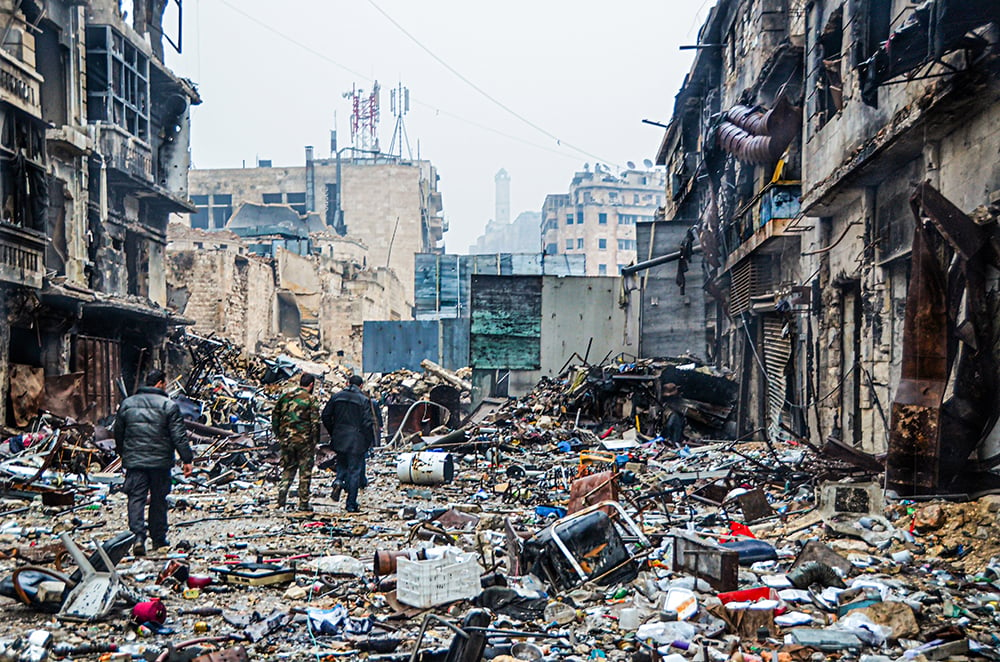
Photo – Eastern Aleppo, December 2016 – © Jan Oberg By Gordon M. Hahn January 17, 2020 If Western leaders are able to put aside the now worn-out cliches such as Russian Vladimir Putin ‘punching above his weight,’ ‘Trump handing Putin a victory on a silver plate’, not to mention ‘Trump as Putin agent’, there are serious lessons that they might still be able to draw from Putin’s looming victory in Syria.  Originally posted on Gordon M. Hahn’s personal blog on December 2, 2019 here First, the era in which the United States and/or the West (NATO) can dictate outcomes anywhere across the globe unilaterally has ended. Events in Syria are but the latest confirmation of this fact, but many in Washington and Brussels still do not see it. NATO expansion drove Russia into China’s arms, and the rest is history and the future.  Second, Washington and Brussels (NATO and...
ChatGPT Image 9 jun 2026, 11_11_33
The struggle for the Donbass region in the eastern and southern Ukraine goes on, seemingly never ending. It’s now six years since dissident militias threw off the yoke of the central government in Kiev and declared their de-facto independence. They were supported by Russian troops which at first president Vladimir Putin denied and then later admitted. It was the Russians who supplied the missile launcher that accidentally shot down a Malaysian Airlines passenger jet. Altogether 17,000 people, mostly civilians, have died in this conflict. Negotiations, brokered by Germany and France, have been held on and off for six years. In December the latest effort was held in Paris. The parameters of a settlement are easily put: in return for Donbass being granted a large amount of autonomy (it could be approximately the same as Scotland has today), Russian troops would withdraw and the militias disbanded. Nevertheless, the gap between the...
AleppoGirl-761x1024
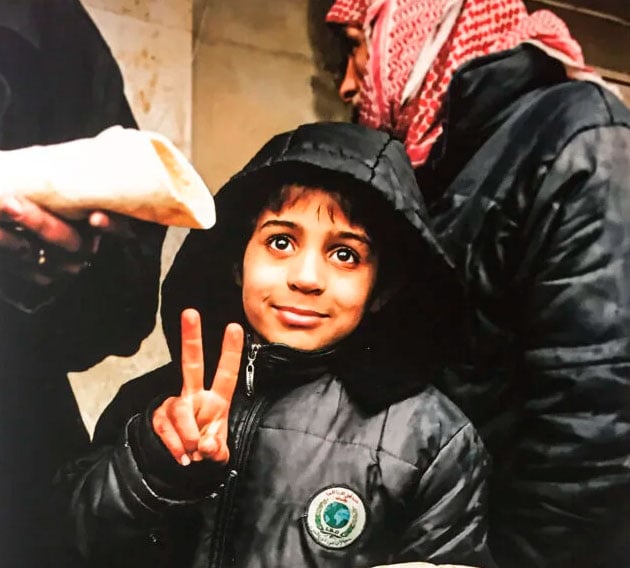
. On December 12, 2012, on the day, 4 years earlier, Western countries and allies – perversely calling themselves ‘Friends of Syria’ – carried through a regime change by statement and set up a Syrian National Council of people never elected by anyone in Syria and told the world that it was, from now on, the only ‘legitimate representative of the Syrian people!’ During the 4 years, Western, Saudi, Turkish and the Gulf States supported innumerable illegal, destructive and mainly foreign terrorist groups with the goal to undermine the legitimate Syrian government and destabilise the country – as had been recommended by US ambassador William Roebuck (1) in Damascus as far back as in 2006 (WikiLeaks documentation here). December 12, 2016, marked a fundamental turning point. Aleppo did not “fall to the dictator/butcher/mass murderer” aka President Bashar al-Assad – no, it was liberated and the occupation by terrorist groups such...
ChatGPT Image 9 jun 2026, 11_11_33
The Europeans have not done well in countering President Donald Trump’s onslaught on Iran. When Trump unilaterally decided that the US should withdraw from the 2015 Iran Nuclear Deal, which committed Iran to winding down its nuclear research in return for the West, Russia and China (the latter two were also part of the deal) lifting sanctions which were crippling the Iranian economy, the Europeans huffed and puffed and then did little. The UN membership considered the 2015 deal to be very fair. The Security Council gave it unanimous support. Indeed, the US is now in breech of international law by opting out. But if the Europeans had had the guts when President Donald Trump announced the US withdrawal they would have pushed for debate on this issue at the Security Council and got the US condemned, even punished. Unfortunately, Trump had the Europeans’ guts for braces. After shouting loudly...
changingmeconstell
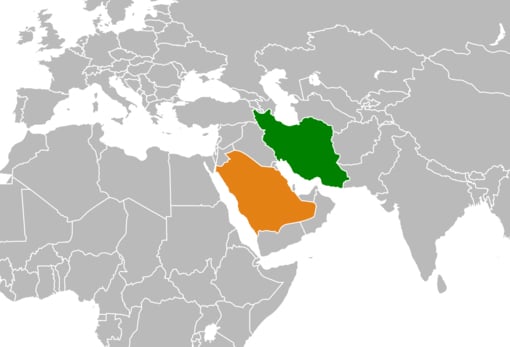
By Conn M. Hallinan November 27, 2019 The fallout from the September attack on Saudi Arabia’s Aramco oil facilities is continuing to reverberate throughout the Middle East, sidelining old enmities – sometimes for new ones – and re-drawing traditional alliances. While Turkey’s recent invasion of northern Syria is grabbing the headlines, the bigger story may be that major regional players are contemplating some historic re-alignments. Originally posted on Counterpunch on November 8, 2019, here After years of bitter rivalry, the Saudis and the Iranians are considering how they can dial down their mutual animosity. The formerly powerful Gulf Cooperation Council (GCC) of the Persian Gulf monarchs is atomizing because Saudi Arabia is losing its grip. And Washington’s former domination of the region appears to be in decline. Some of these developments are long-standing, pre-dating the cruise missile and drone assault that knocked out 50 per cent of Saudi Arabia’s oil...
ChatGPT Image 9 jun 2026, 11_11_33
Of all the present foes of America it is Iran which has consistently been over time the number one.  Since its Islamic Revolution in 1979 that overthrew the secular-minded Shah and supplanted him with a militant, sometimes warlike, Islamic theocracy, it has been America’s Great Satan. (But for Europe rather less so, although no country has broken ranks with Washington.) In the current edition of Foreign Affairs two professors, Daniel Benjamin and Steven Simon, write, “Imagine historians 100 years from now trying to decide which foreign power the US feared most in the decades from the late Cold War…They would see Russia first as an archenemy, then as a friend, and finally as a challenging nuisance. They would see China become a great power rival. North Korea would appear as sideshow. Only one country would be depicted as a persistent and implacable foe: Iran.” A couple of months ago it...
rsz_ussrnations
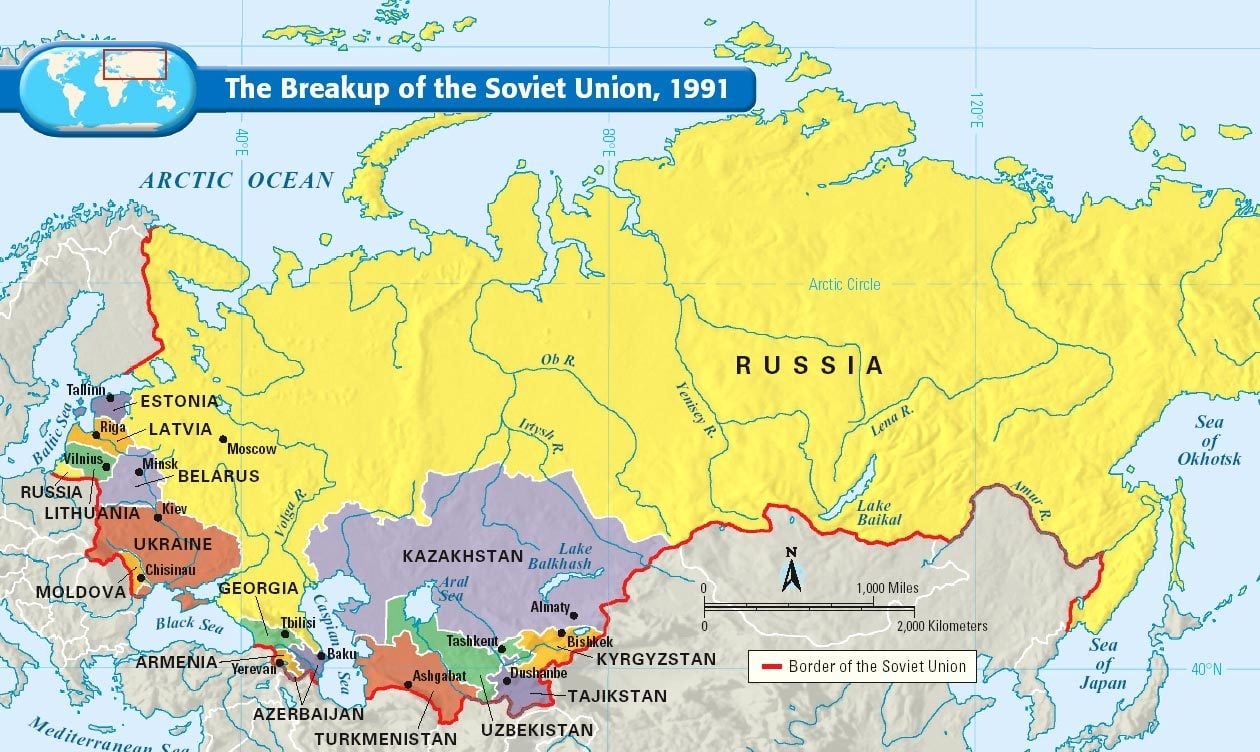
By Jan Oberg November 7, 2019 2019 Introduction The text below is 27 years old, written from 1992. It was the last chapter in a book edited by Jan Oberg, Nordic Security In the 1990s. Options In The Changing Europe (Pinter Publishers & TFF, London/Lund, 1992, 325 pages). In other words, it was written shortly after the euphoria/Europhoria created by the fall of the Berlin Wall on November 9, 1989, and the revolutionary changes in the Eastern system that ended with the dissolution of the Soviet Union on December 26, 1991. A group of international scholars had been gathered by TFF to create this project through extensive discussion and then put it all into book form. They were Håkan Wiberg, Ole Wæver, Pertti Joenniemi, Barry Buzan, Johan Galtung, Clive Archer, Jyrki Käkönen, Sverre Lodgaard and, as mentioned, Jan Oberg. You may read more about it on Goodreads – where you...

bofuq374gwgf
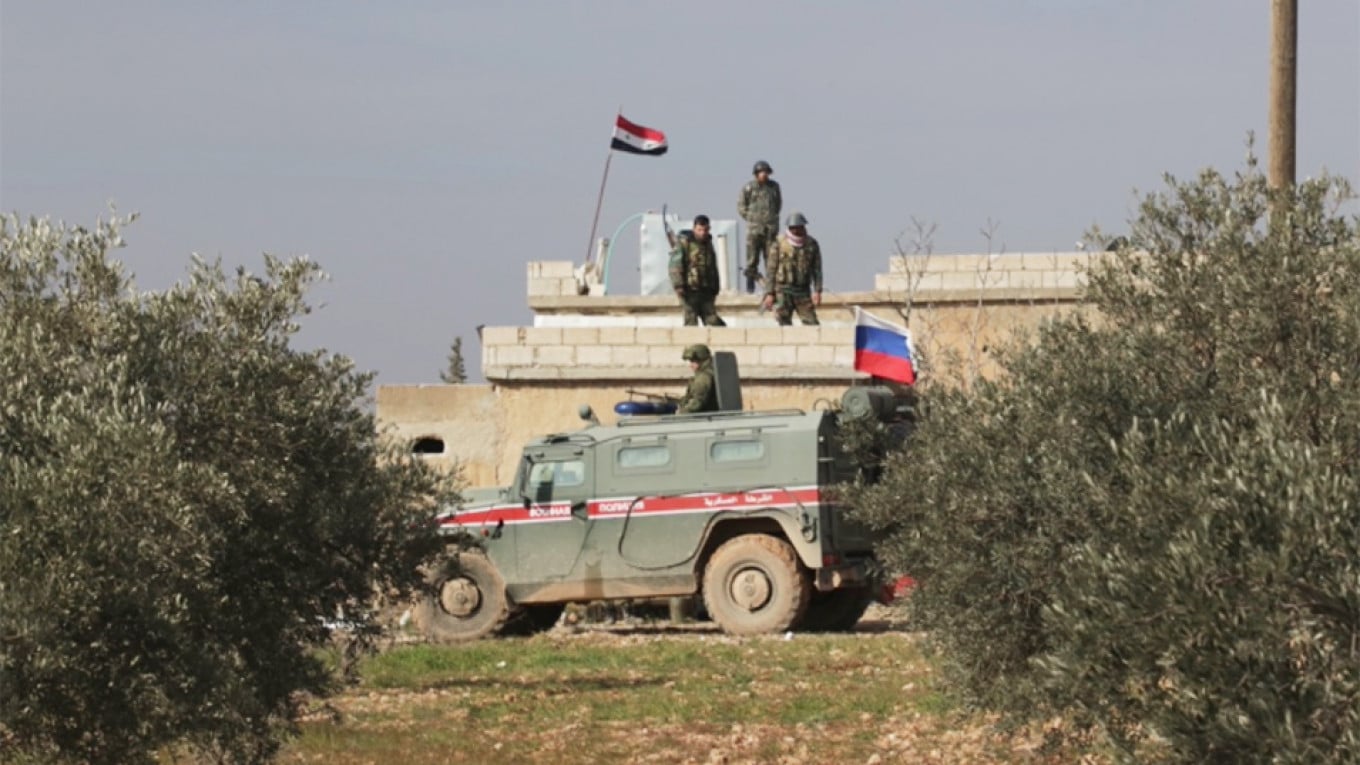
By Scott Ritter November 4, 2019 At a time when the credibility of the United States as either an unbiased actor or reliable ally lies in tatters, Russia has emerged as the one major power whose loyalty to its allies is unquestioned, and whose ability to serve as an honest broker between seemingly intractable opponents is unmatched. Originally posted on Truthdig.com on October 30, 2019 here If there is to be peace in Syria, it will be largely due to the patient efforts of Moscow employing deft negotiation, backed up as needed by military force, to shape conditions conducive for a political solution to a violent problem. If ever there was a primer for the art of diplomacy, the experience of Russia in Syria from 2011 to the present is it. Like the rest of the world, Russia was caught off guard by the so-called Arab Spring that swept through the Middle...
gorbacehv
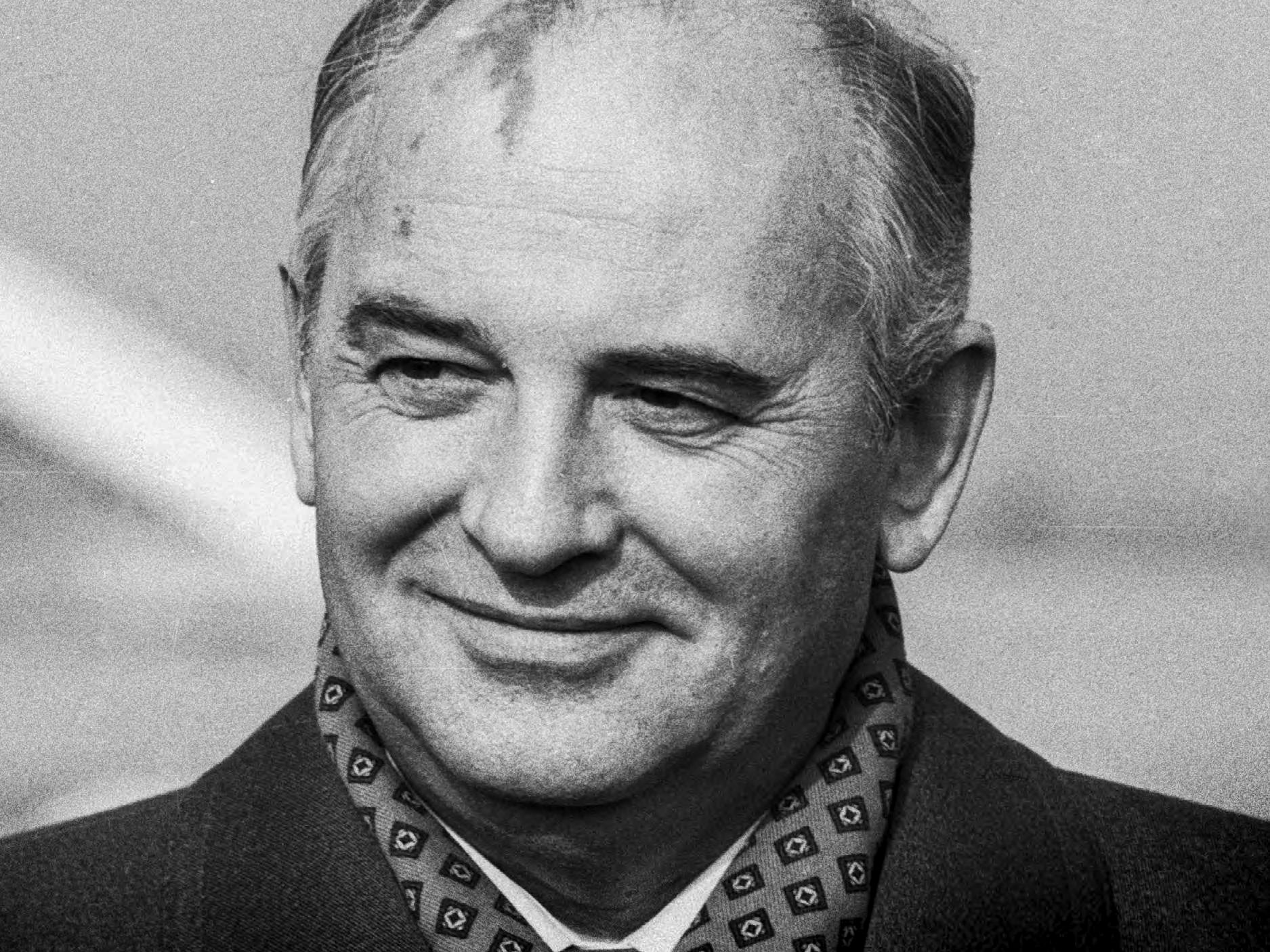
Mikhail Sergeyevich Gorbachev – now 88 and not in good health – but deeply engaged in the world and the primary threat under which we live every day. Watch the short video below – his eyes, his leaning forward to listen, the determination of his face and voice, his deep concern and his warm humour at the end – in spite of all. Deep inside he must feel sadness. What he did to make the world, and his own country, a much better place and the vision he had of a new Common European Home has been systematically ignored by much lesser, non-visionary minds – leaders who have neither the knowledge nor the intuition enabling them to recognize the essential importance of peace – and restructuring thinking and politics to achieve peace. Instead, we are now in a situation where it is reasonable to talk about a New Cold War,...
ChatGPT Image 9 jun 2026, 11_11_33
It’s time overdue for the West to make up with Russia. The contretemps over Ukraine, now played out over five years, is too long. As the world goes it doesn’t deserve so much attention. Ukraine in landmass may be a big country but it’s population is only 44 million and its national income per head a quarter of Russia’s. The Ukrainian puppy’s tail has been wagging the West’s dog. It’s part of the West’s human rights commitment to stand up for the little man, but the Ukraine government’s behavior at the time of its great upheavals didn’t deserve the large amount of support it was given. Yes, it was bad that President Vladimir Putin sent his (disguised) troops into western and southern Ukraine. And equally wrong that Putin organized so fast a referendum in the Crimea on withdrawal from Ukraine that broke the norms of international law (the way the...
c8ddd0cb93fc674b1cb425fea6242d22
By Gordon M. Hahn October 1, 2019 Five or six years ago, when I was still working most intensively on issues related to jihadism in Russia and globally, I warned of the Caucasus Emirate-tied network running from Russia’s North Caucasus to ISIS in Syria and Iraq through Turkey, Azerbaijan and Georgia (with Tbilisi’s connivance) (see previous articles here and here). Originally posted on Gordon M. Hahn’s personal blog on September 29, 2019 here Somewhat more recently, I also had written about former US President Barak Obama’s Muslim Brotherhood (MB) strategy for bringing ‘Islamic democracy’ to the Muslim world and its dire consequences in Egypt, Libya, Syria and elsewhere in what came to be misnamed the ‘Arab Spring’.  America’s hopefully accidental but nevertheless resulting connivance with ISIS and Al Qai`da-tied groups (e.g., AQ-tied Jabhar al-Nusrah) was exacerbated by intentional connivance by one of Obama’s partners in creating the Arab winter: Turkish...
Categories

Year

Author / Contributor

Region