Politics

Category

Year

Author / Contributor

Region

Sort by

Showing 1-10 of 136 stories

cropped-tre-great-delusion
Crop of Book Cover for The Great Delusion: Liberal Dreams and International Realities. Photo: Counterpunch.org By Michael Welton August 10, 2019 I first discovered John Mearsheimer’s work in 2014 when he published a courageous article in Foreign Affairs on why the Ukraine crisis was the West’s fault. The blame could not be laid at Putin’s doorstep. From Mearsheimer’s realist political perspective, you had to be pretty dumb to imagine that Putin would permit NATO ships to dock at Sevastopol in the Crimea or wrench the Ukraine into the Euro-NATO orbit. Anyone who has two brain cells to rub together can figure out that Russia would not tolerate such developments. And it didn’t! The Mueller report did not find any evidence, either, of Russian meddling in the US election of 2016. Perhaps I am too optimistic, but the lifting of dense fog around Russia and Ukraine, Russian meddling and far-fetched ideas (espoused...
f9ab5ce2-7d30-11e9-8126-9d0e63452fe9_image_hires_053908
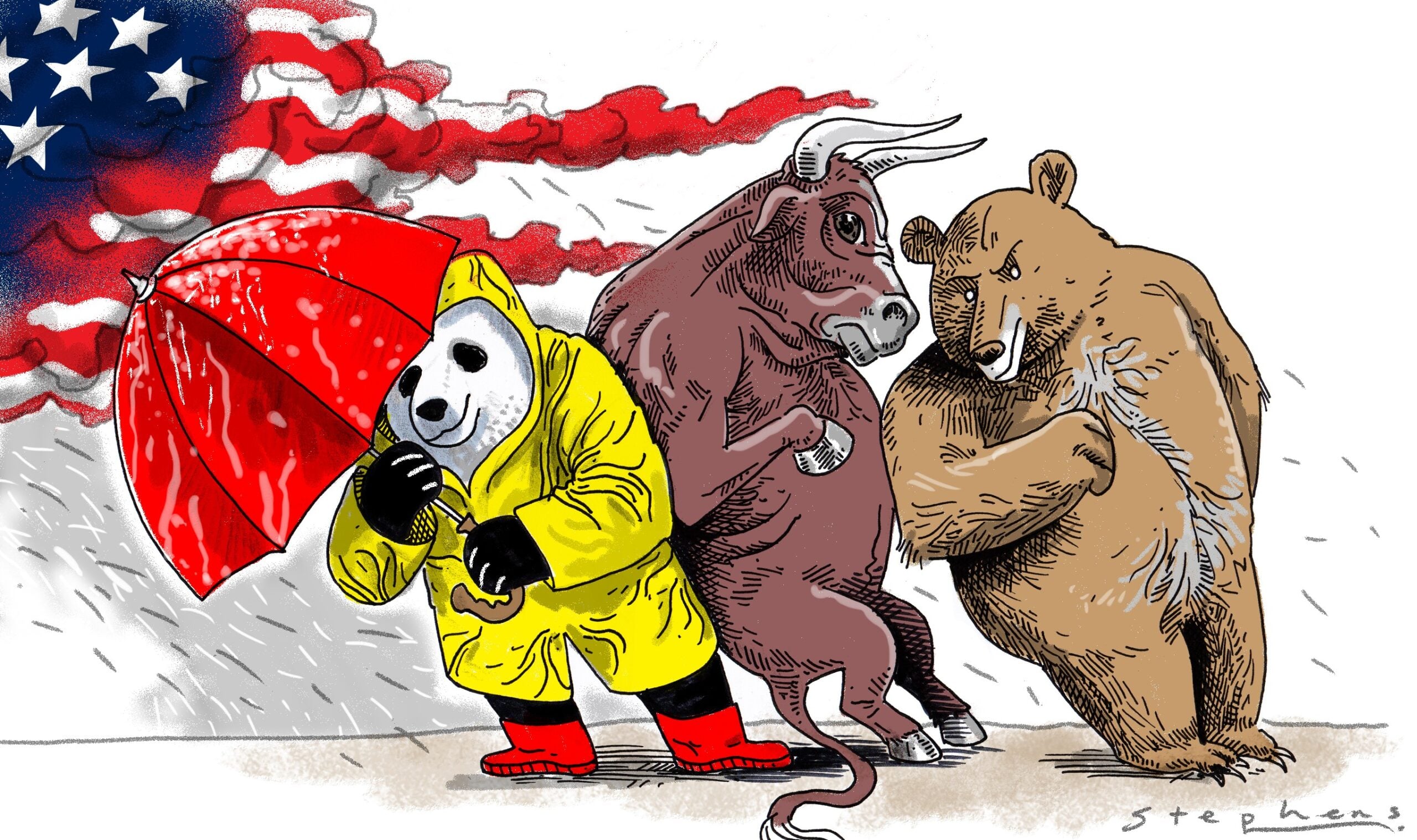
Illustration by Craig Stephens, South China Morning Post By Christopher Black July 26th 2019 On June 4th the Chinese government issued a travel alert for Chinese tourists thinking of visiting the United States, a day after it issued a similar advisory to Chinese students thinking of studying in the US over concerns for their safety and security. Chinese in the US are reporting harassment and interrogations by US immigration authorities and many now have the impression they are not welcome in the US. Originally posted on Global Research on June 10, 2019 here The Global Times, speaking on behalf of the government stated, “The Chinese people find it difficult to accept the fact that they are being taken as thieves. The US boasts too much superiority and has been indulged by the world. Due to its short history, it lacks understanding of and respect for the rules of countries and laws...
ChatGPT Image 9 jun 2026, 11_11_33
Let’s make America great again! Or as the prime minister of France said: Let’s make France great again. Or, as President Donald Trump conceded, let every nation in the world announce that they are going to be great again. But what makes for greatness? Over that there is a big dispute. Strategists say that power has to be measured carefully because “the balance of power is the motor of world politics, playing a role as central as the role of energy in physics and money in economics”, as writes Professor Michael Beckley of Tufts University, in his analysis The Power of Nations. Measuring what really matters. “Power is like love, it is easier to define than measure. Just as one cannot say, ‘I love you 3.6 times more than her,’ scholars cannot calculate the balance of power precisely, because power is largely unobservable and context-dependent”. So what can scholars do? ...
GretaT
The amazing person and phenomenon called Greta Thunberg can be looked at from many perspectives. What connects them all is the energies of hope. Thus, for instance, her own personal story and what drives her so passionately – and scientifically – at the age of only 16. Or, how she is challenging the entire global establishment as a youth leader not allowed to vote herself but demanding that decision-makers take into account the millions and millions she speaks for as well as the yet unborn generations. That’s a non-contractual, non-reciprocal way of thinking foreign to Western culture’s “I do something for you if/when you do something for me”. And you can’t ask something in return from the yet unborn. Or, how the role she plays now makes visible and catapults a fundamentally moral criticism into the political discourse where it hasn’t existed, I would say, for decades. Or, how her...
whistle-gavel
I suppose it is of interest that Donald Trump and Hillary Clinton have found something to agree about – the criminal indictment of Julian Assange.  Trump is acutely vulnerable to the exposure of truth and Clinton blames her electoral defeat in 2016 partly on what WikiLeaks disclosed about her improper use of a government computer to send private emails. Such are the perverse ways of the deeply unjust. The liberal media is not happy with this indictment, although it also wants to distance itself from justifications for Assange’s claims of journalistic privilege, viewing him as a lone wolf with rogue traits. There are solemn assessments evaluating the narrowly framed government indictment charging cyber-crime, that is, publishing illicitly obtained classified documents from a digital source, apparently an apolitical everyday occurrence for government employees. What is apparently at legal issue is deciding whether or not Assange should be protected by reference to...
ChatGPT Image 9 jun 2026, 11_11_33
By 1914 Europeans ruled 84% of the globe. How did they do it? Eleven hundred years ago Europe was a backwater. There were no grand cities, apart from Muslim Cordoba in Spain, and the remnants of Rome and Athens. The Middle East, India and China were further ahead. It was the Arabs who kept alive the teachings of the Ancient Greeks’ knowledge of science, medicine, architecture and philosophy. We now have two schools of thought. Two years ago came Professor Philip Hoffman of Caltech University with his book “Why Did Europe Conquer The World?” He argued that Europe’s pace of innovation was driven by a peculiar form of military competition which he called a “tournament” – the sort of competition that under the right conditions can drive contestants to exert enormous efforts in the hope of earning a prize. Europe, unlike the Ottoman Empire and China, was a very un-unified...
ChatGPT Image 9 jun 2026, 11_11_33
In the Western world, there is a constant debate about democracy. In the US the Democrats charge quite correctly that the House’s constituencies are gerrymandered against them. Then there’s the insoluble issue of the Senate’s anti-democratic bias where its numbers are tilted against the Democrats by the fact that rural, less populated, states which tend to be conservative, elect two senators, just as do the Democratic-inclined, heavily populated, states. In Britain, the country is riven by the Brexit debate. A referendum was held two and a half years ago when voters were given the choice of “Remain” or “Leave”. The “Leavers” won by a small margin and the country has been in political turmoil ever since. Now with Prime Minister Theresa May’s exit plans on the rocks the debate has become vitriolic. There are calls for a new referendum to reverse the previous vote. It’s likely to happen since Mrs...
Hamid-Dabashi1-1
  There is a widely accepted idea among some Americans that Trump does not reflect American values. They are wrong   By Hamid Dabashi In an erudite and timely piece for the New York Times, published just a few days before the midterm elections in early November 2018, my distinguished Columbia University colleague Andrew Delbanco wrote a poignant essay about “The Long Struggle for America’s Soul.” In this learned piece, Professor Delbanco writes passionately about the long US history of human suffering that had come before the cruel behaviours and policies of the democratically elected President Donald Trump, focusing specifically on slavery. “Even free black people in the North …” we learn in this piece, “found their lives infused with terror of being seized and deported on the pretext that they had once belonged to someone in the South. The Fugitive Slave Act forced them to dread every footstep on the...
Ben_Ferencz-copy
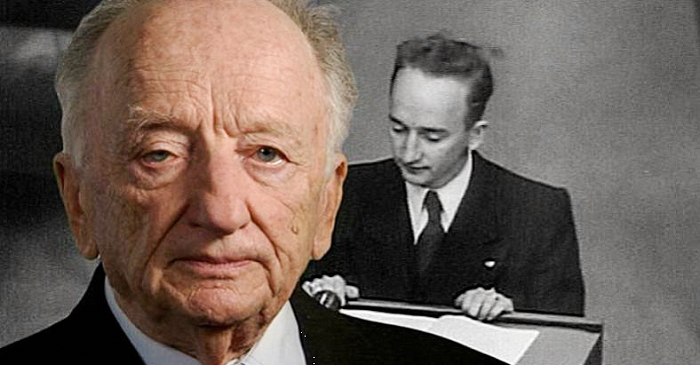
  This is literally a unique experience of extraordinary educational value: Listen to 98-year old Ben Ferencz sharing his crystal clear perception of the human stupidity of war – all wars – and how he sees the situation of humanity. He remains a realist, he says, with more optimism than pessimism. Listen to him telling about his truly amazing, unique life as a lawyer devoted to the common good of humanity and to securing justice but also human care for victims as well as perpetrators. He is the last surviving Nuremberg Tribunal prosecutor and has thought more than probably anyone about the psychology and politics of evil. Ferencz is a staunch believer in abolishing wars as such and, of course, in nuclear weapons abolition. He challenges the entire Military-Industrial-Media-Academic Complex, MIMAC, and argues that there is only one winner in wars: Death. If you are a teacher, get your students...
JO2016_1_10Sepia_thumb-e1512818772877
A personal pledge provoked by the debates about Syria   By Jan Oberg   Summary About 95% of all debates about conflicts and war that we see in politics, mainstream media, the Internet and social media focus on the violence, who uses more or less of it and who is, therefore, the evil party. This approach places direct violence – such as human rights violations, killings, bombings etc. – in the centre of the attention and that is unfortunate because violence is always only a symptom. I call this the simplifying or reductionist approach; invariably it has populist connotations too and usually ends up in mud-slinging. I argue in this analysis that this reductionist approach is counterproductive and that – because of the defining characteristics of these debates – the underlying conflicts/problems that cause the violence are never in focus and that no international complex conflict can be explained even...
StephenFCohen
Ten ways the new US-Russian Cold War is increasingly becoming more dangerous than the one we survived. By Stephen F. Cohen June 21, 2018 Stephen F. Cohen, professor emeritus of Russian studies and politics at NYU and Princeton, and John Batchelor continue their (usually) weekly discussions of the new US-Russian Cold War. (You can find previous instalments, now in their fifth year, at TheNation.com.) Recent reports suggest that a formal meeting between Presidents Donald Trump and Vladimir Putin is being seriously discussed in Washington and Moscow. Such ritualized but often substantive “summits,” as they were termed, were frequently used during the 40-year US-Soviet Cold War too, among other things, reduce conflicts and increase cooperation between the two superpowers. They were most important when tensions were highest. Some were very successful, some less so, others were deemed failures. Given today’s extraordinarily toxic political circumstances, even leaving aside powerful opposition in Washington...

2
  By Tibor Várady April 19, 2018 Some introductory remarks concerning the use of the term “populism” The term “populism” is becoming increasingly popular in public discourse. It is difficult to deny – and I have no intention to try to deny – that the designation tackles (or tries to tackle) a serious problem. But wide use has made it more and more difficult to discern what ground is actually covered by this term. The question also arises, whether more coherent (even if contested) notions framed in social sciences may succeed in reining in careless use of the term “populism” in public discourse. A couple of years ago I was noting various contexts in which the term “populism” was used – particularly in the press. For instance, the Hungarian Népszabadság on May 2, 2009, cites the Slovak “SME” comparing the Czech and Hungarian government crisis, and concludes that “What is...
Categories

Year

Author / Contributor

Region