Pro-peace

Category

Year

Author / Contributor

Region

Sort by

Showing 1-10 of 300 stories

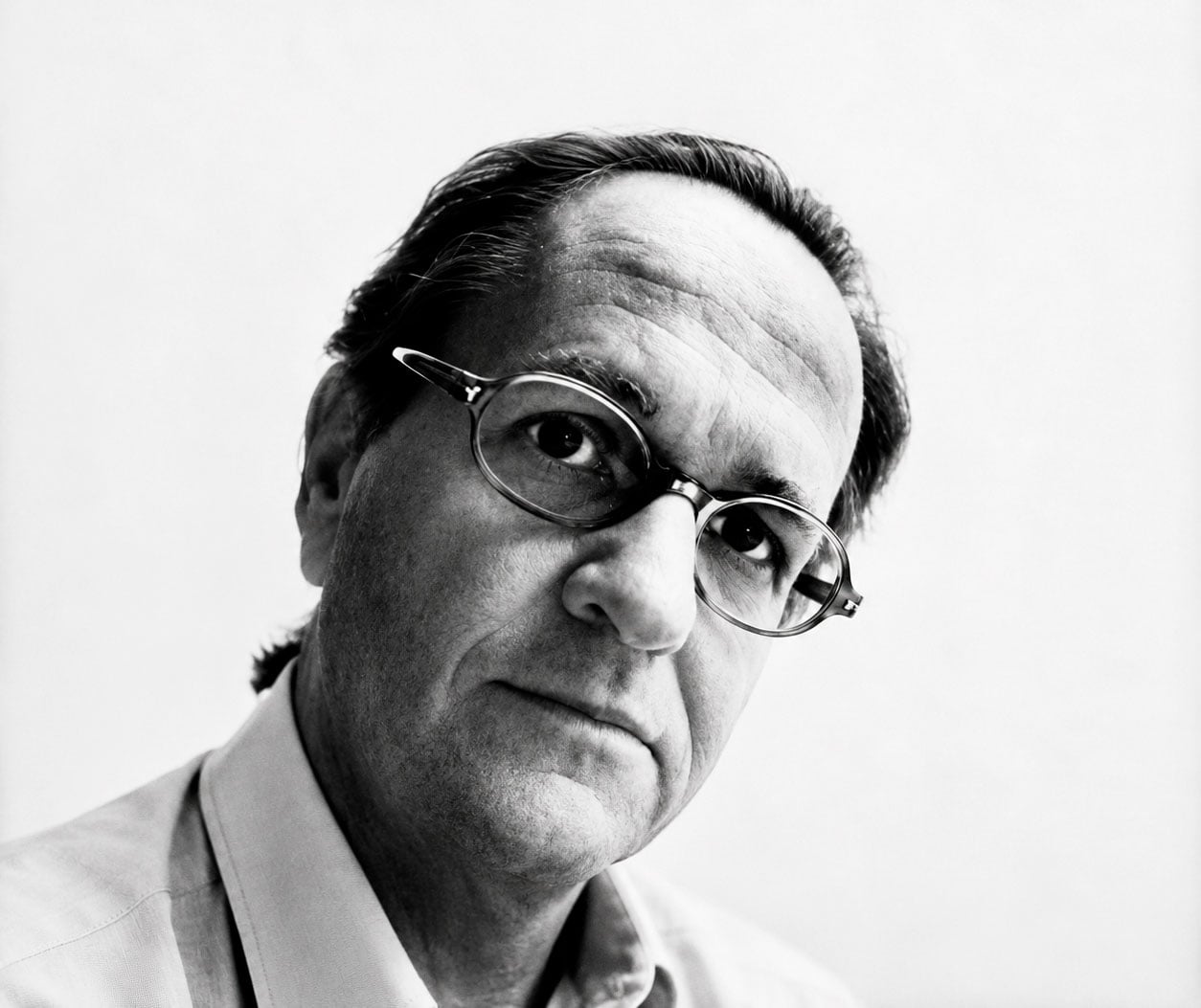
ObergPhoto2cmB-W-3
Lund, December 10, 2015 On the day of the Nobel Peace Prize Award Ceremony at Oslo City Hall To whom it may concern, including the media We know – and Alfred Nobel knew – how devastating war and arms races are, and how little security we get for all the money we spend on military forces. The campaign to reclaim the Nobel Peace Prize is first and foremost a campaign to revive the idea that global peace requires global cooperation on disarmament and replacing the law of force with the force of law. Every day more and more of us see, from the Middle East warfare, from the refugee crisis, and many other chilling reminders, the mandatory urgency of a change in world politics. Alfred Nobel decided to give one fifth of his fortune for a prize to promote disarmament and resolution of all conflicts through negotiations and legal means,...
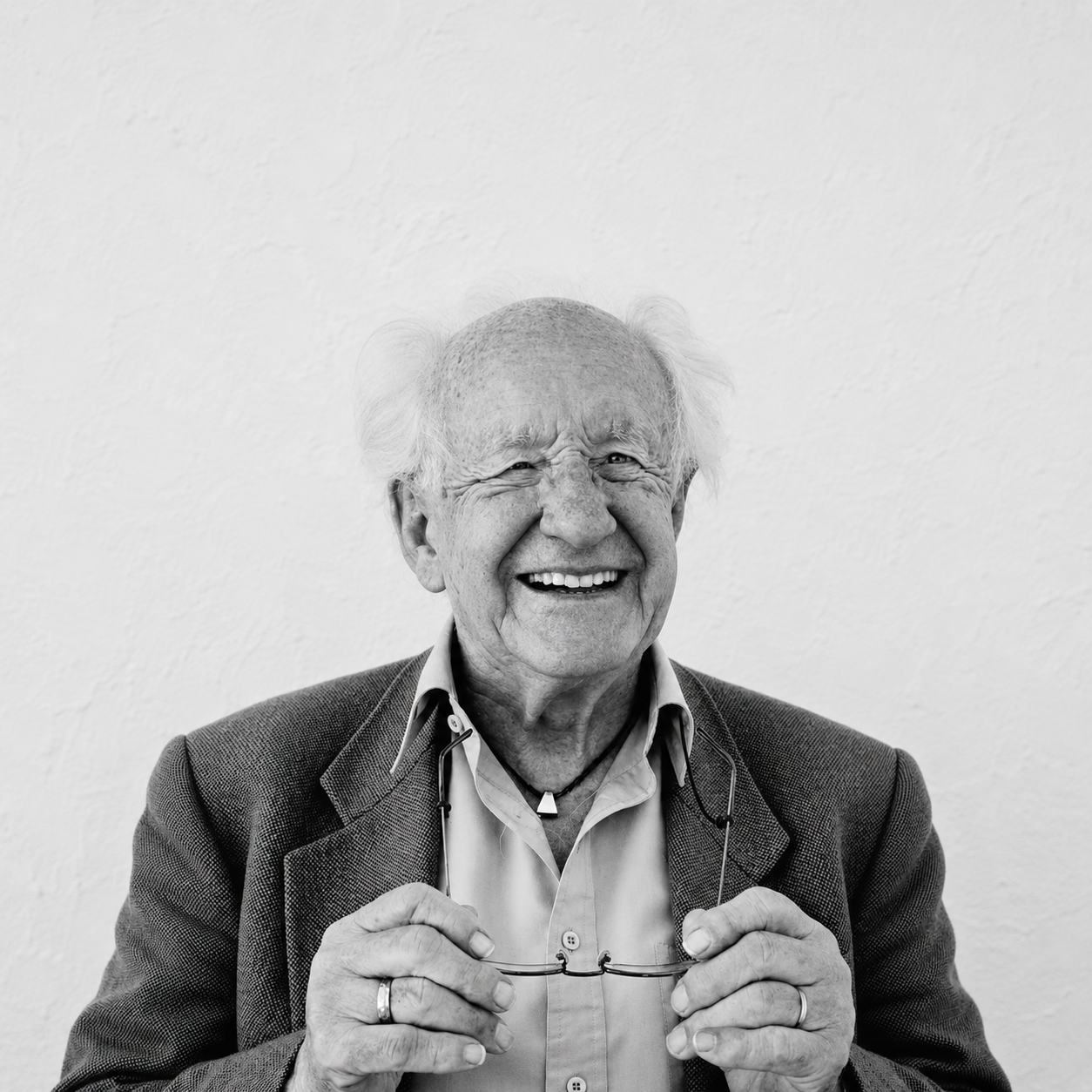
johangaltung
Short answer: No. The Paris event triggered war journalism; no peace journalism was observed. To doubt that anti-IS violence will work is not peace journalism, only war journalism with question marks. Peace journalism was conceived in the 1960s as a reaction to foreign news negativism, and focus on actors and elite people/countries. Not as advocacy of peace, but as journalism about peace; like war journalism is not advocacy of war, but indispensable journalism about war, reporting what happens, and who is winning. It can be done well or not, and often becomes propaganda for one side, in national more than local and global media (with Anglo-American accent, however). Thus, peace journalism was never a substitute for war journalism. The idea was to have both, complementing each other.
ChatGPT Image 9 jun 2026, 11_11_33
The United Nations Security Council has adopted a resolution strongly condemning the escalating violence in Burundi. It paves the way for the UN to send in thousands of blue-helmeted peacekeepers. The resolution, which was passed unanimously, condemns the wave of killings, arrests and human rights violations. It requests that Secretary-General Ban Ki-moon reports within 15 days – i.e. on Friday the 27th – on options for increasing the UN presence in Burundi. There are fears of a Rwandan-style genocide in Burundi, which like Rwanda has a long history of tribal distrust and, on occasion, hatred, although there are many intermarriages. At least 240 people have been killed there since protests began in April. Since independence from Belgium in 1962 it has been plagued by tension between the dominant Tutsi minority and the Hutu majority. The ethnic violence sparked off in 1994 made Burundi
johangaltung
Atlanta, Georgia, USA The atrocity in Paris seems to trigger the word “terrorism” with a higher frequency than ever, in the media, from the politicians. Doing so, they sign their intellectual capitulation: trust me, I am not going to try to understand anything. Watching politicians on 56 US TV channels in Georgia there was not a single word analyzing why?; like underlying conflicts and traumas. Nor conciliation and solution. Only a description of what? – the horrible violence. And what to do: more violence, war. With a question mark though: Will it work? The whole Western world was living up to the old French saying – Cet animal est très méchant, quand on le bat, il se defend. (That animal is very vicious, when you beat it, it defends itself). Look at centuries of French/Arab-Muslim relations and find one-way beating, killing, conquest, colonialism, exploitation, France using them in wars against...

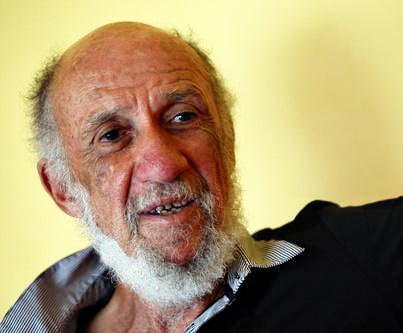
RichardFalk20141
Prefatory Note: What follows is a modified version of the Morton-Kenney annual public lecture given at the University of Southern Illinois in Carbondale on November 18, 2015 under the joint sponsorship of the Department of Political Science and the Paul Simon Public Policy Institute. The Failure of U.S. Foreign Policy in the Middle East While focusing on the ‘failure’ of American foreign policy in the Middle East it is relevant to acknowledge that given the circumstances of the region failure to some degree was probably unavoidable. The argument put forward here is that the degree and form of failure reflected avoidable choices that could and should have been corrected, or at least mitigated over time, but by and large this has not happened and it is important to understand why. This analysis concludes with a consideration of three correctible mistakes of policy. It is also true that the Middle East...
johangaltung
The world wave of mediation has reached school systems all over; in some countries less, in others more. Like in Spain, as evidenced by this heavily oversubscribed seminar on school mediation. When asked to express what they want to see happen in schools, the most frequent answer was convivencia, living togetherness. In one word, not as a composite concept. Like in Japanese, the one word is kyosei. What does it mean, concretely? I would interpret it as positive peace at school. Something behavioral: cooperation for mutual and equal benefit. Equity. Something attitudinal, emotional resonance, I enjoy your joy, I suffer your suffering: Empathy. Harmony. But the school is a big, holistic place. Not only children, but also adults, teachers and staff. And parents. Positive togetherness within and between all these four groups? A huge order. Many simplify this to togetherness among children, and not positive, only less negative. Less bullying,...
ChatGPT Image 9 jun 2026, 11_11_33
The Barbarians are not at the gate. There is no need for a rush to war as the French president, Francois Hollande, suggests. The Americans did this after 9/11 and raced into Afghanistan with the intention of eliminating Al-Qaeda. They failed and they are still in Afghanistan – America’s longest war ever. They have become bogged down in fighting Afghani movements including the Taliban. Some of the Taliban may have hosted Al Qaeda for a while, but accounts suggest they weren’t happy about it. They certainly don’t today. In Harvard University’s magazine, “International Security”, Professors Alexander Downs and Jonathan Monten report they have studied over 1000 military interventions over many years. It is very rare that there has been success. Bogged down, bogged down. These two words should resonate in every Western (and Russian) leaders’ head. Vietnam, Iraq, Afghanistan, Lebanon and Libya. (Also Russia in Afghanistan and in Chechnya). There...
ChatGPT Image 9 jun 2026, 11_11_33
. Albert Einstein once said that “insanity is doing the same thing over and over again and expecting a different result”. That’s how it seems to be with President Obama sending his Secretary of State, John Kerry, to attempt to resurrect the talks about talks between Israel and Palestine. No one knows if the renewed unrest among young Palestinians who are confronting Israel again with stones and knives – and in return bullets are fired to quell the protests – is going to lead to a third Intifada. The signs are not propitious. If not today then certainly tomorrow. Israel is running an apartheid state which, as was South Africa’s, has a termination date built in. What has happened to Obama’s pledge seven months ago to “re-evaluate” US policy on Israel? At the UN the US as usual digs in its heels when Israel is admonished. France has suggested that...
Imagen-thumbnail-The-Transnational-1
The United Nations turns 70 today. It isn’t “we, the peoples” – it is “we, the governments”. It’s in need of reform but we must also remember that its first Secretary-General Trygve Lie said in 1948 – that it will never be stronger or better than the member states want to make it. Whatever you think of it, we certainly can’t do without it, nor without its Charter that is still the most Gandhian document, all governments have ever signed. If its member governments were not so navel-gazing, it would be the best vehicle for global governance – for globalising democracy in a world where the economy and the military as well as communication and culture are all globalizing while politics is still anchored in parliaments in increasingly irrelevant nation-states. And why not set up a People’s Assembly? Establish UN Embassies in each member state and let people vote for...
farhangjahanpour
By Farhang Jahanpour Lund, Sweden, October 21, 2015 It is with pleasure we send you ten recent articles about Iran, the West and the background to the treaty concluded about Iran’s nuclear technology. They are written by Dr. Farhang Jahanpour, Oxford University, who is also a member of TFF’s board. Given the generally insufficient and/or biased knowledge in media and politics about Iran and this cluster of issues, TFF is proud to have a world renowned expert with Iranian roots sharing his knowledge. 1. Iran and the Non-Proliferation Treaty 2. Nuclear states do not comply with the Non-Proliferation Treaty 3. The early history of Iran’s nuclear programme 4. The recent stages of Iran’s nuclear programme 5. Iran and nuclear weapons, a dangerous delusion 6. The Rubicons that have been crossed 7. Iran’s commitments under the Nuclear Treaty are just short of surrender 8. Israel’s opposition to the Nuclear Treaty with...
johangaltung
Johan Galtung turns 85 on UN Day 2015 The global nation-state based system is in deep crisis. The West’s relative decline is obvious, except to the West itself. This multi-dimensional crisis will, of course, give way to something new – but what? Lack of vision – sometimes even of knowledge and empathy – among those in power seems a defining characteristics of our times. Individually as well as nationally, we are living in iTimes, not weTimes. Add to that blowbacks from history and Western knee-jerk militarist responses – and the next few years will be tough. The creativity and innovation we find in commercial and social entrepreneurship and in the arts, seem frighteningly absent in the world of politics. Who would get elected anywhere on having an exciting vision for the the world the next 25 or 40 years? No, you must know about national affairs and economy – while,...
johangaltung
The Oregon community college was “the 45th school shooting this year in America; the 142nd school shooting since the Newton massacre in 2012”, Matthew Albracht–Peace Alliance–who adds: 25% of women experience domestic violence, 6 million children witness it every year, 28% of children are bullied during the year and they are 2 to 9 times more likely to commit suicide. What can be done? Here 10 points: Gun control, of course. But the point is not only sales control but possession control with very strict laws for possession and making illegal possession a federal crime. With an average of at least one lethal weapon per citizen, there are enough arms to continue shootings; sales control is insufficient. States and municipalities can endorse this ahead of time for Weapons Free Zones in America, as places where life is safer. There will still be armed police around. Less violent foreign policy, of...
Categories

Year

Author / Contributor

Region