Peace philosophy

Category

Year

Author / Contributor

Region

Sort by

Showing 1-10 of 80 stories

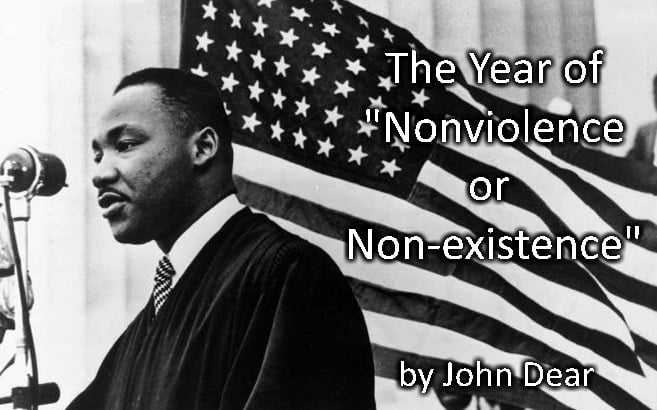
Non-existence
Photo credit: Poster art courtesy paceebene.org John Dear January 20, 2021 It was early 1968. Since the previous spring Martin Luther King, Jr. had been pursuing a course that for many was unthinkable. He had deliberately connected the dots between the movement for civil rights and the struggle to end the war in Vietnam, and had paid the price. He was roundly criticized by the Johnson administration and the media, as well as by people in his own movement. From the right he was attacked for having the gall to question US foreign policy. From the left he was lambasted for losing focus and not keeping his eyes on the prize. Originally published at Satyagrahafoundation He even got it from a childhood friend who stopped by the house one afternoon to vent. “Why are you speaking out against the Vietnam War?” he carped. King put aside his customary oratory. “When I speak about nonviolence,” he patiently explained, “I mean nonviolent all the way.” As David Garrow’s classic biography of King reports, [Bearing the Cross, New York: Harper Collins, 1986], King went on...
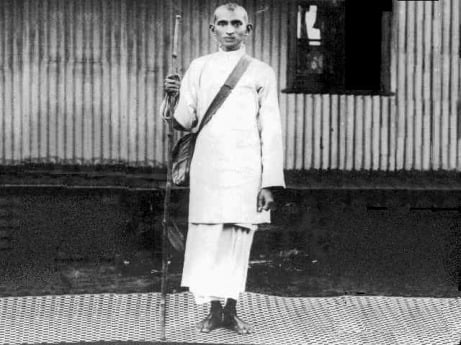
gandhi-burning-passion
December 29, 2020 Stephanie Van Hook “A burning passion coupled with absolute detachment is the key to all success.” – Gandhi (Harijan, 9-29-1946, p. 336) When Gandhi uses the term “detachment” he does not mean a passive disinterest or cold indifference; he is pointing to an active state of conscious awareness of the unity of life. We glimpse that unity when we work to weed out private, selfish attachment and the tiresome obsession about the results of our actions; in other words, we are detached from ourselves. When we think, How does this benefit me? we are not detached. When we think, How does this benefit others? we do have some measure of detachment from ourselves, and our ability to use nonviolence more effectively comes into its own. When we couple that sense of selfless detachment with a burning passion, the apparent paradox becomes a brilliant power. But even that, he says, is only a “key.” At...
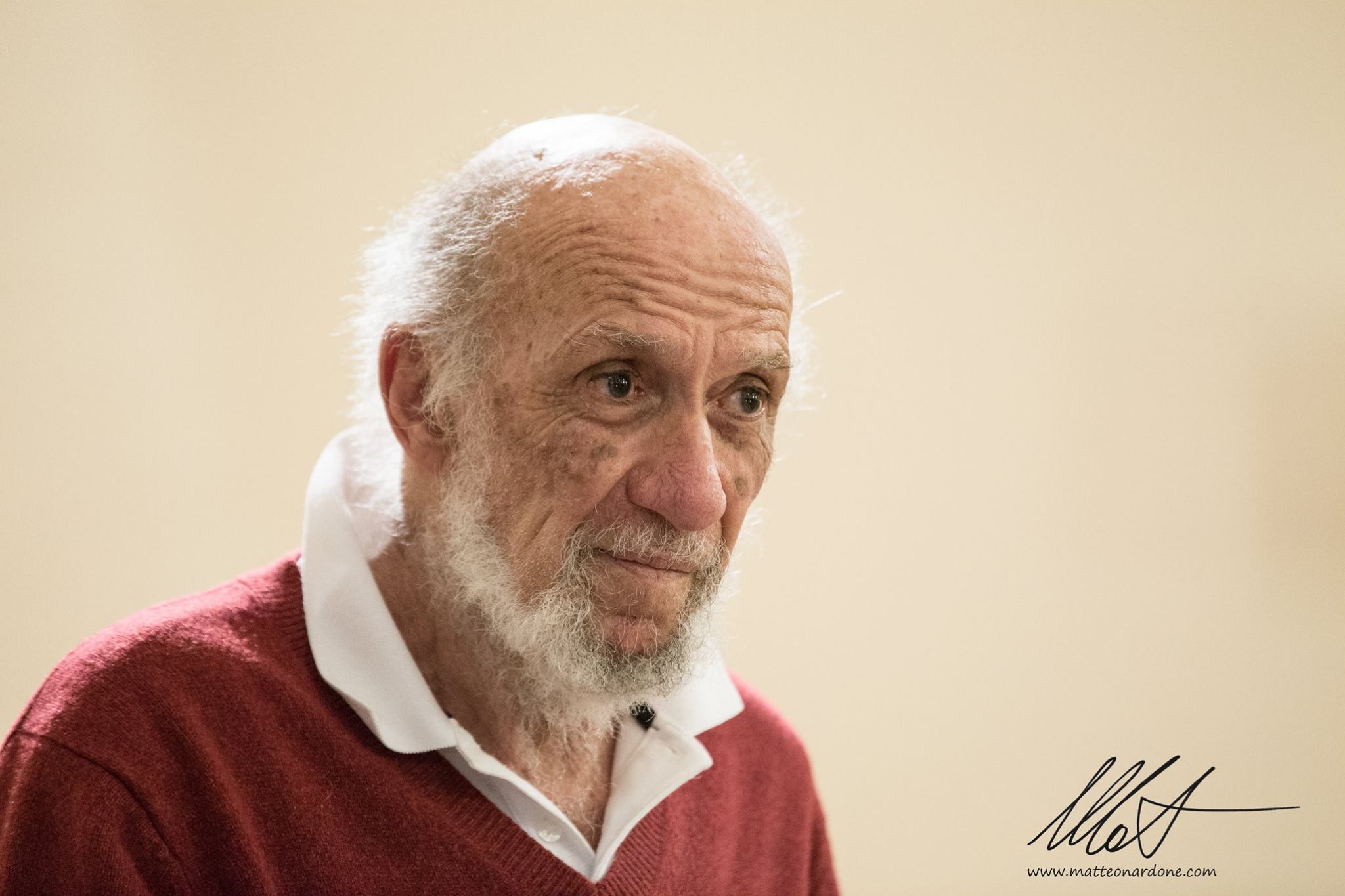
RichardFalk
Richard Falk December 29, 2020 Unlike most of my interviews, this one is not directly about current political concerns. It rather explores ‘peace’ in its manifold identity. The interview was conducted by Miguel Mendoça a couple of months ago for a book project consisting of such interviews from a variety of persons whose life and work touches on the theme of peace. Miguel has since abandoned the project in favour of producing his own poems. Whether such abstract ideas as peace can be usefully explored independent of concrete circumstances haunts this text. I accept most of the blame. The interaction made me realize how little thought I have given to peacefulness as a personal trait and peace as the core of benevolent political arrangements, whether local or planetary and how their interaction may be understood. I recall being rather bemused more than 25 years ago when a meditation practice was...
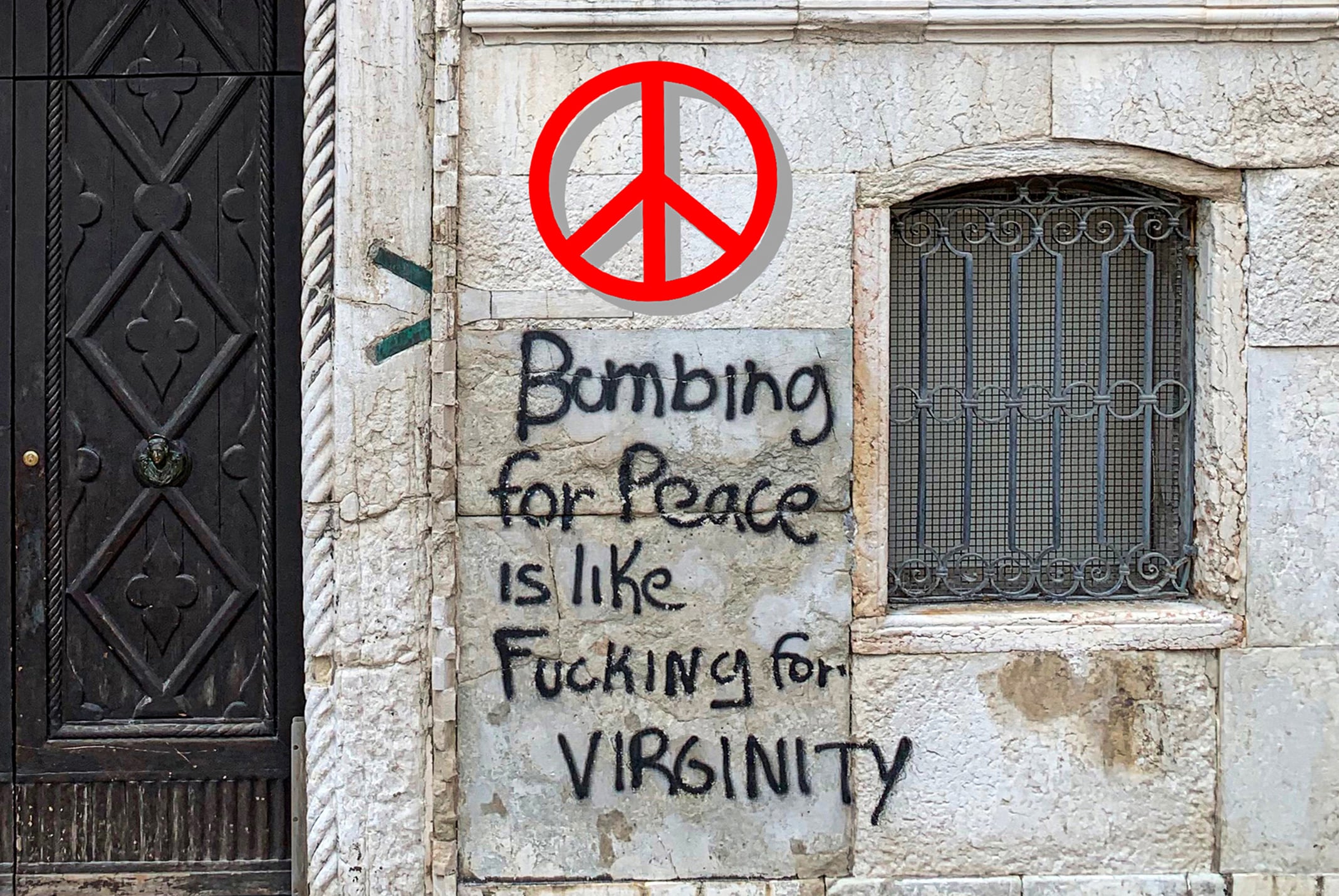
fucking4peace
Jan Oberg December 29, 2020 Look at and listen in to three spheres of contemporary Western society – politics, research and media: The word” peace” and related words, such as the UN Charter norm of “making peace by peaceful means”, nonviolence, negotiations – have disappeared. And with the words, the discourse and with the discourse, the interest, the education and expertise, the focus, the awareness and the strategies. Let us start with the political sphere. In Scandinavia where I happen to live, today’s status is very different from the 1980s. There are no global disarmament policies or disarmament ministers; the UN’s basically non-armed peace-keeping is hardly ever mentioned; while Sweden has integrated with NATO and has soldiers under NATO command, it no longer contributes a single UN peacekeeper. Ideas such as human security, common security and confidence-building measures with the presumed enemy are never mentioned in the political discourse. The...

osama-750_1439889739_725x725
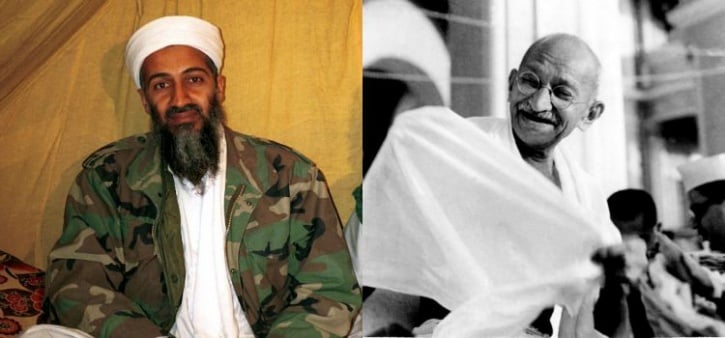
By Bhikhu Parekh November 5, 2020 If he were alive today, how might Mahatma Gandhi, the greatest apostle of non-violence, challenge Osama Bin Laden’s worldview? Bhikhu Parekh is Vice-President of The Gandhi Foundation, a professor of political philosophy, a Labour peer, and the author of three books on Gandhi. This article first appeared in Prospect Magazine in April 2004. Originally published at Gandhifoundation.org Bhikhu Parekh’s preface Like millions around the world, I found the atrocities of 9/11 abhorrent and utterly condemn such acts of terror. Despite the war against terror, we continue to see more horrors such as that in Madrid. What drives the bombers? How do they live with their deeds? Is there no alternative to the cycle of violence? No one is better qualified to advise on this than Mahatma Gandhi, the great apostle of non-violence. My imaginary exchange between him and Bin Laden tries to do two things: to comprehend...
Johan-Mt_2020_1200-72dpi-kopia
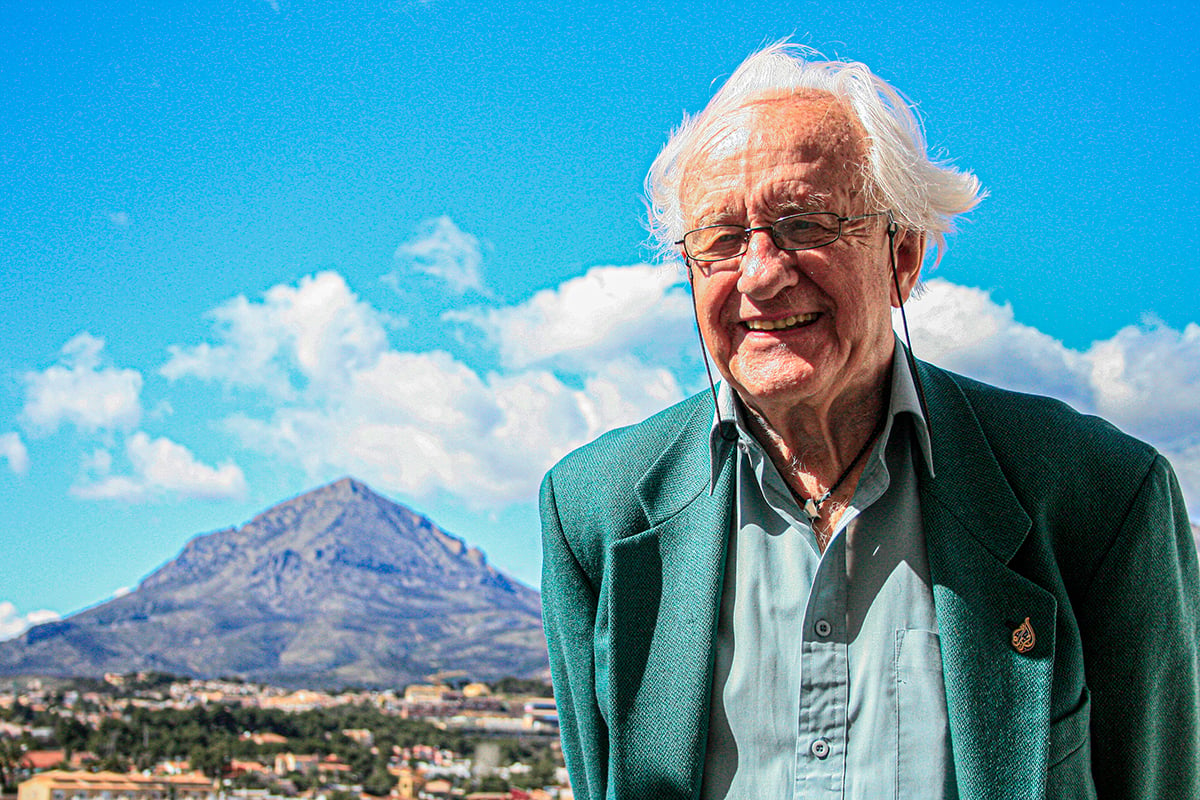
Johan Galtung 2010 © Jan Oberg Johan Galtung October 23, 2020 On the occasion of Galtung’s 90th birthday tomorrow on UN Day, we bring you a conversation he had ten years ago with Riz Khan at Aljazeera about his life. Johan and co-founder Jan Oberg have been friends and collaborated since 1974 and he’s been a TFF Associate since 1985 when TFF was set up. Antonio Rosa, his friend and director of Transcend Media Service (TMS) summarizes: “Johan in a nutshell – wrote more than 170 books on peace and related issues, 96 as the sole author. More than 40 have been translated into other languages and Transcend and Transform was translated into 25 languages. He has published more than 1500 articles and book chapters and over 500 Editorials for TRANSCEND Media Service.” More about Galtung academic life here. You’ll find hundreds of articles by Galtung on our old homepages here and...
We-suffer-through-todays-a-difficult-complicated-and-partially-obfuscated-time
This paper was written in 2015. Republished here on the occasion of Galtung’s 90th birthday, October 24, 2020. It was originally published at TMS, Transcend Media Service 1.  Definitions and Hypotheses: An Overview Definition: An empire is a transborder Center-Periphery system, in macro-space and in macro-time, with a culture legitimizing a structure of unequal exchange between center and periphery: Empires have different profiles. The US Empire has a complete configuration, articulated in a statement by a Pentagon planner: “The de facto role of the United States Armed Forces will be to keep the world safe for our economy and open to our cultural assault. To those ends, we will do a fair amount of killing”. (1) In other words, direct violence to protect structural violence legitimized by cultural violence. (2) The Center is the continental USA and the Periphery much of the world.  Like any system it has a life-cycle reminiscent of an organism, with...
fred-image
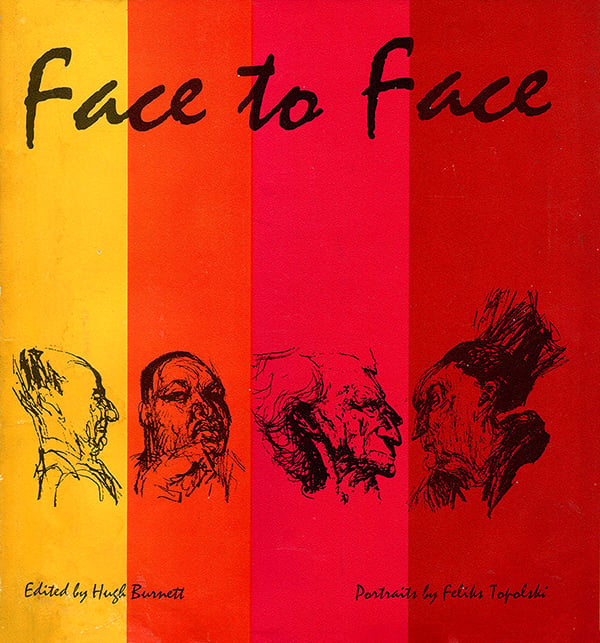
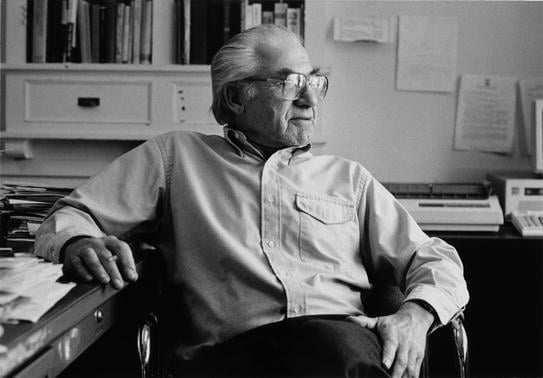
By Maria Popova October 8, 2020 In the mid-1950s, as the icy terror of the Cold War was cloaking the embering rubble of two World Wars, the BBC producer and cartoonist Hugh Burnett envisioned an unexampled program to serve both as a cross-cultural bridge and a mirror beaming back to a dimmed and discomposed humanity the noblest and most beautiful ideas of its noblest and most beautiful minds. Originally published at brainpickings Face to Face — a series of intimate conversations with people of genius, influence, and exceptional largeness of spirit, interviewed by the British broadcaster and politician John Freeman — began as short-wave radio broadcasts to listeners in the Far East and soon became a BBC television program. Television was then a young medium, aglow as any young medium with the promise of its potential and blind to its peril — something reflected with chilling clarity in Burnett’s own...
420836_1_En_1_Fig7_HTML
Louis Kriesberg By Louis Kriesberg September 25, 2020 Since Donald J. Trump was inaugurated as president, many Americans have carried out a wide variety of collective nonviolent actions to oppose many of his and his administration’s policies. The actions include massive marches in Washington, D.C. in concert with marches in cities across the nation. They also include strikes, boycotts, walkouts, and regular meetings to plan and conduct ongoing programs of resistance. The actions have been conducted by diverse segments of the American people. These nonviolent strategies and tactics follow and build on those used throughout American history. Many of the social movements relying on nonviolent methods of struggle have yielded widely beneficial changes in American society. But often they have failed to make substantial lasting change and sometimes they have been counterproductive. Frequently, there are mixed results over time. Originally published at lkriesbe.expressions.syr.edu Fortunately, there are resources that increase the...
Gandhi-Tolstoy
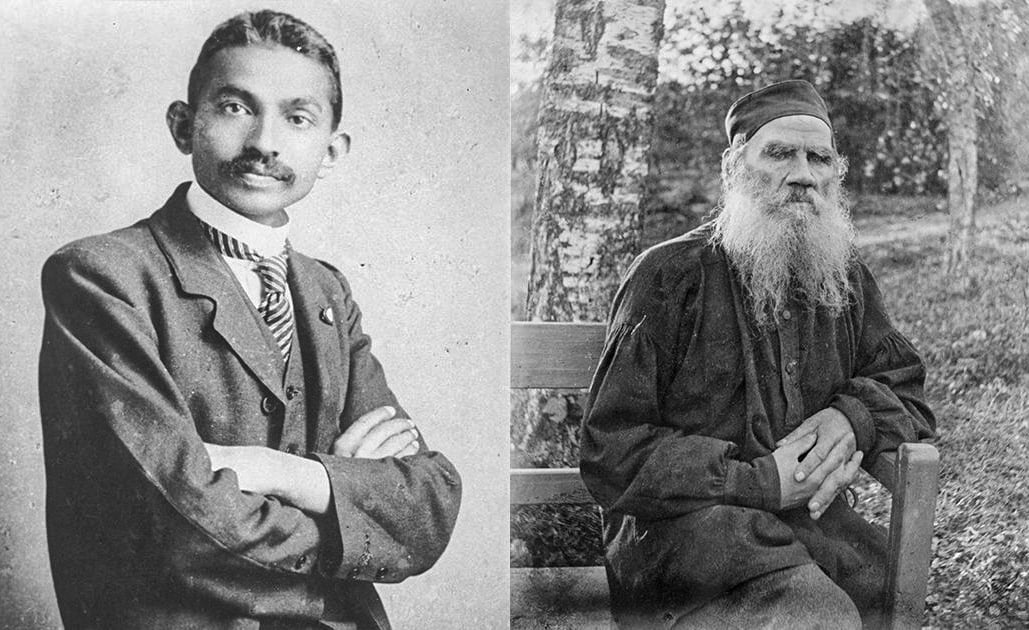
René Wadlow September 16, 2020 “We possess a single infallible guide, the Universal Spirit that lives in men as a whole, and in each one of us, which makes us aspire to what we should aspire: it is the Spirit that commands the tree to grow toward the sun, the flower to throw off its seed in autumn, us to reach out towards God, and by so doing, become united to each other.”— Leo Tolstoy (9 Sep1828 – 20 Nov 1910) November 20 marks the death of Leo Tolstoy in 1910 when he left his estate Yasnaya Polyana and walked to a railroad station at Astopovo, a journey with no set destination.  As Isaiah Berlin writes at the end of his well-known essay on Tolstoy’s philosophy of history, The Hedgehog and the Fox: “At once insanely proud and filled with self-hatred, omniscient and doubting everything, cold and violently passionate, contemptuous and...
ObergComment_OnSite
In times of fake and omission – not to speak of deliberate deception and lies – society’s very foundation is shaken: What can we believe? Who can we trust? What is reliable and truthful information – and how do I know? Tragically, substantial knowledge with complex reasoning about our complex world and its problems has been overwhelmed by marketing, smart soundbites, tweets and ignorance. Diversity has been substituted by uniformity, political correctness and, more recently, the awfully destructive cancel culture and its close companion, self-censorship. People read less, and less and less the long argument – such as (good) books about global problems. Perhaps because we think we are so busy? Whatever the reason, the attention span has shrunk and many have a comfort zone the size of a pinhead. It bodes ill – no matter the kind of social body in which this disease takes root. It spread like...
mahatma-gandhi-1
Human nature, Gandhi said, “will only find itself when it fully realises that to be human it has to cease to be beastly or brutal”. (Illustration: C R Sasikumar) Charles P. Webel with Sofia Khaydari July 28, 2020 The UN’s peacekeeping mission is premised on the Declaration of Universal Human Rights, based on the assumptions that nonviolent means of conflict resolution are preferable to violence, and that all nations and trans-national organizations need to affirm and institutionalize global values. Unfortunately, despite the UN, humanity is far from being delivered from its bellicosity, and a “global ethics” in general, with nonviolence at its core, is far from realization. To understand the desirability but seeming fancifulness of a “Global Ethics” with nonviolence as one of its cardinal values, it is helpful to examine the theoretical and empirical foundations, as well as the possible shortcomings, of global values in general and nonviolence in...
Categories

Year

Author / Contributor

Region