Nuclear

Category

Year

Author / Contributor

Region

Sort by

Showing 1-10 of 379 stories

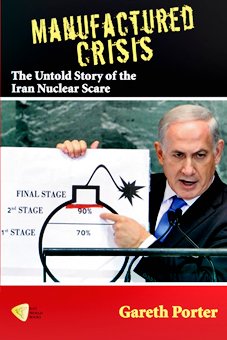
MC-cover-final-684x1024
By Farhang Jahanpour As Iran and the world powers resume nuclear talks in Vienna with the hope of reaching a comprehensive agreement over Iran’s nuclear program by mid-July, the Israelis and their lobbyists in Washington are intensifying their efforts to scuttle the talks. In addition to all the efforts in the US Congress to impose additional sanctions on Iran, thus bringing the talks to a premature end, there are indications that Israel and her friends are continuing with various acts of sabotage against Iranian nuclear facilities. In 2010, the so-called Stuxnet virus temporarily disrupted the operation of thousands of Iranian centrifuges. At least five Iranian nuclear scientists have been assassinated. Iran has also said that it has discovered tiny timed explosives planted on centrifuges but has disabled them before they could go off. On Monday 17 March 2014, Iran said that an alleged attempt to sabotage one of its nuclear...
ChatGPT Image 9 jun 2026, 11_11_33
/10/jonathanpower2.jpg”> It was the Americans, back in the time of the deposed Shah, who encouraged Iran to develop a nuclear bomb-making capacity. Now it is the Americans, along with the Europeans, who are desperately trying to undo their folly. They are nearer the goal than they think- or, rather, let on. Perhaps they are playing their cards too close to their chest? Is this what is necessary for the Administration to position itself to assuage Congressional opinion? As long as both Iran and the US make sure, as the saying goes, they don’t “miss an opportunity to miss an opportunity” they should get home and dry well before the end of the six months allowed to complete final negotiations. A word on the Iranian side: The Supreme Leader, Ayotallah Ali Khameini, who is ultimately the deciding figure, has long ago made his position clear. He has said on more than...

davidkrieger
By David Krieger As the trustee of the United Nations Trust Territory of the Pacific Islands, the United States had an obligation to protect the health and welfare of the Marshallese Islanders. Instead, the U.S. conducted 67 nuclear tests in the Marshall Islands between 1946 and 1958. These 67 nuclear tests had an explosive power equivalent to 1.6 Hiroshima bombs daily for 12 years. In short, the U.S. used these islands shamefully, and the Marshallese people continue to suffer today as a result. Continue reading here
johangaltung
Islamabad, Ministry of Foreign Affairs Your Excellencies, The basic point is that Pakistan will not get that commodity called “peace” in Kashmir, Afghanistan and Central Asia by pursuing the ends and means of Washington and some local elites only. For peace to blossom the goals of other parties also have to be considered; and they are many. The logic of the political games pursued today presupposes some kind of victory or domination of “our side”: neither feasible nor desirable for peace. Hence, the need for some visions for peace politics is Kashmir, Afghanistan and Central Asia for tomorrow or the day after, with the hope that they can be useful when you have come to the end of the road with current policies. Nothing of this is easy; and without visions even impossible. The fairly detailed, non-dogmatic vision appended (below) was my acceptance speech of the 2011 Abdul Ghaffar Khan...
ChatGPT Image 9 jun 2026, 11_11_33
/10/jonathanpower2.jpg”> US aviation authorities banned the carrying of toothpaste on planes heading to the Sochi Winter Olympics for fear they might contain a deadly explosive. Apparently such is the creativity of the modern terrorist. Other departments of the US government rather more seriously worry about the transfer of nuclear materials to a terrorist group fit for an improvised “dirty bomb” (where explosives are wrapped with radiological materials) capable of bringing panic to a city, although it would only destroy not more than a block. Some go further and fear a small nuclear bomb could be smuggled in.
davidkrieger
Open Letter to College and University Presidents Re: Global Security 101 You are in a unique position of leadership to influence today’s youth to achieve a better tomorrow for America and the world. I am writing to enlist your help in educating young people to understand the survival challenges that face humanity in the 21st century. Education is driven by values. Young people must learn to live with reverence for life, as did Albert Schweitzer, and to support equitable and nonviolent solutions to social problems, as did Gandhi and Martin Luther King, Jr. Young people must be imbued with compassion, commitment and courage. They must learn to use their imaginations to find creative and cooperative solutions to the great issues of our time. And they must find joy in the process and take time to celebrate the miracle of living on the only planet we know of in the universe...
farhangjahanpour
By Farhang Jahanpour In his State of the Union Address on 28th February, President Barack Obama bluntly pointed out that if the hawks in Congress pushed for a bill to impose new sanctions on Iran he would veto that bill. This brave and almost unprecedented move by President Obama has silenced, at least for the time being, the opposition to the Joint Plan of Action that was agreed by Iran and the P5+1 (the five permanent Security Council members plus Germany) last November. This was a major setback for AIPAC (American Israeli Public Affairs Committee) and other pro-Israeli lobbies that had mobilized all their forces to block the deal. In fact, some of the Democratic Senators that had sponsored the bill to impose additional sanctions on Iran have already distanced themselves from it. Furthermore, at least seventy Members of Congress are organizing a letter to the President supporting U.S.-Iran diplomacy...
ChatGPT Image 9 jun 2026, 11_11_33
/10/jonathanpower2.jpg”> The agreement just signed by Iran, the US, the EU and Russia is more than a milestone, it changes the world. Perhaps. It is bitterly opposed by Israel. Prime Minister Benjamin Netanyahu seems determined to be the spoiler. Apparently Israel’s threat to bomb Iran’s nuclear facilities remains a serious option, even though such an attack would only have a limited effect and would provoke Iran to raise the ante against Israel. But that is not the only worry. There are two other things.
ChatGPT Image 9 jun 2026, 11_11_33
/10/jonathanpower2.jpg”> The negotiations between Iran and the West have not yet produced a deal. At the same time the BBC’s Mark Urban, a defence correspondent, has unearthed a worrying connection between Iran moving towards the nuclear bomb threshold and a Saudi Arabian decision to produce a nuclear bomb with Pakistani help. “Saudi Arabia has invested in Pakistani nuclear weapons’ projects and believes it could obtain nuclear bombs at will”, he says. This meshes with what I wrote in my column 20 years ago that the only way to explain Saudi Arabia’s purchase from China of CSS-2 ballistic missiles was that it was preparing to develop a nuclear arsenal if one day the security situation demanded it. The Chinese missiles have a capacity to carry nuclear weapons. They are too inaccurate to be of use as conventional weapons. They are an insurance against Iran developing nuclear weapons and also have the...
farhangjahanpour
By Farhang Jahanpour* With the progress of the talks in Geneva between Iran and the six world powers (the so-called P5+1) on 15 and 16 October, there is growing optimism about a lasting solution to Iran’s nuclear program and to the resumption of relations between Iran and the United States after 34 years of estrangement. After an hour-long power-point presentation by the Iranian Foreign Minister Mohammad Javad Zarif, which he called “closing unnecessary crisis, and opening new horizons”, Michael Mann, the spokesman for EU foreign policy chief Catherine Ashton who is leading the talks for the P5+1 group, described the Iranian proposal as “very useful” and said: “For the first time, very detailed technical discussions took place.” (1) The exact choice of words was also repeated by a senior US official taking part in the talks. After the formal talks between the two sides, there was another US-Iran bilateral meeting...
ChatGPT Image 9 jun 2026, 11_11_33
/10/jonathanpower2.jpg”> At the time of the “Cuban Missile Crisis” in 1962 when the Soviet Union secretly shipped into Cuba nuclear weapons and the US, under President John Kennedy, threatened to bomb them, the world came as close to nuclear war as it ever has. Robert McNamara, the US Secretary of Defence, wondered if he would ever see another sunset. At universities students marched. The crisis ended when Kennedy agreed – with only a handful of his inner circle knowing this – to remove US nuclear missiles in Turkey which, with their short flight times, threatened Russia as much as the Cuban missiles threatened the US. Many years later in June 1982, after only modest progress in mutually reducing nuclear weapons on each side, around three-quarters of a million demonstrators gathered in New York’s Central Park demanding a freeze on nuclear weapon production. The New York Times reported that “it was...
ChatGPT Image 9 jun 2026, 11_11_33
/10/jonathanpower2.jpg”> Now that Iran and the US have agreed to negotiate over Iran’s nuclear program hopes are rising that a deal can be made that will end the 34 year-long mutual estrangement. But wait a minute. Before we discuss the possibilities of such a deal coming to fruition there is lurking in the wings a would-be putative saboteur – Israel. At the UN last September Prime Minister Benjamin Netanyahu presented to journalists a caricature of an Iranian nuclear bomb and with a marker pen drew a red line near the top. He made it clear there was a step in the Iranian nuclear program that would be a step too far. The implication was that Israel would make air strikes on Iran’s nuclear facilities, just as it did against Iraq’s Osirak reactor in 1981 and Syria’s in 2007. Netanyahu appears convinced that Iran is on the nuclear bomb route and...
Categories

Year

Author / Contributor

Region