Military

Category

Year

Author / Contributor

Region

Sort by

Showing 1-10 of 287 stories

4cad37ed-6df2-465c-9d7c-2610507643c8
  By Abigail Ruane WILPF Women, Peace and Security Programme Director January 2018 In the last year, a women’s rights tidal wave flooded the world: over 4 million people marched in the first “Women’s March” in January 2017, and over a million marched a year later, from Washington DC to New York, from Sydney to Osaka, and from Rome to Nairobi. Over 2 million people from 85 countries shared #MeToo stories of sexual violence on social media (#BalanceTonPorc #YoTambien #QuellaVoltaChe وأنا_كمان#); and powerful men across the tech, business, politics and media industries stepped down in the face of allegations. Peace and conflict issues have not been immune from this women’s rights surge. Sweden and Canada have led the way with “feminist foreign policies” that included strengthened support for women peace civil society leaders. Under Sweden’s guidance, the Security Council has made some normative progress: The percentage of the Security Council presidential statements referencing Women,...

samuelsen
  Af Jan Øberg Et tidssvarende og relevant forsvarsforlig ville være et hvor man fordomsfrit og med bred ekspertise havde spurgt: Givet at verden ser ud som den gør – og kan forventes at gøre i de næste 20-30 år – hvilken politik på de relevante militære og civile områder bør Danmark så vælge for at få færrest mulige fjender, bidrage til reduktion af krig og risici herfor hjemme og ude og i det hele taget bidrage til en fredelige verden? Det netop indgåede forsvarsforlig indebærer istedet en kraftig militær oprustning og øget beredskab for at deltage i international krige under USAs ledelse. Det åbner mulighed for at Danmark anskaffer Tomahawk-krydsermissiler og bygger helt på et postuleret, u-argumenteret trusselsbillede. Der køres en tur ad de udlagte skinner uden tanke på endestationen bare nogle få kilometer længere fremme. Og den endestation hedder ikke fred i nogen rimelig intellektuel forstand af bergebet....
Screenshot
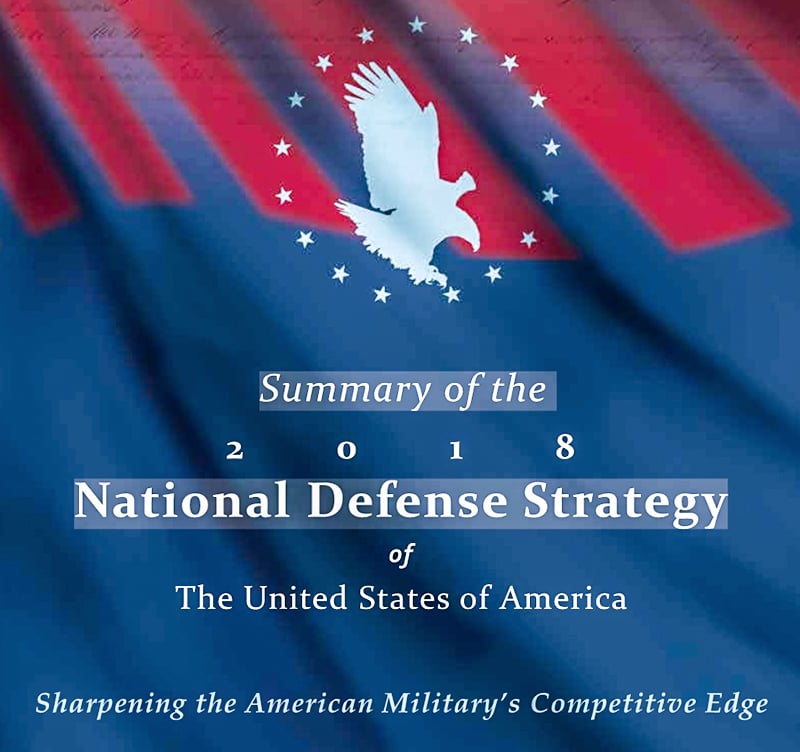
    Excerpts from Summary of the 2018 National Defense Strategy of the United States of America: “For decades the United States has enjoyed uncontested or dominant superiority in every operating domain. We could generally deploy our forces when we wanted, assemble them where we wanted, and operate how we wanted. Today, every domain is contested air, land, sea, space, and cyberspace.” In plain words: An admission of two things, namely that the US considers it right, or natural, to dominate the entire world and do what it pleases. And that it’s relative power is decreasing. • 
”Challenges to the U.S. military advantage represent another shift in the global security environment. Our network of alliances and partnerships remain the backbone of global security. China and Russia are now undermining the international order from within the system by exploiting its benefits while simultaneously undercutting its principles and ‘rules of the road.’...
LoudAnd
By Jan Oberg • Interview on “Loud & Clear” of Radio Sputnik, New York, January 22, 2018   Other posts about this issue Jan Oberg, The 2018 US National Defence Stratgey In Plain Words: Tragi-Comic! Defence News  
Imagen-thumbnail-The-Transnational-1
• “Free elections and free markets” represent “the single sustainable model for national success”. So declared the US National Security Strategy published by the Administration of George W Bush in 2002. It’s a document better known for the novelty of its proposed variation on the traditional UN provision for the legal use of force: the concept of pre-emptive self-defence. You don’t have to join many dots to infer that countries which deviate from this path of righteousness risk being regarded as security threats, and, the document continues: “As a matter of common sense and self-defense, America will act against such emerging threats before they are fully formed”. Is it heresy against free-market fundamentalism that has put one regime after another in the firing line, in the period since? Even before Bush took office, the US and allies went to war over Kosovo, in ‘Operation Allied Force’, the bombing of Yugoslavia...
RichardFalk
By Richard Falk • Prefatory Note -This post addresses the need for dialogue with the political, economic, and cultural ‘other,’ that is, those multitudes acutely alienated from and angry with secular globalism and the Enlightenment legacy often equated with ‘modernity’ and ‘modernization.’ At the core is a search for closure on the nature of reality as well as feelings about equity (given many dimensions of inequality) and ethical innovation (revisionist approaches to gender, sexuality, marriage). Does reason or faith or tradition provide greater closure? Can the Thomistic grand synthesis of the 13th Century be repeated under 21st Century condition in the rough waters of controversy generated by Trump and Trumpism? Is this too Western a way of putting the problem? I write as an American, but there are many parallels in other countries. The first step is to admit being out of touch with the ferment below the surface. A...
ChatGPT Image 9 jun 2026, 11_11_33
  • The nuclear weapon missile business is contradictory, full of missteps, highly dangerous and prepared in its madness (Mutually Assured Destruction, aka MAD, they used to call it in Cold War days) to plunge the world into a nuclear war that will reduce most of the world to dust. A new book, “The Doomsday Machine” by Daniel Ellsberg tells the whole nuclear bomb story in detail. No one has done it better. The only rival is the movie, “Dr Strangelove”, that got the essentials right without being privy to much of the Ellsberg’s knowledge. Ellsberg is the legendary whistle-blower who revealed the Pentagon papers, an expose of the US role in the Vietnam War. In this book he tells of his time in the 1960s as consultant to the Department of Defence and the White House. He drafted Robert McNamara’s plans for nuclear war- McNamara was secretary of defence...
33b1c0ef5b802f0eb18a9f1bd16ce786
  By Manlio Dinucci • Not a single nuclear power has agreed to sign the new Treaty banning nuclear weapons. We all appreciate that unilateral disarmament would be a genuine concern for such states. However, Nato, which violates the NPT (the treaty aiming at containing the proliferation of nuclear arms) every day, has gone much further. Last week, it issued a declaration stating (para 7) that atomic bombs are a factor contributing to peace; and there is no way it would contemplate relinquishing these arms, if other states retained them. Furthermore, the wording of the final paragraph is a pre-emptive strike, aimed at destroying the potential of the new Treaty from slipping into the class of treaties that create norms for inter-state relations. On 20 September, the day after President Trump presents a scenario of nuclear war in the United Nations, threatening to “totally destroy North Korea”, the “Treaty on...
nego
  By ICAN • In a document from October 17, the United States warned other NATO members that efforts to negotiate a treaty prohibiting nuclear weapons or to delegitimise nuclear deterrence “are fundamentally at odds with NATO’s basic policies on deterrence”. In the letter, the US government strongly urges allies and partners to vote no to the resolution, and “not to merely abstain.” and continues to argue that “if negotiations do commence, we ask allies and partners to refrain from joining them.” Via icanw.org Despite claiming that a ban treaty without the nuclear armed states would be meaningless, the US letter outline what they believe would be clear military implications of a ban treaty and for NATO. The document shows that the United States believe a treaty prohibiting nuclear weapons, even without the participation of nuclear-armed states, would indeed have a significant impact. The document was circulated the week before governments...
f-35-gen-iii_575
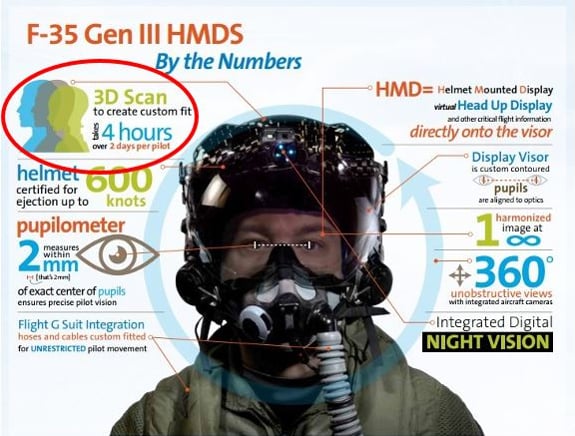
By Dan Grazier • A new Government Accountability Office report, released in October 2017, details problems the services are having keeping the F-35 fleet ready for combat. One problem it highlighted was that, at a time when the Pentagon is desperate to ramp up production of new aircraft, the services have to wait an average of 172 days—nearly six months—to repair components for the F-35 Joint Strike Fighter (JSF), when it should only take between 60 and 90 days. While this aspect of the report garnered most of the headlines, the report reveals a much more fundamental and systemic problem involving most of the latest high-tech weapon systems: Defense contractors are creating complicated support systems for the increasingly complex weapon systems the Pentagon buys, which allows the contractors to secure long-term contracts for which they have no competition from other companies. Via pogo.org The F-35 serves as the ultimate example...
ObergPhoto2cmB-W-3
• In this episode of On the News Line: Pentagon held hostage to military contractors – Video Comments by, among other, TFF director, Jan Oberg The United States Defense Department spends hundreds of billions of dollars of taxpayers’ money annually on military programs. The Pentagon heavily depends on military contractors to acquire various types of weapons, hardware and support services. Major contractors like Lockheed Martin, Raytheon, General Dynamics and Northrop Grumman are constantly competing for lucrative contracts. Such weapons manufacturers have powerful lobbies in the Congress and in the highest levels of US government. The major arms companies are even believed to influence US foreign policy to make sure their business always remains booming. The chain of arms manufacturers, their lobbyists and links in the government have come to be known as the Military Industrial Complex. A US Government Accountability Office report has revealed that the powerful contractors are even...
shutterstock_392347213
  By Dr Sam Perlo-Freeman • Today SIPRI estimated that global military expenditure in 2015 was $1676 billion, about 2.3% of the world’s total Gross Domestic Product (GDP). Such high levels of spending frequently raise concerns as to the ‘opportunity cost’ involved in military spending—the potential civilian uses of such resources that are lost. One way to put this in perspective is to compare it to social spending. Do governments spend as much money on healthcare, for example? We can also look at what else the money could achieve if it were put to other specific uses. In particular, how far would this money go towards achieving the UN’s Sustainable Development Goals (SDGs)? To compare spending on military and health expenditure worldwide, we need reliable data. For the military data, we use the latest figures from SIPRI’s military expenditure database. For the health data, we use the World Health Organization’s...
Categories

Year

Author / Contributor

Region