Global Development

Category

Year

Author / Contributor

Region

Sort by

Showing 1-10 of 75 stories

Sergi-Delgado-artwork-865x577-1
Pankaj Mishra January 13, 2020 It’s time to abandon the intellectual narcissism of cold war Western liberalism. In Radical Hope: Ethics in the Face of Cultural Devastation (2006), Jonathan Lear writes of the intellectual trauma of the Crow Indians. Forced to move in the mid-nineteenth century from a nomadic to a settled existence, they catastrophically lost not only their immemorial world but also “the conceptual resources” to understand their past and present. The problem for a Crow Indian, Lear writes, wasn’t just that “my way of life has come to an end.” It was that “I no longer have the concepts with which to understand myself or the world…. I have no idea what is going on.” It is no exaggeration to say that many in the Anglo-American intelligentsia today resemble the Crow Indians, after being successively blindsided by far-right insurgencies, an uncontainable pandemic, and political revolts by disenfranchised minorities. For nearly three decades...
StatementPic
Lund, Sverige – 22. december, 2020 Deklarationen for TFFs Globale Omstillings-kampagne Vær rar at skrive på!Sammen med millioner kan du gør en forskel. Og bed dine familie og venner om at skrive på den også (længst nede). Hvis du ikke vil læse hele deklarationen, så læs blot denne korte udgave og gå ned til “Jeg støtter forslaget…” Kort udgaveOveni de store globale problemer, vi skal have løst, er så kommet Coronaen. Deklarationen argumenterer for at verdens prioriteter er – lad os sige, perverse. For eksempel så koster alt hvad FN gør bare 3% af verdens militære udgifter.TFF – Den Transnationale Stiftelse for Freds- og Fremtidsforskning i Lund – foreslår derfor at alle lande omgående reducerer militærudgifterne med 50%. Det vil frigøre 1000 milliarder dollar – ja, du læste rigtigt. Dette ufatteligt store beløb skal bruges til at få løst de globale problemer – som klimaforandringen, fattigdommen, sulten etc – og...
saltwater-crop-technology-food-security-1440x1067-1
There is no security without food security. Geoff Tansey argues that meeting the real security needs of humanity necessitates the progressive redistribution of military budgets toward ending hunger and achieving sustainable development. Geoff Tansey December 13, 2020 As Covid-19 exacerbates inequalities nationally and globally, more and more people are becoming food insecure in both richer and poorer countries. According to the UN’s 2020 report on the State of Food Security and Nutrition in the World almost 690 million people went hungry in 2019. And the number of hungry people has been rising since 2014, well before the pandemic hit. COVID-19 could push over 130 million more people into chronic hunger, it says. That means one in every nine humans going hungry most of the time. Originally posted on Rethinking Securityon November 5th, 2020 here This matters for both human security and physical security. Last month saw the 75th anniversary of the founding of...
millions-of-new-poor
Photo credit: wsimag.com By Roberto Savio December 5, 2020 The recent meeting of the G20 – scheduled to take place in Riyadh but held virtually due to the Coronavirus pandemic – has been an eloquent example of how the world is drifting, in a crisis of leadership. It was, in a sense, a showcase. Everybody had to accept the view that the host of the meeting, the ailing King Salman of Saudi Arabia, was accompanied on TV screens by his apparent heir, Prince Mohamed bin Salman, who is clearly the mastermind of the brutal assassination, dismembering and disappearance of the body of dissident Saudi journalist Jamal Khashoggi. Originally published at the Wall Street International Mohamed bin Salman got away with it, also because of the support of Donald Trump who, in his video intervention said, among other pearls, that nobody in US history had done as much as he had...
US-EU-China
TFF Associate Not a day goes by without China appearing in Western news or social media. Almost exclusively with negative reports of human rights violations in Xinjiang or the security law in Hong Kong, government propaganda, or serious concerns that China and its communism will take over the world. Many reports and opinions from Western think tanks and researchers have been published this year about what is happening in China and how China should be approached or dealt with. The contents range from high vigilance to direct attacks in which China is labeled as a serious threat to the future of the “free world”. These pieces are widely reported in the media and often taken over by politicians for their China policy in a considerable number of Western governments. Alternative reports with different sounds or perspectives are snowed under or beaten down. As a result, the perception of China in...
innovation
Caleb Watney Resident fellow at the R Street Institute November 24, 2020 Universities are in trouble and the influx of brainpower from overseas is shrinking. The long-term consequences could be disastrous. Earlier this month, Immigration and Customs Enforcement announced that international students attending universities that switch to online-only courses in the fall would be required to leave the United States. By threatening student visas, the Trump administration, which has been pushing to reopen businesses and schools despite the continuing pandemic, was widely seen as pressuring colleges to resume in-person classes. If implemented, the visa policy could have driven away thousands of brilliant minds—the brainpower that, for decades, has proved essential to entrepreneurship and technological innovation in the United States. Originally published by The Atlantic, July 19, 2020 In the end, immigration officials backed down amid legal challenges, but some damage was already done: The administration had added to the uncertainty...
Skaermbillede-2020-09-27-133259
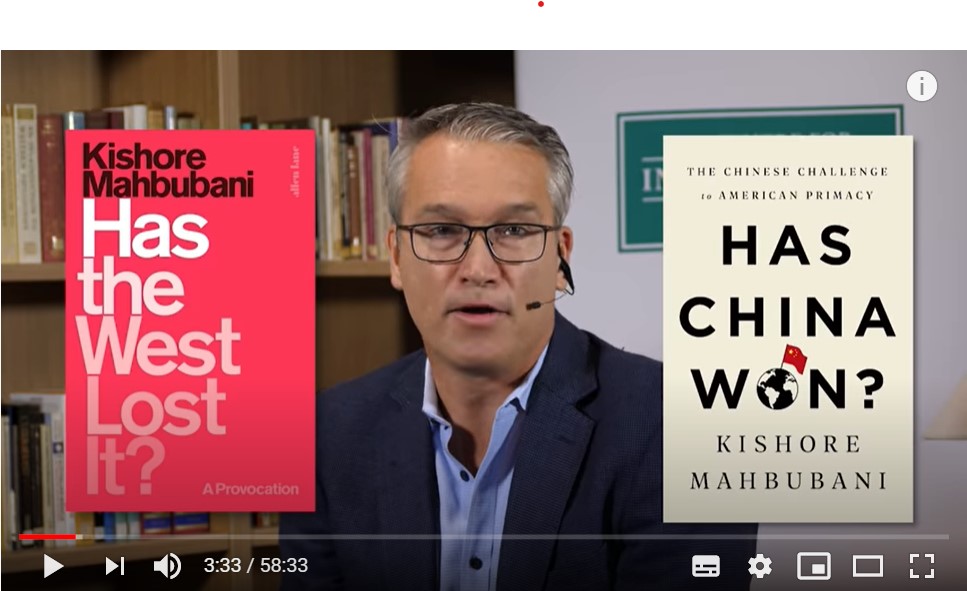
Tom Switzer September 25, 2020 CIS Executive Director, Tom Switzer interviews John Mearsheimer and Kishore Mahubani to ask Has China Won? At a time when tensions are running high, CIS Executive Director Tom Switzer asked Has China Won? Our debate between John Mearsheimer and Kishore Mahbubani, two of the world’s leading foreign policy intellectuals. Covid-19 has greatly raised tensions between China and the West. Washington and its allies express outrage at the Communist regime’s opacity concerning the outbreak of the coronavirus. Meanwhile, fears are growing that a pandemic that began in the Chinese city of Wuhan may end by increasing Beijing’s international influence and power. Kishore Mahbubani is author of Has China Won? The Chinese Challenge to American Primacy (just out, PublicAffairs) A former Singaporean ambassador to the United Nations (twice), he was the founding dean of the Lee Kuan Yew School of Public Policy. He was a guest of...
Dignism_3
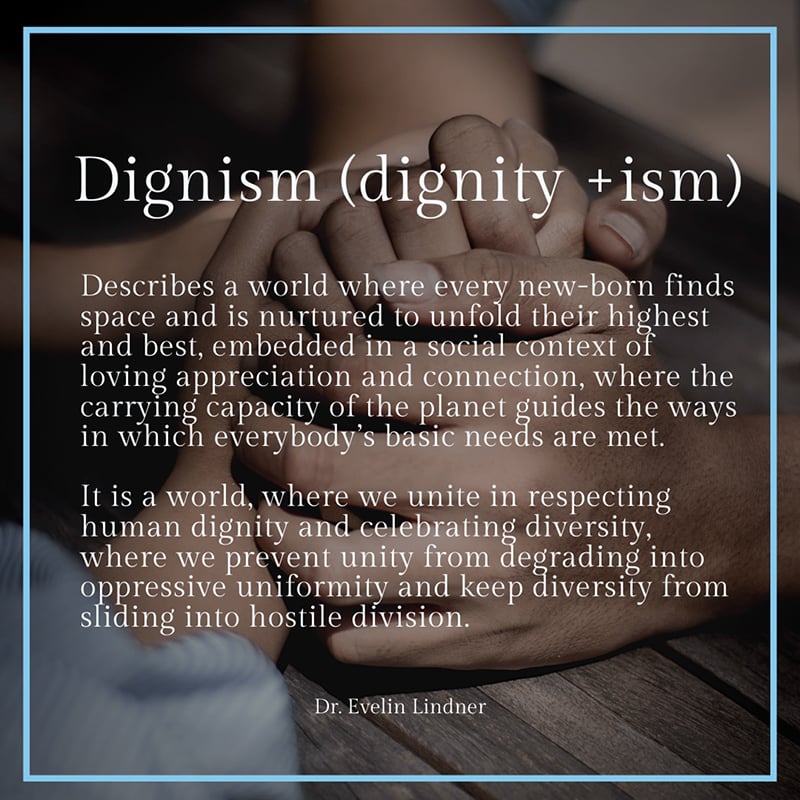
Evelin Lindner TFF Associate September 21, 2020 What We Can Do We humans have dug ourselves into a multitude of perilous crises, both despite of and because of what we call progress. Still, few people seem to realize that we live in a historic moment of unparalleled promise. For the first time, humankind has the capacity to bring about the changes we need for a Great Transition. Unlike our forebears, we have the privilege of growing awareness of the planet-as-a-whole and the understanding that we humans are one species living on one tiny planet. The conditions are in place for nurturing mutual trust and solidarity as a global species, and acting to humanize globalization and reap the benefits that flow from our interdependence. What We Do Instead of realizing this potential, we continue to shred our relations with our habitat and with each other—ecocide and sociocide. We degrade our sociosphere and our...
Screenshot
August 24, 2020 Michael Wong Vice President of Veterans For Peace, Chapter 69 America vs. China: “A Clash of Civilizations” Hillary Clinton famously said, “’I don’t want my grandchildren to live in a world dominated by the Chinese.”   During his tenure, President Obama launched his “Pivot to Asia,” moving 60% of US naval power to bases surrounding China, developing the Trans Pacific Partnership treaty specifically to economically isolate China, making Air-Sea Battle the official US doctrine explicitly to contain China militarily, and announcing boldly that his aim was to contain China’s economic rise.  Not surprisingly, China reacted with alarm. The Cold War was long over, China’s economic rise was a peaceful one, it had no aggressive intentions towards the US or anyone, and prior to Obama’s “Pivot to Asia,” relations had been stable and tension low, China argued. Such arguments from China, however, were dismissed by US leaders.    Originally published at peacepivot.org...

Nixon_and_Zhou_toast
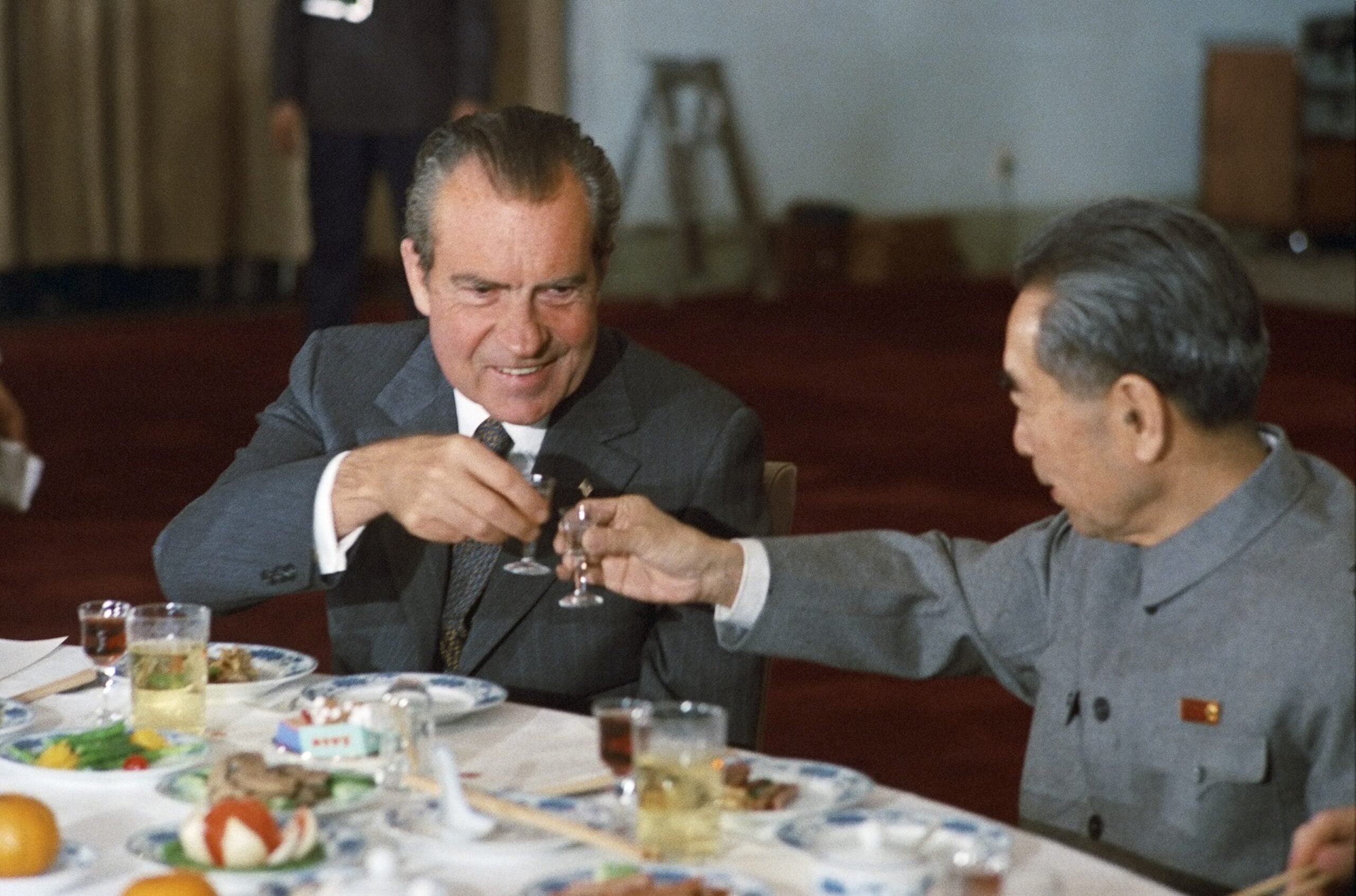
Photo: U.S. President Richard Nixon and Chinese Premier Zhou Enlai toast, Feb. 25, 1972. (White House/Wikimedia Commons) A rant by Mike Pompeo regarding what the U.S. should do with China led to a fruitful exchange between an old China, and an old Soviet hand, writes Ray McGovern. August 24. 2020 Ray McGovern Quick. Somebody tell Mike Pompeo. The secretary of state is not supposed to play the role of court jester — the laughing stock to the world. There was no sign that any of those listening to his “major China policy statement” last Thursday at the Nixon Library turned to their neighbor and said, “He’s kidding, right? Richard Nixon meant well but failed miserably to change China’s behavior? And now Pompeo is going to put them in their place?” Originally published at consortiumnews.com Yes, that was Pompeo’s message. The torch has now fallen to him and the free world. Here’s...
Vimeo
Världen efter Corona – konstruktivt Hur kommer världen att se ut de närmaste årtiondena?Vilka val har vi? Hur kan fred och rättvisa fortfarande bli möjliga? 11:e juni 2020 Jan Öberg I maj höll jag en internationell föreläsning i två delar om förändringarna i världsordningen och om hur framtiden kan bli bättre för oss alla. Den var på engelska. Jag har nu spelat in en svensk version, dock med viss anpassning här och där till svenska förhållanden och en svensk publik. Det är en föreläsning som var tänkt att hållas i Henåns Kulturhus för Fredsrörelsen på Orust, Nordens bästa. Men den fick ställas in med anledning av Coronan. Här har du den i två delar – som den också finns på på TFF:s Vimeo-kanal: Del 1 Del 2 Stort tack om du kan hjälpa sprida budskapet eller återanvända föreläsningen i dina sammanhang – t ex i seminarer, undervisningsförlopp eller på din...
ChatGPT Image 9 jun 2026, 11_11_33
Africa is suffering a double whammy after many years of success. The Coronavirus, while not taking down great numbers of people like in Europe, Asia and the Americas, has had a severe impact by curbing its exports in the face of the formers’ severe economic depression. For example, flowers grown in Kenya and Ethiopia have been particularly hit. Kenya’s flower industry employs up to 70,000 people. Ethiopia’s horticulture provides 180,000 jobs. Kenya’s overnight exports of cut flowers to Europe have been worth almost 770,000 US dollars a year, up from 134 million in 2000. Now sales are on their way to rock-bottom. At the same time parts of East Africa have been hit by plagues of locusts, the likes of which have not been seen for over 70 years. They eat everything that comes their way. For the first time in a decade in Africa, many people are going hungry...
Categories

Year

Author / Contributor

Region