General issues

Category

Year

Author / Contributor

Region

Sort by

Showing 1-10 of 103 stories

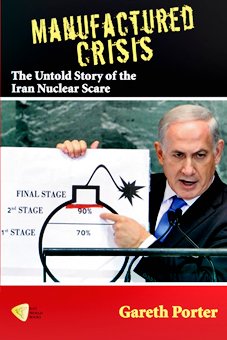
MC-cover-final-684x1024
By Farhang Jahanpour As Iran and the world powers resume nuclear talks in Vienna with the hope of reaching a comprehensive agreement over Iran’s nuclear program by mid-July, the Israelis and their lobbyists in Washington are intensifying their efforts to scuttle the talks. In addition to all the efforts in the US Congress to impose additional sanctions on Iran, thus bringing the talks to a premature end, there are indications that Israel and her friends are continuing with various acts of sabotage against Iranian nuclear facilities. In 2010, the so-called Stuxnet virus temporarily disrupted the operation of thousands of Iranian centrifuges. At least five Iranian nuclear scientists have been assassinated. Iran has also said that it has discovered tiny timed explosives planted on centrifuges but has disabled them before they could go off. On Monday 17 March 2014, Iran said that an alleged attempt to sabotage one of its nuclear...
davidkrieger
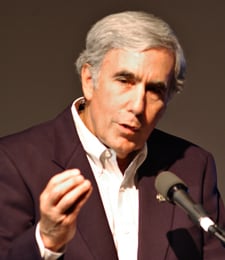
By David Krieger As the trustee of the United Nations Trust Territory of the Pacific Islands, the United States had an obligation to protect the health and welfare of the Marshallese Islanders. Instead, the U.S. conducted 67 nuclear tests in the Marshall Islands between 1946 and 1958. These 67 nuclear tests had an explosive power equivalent to 1.6 Hiroshima bombs daily for 12 years. In short, the U.S. used these islands shamefully, and the Marshallese people continue to suffer today as a result. Continue reading here
davidkrieger
Open Letter to College and University Presidents Re: Global Security 101 You are in a unique position of leadership to influence today’s youth to achieve a better tomorrow for America and the world. I am writing to enlist your help in educating young people to understand the survival challenges that face humanity in the 21st century. Education is driven by values. Young people must learn to live with reverence for life, as did Albert Schweitzer, and to support equitable and nonviolent solutions to social problems, as did Gandhi and Martin Luther King, Jr. Young people must be imbued with compassion, commitment and courage. They must learn to use their imaginations to find creative and cooperative solutions to the great issues of our time. And they must find joy in the process and take time to celebrate the miracle of living on the only planet we know of in the universe...
ChatGPT Image 9 jun 2026, 11_11_33
/10/jonathanpower2.jpg”> The agreement just signed by Iran, the US, the EU and Russia is more than a milestone, it changes the world. Perhaps. It is bitterly opposed by Israel. Prime Minister Benjamin Netanyahu seems determined to be the spoiler. Apparently Israel’s threat to bomb Iran’s nuclear facilities remains a serious option, even though such an attack would only have a limited effect and would provoke Iran to raise the ante against Israel. But that is not the only worry. There are two other things.
farhangjahanpour
By Farhang Jahanpour* With the progress of the talks in Geneva between Iran and the six world powers (the so-called P5+1) on 15 and 16 October, there is growing optimism about a lasting solution to Iran’s nuclear program and to the resumption of relations between Iran and the United States after 34 years of estrangement. After an hour-long power-point presentation by the Iranian Foreign Minister Mohammad Javad Zarif, which he called “closing unnecessary crisis, and opening new horizons”, Michael Mann, the spokesman for EU foreign policy chief Catherine Ashton who is leading the talks for the P5+1 group, described the Iranian proposal as “very useful” and said: “For the first time, very detailed technical discussions took place.” (1) The exact choice of words was also repeated by a senior US official taking part in the talks. After the formal talks between the two sides, there was another US-Iran bilateral meeting...
ChatGPT Image 9 jun 2026, 11_11_33
/10/jonathanpower2.jpg”> At the time of the “Cuban Missile Crisis” in 1962 when the Soviet Union secretly shipped into Cuba nuclear weapons and the US, under President John Kennedy, threatened to bomb them, the world came as close to nuclear war as it ever has. Robert McNamara, the US Secretary of Defence, wondered if he would ever see another sunset. At universities students marched. The crisis ended when Kennedy agreed – with only a handful of his inner circle knowing this – to remove US nuclear missiles in Turkey which, with their short flight times, threatened Russia as much as the Cuban missiles threatened the US. Many years later in June 1982, after only modest progress in mutually reducing nuclear weapons on each side, around three-quarters of a million demonstrators gathered in New York’s Central Park demanding a freeze on nuclear weapon production. The New York Times reported that “it was...
davidkrieger
By David Krieger Krieger is one of the three TFF Associates nominated for the 2013 Nobel Peace Prize When asked by a reporter why nuclear weapons are useless, Colin Powell, former US secretary of state and four-star general said: “Because they’re such horrible weapons. And so no sane leader would ever want to cross that line to using nuclear weapons. And, if you are not going to cross that line, then these things are basically useless.” In other words, one could say, nukes are nuts. There are innumerable global security issues that need to be addressed, some of which are poverty, terrorism, the climate crisis, pollution of the oceans, loss of biodiversity and forest depletion. Not one of these issues can be addressed with nuclear weapons. In fact, nuclear weapons draw much-needed resources away from solving these global problems. Nukes are nuts. Nuclear weapons are justified by their possessors for...

davidkrieger
By David Krieger The high-profile nuclear crisis on the Korean Peninsula, pitting the reigning heavyweight nuclear champion, the United States, against the bantamweight nuclear contender, North Korea, is not finished and is deadly serious. The posturing and exchanges that the world has been witnessing are capable of spiraling out of control and resulting in nuclear war. Like the Cuban Missile Crisis more than half a century ago, this crisis demonstrates that nuclear dangers continue to lurk in dark shadows across the globe. This crisis, for which the fault is shared by both sides, must be taken seriously and viewed as a warning that nuclear stability is an unrealistic goal. The elimination of nuclear weapons, an obligation set forth in the Non-Proliferation Treaty and confirmed by the International Court of Justice, must be a more urgent goal of the international community. The continued evasion of this obligation by the nuclear weapon...
richardfalk
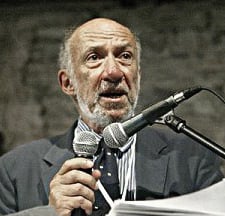
We share with your editorial (Nov. 11, 2012) the view that one of President Obama’s “singular contributions has been his vision of a world without nuclear weapons.” We would go further, and suggest that realizing this vision would ensure Mr. Obama a legacy of honor, not only for American, but for the world. Your editorial adds a caveat that nuclear disarmament “is a lofty goal that would not be achieved in his second term, or maybe for years after this.” We dissent from this bit of conventional wisdom that almost always accompanies the affirmation of the goal, almost taking back what was so grandly proposed. In our view there has rarely been a better time to initiate a negotiated process of phased nuclear disarmament, and there is no reason that such a process should be stretched out over a long period.
richardfalk
Book Review ZERO: THE CASE FOR NUCLEAR WEAPONS ABOLITION By David Krieger (published in 2013 by the Nuclear Age Peace Foundation); $14.95 I have known David Krieger for the past twenty-five years, and he has never wavered, even for a day, from his lifelong journey dedicated to ridding the world of nuclear weapons and the threat of nuclear war. If I were given to categorization, I would label such an extraordinary engagement with a cause as an instance of ‘benign fanaticism.’ Unfortunately, from the perspective of the human future, it is a rather rare condition, posing the puzzle as to why Krieger should be so intensely inclined, given his seemingly untraumatized background. He traces his own obsession back to his mother’s principled refusal to install a bomb shelter in the backyard of their Los Angeles home when he was 12 years old. He comments in the Preface to ZERO that...
farhangjahanpour
Iran and the P5-plus-1, which includes the United States, will meet again on 26 February in Kazakhstan. This is the first time that the two sides will meet in an atmosphere of continuing mutual suspicion since the third round of talks held in Moscow on 18-19 June 2012 ended in stalemate. Iran believes that the West, particularly the United States, is using the talks as a pretext to increase the sanctions until Tehran bends to its will; whereas Washington holds that Iran is prolonging the talks in order to continue its uranium enrichment with the aim of producing a nuclear weapon. The fact of the matter is that neither side is sincere in their remarks and both sides are engaged in a cat and mouse game trying to use the talks for domestic purposes and for pursuing other goals, rather than finding a mutually acceptable solution to Iran’s nuclear program.
ChatGPT Image 9 jun 2026, 11_11_33
/10/jonathanpower2.jpg”> It’s always better to talk than be super-tough. But Iran’s supreme leader, Ayotollah Ali Khamenei, last week firmly rejected the US attempt to resume negotiations over its suspected nuclear bomb making. This is nothing short of disastrous. The Ayotallah must know that now Barack Obama has been re-elected not only has he got much more room to compromise but he has effectively seen off the attempt of Benjamin Netanyahu, the Israeli prime minister, to persuade the US to attack Iran. The Ayotallah probably thinks by going eyeball to eyeball with the US he is going to win more than even Obama is prepared to give. This is nonsense and the attitude of both sides reminds me of the negotiating tactics of President John Kennedy and Soviet Premier, Nikita Khrushchev, during the Cuban missile crisis in 1963 which nearly brought the superpowers to a nuclear war.
Categories

Year

Author / Contributor

Region