Economics

Category

Year

Author / Contributor

Region

Sort by

Showing 1-10 of 97 stories

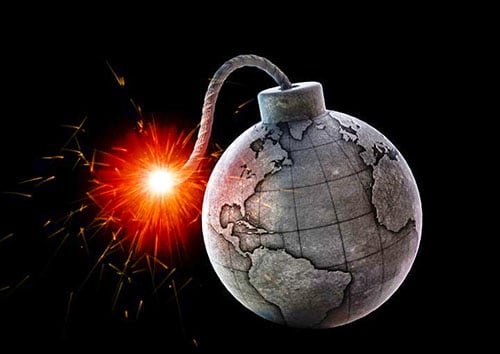
earth-as-an-exploding-bomb-720x510
By William Bowles • Before I began this essay I read through some of my past forays that mentioned climate change and capitalism, the first I think, being in 2006 where I opined in a piece on the ‘War on Terror’: Perhaps the impending climate catastrophe as well as the genocidal actions of the US will force us to finally start thinking and acting ‘outside of the box’ but without a clear idea of where we are heading or how to get there, currently the situation looks dire. — WOT is to be done? 2 November, 2006 In the intervening years, things have gotten even more dire on pretty much every front. It appears that the world’s political and business elite are even more entrenched inside their box. Except, we do know what has to be done, so why, in the face of the obvious, do we not act to forestall catastrophe? Original posted...
Imagen-thumbnail-The-Transnational-1
• “Free elections and free markets” represent “the single sustainable model for national success”. So declared the US National Security Strategy published by the Administration of George W Bush in 2002. It’s a document better known for the novelty of its proposed variation on the traditional UN provision for the legal use of force: the concept of pre-emptive self-defence. You don’t have to join many dots to infer that countries which deviate from this path of righteousness risk being regarded as security threats, and, the document continues: “As a matter of common sense and self-defense, America will act against such emerging threats before they are fully formed”. Is it heresy against free-market fundamentalism that has put one regime after another in the firing line, in the period since? Even before Bush took office, the US and allies went to war over Kosovo, in ‘Operation Allied Force’, the bombing of Yugoslavia...
Xiaomi-FeatureArt-664734054
By David Kline A year ago, Chinese smartphone maker Xiaomi (sha-oh-me) had fallen from the world’s most valuable unicorn to a “unicorpse.” Sales plunged in 2016, pushing the company from first to fifth place among China’s smartphone makers. No firm had ever come back from a wound that severe in the trench warfare of the global smartphone business. Today, Xiaomi is being called a “Chinese phoenix.” The company has grown so fast in the past year that research firm Strategy Analytics says Xiaomi could overtake Oppo, Huawei, and Apple in the next year to become the world’s second-largest smartphone vendor, behind Samsung. Executives are reportedly considering an IPO in 2018, which could be among the highest-valued ever. Via wired.com The comeback has made Xiaomi a poster child for China’s entrepreneurial dynamism. More than 10,000 new businesses are started every day in China – that’s seven Chinese startups born each minute....
John-Scales-Avery-2
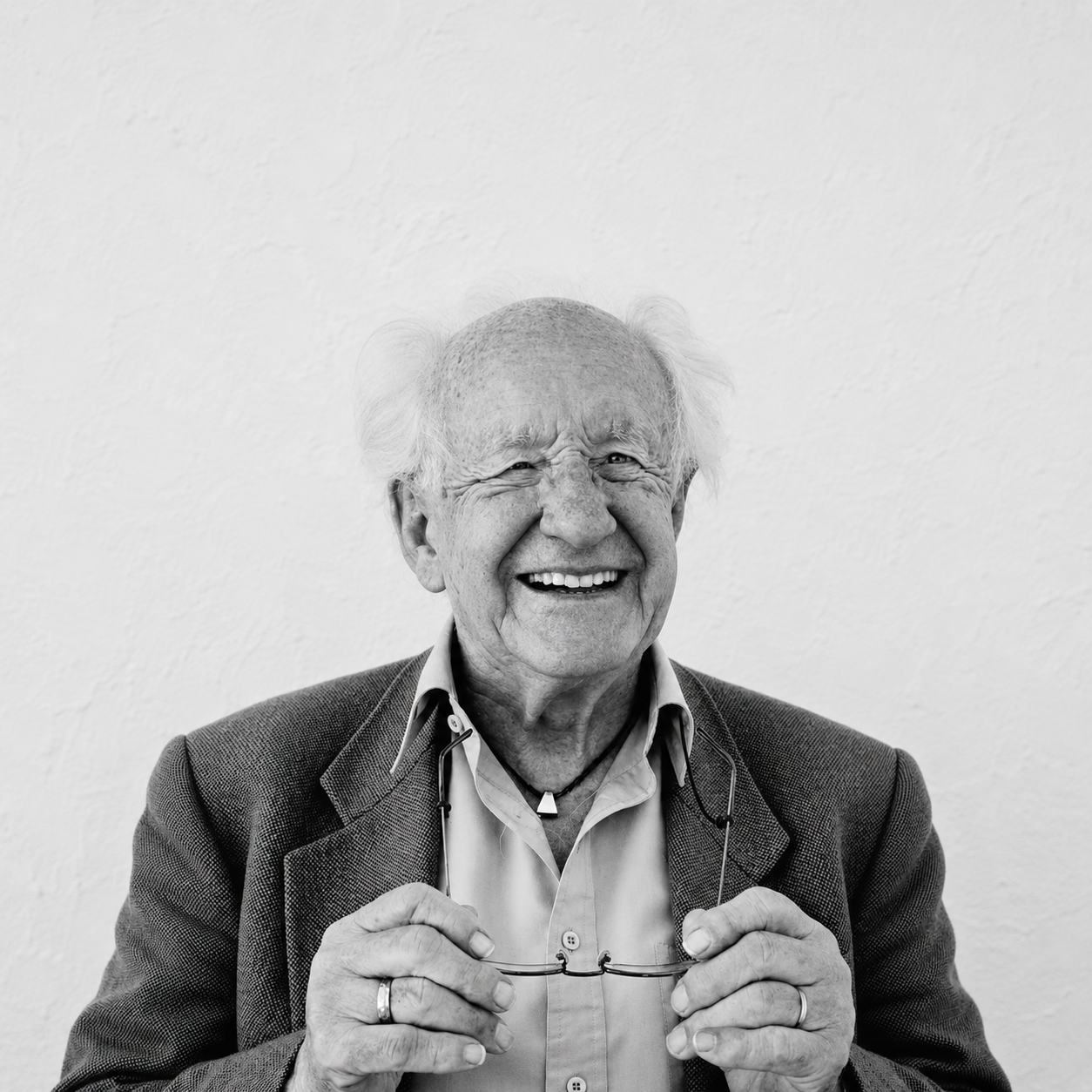
Portrait of a TFF Associate • John Scales Avery is a theoretical chemist at the University of Copenhagen. He is noted for his books and research publications in quantum chemistry, thermodynamics, evolution, and history of science. His 2003 book Information Theory and Evolution set forth the view that the phenomenon of life, including its origin, evolution, as well as human cultural evolution, has its background situated in the fields of thermodynamics, statistical mechanics, and information theory. Since 1990 he has been the Chairman of the Danish National Group of Pugwash Conferences on Science and World Affairs. Between 2004 and 2015 he also served as Chairman of the Danish Peace Academy. He founded the Journal of Bioenergetics and Biomembranes, and was for many years its Managing Editor. He also served as Technical Advisor to the World Health Organization, Regional Office for Europe (1988-1997). A complete list of books and many of...
johangaltung
• Two important words enriching each other. “Nonviolent” easily becomes bla-bla, and “economy” is too general. But, does “nonviolent” make a difference for the better to the economy?  And vice versa, can “economy” make “nonviolent” more positive, beyond resistance to evil? Let us start with “economy”, here conceived of as a cycle with three poles: Nature, Production, Consumption. And three processes: Extraction from Nature, Distribution from Production to Consumption, and Pollution from Production-Consumption back to Nature. The cycle flow is in that order: Nature → Production → Consumption → Nature. Via transcend.org A simple summary of the economy: humans extract resources from nature, produce-process for (end) consumption, and sends what they cannot consume back to nature (but economists, like book-keepers, left out the Nature part). And we want it all to be nonviolent! “Do no harm!”, nonviolent, is insufficient.  “Peace”, “peaceful” include positive peace–Peace Economics, A Theory of Development are...

shutterstock_392347213
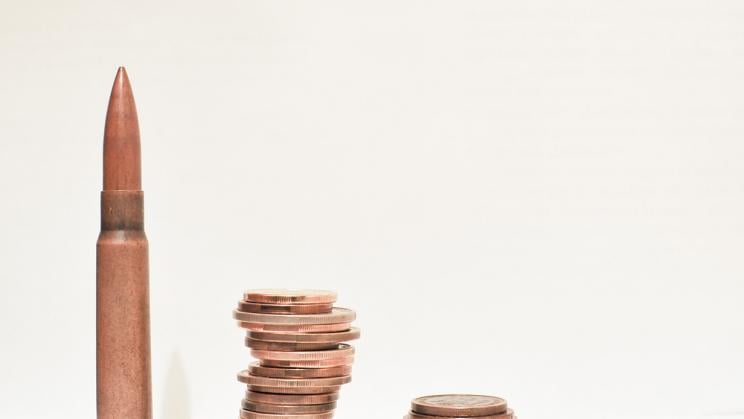
  By Dr Sam Perlo-Freeman • Today SIPRI estimated that global military expenditure in 2015 was $1676 billion, about 2.3% of the world’s total Gross Domestic Product (GDP). Such high levels of spending frequently raise concerns as to the ‘opportunity cost’ involved in military spending—the potential civilian uses of such resources that are lost. One way to put this in perspective is to compare it to social spending. Do governments spend as much money on healthcare, for example? We can also look at what else the money could achieve if it were put to other specific uses. In particular, how far would this money go towards achieving the UN’s Sustainable Development Goals (SDGs)? To compare spending on military and health expenditure worldwide, we need reliable data. For the military data, we use the latest figures from SIPRI’s military expenditure database. For the health data, we use the World Health Organization’s...
ObergPhoto2cmB-W-3


 Can the almost total destruction of Eastern Aleppo be used constructively? 
 
 Only if we are willing to ask and dialogue about this: 
 
 Why does the world go on investing US$ 2000 billion annually in warfare and US$ 30 in all the UN does – only to create destruction of people, places, past and future?
 
 How absurd, how meaningless – indeed how far must it go to destroy the West itself – before we learn to conflict intelligently? The Meaninglessness Of War by Jan Oberg on Exposure
 
 •
 
 I’ve see much destruction during my work in conflict zones the last 25 years. But nothing compares with Aleppo and the destruction of Syria and its people. 
 Nothing – absolutely nothing – can justify this barbarian process, not even an alleged dictatorship and ruthless regime policies. 
 
 We must learn from Aleppo...
johangaltung
The Cold War ended by an agreement that the USSR leaves Eastern Europe and the USA does not enter the area. What the USA did is treason, like Sykes-Picot. NATO expanded from 16 to 28: Bill Clinton added Poland, Czech Republic and Hungary; George W. Bush the Baltic Slovakia, Slovenia, Romania and Bulgaria; Obama attached Croatia and Albania. In 1999, 2004 and 2009, respectively. However, did those countries want it? They could have made their own pacts with neither USSR nor USA. The Soviet empire, and the Soviet Union itself, had collapsed. With NATO at the border, Russia took back its 1954 Crimea gift to Ukraine within the Soviet Union. Kiev with US help fought in Eastern Ukraine to make ethnic Russians escape to Russia. Maybe 60% did. Enters world history: The Pope and the Patriarch declare their Christianities one and the same (Havana Airport, VIP Lounge, 14 Feb 2016)....
ChatGPT Image 9 jun 2026, 11_11_33
Once again the media is presenting us with the images of the mother of all famines – stretching from the Yemen to Somalia, to Sudan and South Sudan, to the Central African Republic, to northern Nigeria. It’s a bad famine but there have been bad famines in the not so distant past – the great Ethiopian one in 1985 which triggered the rock star, Bob Geldorf, to organise a massive world-wide popular response. (I remember running with tens of thousands of other campaigners in London’s Hyde Park.) Before that, in 1974 at the World Food Conference, there was a real feeling that the world was running out of food and dramatic new policies must be put in place by the richer countries. They were and much progress was made. Between 1990 and 2015 the proportion of children under five who were malnourished fell from 25% to 14% of the world’s...
ChatGPT Image 9 jun 2026, 11_11_33
Eleven hundred years ago Europe was a backwater. There were no grand cities, apart from Cordoba in Spain which was Muslim. The Middle East was much further ahead, still absorbing the intellectual delights and challenges of Greek science, medicine and architecture which Europeans were largely ignorant of. In southern China agriculture advanced and trade in tea, porcelain and silk flourished. By 1914 it was a totally different world. The Europeans ruled 84% of the globe and they had colonies everywhere. How was it that Europe and its offspring, the United States, became the dominant dynamic force in the world, and still are today in most things? If I walk round my university town and stop the first ten students I meet and ask them why this was so they would probably say because of the Industrial Revolution. But in 1800 when the Industrial Revolution was only just beginning Europeans already...
johangaltung
What is the essence of democracy? “Rule with the consent of the ruled” implies two classes of people, Rulers and Ruled; concretely State and People, Statism. “Free and Fair Elections” implies voting for a Parliament; Parliamentarism. Together, a three-tier power structure State-Parliament-People; with People controlling Parliament, and Parliament controlling State. In 2016 some voting differed from what State-Parliament expected; leading to talk about elitist vs populist democracy – from statism and parliamentarism to peopleism. A crisis. And talk about post-democracy. Another answer about democratic essence is “one-tier self-ruling units”; no rulers vs ruled, and decisions are made by general assemblies for all. This is often referred to as Anarchism, “no structure”. A misnomer: there is no State and no Parliament, but many assemblies. A concrete interpretation would be Localism, the units being local authorities – LAs, municipalities; the assemblies being their municipal councils. A key dimension then becomes the level...
johangaltung
Two closely related points, as a starter. This column has argued Lifting the Bottom Up as economic approach in all weathers, bad, fair, good, to mitigate any suffering, and for them to enter the economy as producers and consumers, not as “cases”. This column has also argued judging Trump not by his poisoning words, nor by commentators’ words, but by his deeds. White-male-workers-no college is not the US bottom, but they were heading down. Now lifted up the Trump way, by keeping/bringing back industry to the “Rust Belt”. Ford Motor Company just did that, GM may be next. If outsourcing to Mexico – under the euphemism “trade” served poor Mexican workers, maybe–but it serves rich elites in both countries. 45 percent tariff on Chinese goods: a non-starter. US homes are filled with affordable “Made in China”. To de-industrialize was US stupidity; to re-industrialize will take time. Keep what is, bring...
Categories

Year

Author / Contributor

Region