Conflict

Category

Year

Author / Contributor

Region

Sort by

Showing 1-10 of 517 stories

internationallaw_ShenukaCorea
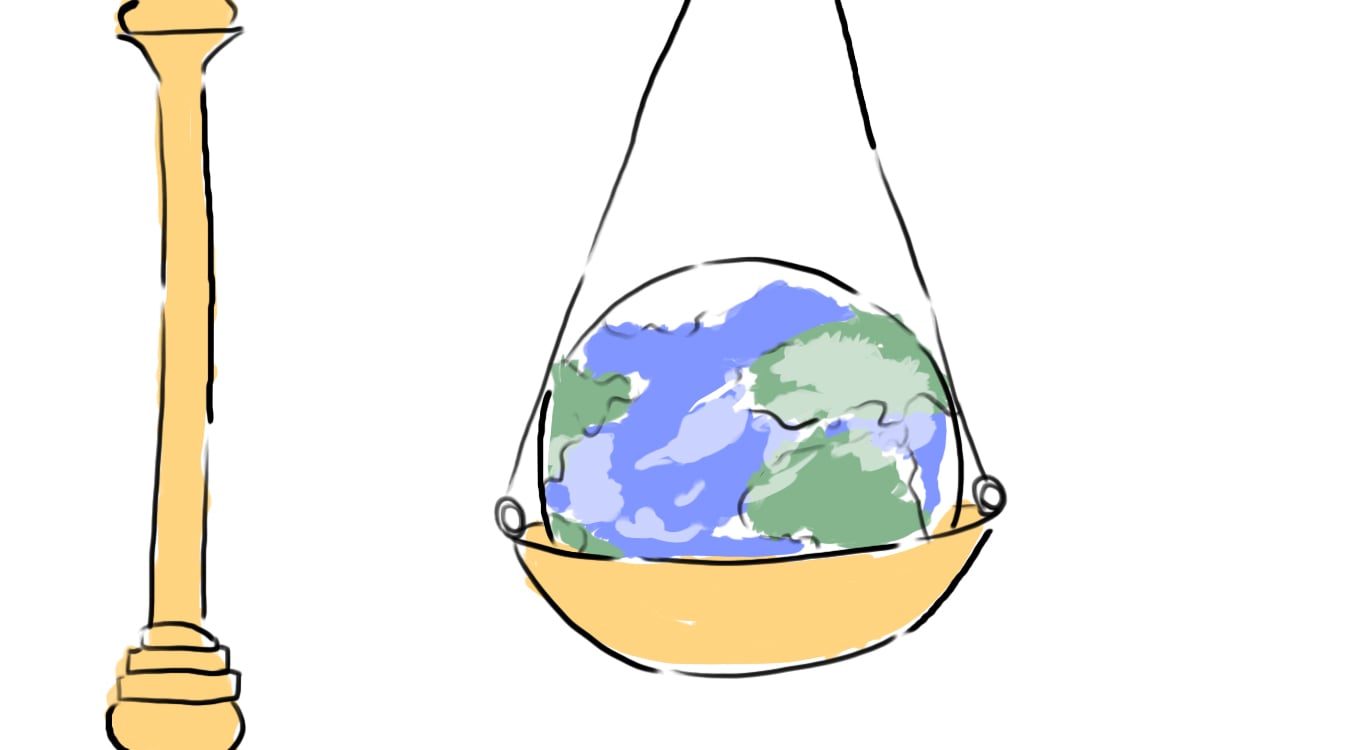
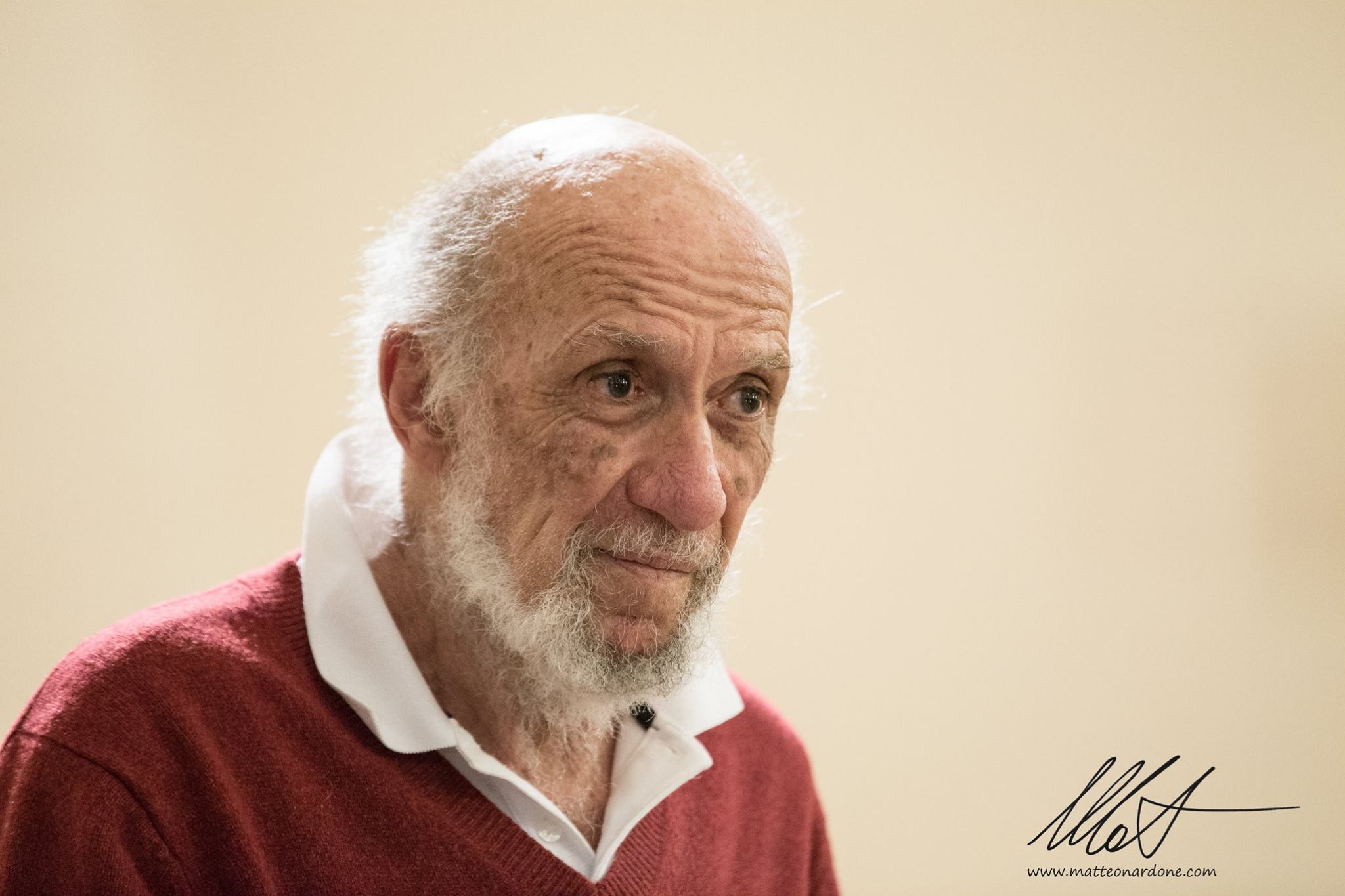
Illustration by Shenuka Corea By Richard Falk, TFF Associate March 12, 2020 Prefatory Note International law – as so much else of value – has fallen on hard times, violated and ignored, where applicable and needed. Although this is a deplorable state of affairs as the planet burns and vulnerable people suffer from ecological hazards and predatory geopolitics, it is the time to heighten struggle, and not sit home in despair. This essay in a slightly modified form was written at the request of Fikir Turu, an online source of commentary operating from Turkey, and published in Turkish. An English version was also published in Transcend Media Service, TMS, 17 February 2020. Published at Richard Falk’s personal blog  Respecting International Law: A Practical Argument International law disappoints in so many ways, making it easy to overlook why, despite its flaws, it remains valuable and indeed vital for human wellbeing. I put here...
soldiersnature
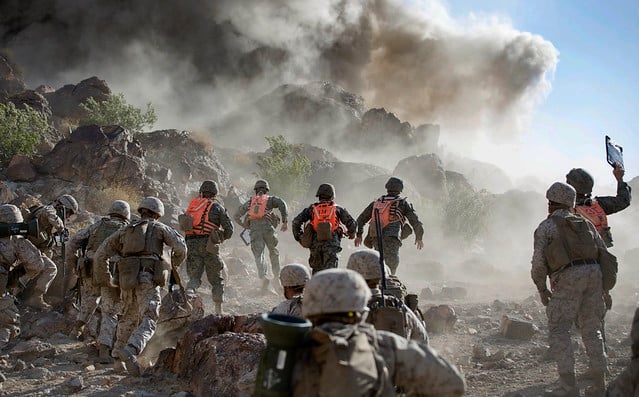
By Judith Deutsch March 10, 2020 The world situation is much worse than generally acknowledged. This December, the coinciding meetings of NATO and of the climate change Conference of the Parties (COP25) were barely reported, much less analyzed, even though the delegates held the fate of humanity in their hands. To some degree, both meetings are secret, and their unelected delegates are not accountable to the public. COP has met far from the ‘maddening crowd’ ever since the large protests at Copenhagen COP15. NATO provides credibility, flexibility, and anonymity in equal doses and shields member states from legal and political accountability. NATO policy is not to reveal which member state participated in a military operation.(1) NATO countries refuse to sign the nuclear ban treaty and now legitimize a nuclear-weapons first strike. To judge by the results delegates in both organizations chose to ignore both science and the human situation. Originally...
us-china-relations
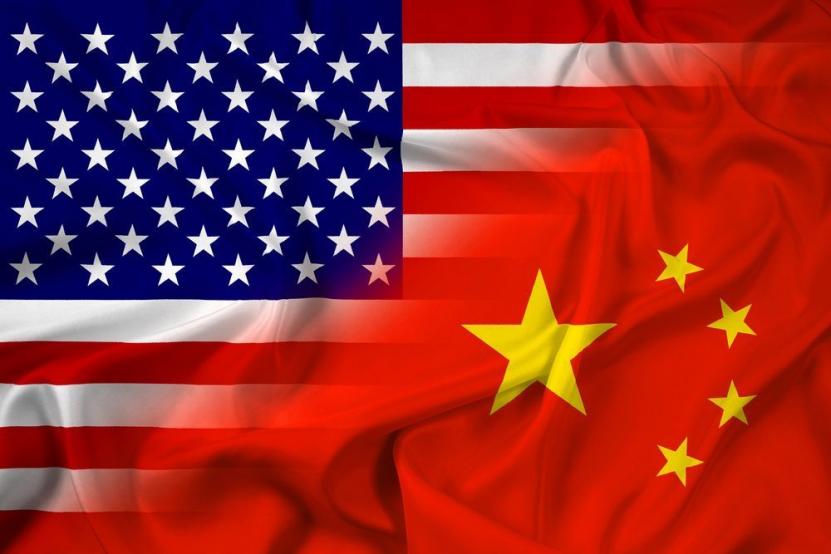
Ambassador Chas W. Freeman, Jr. (USFS, Ret.) Senior Fellow, Watson Institute for International and Public Affairs, Brown University Washington, DC  29 November 2018 Ladies and Gentlemen: You have asked me to say a few words about China’s rise and its role in the post-American world.  There is a lot of nonsense being voiced on this topic at present.  It’s timely to address it.  I played a minor part in the original opening of China to the West.  Somewhat like Leonard Zelig or Forrest Gump in other contexts, over the course of fifty years as China returned to wealth and power, I was often on or in the scene.   I am happy to share some impressions with you. Originally posted on Chas W. Freeman, Jr.’s personal blog on November 29, 2018 here After serving in India, working to keep China out of the United Nations, and studying Chinese in Taiwan, I...
erdo.paint_
PhotoPainting by the author Diagnosis, prognosis and treatment in the light of Turkey’s invasion and the risk of a larger catastrophic war. By Jan Oberg March 7, 2020 Diagnosis The world looked at the violence but didn’t have the capacity to analyze the underlying conflicts in and around Syria. For sure, it is a civil war but, to a much larger extent, it is an international regime-change war. In 2006 William Roebuck, US chargé d’affaires in Damascus, advocated that US policy should focus on destabilizing the Syrian government and al-Assad. At a meeting in Marrakech on December 12, 2012, lots of countries under Western leadership – perversely calling themselves Friends of Syria on the initiative of French President Sarkozy – decided to oust President Assad by decree and establish a National Council which, from then on, was supposed to be the only legitimate Syrian governing body and representative of the...
guerra-del-golfo-naturaleza-viva_1718483347
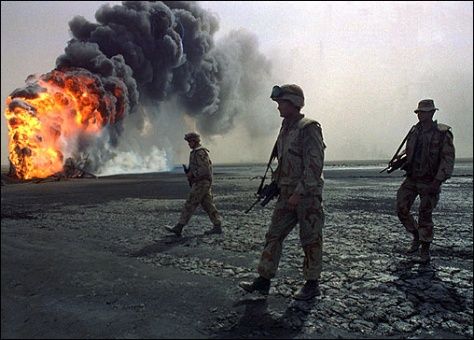
By Caroline Davies February 17, 2020 Extinction Rebellion (XR) US has four Demands for our governments, local and national, the first of which is “Tell the Truth”. One truth that is not being told or spoken about openly, is the carbon footprint and other sustainability impacts of the US Military.  Originally posted on WorldBeyondWar on February 4, 2020 here I was born in the UK and, although I am now a US citizen, I have noticed that people are very uncomfortable saying anything negative about the US Military here. Having worked with many injured veterans as a physical therapist, I know how important it is for us to support our veterans; many Vietnam veterans still feel hurt about being blamed and discriminated against when they came home from that war. As horrific as wars are for everyone involved, especially the civilians in the countries we are attacking, the soldiers follow...
soldiersnature
Today TFF launches “Bootprint – Militarism and Environment” – a curated, free-of-charge online magazine that brings you quality knowledge about the connections between the two most urgent problems that humanity faces. These two main clusters of problems which, if not solved, threaten to destroy humanity, our Earth and all future potentials are: Environment – with catchwords such as climate change, global warming, CO2 footprint, non-sustainability, pollution, resource depletion, species extinction, variety and diversity reduction, rain forest destruction, overconsumption, fossil fuels economy, limitless material growth, etc. etc. – and Militarism – with catchwords such as warfare, nuclear weapons, arms production and trade, militarization of land, air, space and oceans, tension creating, interventionism, base networks, terrorism, cyber and propaganda warfare, other weapons of mass destruction, special forces operations, intelligence agency crimes, imperialism, etc. The two clusters a fundamentally connected – militarism is enormously destructive of the environment; climate change and other processes...

1024px-Universitetshuset_i_lund
The main building of Lund University, situated next to the Lund Cathedral in the centre of town And why I lived happily ever after Albeit small, this is a piece of Nordic academic history that deserves to be shared. It’s an early example of the destruction of Nordic peace and conflict research and education that followed By Jan Oberg February 10, 2020 Last November 2019, it was 30 years since I left Lund University as associate professor and head of the Lund University Peace Research Institute, LUPRI, from 1983-1989. I did so, and have been a freelancer ever since because the Faculty of Social Sciences that year had decided to close down all inter or multi-disciplinary research and teaching, units and departments at the university – that is, peace and conflict research, women studies, human rights studies, environmental studies and human ecology studies. In my view, this was a disastrous...
goodinevil
By David Loy Buddhism encourages us to be wary of antithetical concepts, not only good and evil, but success and failure, rich and poor, even the duality between enlightenment and delusion. Originally posted in Tricycle’s Magazine in spring 2002, here If only there were evil people somewhere, insidiously committing evil deeds, and it were necessary only to separate them from the rest of us and destroy them. But the line dividing good and evil cuts through the heart of every human being. And who is willing to destroy a piece of his own heart? Alexander Solzhenitsyn Because it emphasizes mindfulness of our thought processes, Buddhism encourages us to be wary of antithetical concepts, not only good and evil but success and failure, rich and poor, even the duality between enlightenment and delusion. We distinguish between the opposing terms because we want one rather than the other, yet the meaning of each depends...
solemanii
By Craig Murray January 31, 2020 In one of the series of blatant lies the USA has told to justify the assassination of Soleimani, Mike Pompeo said that Soleimani was killed because he was planning “imminent attacks” on US citizens. It is a careful choice of word. Pompeo is specifically referring to the Bethlehem Doctrine of Pre-Emptive Self Defence. Originally posted on Craig Murray’s personal blog on January 4, 2020, here Developed by Daniel Bethlehem when Legal Adviser to first Netanyahu’s government and then Blair’s, the Bethlehem Doctrine is that states have a right of “pre-emptive self-defence” against “imminent” attack. That is something most people, and most international law experts and judges, would accept. Including me. What very few people, and almost no international lawyers, accept is the key to the Bethlehem Doctrine – that here “Imminent” – the word used so carefully by Pompeo – does not need to have its normal...
death
By Nicolas J.S. Davies January 27, 2020 The numbers of casualties of U.S. wars since Sept. 11, 2001, have largely gone uncounted, but coming to terms with the true scale of the crimes committed remains an urgent moral, political and legal imperative, argues Nicolas J.S. Davies, in part two of his series. Originally posted on Consortium News April 3, 2018 here Part One here In the first part of this series, I estimated that about 2.4 million Iraqis have been killed as a result of the illegal invasion of their country by the United States and the United Kingdom in 2003. I turn now to Afghan and Pakistani deaths in the ongoing 2001 U.S. intervention in Afghanistan. In part three, I will examine U.S.-caused war deaths in Libya, Somalia, Syria and Yemen.  According to Ret. U.S. General Tommy Franks, who led the war against the Taliban in Afghanistan in reaction to 9/11, the U.S. government...
RichardFalk
By Richard Falk, TFF Associate Januar 22, 2020 Prefatory Note: The post below is a somewhat amplified version of an interview with C. J. Polychroniou, journalist and professor of political economy at West Chester University, which was published on January 7, 2020, in the online journal, Global Policy. As the interview was conducted in December 2019, it fails to address the various disruptive consequences of the assassination of Qasem Soleimani, including the violation of Iraqi sovereignty, Baghdad being the site of the drone attack, as well as the risks of war arising from an escalating tit-for-tat cycle of actions and reactions. Given growing tensions between the interconnectedness of the world and the state-centric character of international law, including contradictions between totalizing and disregarding territorial sovereignty, state-centric world order is being increasingly marginalized by geopolitical behaviour that both generates and suppresses transnational political violence. A normative crisis with structural implications exists,...
death
By Nicolas J. S. Davies* January 17, 2020 How many people have been killed in America’s post-9/11 wars? I have been researching and writing about that question since soon after the U.S. launched these wars, which it has tried to justify as a response to terrorist crimes that killed 2,996 people in the U.S. on September 11th, 2001. Originally posted on Consortium News, January 15, 2020, here But no crime, however horrific, can justify wars on countries and people who were not responsible for the crime committed, as former Nuremberg prosecutor Ben Ferencz patiently explained to NPR at the time. “The Iraq Death Toll 15 Years After the U.S. Invasion” which I co-wrote with Medea Benjamin, estimates the death toll in Iraq as accurately and as honestly as we can in March 2018.  Our estimate is that about 2.4 million people have probably been killed in Iraq as a result of the historic act of aggression committed by the U.S. and U.K. in...
Categories

Year

Author / Contributor

Region