Conflict – violence and war

Category

Year

Author / Contributor

Region

Sort by

Showing 1-10 of 206 stories

Screenshot
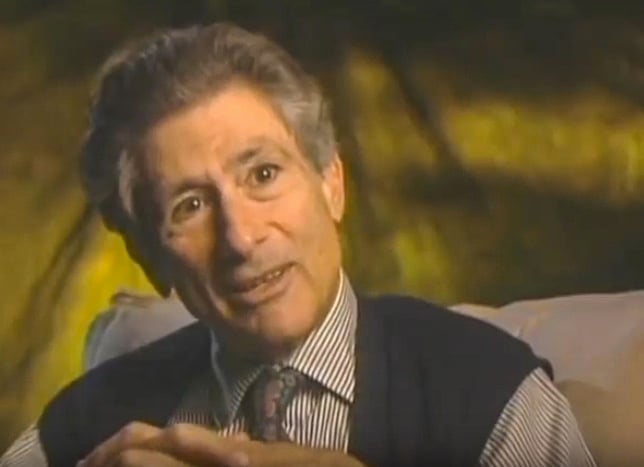
  By Edward Said Edward Said’s book “Orientalism” has been profoundly influential in a diverse range of disciplines since its publication in 1978. In this engaging (and lavishly illustrated) interview he talks about the context within which the book was conceived, its main themes and how its original thesis relates to the contemporary understanding of “the Orient.” Said argues that the Western (especially American) understanding of the Middle East as a place full of villains and terrorists ruled by Islamic fundamentalism produces a deeply distorted image of the diversity and complexity of millions of Arab peoples. Director: Sut Jhally, 1998.   Jan Oberg comments TFF and I pay tribute to this extraordinary intellectual who so sadly died only 67 years old in 2003 – perhaps most known for his book about Orientalism published in 1978, i.e. 40 years ago. Said could know, neither in 1978 nor up to his death,...
1-1
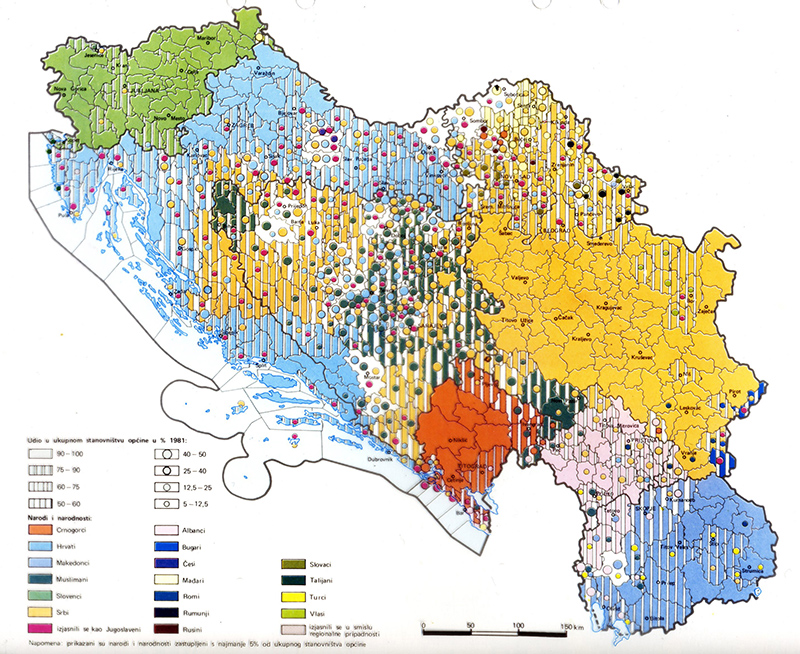
The ethnic map few understood. Should make it clear that cutting up Yugoslavia in independent republics could not be done without bloodshed. (1) Yellow = Serbs, Dark Green = Muslims, Light Blue = Croats,  Light Green = Slovenes, Orange = Montenegrins, Pink = Albanians, Darker Blue = Macedonians   , marks the 19th anniversary of NATO illegal and illegitimate bombing of Yugoslavia, Serbia and its Kosovo, province during 78 days. It has – one is tempted to say: of course – been conveniently forgotten by the West itself. It was masterminded by the United States under Bill Clinton and Secretary of State Madeleine Albright after the so-called negotiations between Serbs and Albanians in Rambouillet outside Paris (the parties never met face-to-face) While Clinton may be best remembered for his relations with Monica Lewinsky and his wife, Hillary Clinton, some of us also remember him (and Albright) for bombing Afghanistan, Sudan,...
johangaltung
* Today marks the 15th Anniversary of the US invasion of Iraq. Neither solid analyses, moral reasoning and decent argument nor history’s probably largest pre-war, anti-war demonstrations worldwide had any discernible impact on the Bush and Blair Administrations’ decision to go to war and do so on a false pretext. Neither could major allies like France and Germany by their opposition to the war on Iraq persuade Washington and London to first try a peaceful resolution in accordance with the UN Charter provisions. TFF was deeply engaged in preventing this war – also by being on the ground in Iraq – and wants to a) document the research we did and how we argued back then and b) contribute to this tragedy never being forgotten. We also want to place our analyses and debate articles at the disposal – in one place – of the students, researchers, concerned citizens and...
richard-falk-cropped-internal
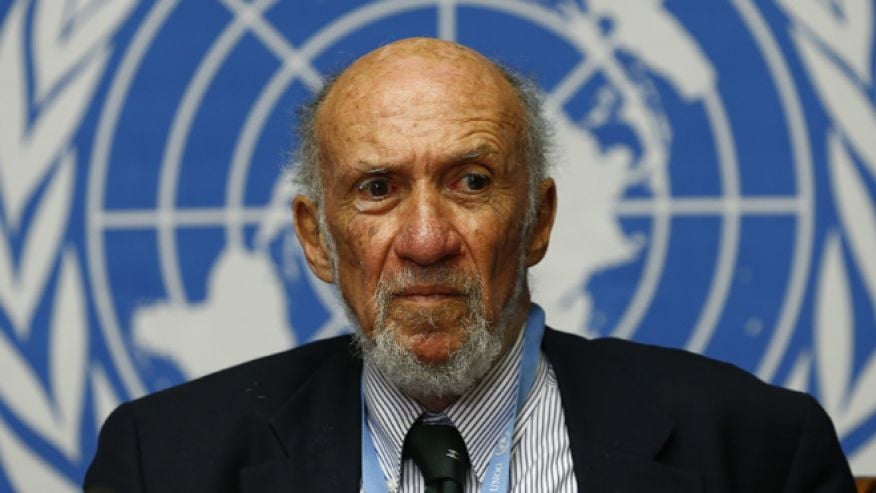
New book by TFF Associate, Richard Falk, on the Vietnam War Revisiting the Vietnam War And International Law: Views and Interpretations of Richard Falk Editor Stefan Andersson Cambridge University Press, 2017 (US $ 157) Paperback UK £ 28 here Why the Legal and Political Debate on the Vietnam War Still Matters Introduction There has been recently a revival of interest in the Vietnam War, perhaps most notably as a result of the quite extraordinary 10-episode Ken Burns & Lynn Novick’s ten-part, eighteen hour documentary film as aired on PBS, which although somewhat ideologically slanted toward an American audience has much illuminating footage, especially bearing on various Vietnamese perceptions of the war experience. I would also call attention to a series of articles by Matthew Stevenson describing his recent visit to Vietnam – “Why Vietnam Still Matters: An American Reckoning” – which combines acute journalistic observation with impressive commentary on the...
images
By Robert J. Burrowes 24 Jan 2018 • As our world spirals deeper into an abyss from which it is becoming increasingly difficult to extricate ourselves, some very prominent activists have lamented the lack of human solidarity in the face of the ongoing genocide of the Rohingya. See ‘The Rohingya tragedy shows human solidarity is a lie’ and ‘Wrongs of rights activism around Rohingyas’. While I share the genuine concern of the Yemeni Nobel peace laureate Tawakkol Karman and Burmese dissident and scholar Dr Maung Zarni, and have offered my own way forward for responding powerfully to the ongoing genocide of the Rohingya – see ‘A Nonviolent Strategy to Defeat Genocide’ – in my view the lack of solidarity they mention is utterly pervasive and readily evident in our lacklustre official and personal responses to the many ongoing crises in which humanity finds itself. To mention just the most obvious:...
map_fa12ed9c2c07a838f8f9b76c947ace37.nbcnews-ux-2880-1000
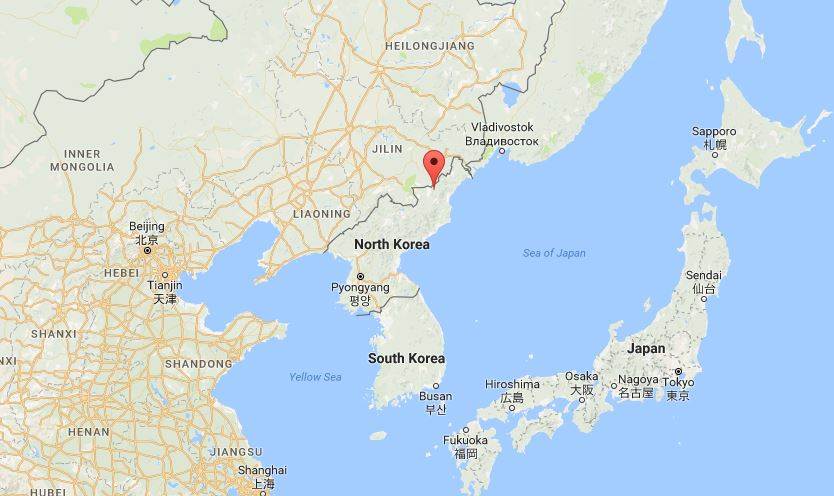
  -2018, the risk of nuclear war has surfaced more or less permanently in the media – the catchword being “North Korea” and the media being Western. It’s all been seen from the West’s point of view, nobody pointing out, for instance, that North Korea’s military expenditures are around 1% of those of the United States. And President Trump found it appropriate to talk about his bigger nuclear button – in response to a pretty pathetic statement from Kim Jong-un about having his on his desk in front of him all the time. In short, an extremely a-symmetric conflict with North Korea, for all practical purposes, seeing enemies and no reliable friends all around it and therefore in need of one tool which it has learned from others that it can be good to have when you are alone and you’re the weaker: nuclear weapons. In 2010, the New York...
Evelin_Lindner_2017
New book by Evelin Lindner • Humankind has reached a boiling point. Violence, hatred, and terror have become deeply entangled with honor, heroism, glory, loyalty, and love. Over the past five percent of modern human history on planet Earth, roughly the past ten millennia, human activity has reached a crescendo of rapid and ruthless competition for domination, a fight for power over people and the planet, where “might” has become “right.” Within this context, a dangerous culture of honor has evolved, in which destruction is mercilessly merged with love: “It is my duty, if I love my people, to heroically destroy our enemies and secure all resources for us,” underwritten by an ominous motto: “If you want peace, prepare for war.” Humanity has haphazardly constructed an entire world-system on top of this merger, holding the whole world hostage through never-ending cycles of domination and humiliation. The consequence, today, is the...

John-Scales-Avery-2
Portrait of a TFF Associate • John Scales Avery is a theoretical chemist at the University of Copenhagen. He is noted for his books and research publications in quantum chemistry, thermodynamics, evolution, and history of science. His 2003 book Information Theory and Evolution set forth the view that the phenomenon of life, including its origin, evolution, as well as human cultural evolution, has its background situated in the fields of thermodynamics, statistical mechanics, and information theory. Since 1990 he has been the Chairman of the Danish National Group of Pugwash Conferences on Science and World Affairs. Between 2004 and 2015 he also served as Chairman of the Danish Peace Academy. He founded the Journal of Bioenergetics and Biomembranes, and was for many years its Managing Editor. He also served as Technical Advisor to the World Health Organization, Regional Office for Europe (1988-1997). A complete list of books and many of...
johangaltung
Keynote Speech, International Peace Research Association (IPRA) – 7 Jan 2006 On professionalization in general Generally, the sociology of professions identifies three characteristics of a profession: The purpose of peace research is to produce intersubjectively communicable and verifiable KNOWLEDGE according to the general rules of research. Thus, research is incompatible with secrecy, as research has to take place in public space. And one purpose of peace studies is the communication of the findings of peace research, in line with general rules for education, another public space activity. The free access of the rest of society to what happens is of the essence. As peace workers are not planning to hurt or harm, in other words to exercise violence, s/he has nothing to conceal. In the following a person exercising the peace profession will be referred to as “peace worker”, like “social worker”, or “peace professional” like “health professional”. Others may...
lenin_300
• Published in Bulletin of Peace Proposals 3-1990, pp 287-298 and on TFF’s homepage at the same time   1. Four hypotheses The West has lost a close enemy, the Soviet Union and Eastern Europe. Which reactions can be discerned and what psycho-political emotions are they indicative of? How did the West cope with the first years of this new post-Cold War situation? Can we mourn the death of an enemy, can we heal ourselves after the loss? How does one learn to live a new life without a close enemy? Has the West done what it ought to do for itself and for the former enemy? “The West” of course is a term hanging loose. We employ it in this article as meaning interchangeably “NATO, the Western hemisphere, the United States and Western Europe and a few cases, Western or Occidental culture”. The first hypothesis of this essay is...
Imagen-thumbnail-The-Transnational
By Vijay Prashad • In the final segment of Paul Jay’s interview with Vijay Prashad on Reality Asserts Itself, the subject is the undermining of international law and military interventions in the name of human rights. Watch the full episode… From The Real News Network Via youtube.com
gandhi
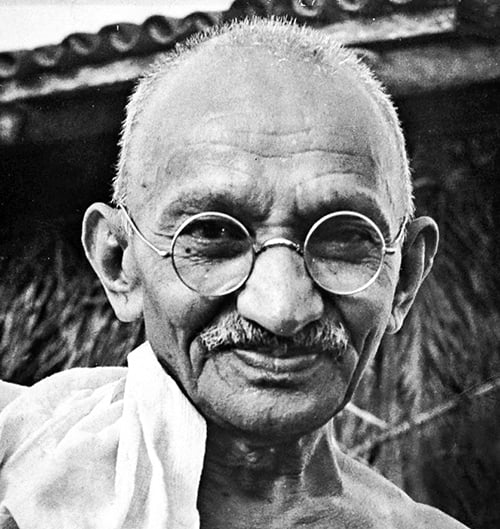
By Bhikhu Parekh Via gandhifoundation.org • If he were alive today, how might Mahatma Gandhi, the greatest apostle of non-violence, challenge Osama Bin Laden’s worldview?  Bhikhu Parekh is Vice-President of The Gandhi Foundation, a professor of political philosophy, a Labour peer, and the author of three books on Gandhi. This article first appeared in Prospect magazine in April 2004. Like millions around the world, I found the atrocities of 9/11 abhorrent and utterly condemn such acts of terror. Despite the war against terror, we continue to see more horrors such as that in Madrid. What drives the bombers? How do they live with their deeds? Is there no alternative to the cycle of violence? No one is better qualified to advise on this than Mahatma Gandhi, the great apostle of non-violence. My imaginary exchange between him and Bin Laden tries to do two things: to comprehend at least part of the...
Categories

Year

Author / Contributor

Region