Conflict – violence and war

Category

Year

Author / Contributor

Region

Sort by

Showing 1-10 of 206 stories

181022_r33055
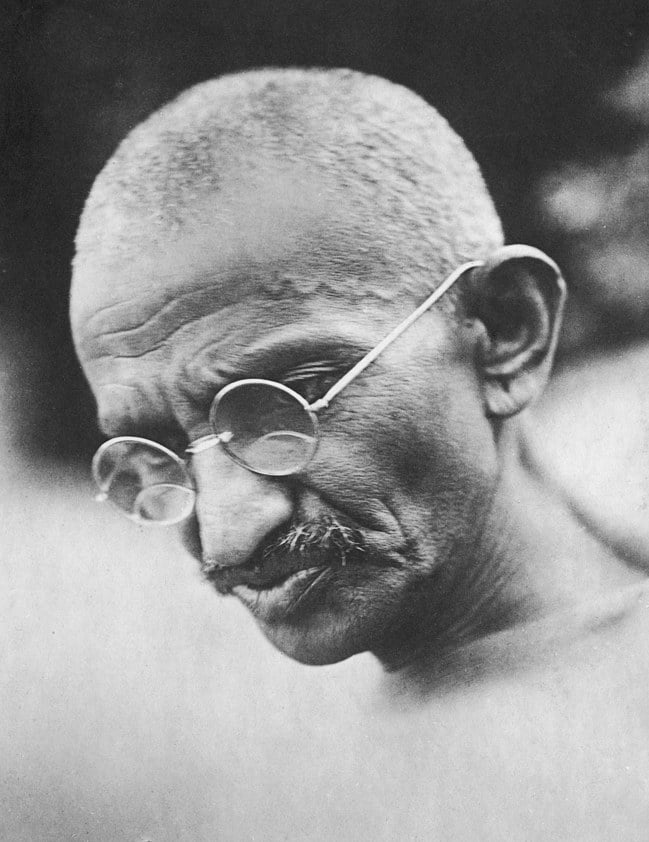
The icon’s legacy is no longer secure, but he anticipated much about our current political moment By Pankaj Mishra January 11, 2019 In 2015, in South Africa, where Mohandas Gandhi lived from 1893 to 1914, a statue of him was defaced by protesters. The following year, the University of Ghana agreed to remove Gandhi’s statue from its campus, after an online campaign with the (misspelled) hashtag #Ghandimustfall charged the Indian leader with racism against black Africans. Compared with other recent targets of political iconoclasts—stalwarts of the Confederacy and Cecil Rhodes—Gandhi seems an unlikely symbol of racial arrogance. Nelson Mandela claimed that Gandhi’s tactics offered “the best hope for future race relations”; Martin Luther King, Jr., held Gandhi up as a model; decades before that, black activists such as Adam Clayton Powell, Sr., and Benjamin Mays were enthralled by the phenomenon of an Indian leading people of color in the campaign...
ChatGPT Image 9 jun 2026, 11_11_33
  “We need jaw jaw not war war”, said Winston Churchill rather hypocritically. Still, he would be glad to see that the number of wars around the world has fallen dramatically since the end of World War 2, despite the wars in Korea, Africa, Afghanistan, Iraq, Libya, Lebanon, Pakistan versus India, Central America, Cyprus, ex-Yugoslavia, Syria and now Yemen. Compared with centuries past this has been a remarkable era, yet one not often acknowledged. Interstate wars, apart from India versus Pakistan, Afghanistan, Saudi Arabia and Yemen, have vanished off the map. The wars that remain are civil wars. The democracies do not go to war with each other, as British Prime Minister Margaret Thatcher long ago observed. According to a detailed study made by the Economist last month, analyzed all international wars since 1900, along with the belligerents’ wealth and degree of development. It counted all conflicts in which at...

Skaermbillede-4
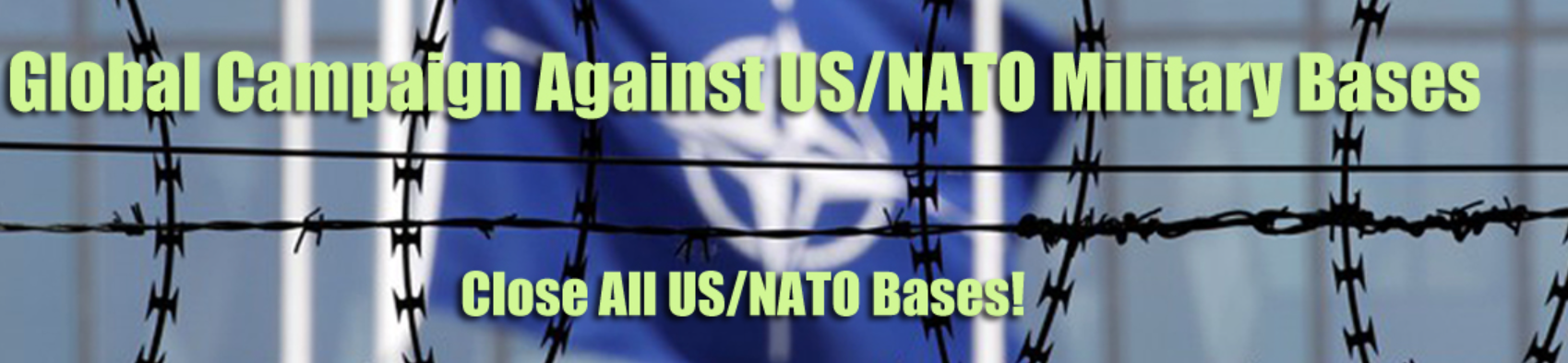
Photocredit: nousnatobases.org   By Mairead Maguire, Nobel Peace Laureate and TFF Associate Presented at the International Conference against US/NATO Military Bases, 16-18 Nov 2018, Dublin, Ireland. November 27, 2018   Dear Friends, It is good to be here with you all. I would like to thank the organizers for inviting me to address the conference. Firstly I thank you all for your work for peace. It is good that we will have an opportunity in the next few days to get to know each other and together discuss what kind of a world we want to live in? There will be many different perspectives on this and the way forward, but let us agree to respect each other and to engage in deep listening and conversation no matter how hard and where the dialogue might take us! Originally published at transcend.org Let us be encouraged by the fact that we have made...
18932770_401
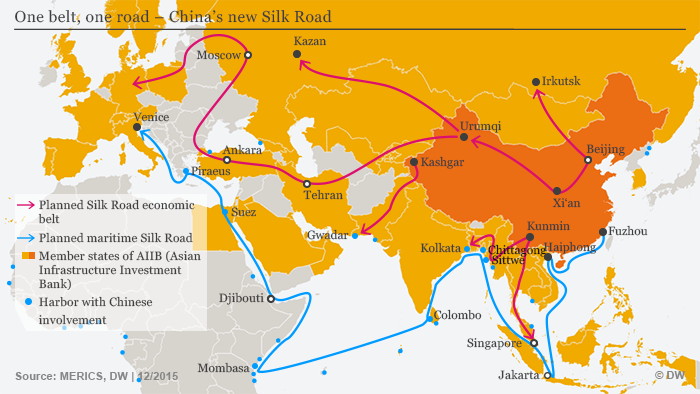
The Belt and Road Initiative has turned 5 years. On September 7, 2013, at the Nazarbayev University in Astana, Kazakhstan, President Xi Jinping of China launched the Belt and Road Initiative (BRI). This initiative – which has attracted a lot of attention from all over the world – was launched to “promote the economic prosperity of the countries, strengthen mutual learning between different civilizations and promoting world peace and development.” The historical roots, of course, is the ancient Silk Road from China through Eurasia to Europe and Africa. At the time of the mentioned speech, 60+ countries were on the list. Now, 5 years later and as the initiative gains momentum, there are more than 100 countries involved in various ways and roles. And the “Silk Roads” now points in all directions, including Australia, New Zealand, Japan, even the USA. The BRI has become a global force – a civilian...
Ben_Ferencz-copy
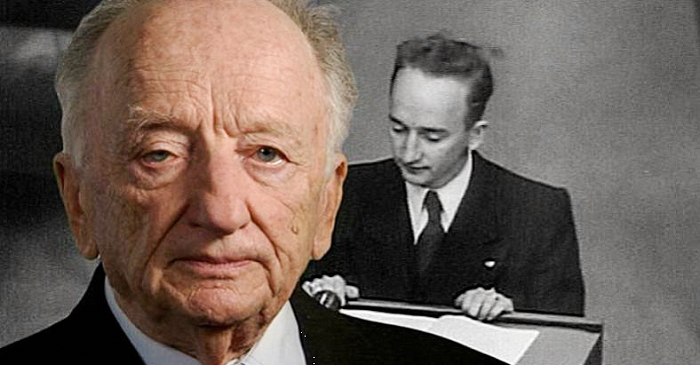
  This is literally a unique experience of extraordinary educational value: Listen to 98-year old Ben Ferencz sharing his crystal clear perception of the human stupidity of war – all wars – and how he sees the situation of humanity. He remains a realist, he says, with more optimism than pessimism. Listen to him telling about his truly amazing, unique life as a lawyer devoted to the common good of humanity and to securing justice but also human care for victims as well as perpetrators. He is the last surviving Nuremberg Tribunal prosecutor and has thought more than probably anyone about the psychology and politics of evil. Ferencz is a staunch believer in abolishing wars as such and, of course, in nuclear weapons abolition. He challenges the entire Military-Industrial-Media-Academic Complex, MIMAC, and argues that there is only one winner in wars: Death. If you are a teacher, get your students...
the-cold-war-russia-america
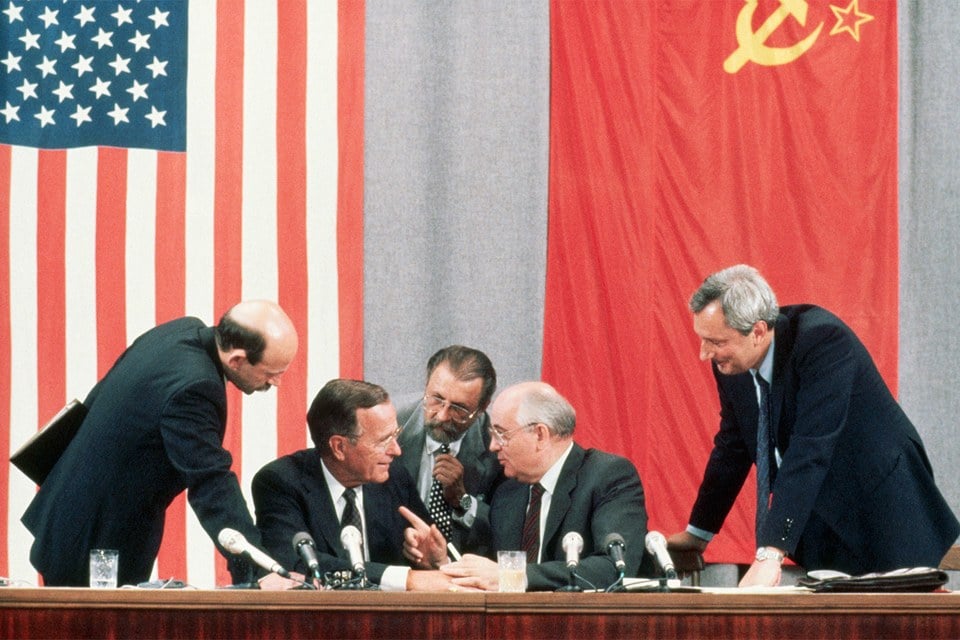
Photo: US President George Bush and Soviet President Mikhail Gorbachev at the Moscow Summit 1991 By Peter Turnley/Corbis/VCG/Getty Images Over the last four month, ten articles about the new Cold War have been published on the TFF Associates blog. And on our social media you’ll find hundreds of brilliant, informative posts written by others. While this new Cold War is certainly different from the first Cold war that ended in 1989, we are not in doubt that there is a new such tragic war and that the risk of military confrontation between Russia and NATO countries in Europe has increased. We also happen to think it could have been avoided. This Cold War has to do with, among many other things, NATO’s counterproductive expansion since 1994, the way Yugoslavia broke down and was broken up, with Ukraine and now Syria as well as – perhaps surprisingly to some – the...
JO2016_1_10Sepia_thumb-e1512818772877
A personal pledge provoked by the debates about Syria   By Jan Oberg   Summary About 95% of all debates about conflicts and war that we see in politics, mainstream media, the Internet and social media focus on the violence, who uses more or less of it and who is, therefore, the evil party. This approach places direct violence – such as human rights violations, killings, bombings etc. – in the centre of the attention and that is unfortunate because violence is always only a symptom. I call this the simplifying or reductionist approach; invariably it has populist connotations too and usually ends up in mud-slinging. I argue in this analysis that this reductionist approach is counterproductive and that – because of the defining characteristics of these debates – the underlying conflicts/problems that cause the violence are never in focus and that no international complex conflict can be explained even...
cropped-davidindc-1-e1516137163905
By David Swanson May 29, 2018 “Memorial Day is a time to remember, appreciate, and honor the selfless patriots who gave the ultimate sacrifice in service to freedom. At a time when our country seems so divided, we must not forget that it is because of their service and sacrifice that we live in the most free and prosperous nation on Earth.” Congressman Tom Garrett It would be difficult to count all of the lies in the above statement. It’s about the U.S. Memorial Day on May 28, 2018. Let’s just highlight a few. Originally published at David Swanson’s “Let’s Try Democracy” – May 28, 2018 Let’s start with “most free.” The British-based Legatum Institute, which ranks the United States 18th in overall “prosperity,” ranks it 28th in “personal freedom.”(1) The U.S.-based Cato Institute ranks the United States 24th in “personal freedom” and 11th in “economic freedom.”(2) The Canadian-based World...
Screenshot
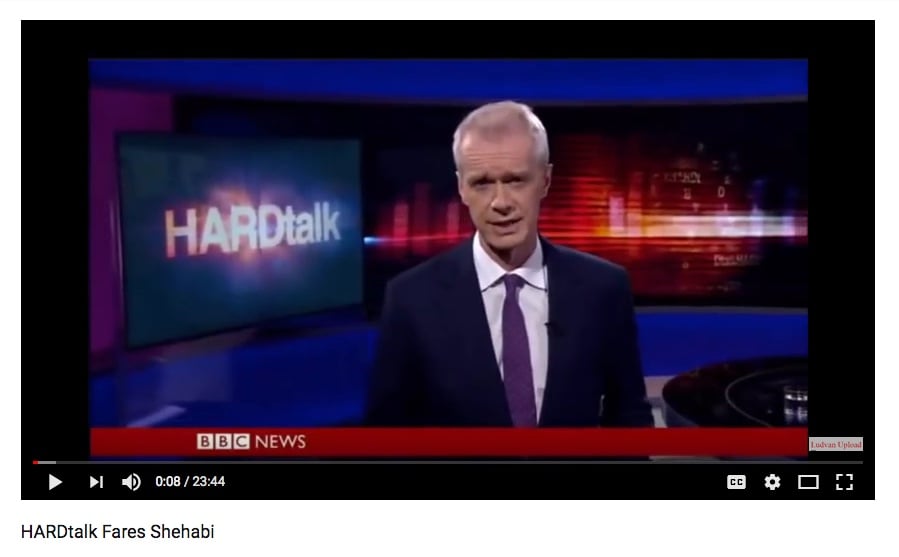
  The violence in Syria has occupied the world since it broke out in 2011. The underlying conflicts and various explanations are still lost in the heated debate about the violence and who is to blame – both of which are much easier than understanding this hugely complex conflict formation in a longer time and space perspective. Teachers in international politics, activists and journalists would do wise in trying to find pedagogical examples of just how differently the same problem can actually be perceived. This edition of BBC’s “Hard Talk” could be used in classrooms – for a better understanding of why we still don’t understand much of the underlying issues in the case of Syria. This – indeed hard – discussion is between two men who both have knowledge, passion and self-esteem. They are also both arguing well their viewpoints – which are about as different as can be...
786be20f99b4493b9782507b9ca84abf_18
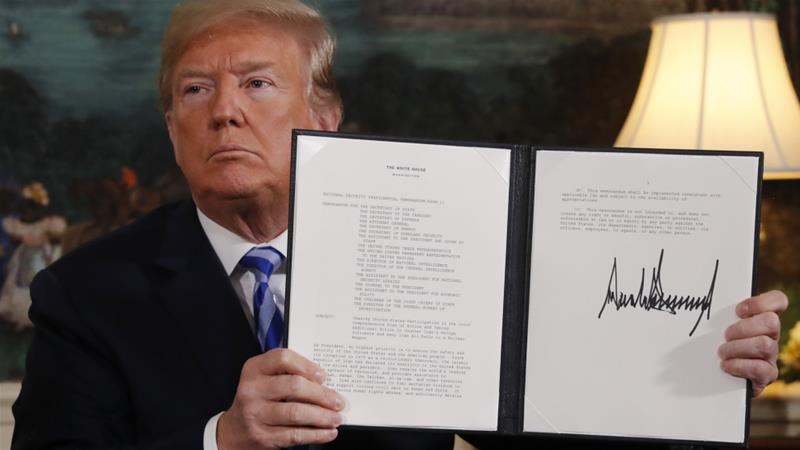
  – all about this agreement and its text here). Noteworthy is that the nuclear deal is incorporated into international law by UN Security Council Resolution 2231, even though the U.S. already at that point stated – as an exceptionalist state – that it did not consider the deal binding for it. With the exception of Germany, the deal was negotiated – cynically, of course – by countries which have themselves thousands of nuclear weapons. It never mentioned the only state in the region that possesses them, against international law in the form of UN resolutions and, additionally, has not signed the Non-Proliferation Treaty (NPT). That state is Israel whose nuclear weapons Western politicians and their loyal, politically correct media omit mention of – as systematically and uniformly as if orchestrated by an invisible hand from above. Back in 2014-15, many of us stated that the alternative to a negotiated...
cropped-david6
 In the park today I saw a teenager watching two little kids, one of whom apparently stole a piece of candy from the other. The teenager rushed up to the two of them, reprimanded one of them, and stole both of their bicycles. I felt like it was my turn to step in at that point, and I confronted the bicycle thief. “Excuse me,” I said, “what makes you think you can commit a larger crime just because you witnessed a smaller one? Who do you think you are?” He stared at me for a while, and replied: “the U.S. military.” Originally published at David Swanson here There is no crime larger than war. There is no way to legalize it. The Kellogg-Briand Pact bans it, and the United Nations Charter bans it with narrow exceptions that have not remotely been met by any of the U.S. wars of the...
cropped-david6
    By David Swanson April 9, 2018 Back in the 1890s those who believed conquering a continent was killing enough (without taking over Hawaii, the Philippines, Cuba, Puerto Rico, etc.) included Speaker of the House Thomas Reed. He clipped an article out of a newspaper about a lynching in South Carolina. He clipped a headline about “Another Outrage in Cuba.” He pasted the two together (fake news!) and gave them to a Congressman from South Carolina who was pushing for a war on Cuba. The Congressman eagerly read the article, then stopped, looked puzzled, and remarked “Why, this isn’t Cuba.” Originally published on David Swanson’s Lets’ Try Democracy here I recommend trying this trick. Clip an article about Israelis murdering Palestinians, or some outrage in a U.S. prison or a Saudi square or under the rain of humanitarian bombs in Afghanistan, Pakistan, Syria, Yemen, Somalia, Iraq, Libya, or elsewhere;...
Categories

Year

Author / Contributor

Region