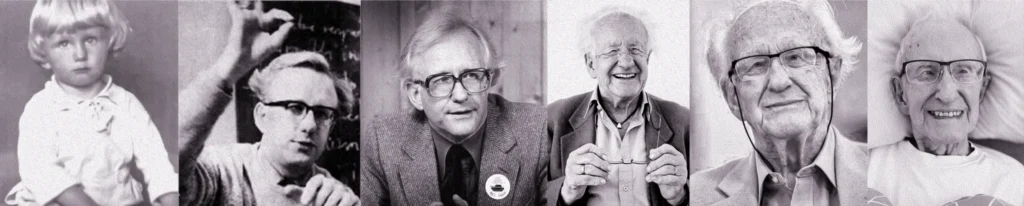
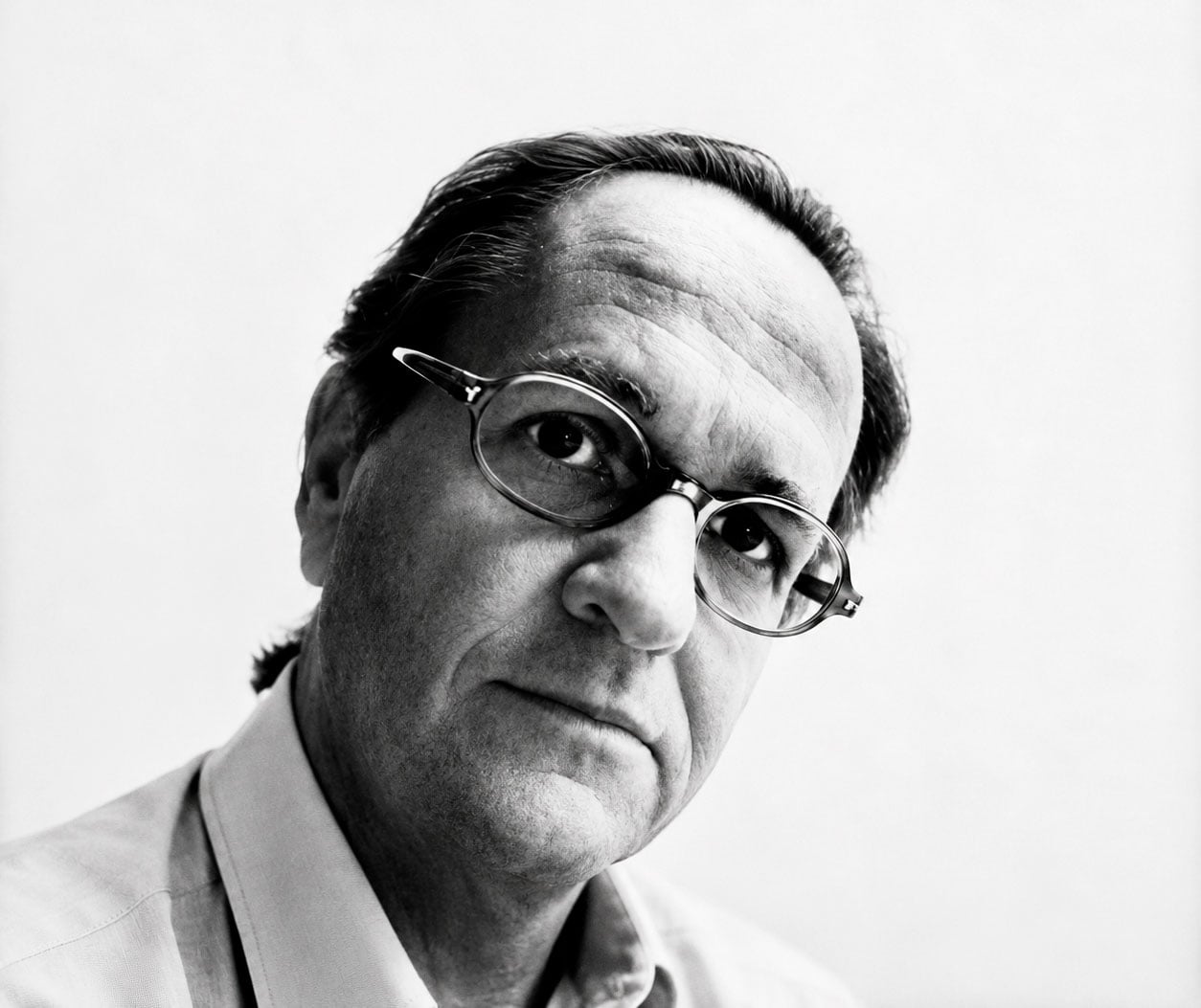
Johan Galtung 1930-2024

A memorial for the world renowned peace and future researcher

Classics

Category

Year

Author / Contributor

Region

Sort by

Showing 1-10 of 25 stories

FreeComposition_1_1200_100dpi
A Critical Analysis Of A Report By The Newlines Institute And The Raoul Wallenberg Center On March 8, 2021, the Newlines Institute for Strategy and Policy in Washington published a report, The Uyghur Genocide: An Examination of China’s Breaches of the 1948 Genocide Convention in cooperation with the Raoul Wallenberg Centre for Human Rights in Montreal. It states that ”This report is the first independent expert application of the 1948 Genocide Convention to the ongoing treatment of the Uyghurs in China. It was undertaken by the Newlines Institute for Strategy and Policy, in cooperation with the Raoul Wallenberg Centre for Human Rights, in response to emerging accounts of serious and systematic atrocities in Xinjiang province, particularly directed against the Uyghurs, an ethnic minority, to ascertain whether the People’s Republic of China is in breach of the Genocide Convention under international law.” The Report – hereafter The Report – has been produced with the contributions of, and upon...

IMG_9126
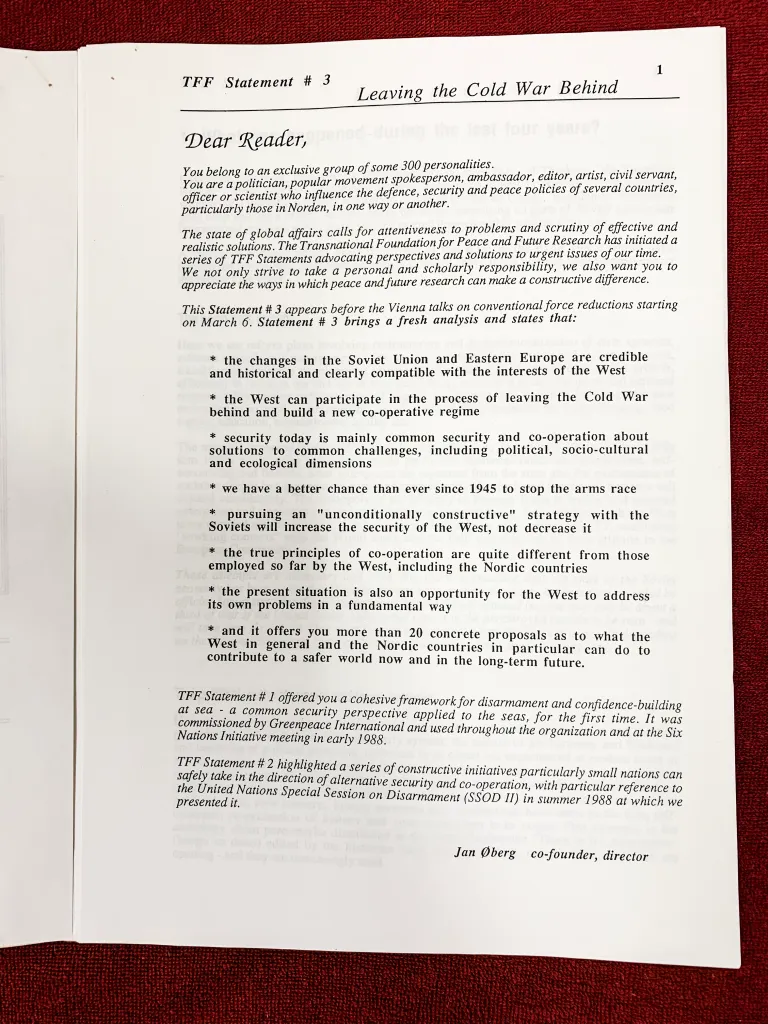
This is the digitalized version of a TFF Statement published by TFF’s Board almost 31 years ago. Could that be of any interest today? First, it reflects the situation and the issues discussed at the time as well as the hopes for a better future – now sadly lost. Secondly, it is one example of how peace researchers were thinking and made constructive political recommendations, available for anyone to take inspiration from – which virtually no one in power did. So, it’s a piece of international political as well as intellectual history. Third, it is an indicator of what the West could – and should – have done to have been in a much better situation than it is today. Admittedly, this is a contra-factual argument, but it can be defended on intellectual grounds although not empirically proven. Fourth, the authors pointed out a series of longterm priorities which match...
the-cold-war-russia-america
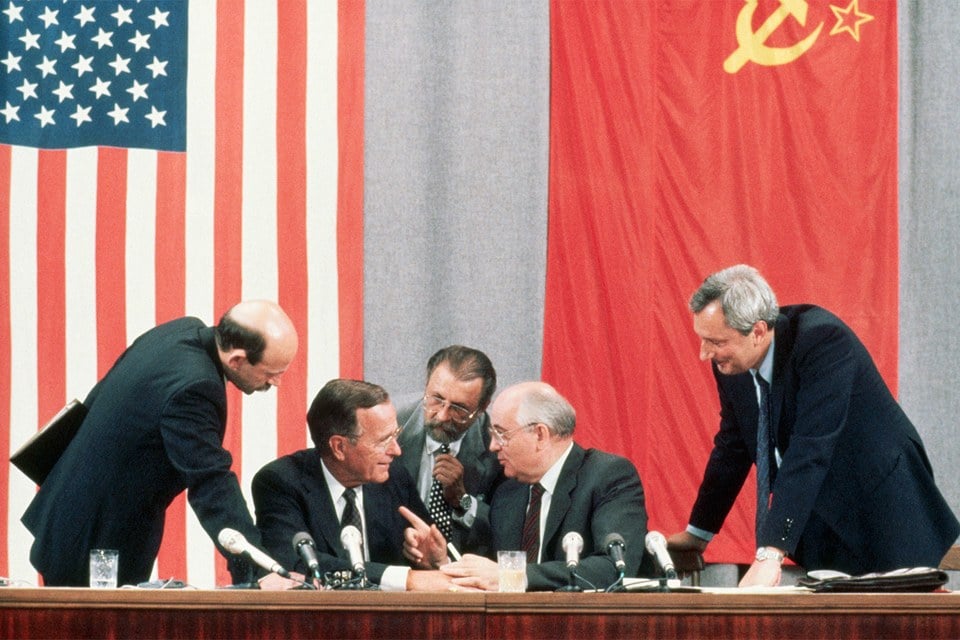
Photo: US President George Bush and Soviet President Mikhail Gorbachev at the Moscow Summit 1991 By Peter Turnley/Corbis/VCG/Getty Images Over the last four month, ten articles about the new Cold War have been published on the TFF Associates blog. And on our social media you’ll find hundreds of brilliant, informative posts written by others. While this new Cold War is certainly different from the first Cold war that ended in 1989, we are not in doubt that there is a new such tragic war and that the risk of military confrontation between Russia and NATO countries in Europe has increased. We also happen to think it could have been avoided. This Cold War has to do with, among many other things, NATO’s counterproductive expansion since 1994, the way Yugoslavia broke down and was broken up, with Ukraine and now Syria as well as – perhaps surprisingly to some – the...
lenin_300
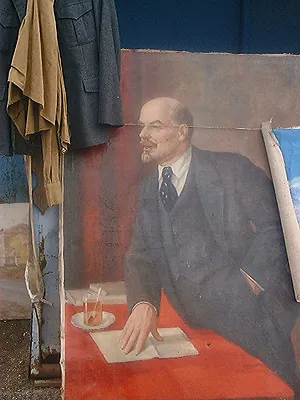
• Published in Bulletin of Peace Proposals 3-1990, pp 287-298 and on TFF’s homepage at the same time   1. Four hypotheses The West has lost a close enemy, the Soviet Union and Eastern Europe. Which reactions can be discerned and what psycho-political emotions are they indicative of? How did the West cope with the first years of this new post-Cold War situation? Can we mourn the death of an enemy, can we heal ourselves after the loss? How does one learn to live a new life without a close enemy? Has the West done what it ought to do for itself and for the former enemy? “The West” of course is a term hanging loose. We employ it in this article as meaning interchangeably “NATO, the Western hemisphere, the United States and Western Europe and a few cases, Western or Occidental culture”. The first hypothesis of this essay is...
Destruct2
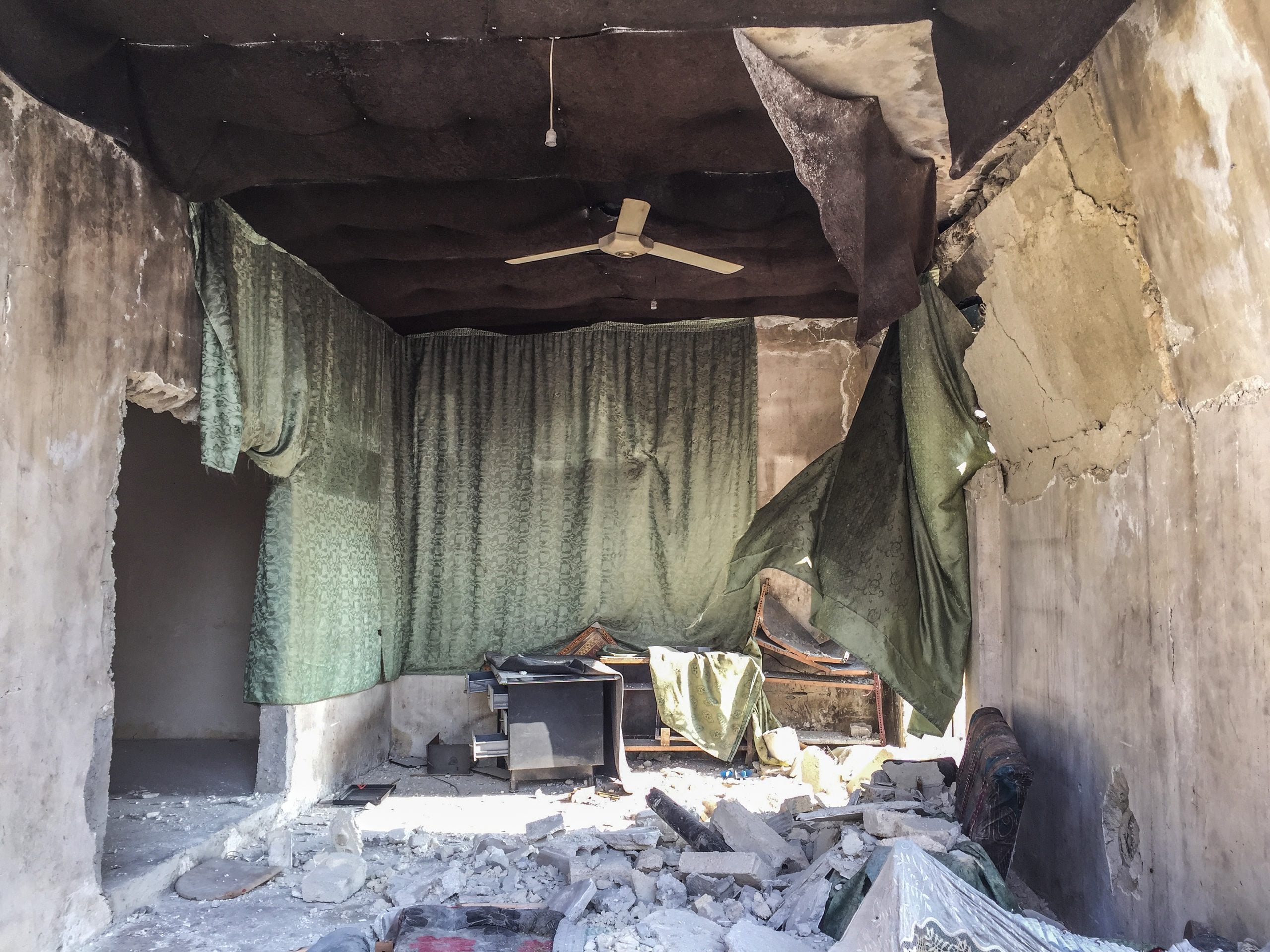
December 12, 2017, marks the anniversary of the liberation – the West called it fall – of Aleppo in Syria. What happened is conveniently forgotten today by the West. Some of us can’t and won’t forget what was both world, regional and local history. Important for Syria, for the West and for the future world order – for at least 5 reasons:   1. The Western mainstream media’s deceptive – constructed, ignorant, or both – narrative since 2011 was debunked. Perspectives that media and political decision-makers deliberately omitted (remember omitted stuff is more important than fake): • History and the colonialists’ role in Syria. • The immense complexity of the Syrian society. • Syria as a 7000 year-old civilisation and as end of the Silk Road. • The decades-long conflicts underlying the violence, since CIA’s coup in 1949. • The Western-driven regime change policies years since before 2011. • Other...
ObergPhoto2cmB-W-3
And why Russia doesn’t have to be a threat to the West TFF Series ”The New Cold War” # 7 If the Ukraine conflict is the centerpiece of the new 2nd Cold War, it is essential to ask: What really happened? What did NATO countries do to cause it? What did Russia do to cause it? And – if you live in the West, in particular: Did we really have to end in this situation given Russia’s significant weakness over 25 years? This article argues that the superior West could have played its cards differently and it’s time for self-critical soul-searching and just a little living yourself into the shoes of the other. If peace rather than war is your true aim. There was a beginning and a framework The Ukraine conflict has a 25-years history. Instead of dissolving NATO, the alliance was expanded. Relieved from there being a Soviet...
YUsmall-300x152-1
(TFF Associates’ original writings from 1991 onwards, published without changes, 2000+ pages – 2015). https://yugoslavia-what-should-have-been-done.org
cropped-hw-blogheader_bigger
A commemorative blog for Håkan Wiberg, Peace researcher, philosopher, sociologist, and mathematician. https://hakanwiberg.wordpress.com
eu_front2006
Analysis, critique and alternatives, 2006. /wp-content/uploads/2026/01/Oberg_EU_Promote_Peace-2.pdf
ObergPhoto2cmB-W-3
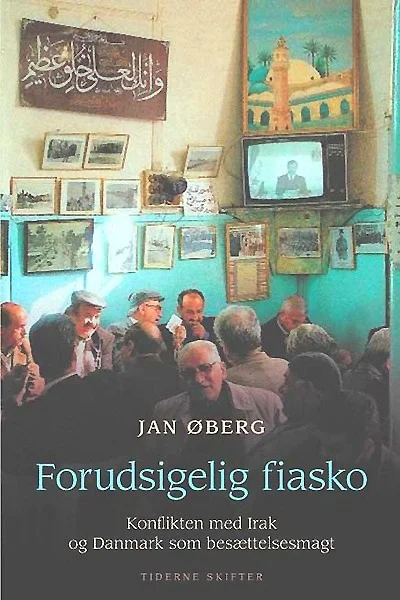
Siden den kolde krigs afslutning har dansk udenrigs- og sikkerhedspolitik bevæget sig langt ind i en politisk og moralsk blindgyde. Men det tjener hverken os eller verden at Danmark er blevet en krigs- og besættelsesmagt, viser den internationalt respekterede danske freds- og fremtidsforsker, Jan Øberg i denne bog. Tværtimod mindsker det vores og andres sikkerhed og bidrager til at øge, snarere end at mindske, terrortruslen. Forudsigelig fiasko – der udkommer 4. juni 2004 – sætter fokus på det irakiske samfund og Vestens måde at betragte og behandle Irak på. Jan Øberg kombinerer konkret konfliktanalyse med et personligt engagement, og underbygger overbevisende og konsekvent det synspunkt, at Vestens mangelfulde konfliktforståelse og ukyndige konflikthåndtering måtte ende med den ulykkelige krig. Det er en krig, som efter forfatterens opfattelse hverken kan fremme ædle motiver – etablere et demokratisk Irak – eller økonomisk-kulturelle interesser, men tværtimod kan blive en boomerang mod os selv og forkorte Vestens lederskab....
Forudsigelig_fors_S
Lidt om bogen Bogens indhold Bestil bogen her Anmeldelser Siden den kolde krigs afslutning har dansk udenrigs- og sikkerhedspolitik bevæget sig langt ind i en politisk og moralsk blindgyde. Men det tjener hverken os eller verden at Danmark er blevet en krigs- og besættelsesmagt, viser den internationalt respekterede danske freds- og fremtidsforsker, Jan Øberg i denne bog. Tværtimod mindsker det vores og andres sikkerhed og bidrager til at øge, snarere end at mindske, terrortruslen. Forudsigelig fiasko – der udkommer 4. juni 2004 – sætter fokus på det irakiske samfund og Vestens måde at betragte og behandle Irak på. Jan Øberg kombinerer konkret konfliktanalyse med et personligt engagement, og underbygger overbevisende og konsekvent det synspunkt, at Vestens mangelfulde konfliktforståelse og ukyndige konflikthåndtering måtte ende med den ulykkelige krig. Det er en krig, som efter forfatterens opfattelse hverken kan fremme ædle motiver – etablere et demokratisk Irak – eller økonomisk-kulturelle interesser, men tværtimod kan blive...
Categories

Year

Author / Contributor

Region