building

Category

Year

Author / Contributor

Region

Sort by

Showing 1-10 of 50 stories

1024px-Small_Flag_of_the_United_Nations_ZP.svg_
Jan Oberg October 24, 2020 2020 marks the 75th Anniversary of the world’s most important and visionary organisation, the United Nations. Everything TFF has done during its 35 years of existence has been based on one mission – namely, to promote the UN Charter’s Article 1 which states that peace shall be brought about by peaceful means. That is a typical Gandhian inspiration – “the means are the goals in-the-making” – as he said. You cannot use destructive means to achieve constructive goals. Regrettably, one hears many – thoughtless – voices accusing “the UN” of being too expensive, too bureaucratic, too ineffective, too corrupt, too this and that. Why must this be seen as an indicator of intellectual poverty? First, as stated by its first Secretary-General, Norwegian Trygve Lie – the UN shall never become stronger or better than its member states want to it to be. And, sadly, they...
fred-image
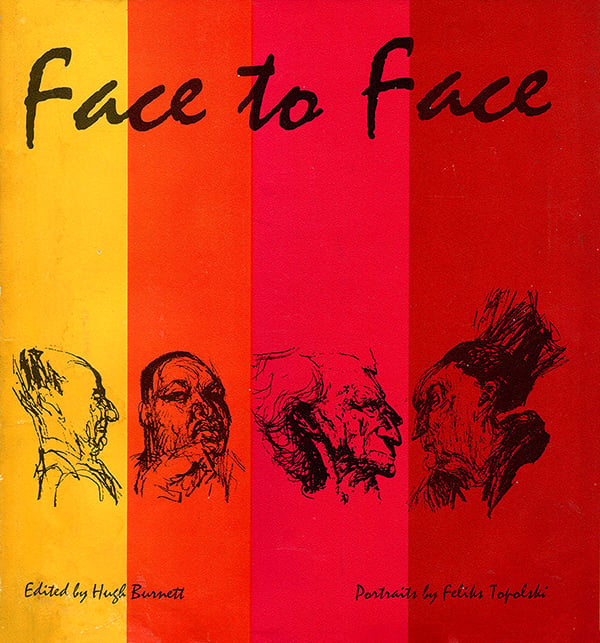
By Maria Popova October 8, 2020 In the mid-1950s, as the icy terror of the Cold War was cloaking the embering rubble of two World Wars, the BBC producer and cartoonist Hugh Burnett envisioned an unexampled program to serve both as a cross-cultural bridge and a mirror beaming back to a dimmed and discomposed humanity the noblest and most beautiful ideas of its noblest and most beautiful minds. Originally published at brainpickings Face to Face — a series of intimate conversations with people of genius, influence, and exceptional largeness of spirit, interviewed by the British broadcaster and politician John Freeman — began as short-wave radio broadcasts to listeners in the Far East and soon became a BBC television program. Television was then a young medium, aglow as any young medium with the promise of its potential and blind to its peril — something reflected with chilling clarity in Burnett’s own...
image1170x530cropped
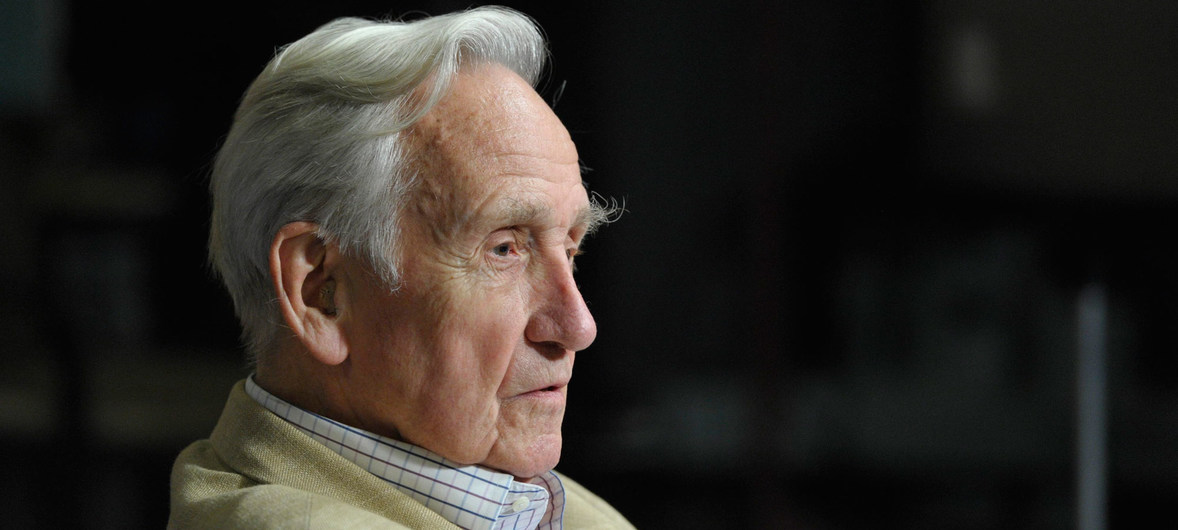
Jake Sherman August 3, 2020 Today, February 28, 2019, is the 100th birthday of Sir Brian Urquhart, whose distinguished career at the United Nations began at its creation and lasted until the final years of the Cold War. As an adviser to five secretaries-general, his influence over the first generation of UN peacekeeping missions was without peer. A committed multilateralist, Sir Brian was clear-eyed about the idealism of the UN as a mechanism to address international crises—and the reasons it often failed. Originally posted on International Peace Institute (IPI)’s official website on February 28, 2019 His centennial is an apt moment to reflect on his legacy and how his experiences at the UN continue to inform contemporary challenges facing the organization. Two aspects of Sir Brian’s legacy stand out: his ability to find imaginative solutions to crises despite fundamental differences among the five permanent members—the “P5”—of the Security Council, and his...
2014-10-29-Peace
60 years of peace theory and peace practice can be summarized in:                                                 EQUITY x HARMONY                              PEACE =   ——————————-                                                 TRAUMA x CONFLICT Four theory foci, four policy tasks, and four education topics. Any true education should prepare for practice, guided by general theory. Moving from denominator right to numerator left, this means: Mediation is verbal, based on dialogues with the parties, but the four tasks are very concrete, practical.  For doers not only talkers; for practical people like officers.  Hence the Big Question: Is peace theory-practice-education compatible with the military mind – however defined, and there are many military cultures in the world – or not? Originally published at TRANSCEND Thinkers so diverse as Nietzsche and Gandhi saw the military as exemplary because of the ésprit de corps and willingness to sacrifice, even their own lives. For Gandhi the kshatriya (military) caste was a model: he wanted non-violent warriors, with the same perseverance, also indispensable...
MLKAmericalearnednothing
June 29, 2020 Intro by Tom Engelhart to article by Andrew Bacevich Today, in the context of the Black Lives Matter protests, TomDispatch regular Andrew Bacevich considers the all-American version of “extreme materialism” that Martin Luther King called out more than half a century ago. And when it comes to the overwhelming urge to get one’s hands on the goods, among the looters of this moment two groups are almost never mentioned: the Pentagon and the police. Yet, in 1997, the Department of Defense set up the 1033 program as part of the National Defense Authorization Act to provide thousands of domestic police forces with “surplus” equipment of almost every imaginable militarized kind. Since then, thanks to your tax dollars, it has given away $7.4 billion of such equipment, some of it directly off the battlefields of this country’s forlorn “forever wars.” For items like grenade launchers, mine-resistant armored vehicles,...
un-united-nations-e1494375595426
Stephen Schlesinger April 07, 2020 Sir Brian Urquhart celebrated his 100th birthday in 2019. This is an eventful moment. Sir Brian is one of the most notable figures in the history of the United Nations. Urquhart has spent most of his entire life in service to the UN and, in his tenure, embodied the very narrative of the institution from its inception. Urquhart served from the opening session of the UN in the fall of 1945 until he stepped down in 1986, just as the Cold War neared its end. His 40-year sojourn in the UN was a time of great fear and great upheaval – with the threat of atomic war hanging over humankind, extreme tensions between Communist nations and democratic ones, a series of conflicts risking mayhem around the world, the decolonization of the planet, the enlargement of the UN’s membership and the UN’s wholesale expansion into new...
Ina_feathers_1_855_cropped-kopia
… and for artists to contribute to it … Have you often seen conflicts – big or small – escalate out of control? What do you do when it happens? Do you know how to intervene and de-escalate it again? Do you want more peace in your everyday life? A more peaceful world? Of course, you do! So let’s create something that works with children and adults together. Imagine Creatively is my homepage. It’s a storytelling-for-peace platform. I’m an academic with an MA in peace studies; I have taught courses and written several books before, and I have two children. I’m into both theory and practise. I know what works. You can trust me! It will be another bedtime story for children and a waking up story for parents and adults. I imagine it creatively as a constructive follow-on to the world-renown “Butter Battle Book” of the much endeared Dr...
soldiersnature
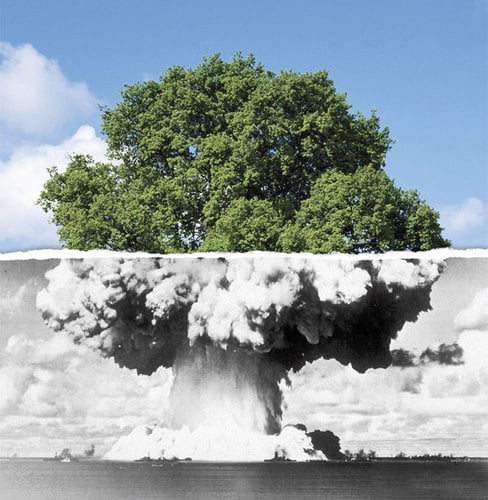
Today TFF launches “Bootprint – Militarism and Environment” – a curated, free-of-charge online magazine that brings you quality knowledge about the connections between the two most urgent problems that humanity faces. These two main clusters of problems which, if not solved, threaten to destroy humanity, our Earth and all future potentials are: Environment – with catchwords such as climate change, global warming, CO2 footprint, non-sustainability, pollution, resource depletion, species extinction, variety and diversity reduction, rain forest destruction, overconsumption, fossil fuels economy, limitless material growth, etc. etc. – and Militarism – with catchwords such as warfare, nuclear weapons, arms production and trade, militarization of land, air, space and oceans, tension creating, interventionism, base networks, terrorism, cyber and propaganda warfare, other weapons of mass destruction, special forces operations, intelligence agency crimes, imperialism, etc. The two clusters a fundamentally connected – militarism is enormously destructive of the environment; climate change and other processes...

Screenshot
A must-see and must-followup! February 6, 2020 Here is the knowledge, the experience, the passion and the vision that the US needs – and needs to set through before the militarists destroy America and more or less the rest of the world too. And while Kinzer’s introduction to Iran is impressively forceful, correct and pedagogic – listen to it even twice! – this 76 minutes conversation contains so much more than what pertains to Iran which makes it even more important. Now share everywhere you can… And please take note of this: This type of – free, critical – discussion can happen in the United States but how often do you see Europeans talk about these issues in this way? I know of no Danish, Swedish or Norwegian channel, intellectuals or active politicians who would come anywhere near these three personalities and would produce a similar high-quality debate. If you...
changingmeconstell
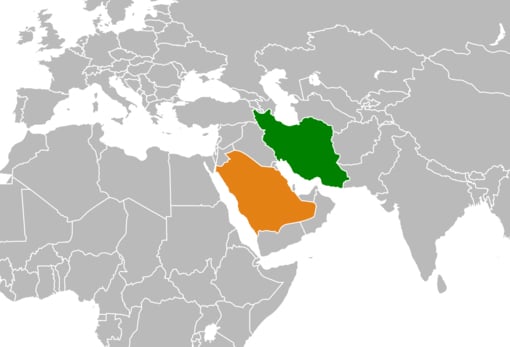
By Conn M. Hallinan November 27, 2019 The fallout from the September attack on Saudi Arabia’s Aramco oil facilities is continuing to reverberate throughout the Middle East, sidelining old enmities – sometimes for new ones – and re-drawing traditional alliances. While Turkey’s recent invasion of northern Syria is grabbing the headlines, the bigger story may be that major regional players are contemplating some historic re-alignments. Originally posted on Counterpunch on November 8, 2019, here After years of bitter rivalry, the Saudis and the Iranians are considering how they can dial down their mutual animosity. The formerly powerful Gulf Cooperation Council (GCC) of the Persian Gulf monarchs is atomizing because Saudi Arabia is losing its grip. And Washington’s former domination of the region appears to be in decline. Some of these developments are long-standing, pre-dating the cruise missile and drone assault that knocked out 50 per cent of Saudi Arabia’s oil...
wuerkercomplex
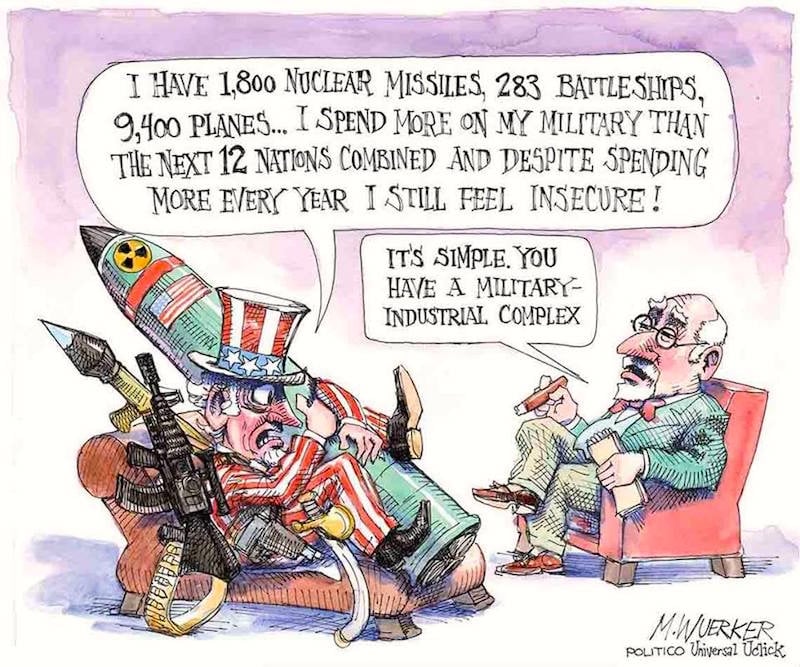
By William J. Astore November 14, 2019 The expanding cultural authority of the armed forces is a problem for U.S. democracy, writes William J. Astore. When Americans think of militarism, they may imagine jackbooted soldiers goose-stepping through the streets as flag-waving crowds exult; or, like our president, they may think of enormous parades featuring troops and missiles and tanks, with warplanes soaring overhead. Or nationalist dictators wearing military uniforms encrusted with medals, ribbons, and badges like so many barnacles on a sinking ship of state. (Was President Donald Trump only joking recently when he said he’d like to award himself a Medal of Honor?) And what they may also think is: that’s not us. That’s not America. After all, Lady Liberty used to welcome newcomers with a torch, not an AR-15. We don’t wall ourselves in while bombing others in distant parts of the world, right? Article posted on ConsortiumNews.com on October 31, 2019 (original article is posted on TomDispatch.com) here But...
US-sanctions
Prefatory Note: The post below is a slightly modified version of an interview published in The Nation on September 25th, following the September 14th attack on Saudi oil facilities. It follows a pattern with respect to Iran of accusations, denials, and public uncertainties. This combination of elements, given the leadership in Washington and Tehran, one blustering, the other inflexible, can easily produce an unintended stumble into war. A second shorter interview is appended, conducted prior to the attacks by an Iranian journalist, M.J. Hassani of Tasnim News Agency. It illustrates the seeming rigidity of Iran’s Supreme Guide, considered as having the final word on government policy, exceeding that of the elected leadership. Originally posted on Richard Falk’s personal blog on October 1, 2019, here Daniel Falcone Introduction to the Interview: After accusations of Iranian drone attacks on Saudi oil facilities, Iranian officials and authorities indicated that “full-fledged war” with the United States could...
Categories

Year

Author / Contributor

Region