Archive 1986 – 2017

Category

Year

Author / Contributor

Region

Sort by

Showing 1-10 of 3510 stories

Louts-for-web
By Metafutures • Welcome to Metafuture Metafuture is an educational think tank which explores futures-oriented issues. Our approach to futures thinking and practice (theories, methods, tools and processes) is based on the “Six Pillars” model which inquires into alternative and preferred futures and the worldviews and myths that underlie them. Library Free material – published articles, book chapters, … Free material – published articles, book chapters, reports and theses – by Metafuture associated futures-oriented scholars. Search by author or topic. Books and ebooks. Titles include: What Works: Case Studies in the Practice of Foresight (2015) and CLA 2.0: Transformative Research in Theory and Practice (2015). A list of organisations and conferences that Metafuture has delivered speeches, workshops and research reports. Requisting a speech, course, workshop and training. Videos of our presentations on a number of topics, such as Causal layered analysis, City futures, and What works in futures studies. The...
PES-group-picture-June-2016
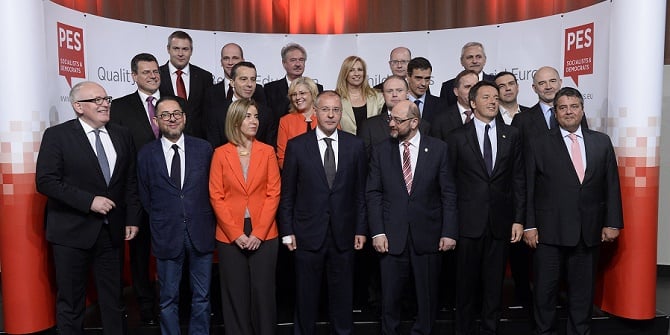
By Sheri Berman • Several of Europe’s centre-left parties have suffered disappointing election results since the financial crisis, but is this slide in support permanent or can they arrest their decline? Sheri Berman writes that with the rise of new parties on the populist right, the centre-left risks sliding into irrelevance unless it can respond with viable and attractive solutions to contemporary problems. Europe today is in crisis. Economically, much of the continent suffers from low growth, high unemployment and rising inequality, while politically, disillusionment with the European community as well as domestic institutions and elites is widespread. Partially as a result, right-wing populism is growing, increasing political instability and uncertainty even further. Although many have noted a correlation between the rise of populism and the decline of the social democratic or centre-left, the causal relationship between them has not been sufficiently stressed. Indeed, to a large degree the failures...
shutterstock_561439453-715x476
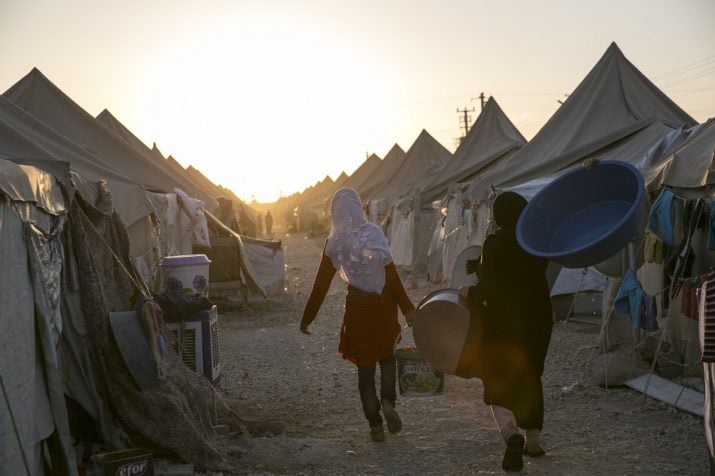
By James Fitzgerald • This paper examines how the politics of state, border, and biological control affect the journeys and experiences of asylum seekers and “irregular” migrants who are, at once, the victims and recipients of care and security. Building on fieldwork carried out at the “migrant aid centre” in Porte de la Chapelle, Paris, the harsh realities of the indefinitely displaced in supposedly-liberal democratic spaces reflect not only a disintegrating duty of care, but also the very conditions—and political logics—that make such moves possible. It exposes these practices in terms of biopolitics, the state of exception and humanitarian government; an assemblage of domination that seeks not to provide adequate security to those subjects seeking refuge, but to instead “enhance the biological and emotional well-being of host populations“ (2017, p. 809) which must be innocultated from them. It has long been argued by political theorists and philosophers of a certain...
GettyImages-513157188
By Jonathan Haidt • And how moral psychology can help explain and reduce tensions between the two. What on earth is going on in the Western democracies? From the rise of Donald Trump in the United States and an assortment of right-wing parties across Europe through the June 23 Brexit vote, many on the Left have the sense that something dangerous and ugly is spreading: right-wing populism, seen as the Zika virus of politics. Something has gotten into “those people” that makes them vote in ways that seem—to their critics—likely to harm their own material interests, at least if their leaders follow through in implementing isolationist policies that slow economic growth. Most analyses published since the Brexit vote focus on economic factors and some version of the “left behind” thesis—globalization has raised prosperity all over the world, with the striking exception of the working classes in Western societies. These less educated...
E_SDG_Icons-01
• On September 25th 2015, countries adopted a set of goals to end poverty, protect the planet and ensure prosperity for all as part of a new sustainable development agenda. Each goal has specific targets to be achieved over the next 15 years. For the goals to be reached, everyone needs to do their part: governments, the private sector, civil society and people like you. Do you want to get involved? You can start by telling everyone about them. We’ve also put together a list of actions that you can take in your everyday life to contribute to a sustainable future. What are the #globalgoals? The full list is here. Read more…  
shutterstock_385054867-715x476
• Multiple and more frequent crises have been taking place in consolidated democracies where governments fail to solve problems, politics takes extremist directions, and entire institutional systems perform poorly. In a few words, the performances of democracy have been disappointing, and these conditions of dissatisfaction and distress risk to undermine the legitimacy of our institutions. Despite the many differences between countries, this phenomenon is mainly related to both the European states and the United States of America. As Russell J. Dalton’s researches show us: “the cross-national breadth of this pattern suggests it is a general feature of contemporary politics in advanced industrial democracies, not the specific experience of only a few nations.” (Dalton 39). Dalton was correct when publishing this research more than ten years ago. Today, we observe the emergence of a new type of contemporary policies, which represents a challenge for the stability of our institutions and their...
2560
By Jennifer Rankin • “EU army plans kept secret from voters,” was the front-page story in Friday’s Times. If the claim sounded familiar, that was because just two days earlier a retired British army commander, Major General Tim Ross, had claimed in the Daily Express that the EU was “moving inexorably towards full political union and all that comes with it”, including “unified armed forces”. Alongside Brussels bans on bendy bananas and high-powered toasters, few subjects get leave campaigners as hot under the collar as the prospect of an EU army. On Friday Nigel Farage, the Ukip leader, accused the remain side of lying about moves to create one, while the former defence secretary Liam Fox warned darkly that “Europe’s defence intentions are a dangerous fantasy” that risked cutting the UK off from the US, “our closest and most powerful ally”. Via theguardian.com It is no secret that the EU...
Imagen-thumbnail-The-Transnational
By Milad Jokar • Those who ideologically opposed the negotiations with Iran on the nuclear issue have been proven wrong. Diplomacy works and the results are a clear success for the Non Proliferation Treaty, the region which desperately needs a new approach, the Iranian people who have been under crippling sanctions for over a decade and the rest of the world which is now free to reengage in economic and financial relations with Iran. We need to learn several key lessons from this historic deal. First, diplomacy is strength not weakness. Very few people believed that choosing the path of de-escalation and dialogue would prevent a military confrontation and successfully lead to a peaceful resolution of the nuclear crisis. The negotiations that took place between Iran and the P5+1 (the five permanent members of the United Nations Security Council plus Germany) have been tough but the tremendous political capital invested...
Muse-Bihi-300x199
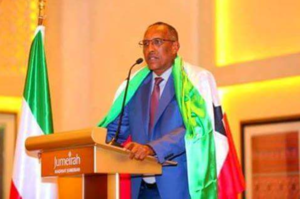
By Muse Jeeh • The new president of Somaliland, Muse Bihi Abdi will be inaugurated as fifth president on 13 December, after his victory of a tight contest with the country’s two opposition candidates but ultimately a legitimate election when his main challenger, Abdurrahman Irro conceded a defeat and calls for national unity. The election of the new president in Somaliland has attracted the eyes and attention of the neighboring countries as well as the international community. Thus, his inauguration is believed to be a tribute to democratic presidential election that took place peacefully in the country last month but to overcome many challenges is an examination for the new president elected. The international election mission congratulated the way, the election was performed by Somaliland government in collaboration with the local citizens for whom, nothing could have been successfully done without their support and thanks to Somaliland citizens, the National...
shutterstock_392347213
  By Dr Sam Perlo-Freeman • Today SIPRI estimated that global military expenditure in 2015 was $1676 billion, about 2.3% of the world’s total Gross Domestic Product (GDP). Such high levels of spending frequently raise concerns as to the ‘opportunity cost’ involved in military spending—the potential civilian uses of such resources that are lost. One way to put this in perspective is to compare it to social spending. Do governments spend as much money on healthcare, for example? We can also look at what else the money could achieve if it were put to other specific uses. In particular, how far would this money go towards achieving the UN’s Sustainable Development Goals (SDGs)? To compare spending on military and health expenditure worldwide, we need reliable data. For the military data, we use the latest figures from SIPRI’s military expenditure database. For the health data, we use the World Health Organization’s...
99800349
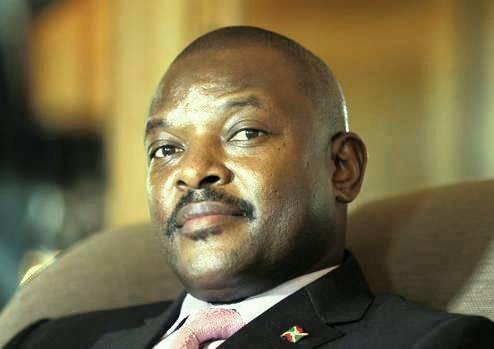
  Via africanindy.com December 15, 2017 • The Burundi president, whose re-election in 2015 triggered a political and economic crisis, said on national television yesterday that the country was sovereign and that changing its constitution was part of its sovereignty. He warned all those who wanted to challenge the constitutional changes that they would face hardship, adding that it was God’s plan. In power since 2005 after a decade of civil war, Nkurunziza’s re-election was criticised as illegal and led to killings and more than 400000 refugees fleeing the country, triggering a Great Lakes humanitarian crisis. Nkurunziza, a former rebel leader, announced this plan in Bugendana district, in front of several allies and security forces, who gathered for the event. If the constitution is amended, Nkurunziza will be allowed to stay in power until 2034, and his presidential terms will last seven years. Read more… Jan Oberg comments: Oh God,...

4_1
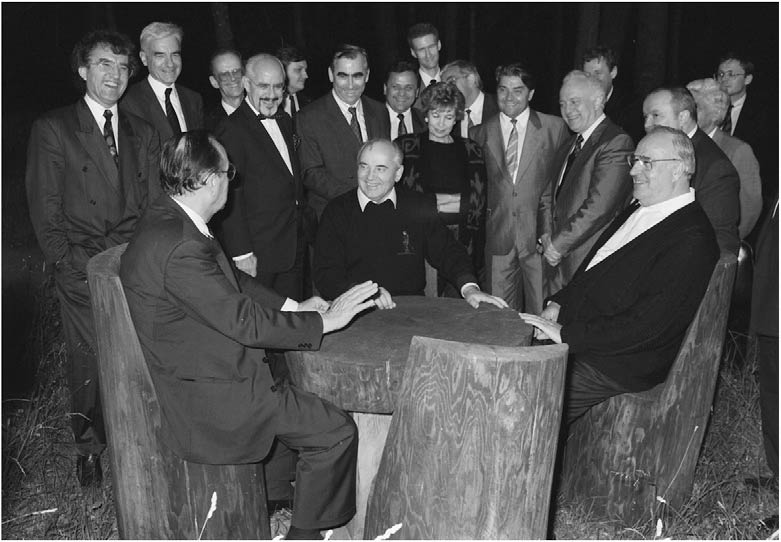
Via gwu.edu Washington D.C., December 12, 2017 – U.S. Secretary of State James Baker’s famous “not one inch eastward” assurance about NATO expansion in his meeting with Soviet leader Mikhail Gorbachev on February 9, 1990, was part of a cascade of assurances about Soviet security given by Western leaders to Gorbachev and other Soviet officials throughout the process of German unification in 1990 and on into 1991, according to declassified U.S., Soviet, German, British and French documents posted today by the National Security Archive at George Washington University ( http://nsarchive.gwu.edu). The documents show that multiple national leaders were considering and rejecting Central and Eastern European membership in NATO as of early 1990 and through 1991, that discussions of NATO in the context of German unification negotiations in 1990 were not at all narrowly limited to the status of East German territory, and that subsequent Soviet and Russian complaints about being...
Categories

Year

Author / Contributor

Region