Archive 1986 – 2017

Category

Year

Author / Contributor

Region

Sort by

Showing 1-10 of 3510 stories

RichardFalk20141
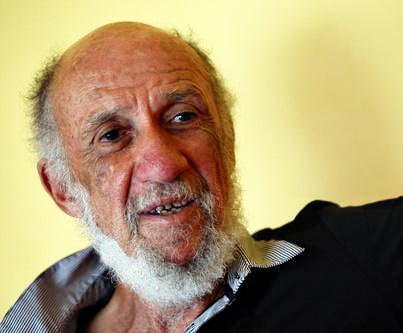
By Richard Falk, David Krieger and Robert Laney Prefatory Note What follows here is An Open Letter to the American People: Political Responsibility in the Nuclear Age. It was jointly written by Richard Falk in collaboration with David Krieger and Robert Laney. The three of us have been long connected with the Nuclear Age Peace Foundation, NAPF. The NAPF focuses its effort on the menace posed by nuclear weaponry and the urgency of seeking nuclear disarmament. The nuclear agreement with Iran and the North Korean nuclear test explosion are reminders of the gravity of the issue, and should serve as warnings against the persistence of complacency, which seems to be the prevailing political mood judging from the policy debates that have taken place during the early stages of the 2016 presidential campaign. This complacency is encouraged by the media that seems to have forgotten about nuclear dangers since the end...
ChatGPT Image 9 jun 2026, 11_11_33
By Jonathan Power Yesterday in Kabul the so-called Quadrilateral Coordination Group – comprising representatives from Afghanistan, Pakistan, China and the US – met to hold discussions on a roadmap to peace in Afghanistan. A former Taliban senior official said that “military confrontation is not the solution” and that a “political solution” was needed to end the war in Afghanistan. “The motivation for peace talks was very weak in the past,” Mohammad Hassan Haqyar said. “But now the situation has changed and the parties seem to have a readiness for dialogue.” Speaking before the meeting, Sartaj Aziz, the shrewd foreign affairs adviser to Pakistan’s prime minister Nawaz Sharif, said that “the primary objective of the reconciliation process is to create conditions to bring the Taliban groups to the negotiation table and offer them incentives that can persuade them to move away from using violence as a tool for pursuing political goals”....
johangaltung
Democracy is rule–decision-making–by the consent of the people, the demos. There is a very good argument: the people will suffer the consequences. Hence rule of, by, and for the people. But the problem is: which level dominates the decision-making? Level [4] national (government-parliament-courts); [3] regional (provinces-departments), [2] local (LAs, municipalities), level [1] individuals? In theory [1] is primary, basic, sovereign; in practice level [4]. Through elected representatives, packaged in electoral districts; representing individual preferences, packaged in party programs. Comment, from Germany: “The sovereignty comes from the people – and never comes back” (“vom Volke raus, und kommt niemals zurück“). The representatives kindly open a window every 4 years or so, 8-12 hours, 1-2 days, for the people to confirm or disconfirm the government. so the degree of democracy looks like 1-2 days out 4 x 365 = 1460 (+1): around 1 per mille.
ObergPhoto2cmB-W-3
Lund, Sweden, January 18, 2016 Today, on Martin Luther King Jr. Day, TFF launches its new online “flip” magazine, “Transnational Affairs”. Social media posts may soon be forgotten, too far down your feed to find. We now curate them – 10-15 a day – at “Transnational Affairs” and include other important debate articles, blog posts, analyses and videos you’ll only find here. That’s why you should click “follow” on this magazine – and Like it too – a treasure trove of quality materials for the concerned citizen, media person, student and researcher. We curate “Transnational Affairs” to help you understand – easily flipping – what happens in our troubled world and what could be done to make it much better. “Transnational Affairs” reflects the diversity of TFF’s work and themes – such as peace by peaceful means, nuclear issues, Iran, Syria, Burundi, the Balkans, non-violence, UN matters, world order change,...

ChatGPT Image 9 jun 2026, 11_11_33
By Jonathan Power Make no mistake Barack Obama is going to go down in history as one of the great American presidents. At home he has confronted poverty, ill-health, racism, gun laws, unemployment, immigration and the criminal justice system – with amazing tenacity, sometimes to great effect, even though the Republicans have fought him tooth and nail over every attempt at reform. The economy is striding along, shaming Europe. Abroad he has had to struggle on multiple fronts – more than any other recent president. There are problems, especially in the Middle East, that would – and will – defeat any president. But there is a clear narrative running through Obama’s foreign policy, one that makes a lot of sense. What is most clear is the honouring of the commitment he made in his Nobel Peace Prize speech at the onset of his presidency to lowering America’s propensity to use...
johangaltung
Baher Kamal, in – And All of a Sudden Syria! writes: “The “big five” /the UN veto powers/ have just agreed /Res 2254 of 18-12-2015/– time to end the Syrian five – year long human tragedy – they waited until 300,000 innocent civilians were killed–4,5 million humans lost as refugees and homeless at home, hundreds of field testing of state-of-the-art drones made, and daily US, British, French and Russian bombing carried out”. But no Chinese bombing. One term in the resolution, road map, already spells failure. There is another reason: missing issues. But something can be done. Roads twist, turn and may be far from straight. Traveling a road is a linear, one step or mile-stone after another, process, by the map. The West loves linearity; as causal chains (“falling dominoes”) from a root cause; as deductive chains from axioms; as ranks from high to low. However, is that not...
gunnarwestberg
By Gunnar Westberg Can cyber warfare prevent wars? This is a call for information. An appeal to people who know more abou cyber warfare! As long as there are armies the threat of war remains. As long as there are nuclear weapons the threat of extermination of mankind from nuclear war remains. It is sometimes said that nuclear weapons will be with us until we find something more effective. Could cyber warfare be an alternative? The U.S. together with Israel delayed the development of the uranium enrichment facilities in Iran through the use of a virus introduced into the centrifuges. Iran may have been behind a cyber attack on computers in Saudi Arabia that interfered with oil refineries and oil transport. Can cyber warfare prevent a military attack? Here an attempt to illustrate the idea:
RichardFalk20141
This post appeared on January 5th under a different title in the Electronic Intifada. It is published here in a slightly modified and extended form. Makarim Wibisono announced his resignation as UN Special Rapporteur on Occupied Palestine, to take effect on March 31, 2016. This is position I held for six years, completing my second term in June 2014. The prominent Indonesian diplomat says that he could not fulfill his mandate because Israel has adamantly refused to give him access to the Palestinian people living under its military occupation in the West Bank and Gaza Strip. “Unfortunately, my efforts to help improve the lives of Palestinian victims of violations under the Israeli occupation have been frustrated every step of the way,” Wibisono explains. His resignation reminds me in a strange way of Richard Goldstone’s retraction a few years ago of the main finding in the UN-commissioned Goldstone report, that Israel...
ChatGPT Image 9 jun 2026, 11_11_33
By Jonathan Power The year’s first major atrocity – Saudi Arabia’s execution by beheading on Sunday of 47 people, including an important Shia ayotallah who led Shia protests against discrimination by the Sunni majority but never committed an act of violence. Even the Islamic State doesn’t behead 47 in one day. Although beheading is swift it strikes most of us as being grotesque as well as medieval. The Saudis are aware of their image in the outside world but nevertheless persist, as if they want to tell the rest of the world: “Back off. Our Wahhabi (ultra puritanical) morality is our morality. We are a belief system unto ourselves.” They exported the political convictions that have evolved out of Wahhabism to Afghanistan (with money for guns along with the theology), first to fight the Russians, then to arm the Taliban and later to allow them to “ignore” that the Taliban...
johangaltung
According to UNESCO, wars start in the minds of men. Well, something–like unsolved conflicts and unconciled traumas–passes minds on the way to war. But UNESCO got the unintended focus on male humans right. Minds matter, above all pre-programmed minds. This New Year 2016 editorial minds minds and mind-sets, the set minds. For peace culture. 1. A case: New York Times editorial 30 Dec 2015, “The Importance of Retaking Ramadi”. Being the capital of a governorate–IS uses them as building blocks–this was a major military victory. However, the mind-set of the writer confuses retaking space with retaking minds. Sunni Arab minds. “Liberated” by a Shia army and infidel US bombs? They might even be against both. The military come and go. Minds often stay. 2. Can we map minds? Well, to standard world maps with 200 states at least add maps of 2000 nations, showing those who would like to be...
RichardFalk20141
Part 1 One of the seemingly permanent contributions of Europe to the manner of organizing international society was to create a strong consensus in support of the idea that only a territorially delimited sovereign state is entitled to the full privileges of membership. The United Nations, the institutional embodiment of international society recognizes this principle by limiting membership in the Organization to ‘states.’ Of course, there is an enormous variation in the size, population, military capabilities, resource endowments, and de facto autonomy among states. At one extreme are gigantic states such as China and India with populations of over 1 billion, while at the other are such tiny countries such as Liechtenstein or Vanuatu that mostly rely on diplomacy and police rather than gun powder and armies for security. All four of these political entities have the same single vote when it comes to action in the General Assembly or...
farhangjahanpour
By Farhang Jahanpour While Christians celebrate Christmas on Dec. 25th, the Persians celebrate one of their oldest and most festive celebrations on Dec. 21st, the eve of winter solstice, the longest night and the shortest day of the year. In Iran this night is called “Shab-e Yalda”, the night of the birth or nativity of the sun, or Mithra the Sun-god. According to Orthodox Christians, the Armenians and the Eastern churches, Jesus Christ was born on January 6, and the celebration of his birthday on December 25th, may in fact be born out of the Persian Mithraic influence. In ancient Persian mythology, Mitra (Mithra, Mehr), the God of love, friendship, and light, or the sun-god, was miraculously born from a rock by a river or stream on this longest night of the year. In his fifth volume of the collected works, Symbols of Transformation, Carl Jung, the famous Swiss psychiatrist,...
Categories

Year

Author / Contributor

Region